

07 Apr How to Hire Chair Cover: An Event Planner’s Guide
If you are hiring chair covers, you are usually already juggling ten other decisions at once. The marquee is booked, the guest list keeps moving, and the chairs themselves often look far less polished than they did in the showroom.
That is where chair covers earn their place. They do not just dress a chair. They tidy the whole room, make mixed seating look consistent, and help a marquee feel finished rather than temporary. In and around Croydon, that matters because many events use practical folding or banquet chairs that need softening for weddings, smartening for corporate functions, or colour coordination for community events.
A good hire chair cover decision comes down to four things. Pick the right fabric. Match it to the actual chair. Measure properly before you order. Then sort the booking terms so collection, fitting, cleaning, and replacements do not become last-minute problems.
Choosing Your Chair Cover Style and Fabric
A July marquee wedding in Croydon can start in bright heat, turn humid by mid-afternoon, and feel noticeably cooler once the sides are down in the evening. Chair cover fabric needs to cope with that shift without looking limp, creased, or out of place by the speeches.
The right starting point is the overall shape of the cover and how the fabric behaves in a marquee. Colour matters later. First decide whether the event needs a neat fitted finish or a softer draped one, because outdoor settings magnify the difference. Under natural daylight, every crease, sag, and shine shows up more clearly than it does in a hotel suite.
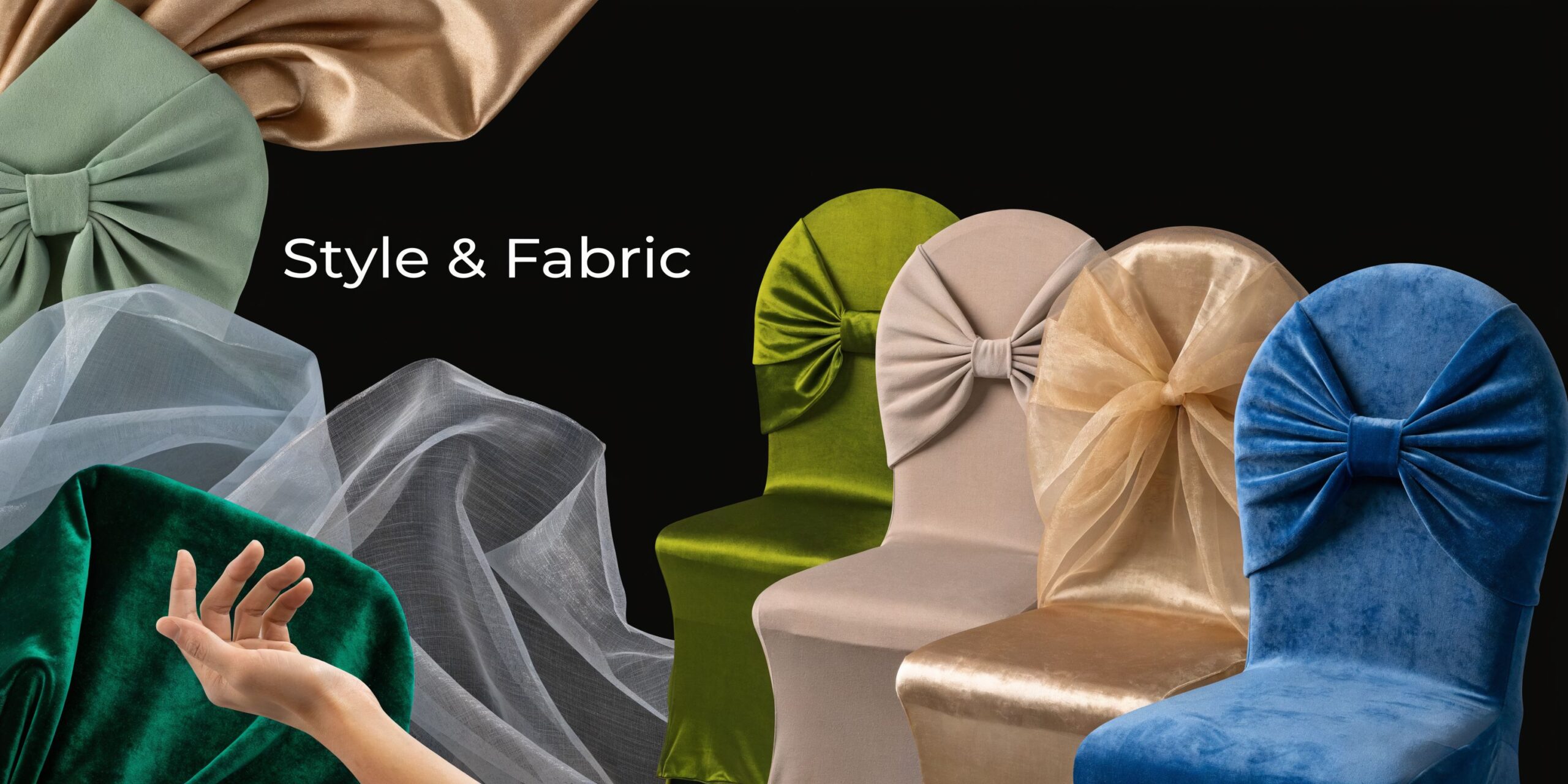
Spandex for a cleaner modern finish
Stretch spandex suits marquees better than many clients expect. It gives a tidy, fitted line, copes well with quick installations, and usually comes out looking smart even after transport and handling on site. For corporate functions, modern weddings, and events with a fast room reset, that matters.
It is also one of the more practical options for UK weather. If guests come in from a damp reception area or the ground conditions add a bit of moisture to the setup process, spandex tends to recover better than looser fabrics that crease or drop once they pick up humidity.
It works especially well for:
- Corporate dinners where clean symmetry helps the room look organised
- Contemporary weddings with simple florals, clear table styling, and modern lighting
- Marquee events with tight turnarounds where the team needs covers fitted quickly and consistently
The trade-off is style. Spandex can look a little too sharp for a romantic marquee with soft linings, chandeliers, and layered table dressing. If the brief is elegant rather than crisp, a fitted cover can make the seating feel slightly harder than the rest of the room.
Polyester or linen-style covers for a softer marquee setting
Loose-fit polyester and linen-style covers create a fuller silhouette and hide a basic chair more completely. That is often useful in marquees because many setups rely on practical banqueting or folding chairs that need softening.
Polyester is the dependable all-rounder. It gives a clean finish, holds colour well, and usually copes better with repeated hire use, loading, and storage. Linen-style covers have a nicer texture for some weddings, especially where the client wants a softer, less formal look, but they need more attention. In a marquee, airflow and temperature changes can leave natural-look fabrics appearing less tidy by the evening if they have not been dressed properly.
| Cover type | Best for | Strength | Watch out for |
|---|---|---|---|
| Spandex | Modern events, corporate layouts, fast turnarounds | Sleek fit, low fuss on site | Can feel too fitted for classic styling |
| Polyester | Weddings, banquets, formal dining | Reliable finish, practical for hire | Needs the right chair size to sit neatly |
| Linen-style | Softer, elegant marquee styling | Good texture and drape | Can show creasing more easily outdoors |
For South London and Surrey marquee jobs, polyester often ends up being the safest middle ground. It gives enough softness for a wedding, without becoming too fussy to manage on a live outdoor site.
Choose for the marquee conditions, not just the mood board
Generic wedding blogs often treat chair covers like a purely decorative choice. In a UK marquee, fabric choice is tied to weather, flooring, access, and setup time.
A summer reception in Sanderstead with hard flooring and a fully lined marquee can carry a more formal loose cover quite well. A garden marquee in Purley with uneven access, warm afternoon sun, and a quick evening turnover usually benefits from something more forgiving. The same applies to community and family events where chairs are moved around during the day. A fabric that starts neat and stays neat saves trouble later.
Ceiling treatment also matters here. Chair covers should work with the rest of the interior rather than sit apart from it, especially if the marquee is fully lined. It helps to review the wider fabric scheme, including marquee ceiling drapes and lining options, before settling on a cover style.
There is also a cost point clients often miss. Bundling chair covers with a Croydon-based marquee provider is usually cheaper and simpler than hiring them separately from a distant décor company. Delivery is easier to coordinate, the fitting team is already on site, and if a few covers need swapping on the day, it is far easier to solve locally.
What usually works best
For marquee events, the safest decisions are usually the most practical ones:
- Choose fitted covers for clean modern layouts, fast setup, and chairs that need a uniform line.
- Choose draped covers for softer wedding styling and more traditional dining plans.
- Use durable, easy-care fabrics if the event is outdoors all day or guest movement will be heavy.
- Keep the main cover neutral and bring in colour through sashes or accessories if needed.
A chair cover should still look right at 8pm, not just in the supplier photo taken indoors at midday. In marquees, fabric has to earn its keep.
Matching Covers to Chairs and Your Marquee
A Croydon marquee can look calm and polished at 10am, then feel very different by mid-afternoon once the sides have been opened, guests have crossed the floor a few hundred times, and the air has turned damp. Chair covers need to suit that reality, not just the sample shown indoors.
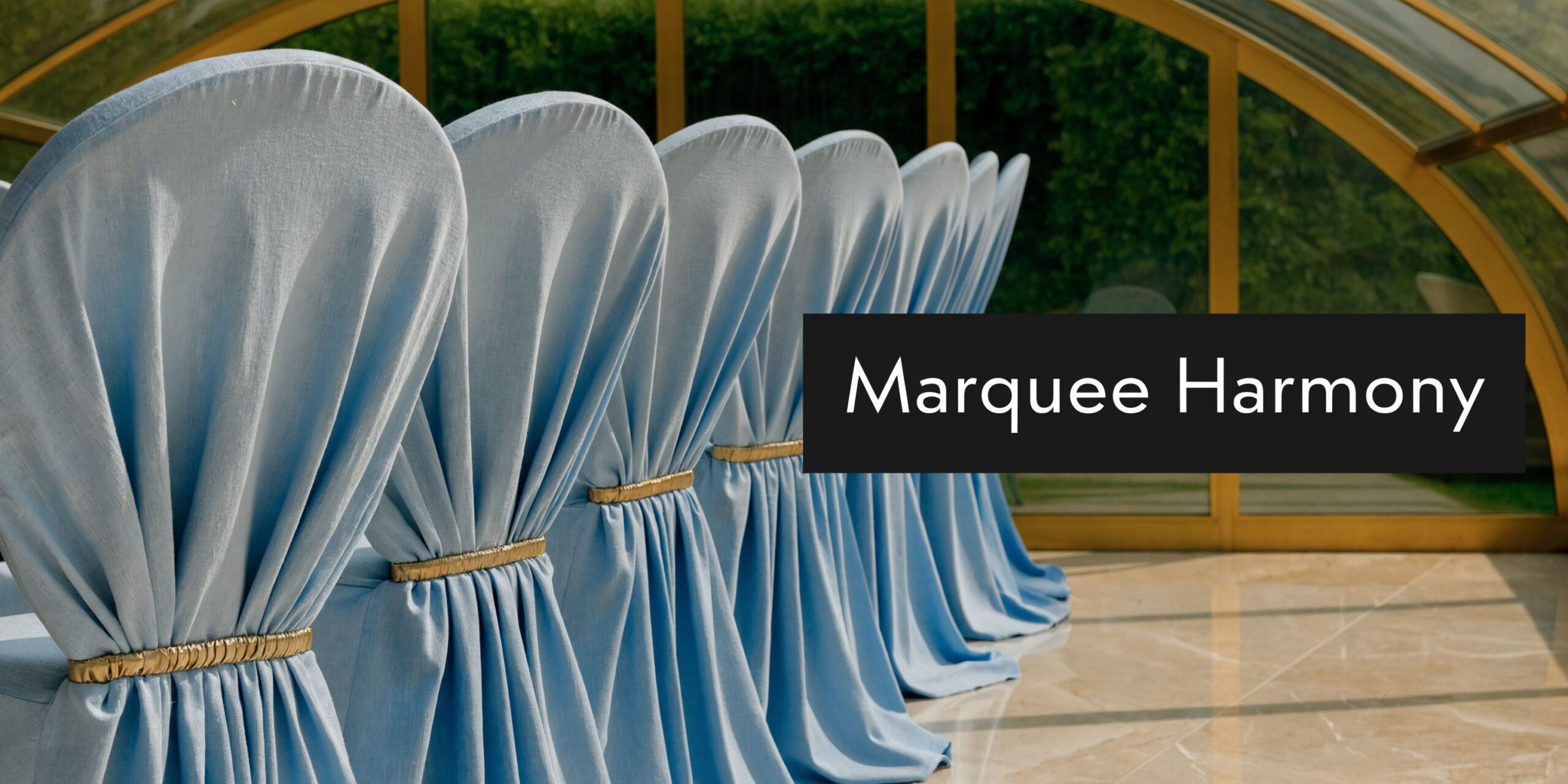
The chair itself sets the limit on what will work. Banquet chairs are usually straightforward because the back and seat proportions are consistent. Folding chairs need more care, especially if the frame is angular or the legs flare out, because any loose fabric tends to catch the eye straight away. Chiavari chairs are different again. They already have a decorative shape, so covering them can either tidy up a mismatched colour scheme or hide one of the better-looking pieces of furniture in the room.
That is why I usually tell clients to decide on the chair first, then the cover. If you are still comparing furniture layouts, it helps to review the available chair hire options for marquee events before locking in a cover style.
A quick size check matters too, particularly if chairs are coming from more than one supplier or from mixed venue stock. A Complete Guide to the Dimensions of a Chair is a useful reference for understanding why one “standard” chair can still sit differently under the same cover.
Marquee conditions change the decision more than many clients expect. UK wedding blogs often assume a dry indoor room with stable light and temperature. A marquee in Croydon, Sutton or across Surrey has different pressures. Moisture gets tracked in. Ground conditions affect how hems sit. Airflow changes through the day. If the entrance is busy, chair backs and corners take more contact than they would in a hotel suite.
That is where fabric choice starts to separate good hires from awkward ones on the day. Stretch covers cope better with small variations in chair shape and usually stay neater if guests are in and out of their seats all afternoon. Heavier decorative fabrics can look smart at setup, but they are less forgiving if the ground is slightly damp or the chairs need to be moved during service. For marquee work, I would rather see a cleaner fit in a practical fabric than a richer fabric that starts to sag by evening.
A few combinations tend to work reliably:
| Chair type or marquee condition | Usually a sensible match | Usually harder to keep looking right |
|---|---|---|
| Standard banquet chairs | Fitted covers with a close hemline | Oversized draped covers |
| Folding chairs | Simple fitted covers that hide the frame cleanly | Loose styles that twist around the legs |
| Chiavari chairs | No cover, or a test cover on one sample chair first | Full-room cover hire without testing |
| Busy marquee entrances | Stretch or easy-care fabric | Covers with excess fabric at floor level |
| Changeable weather | Quick-drying, wipeable materials | Fabrics that hold moisture and crease heavily |
Colour needs the same practical eye. In a lined marquee, off-white and ivory often sit more comfortably than a bright optical white, especially under daylight. Then the lighting changes. Once evening uplighters come on, satin trims and metallic bows can suddenly look much stronger than they did during setup. A cover that seems subtle at noon can read quite differently after dark.
The best test is distance. Stand at the marquee entrance and look across a full table run. Guests will notice straight rows, even backs, and consistent colour long before they notice a fancy sash knot. If the chairs look level and intentional from there, the covers are doing their job.
Bundling chair covers with a local marquee provider also makes life easier in practical terms. The same crew can unload, fit, and swap anything that does not sit right once the room is dressed. For Croydon events, that local coordination usually saves both cost and stress compared with bringing in a separate décor company from further out.
How to Measure and Count for a Perfect Fit
This is the part that saves the event.
A hire chair cover can look excellent in a brochure and still be completely wrong on the day if the measuring was guessed. Most fitting problems are not dramatic. They are the irritating kind. Covers ride up, bunch around the seat, sit short at the back, or refuse to go on the final few chairs because those chairs came from a different stack.
The fix is simple. Measure properly, identify the exact chair type, and test a sample before you confirm the order.
Start with this visual guide.
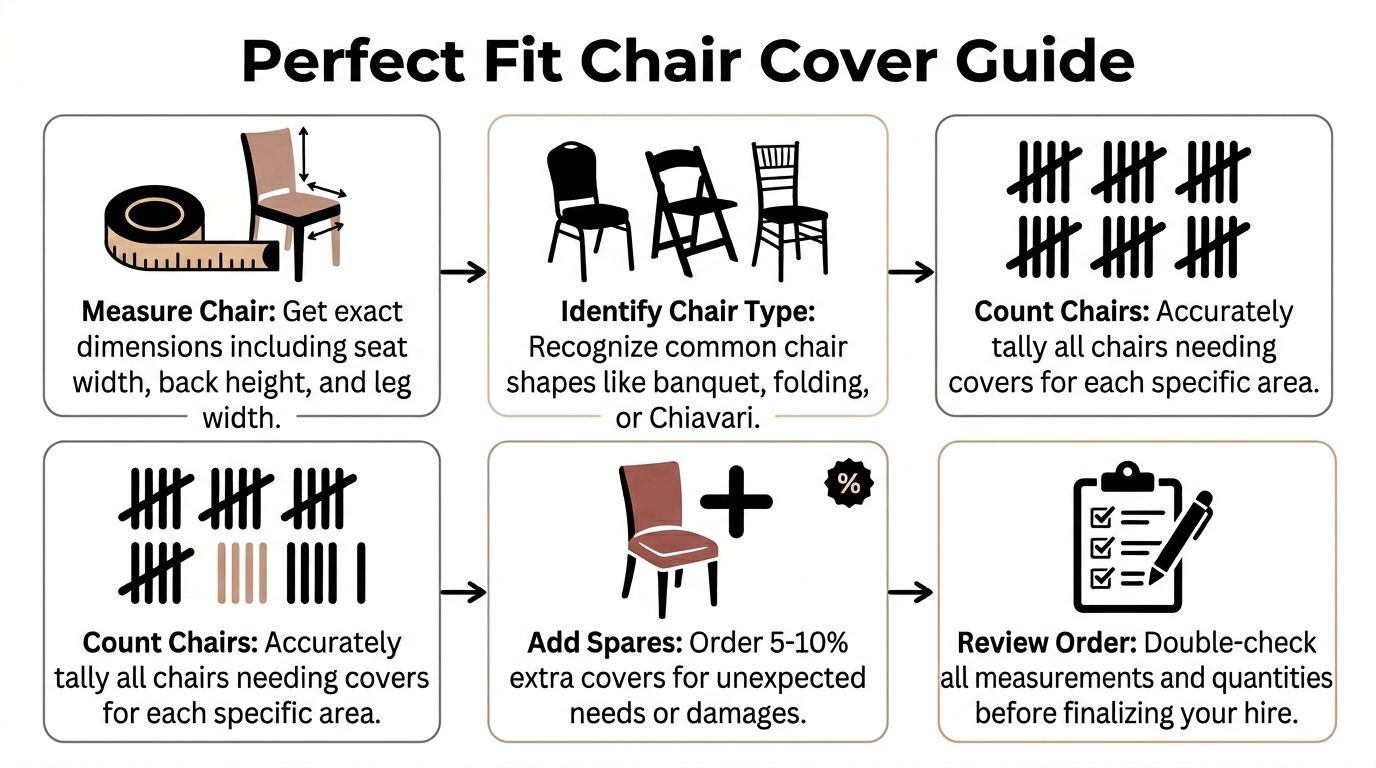
The measurements that matter
That sounds technical, but the process on site is straightforward.
- Measure overall height from the floor to the top of the chair back.
- Measure the back width at its widest point.
- Measure seat width and seat depth without guessing around padded edges.
- Note the chair type. Banquet, folding, and Chiavari should never be treated as interchangeable.
- Check for awkward features such as armrests, curved backs, or a wider rear frame.
If you need a plain-English reference for furniture dimensions before sending anything to a supplier, A Complete Guide to the Dimensions of a Chair is a useful primer because it breaks down the terms people often mix up.
Why the sample test matters
The sample test is the step people skip when they are rushed. It is also the step that prevents replacement charges, delays, and a room full of half-fitted covers.
One test cover on one actual chair tells you more than a page of measurements alone. It shows whether the cover catches on the legs, whether the seat corners fill out properly, and whether the back line sits at the height you expected.
Best practice: Test the sample on the actual chairs for the event, not on something “close enough” in a warehouse or another room.
That point matters for venues and community halls where seating has been replaced over time. Two stacks can look identical until you try to cover them.
A short video can also help if your team is fitting covers themselves rather than using a full setup service.
Counting without getting caught short
Counting chairs sounds simple until a layout changes. The dining plan says one thing, the ceremony needs another, and someone adds a top table or extra family seating late in the week.
The safest counting method is to break the event into zones rather than doing one total.
- Ceremony area if separate
- Main dining area
- Top table or stage seating
- Cake table or signing table seating
- Reserve chairs kept off to one side
Then check whether every zone needs the same cover. Sometimes they do not. You may only cover guest dining chairs and leave service or waiting-area chairs plain.
A practical count sheet
| Area | Chair type | Cover type | Quantity |
|---|---|---|---|
| Dining tables | Banquet | Loose cover with sash | |
| Ceremony rows | Folding | Stretch cover | |
| Top table | Feature chairs | Matching premium cover | |
| Spare stock | Same as main area | Same as main area |
Keep that sheet separate from the seating plan. It makes supplier conversations much easier and reduces last-minute confusion.
The mistakes that keep happening
These are the problems seen most often on actual bookings:
- Using venue chair numbers instead of physically counting on site
- Assuming all chairs in one venue are identical
- Ordering for seated guests only and forgetting supplier or display chairs
- Skipping the sample because the event is “standard”
- Changing chair type after the cover order is confirmed
None of those mistakes are unusual. They are avoidable if the measuring and counting happen early enough.
Styling with Sashes Bows and Other Accessories
A plain chair cover gives you a clean base. The personality usually comes from the accessory.
This is the stage where a room stops looking functional and starts looking considered. A simple ivory cover can feel formal, romantic, rustic, or corporate depending on what is tied around it and how that fabric sits against the rest of the table styling.
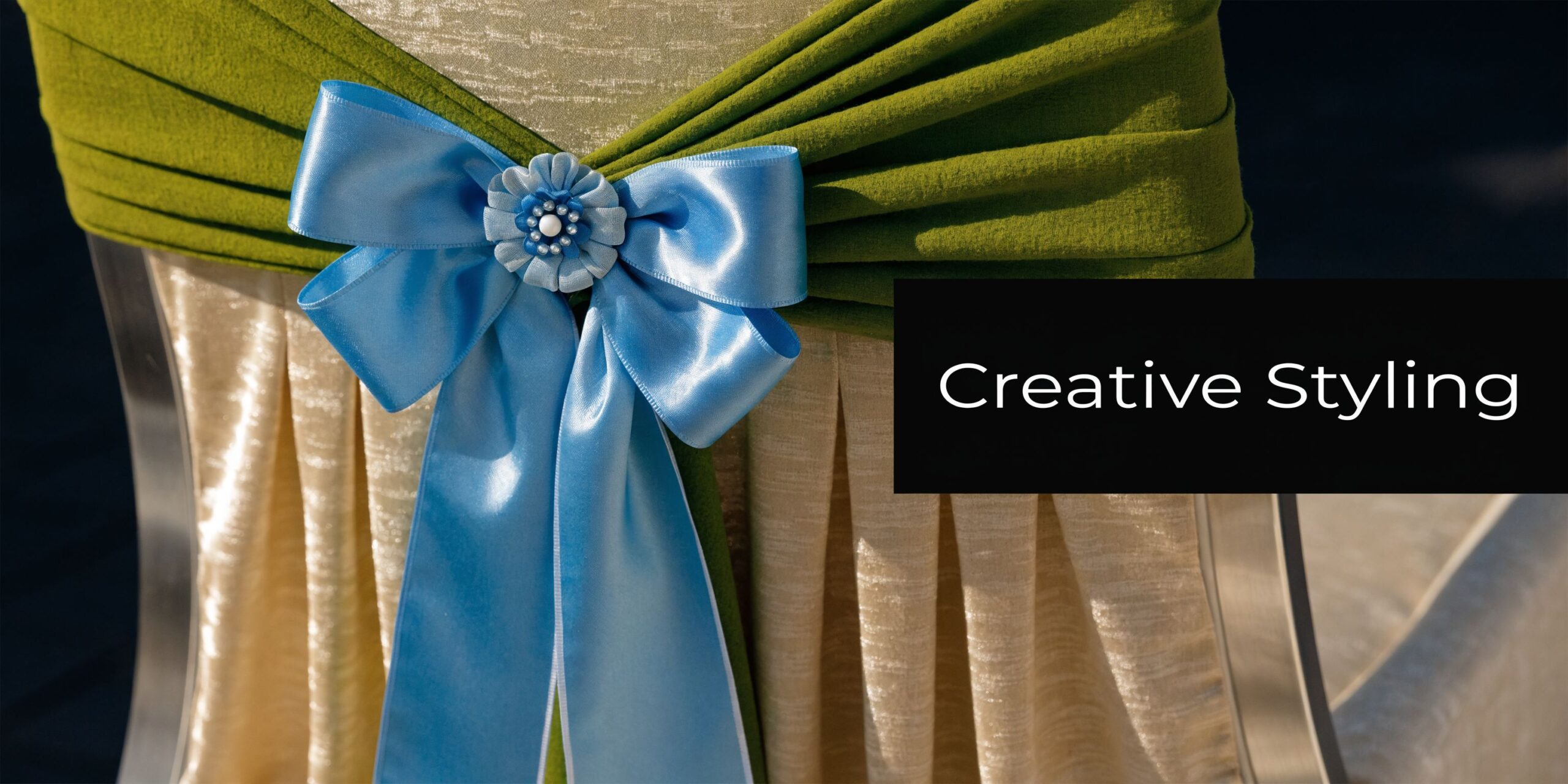
The sash changes the tone of the room
A wedding in a lined marquee with soft florals often suits organza. It catches light lightly and gives a floaty finish that does not weigh the chair down.
A more polished evening reception may lean toward satin. That brings a richer surface and works well when the tables include charger plates, glassware, and more formal linen.
For rustic settings, hessian or textured fabric ties can work, especially where the brief includes wood, foliage, or a barn-inspired look. In a marquee, though, these need balance. Too much texture can start to feel heavy if the rest of the room is already busy.
Tying style matters as much as colour
Clients often focus on fabric and forget the knot itself. Yet the tying method changes the chair’s shape from the back, which is the angle guests see most.
Three common looks keep appearing because they work:
- Classic rear bow for weddings and formal family occasions
- Side knot for a cleaner and less fussy finish
- Loose drape or hood style when you want softness without a bulky bow
A tightly pulled bow can sharpen a traditional cover. A looser tie can soften a fitted one. Small choices, but they alter the room.
Examples that work in practice
At a corporate dinner, plain black or white covers with a single branded sash colour usually look smarter than trying to introduce several accent tones. The chairs support the event identity rather than competing with screens, lecterns, and table centres.
At a wedding, the sash often picks up one of the quieter colours from the flowers or bridesmaids’ dresses rather than the dominant one. That tends to age better visually than matching everything exactly.
For bridal styling inspiration beyond chairs, some couples find it useful to look at guides on coordinating waist detail and fabric accents. One relevant example is this piece on how to choose and style bridal sashes, which helps show how small fabric details can pull a wider look together.
Styling tip: If the room already has strong coloured uplighting, keep the chair accessory simpler. Lighting changes fabric colour more than people expect.
Avoid the over-dressed chair
Not every chair needs a full cover, sash, brooch, flower, and extra drape. In fact, that often works against the room.
A better approach is to decide where detail should sit:
| Event style | Chair finish that usually suits it |
|---|---|
| Formal wedding | Full cover with soft bow or neat knot |
| Modern reception | Fitted cover with minimal sash |
| Rustic celebration | Simple cover with textured tie |
| Corporate event | Clean cover with restrained colour accent |
The most effective styling often feels measured rather than elaborate. Guests remember the atmosphere of the room, not whether every chair had a decorative flourish on it.
Your Booking Logistics and Final Checklist
A marquee wedding in Croydon can look perfectly organised at 10am and feel very different by 4pm if the weather turns, the ground is damp, or access runs late. Chair covers are often treated as a finishing touch, but from the hire side they sit much closer to the logistics plan. If the quantities, chair model, fitting method, delivery slot, and pack-down responsibility are not confirmed early, the problems usually show up on site.
For UK marquee events, those details matter even more than they do indoors. Moisture, grass, matting, uneven ground, and last-minute layout changes all affect how covers are delivered, fitted, and collected. A fabric that looks fine in a showroom may crease badly in a damp marquee or pick up marks during setup if the flooring is still being finished.
Pricing matters, but coordination usually matters more. Venue-supplied décor can look simple on paper, yet costs often climb once fitting, timing restrictions, and substitutions are added. Local bundled hire often works better because the same team is already handling the marquee, furniture, and access plan, so fewer details get lost between suppliers.
Why bundled hire usually saves hassle
If chairs come from one company, covers from another, and the marquee from a third, someone has to keep all three versions of the plan aligned. On busy wedding weeks, that is where mistakes start. One supplier works from the old layout, another assumes all banqueting chairs are the same, and the issue only appears once the room is being dressed.
A Croydon-based marquee provider can usually spot practical conflicts early because they know the local venues, residential access limits, and setup windows. They can also flag the small things that affect chair covers at marquee events, including:
- whether the chair style suits the flooring and ground conditions
- whether the delivery route stays dry and clean enough for lighter fabrics
- whether the turnaround between marquee build and styling is realistic
- whether the guest layout leaves enough room to fit covers neatly without slowing the full setup
Premier Marquee Hire also offers site visits and CAD layouts on request, which helps when guest numbers, aisle widths, and final chair counts are still shifting.
Questions worth asking before you book
Ask about the process, not just the colour card.
Ask about fit and setup
A reliable supplier should be able to answer these clearly:
- Have you fitted covers on this exact chair before
- Can we test a sample on the actual chairs going into the marquee
- Is fitting included in the price, or are covers delivered for someone else to put on
- What happens if the venue or furniture supplier swaps part of the chair batch
That sample check matters more outdoors. In marquees, even a slight mismatch looks more obvious because rows are often more exposed and lighting is flatter in daytime.
Ask about hire period and collection
Collection catches people out all the time, especially after late receptions.
Clarify:
- Whether the quoted rate covers a single day or a wider hire window
- The delivery and collection times
- Whether covers are collected after the event or the next day
- Whether your team needs to remove sashes or covers before collection
- How wet or muddy items are handled after an outdoor event
For marquee bookings, ask specifically what happens if rain affects pack-down. Some fabrics cope well with light damp and standard laundering. Others can mark, stretch, or need separate handling.
Ask about cleaning and damage responsibility
The terms should be plain and specific.
Check:
| Booking point | What to confirm |
|---|---|
| Cleaning | Whether standard laundering is included in the hire |
| Stains | Which marks are treated as normal event use and which are chargeable |
| Tears or burns | How repair or replacement costs are calculated |
| Wet weather exposure | Whether outdoor conditions change liability |
| Missing items | How shortages are counted at collection |
Earlier planning helps more with marquees
In halls and fixed venues, chair stock is usually sitting on site. In a marquee, everything is timed. Chairs arrive, flooring goes in, tables are set, linen is fitted, and covers are often one part of a much bigger install. If one stage slips, the rest tightens up quickly.
That is why I always advise clients to fix chair numbers, chair type, and layout before worrying about minor styling changes. The earlier those decisions are settled, the easier it is to keep the right stock aside and avoid rushed substitutions.
If you are managing the wider wedding timeline as well, this wedding planning checklist for UK events is a useful way to keep furniture, marquee, and styling decisions tied to the same schedule.
Booking tip: If your guest count may change, ask for the latest date you can increase or reduce cover numbers without affecting stock allocation or transport planning.
What works in practice
Certain habits consistently lead to smoother hires.
What works
- A fitted sample on the actual chair batch
- One confirmed count sheet linked to the final layout
- A local team that understands the venue access and marquee setup order
- Clear written confirmation of who fits, removes, and collects the covers
- Fabric choices that suit outdoor use, not just showroom appearance
What causes problems
- Booking covers before the chair model is confirmed
- Assuming "universal" covers will fit neatly enough for wedding photos
- Relying on venue images instead of checking the actual furniture being delivered
- Leaving final quantities too late in peak season
- Changing chair type after the cover order is confirmed
A practical final checklist
Use this before confirming any hire chair cover order.
The chairs
- Chair type confirmed, with photos if needed
- Measurements checked against the actual stock going into the marquee
- Sample fitted before sign-off
- Mixed chair batches checked instead of assumed identical
The numbers
- Dining chairs counted
- Ceremony chairs counted, if separate
- Top table and feature chairs included
- A small reserve allowed for
- Any staff or service chairs excluded on purpose
The logistics
- Delivery slot confirmed
- Setup responsibility confirmed
- Collection timing confirmed
- Cleaning terms confirmed
- Damage terms understood
- Wet weather procedure confirmed
- Access route and unloading point agreed
The value check
- Venue décor pricing compared against local hire
- Bundled pricing requested if chairs, tables, or marquee items are also being hired
- Site visit or layout support requested where the setup is complex
The strongest bookings are usually the clearest ones. Once the practical points are settled, chair covers stop being a source of stress and perform their function. The room looks finished, the setup team knows what they are doing, and the event starts on time.
If you are planning an event in Croydon, London, Surrey, Kent, or nearby areas and want practical advice on chair covers alongside marquee and furniture hire, you can request a quote from Premier Marquee Hire.
Sorry, the comment form is closed at this time.