

08 Apr What Is a Mehndi Ceremony? A UK Planning Guide (2026)
Planning a Mehndi at home often starts with a lovely idea and a slightly worrying reality. You want colour, music, family, fresh food, a comfortable seat for the bride, enough room for aunties, cousins and children, and you need it all to work even if the Croydon sky changes its mind halfway through the afternoon.
That is exactly where many families get stuck. They understand the feeling they want, but they are less sure about the setup that makes it run smoothly in a UK garden.
Your Guide to the Perfect Pre-Wedding Celebration
A Mehndi should feel relaxed, welcoming and full of life. In practice, it is also an event with real logistics. The bride may be seated for hours. Guests need space to move, eat and chat. Henna artists need light, steady tables and calm working areas. If the celebration is outdoors, everyone also needs shelter from wind, showers and damp ground.
In South London and the surrounding boroughs, I often see the same pattern. A family has a good-sized garden, a clear vision for a bright pre-wedding party, and then a list of practical questions starts appearing. Where does the bride sit so photographs look good and she stays comfortable? How do you stop heels sinking into the lawn? What happens if it rains just after the first guests arrive?

A good Mehndi setup answers those questions before the first tray of drinks comes out. That is why understanding what is a mehndi ceremony matters, but understanding how to host one in Britain matters just as much.
Why UK families need a practical plan
The ceremony itself is rooted in tradition, but the venue choices are often very modern. A London or Surrey garden can become a superb Mehndi space if the layout is thought through properly.
What tends to work well is:
- A defined bridal area with a decorated seat, shade or cover, and enough room for artists to work comfortably
- Separate guest zones so eating, dancing and henna application do not clash
- Dry flooring and lighting for comfort, photographs and safe movement
- A weather backup built into the plan rather than added in a panic
A Mehndi feels effortless when the practical side is organised early. The less guests notice the logistics, the better the celebration usually runs.
The Heart of the Celebration What Is a Mehndi Ceremony
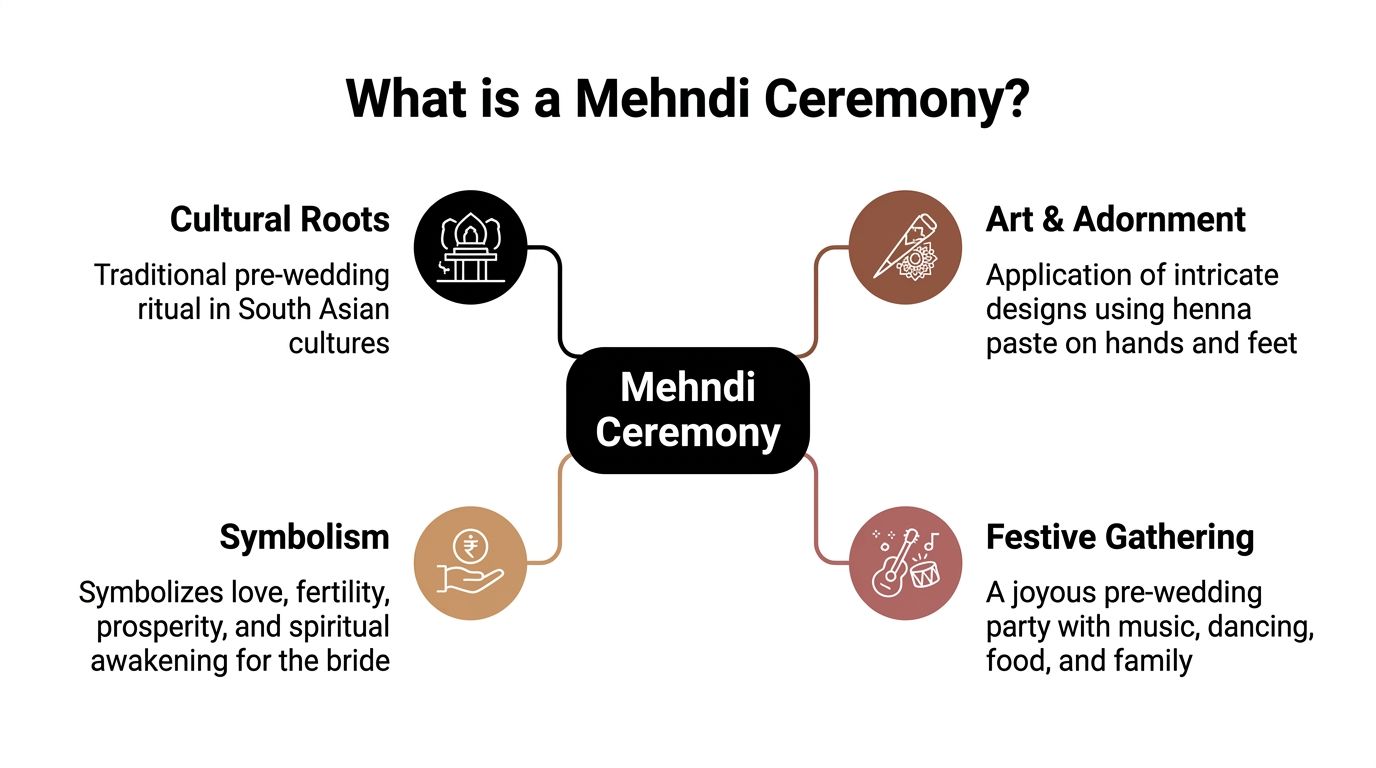
A Mehndi ceremony is a pre-wedding celebration in South Asian traditions centred on the application of henna to the bride’s hands and feet. It is both a ritual and a party. Families gather, music plays, food is served, and the bride’s henna becomes one of the visual highlights of the wedding week.
Mehndi is about blessing, beauty, and shared celebration. The henna designs are often intricate and personal, and the event gives friends and relatives time to come together before the formality of the wedding day itself.
The meaning behind the ritual
Henna has long been associated with joy, prosperity and protection in wedding traditions. Families may have their own customs, but the ceremony usually carries the sense of preparing the bride for married life with warmth, celebration and blessings from those closest to her.
The stain itself also has symbolic weight. Many families see rich colour as auspicious and connected to affection, happiness and a strong start to marriage. That symbolism is one reason Mehndi is never treated as a minor extra. It is often emotionally important in its own right.
In the UK, this is not a niche custom. Over 70% of British Indian and Pakistani couples incorporated Mehndi as a key pre-wedding event in 2023, and South Asian wedding spending reached £7.5 billion in 2024 according to the verified data linked via Wikipedia’s Mehndi overview.
How it fits into a modern UK wedding
British South Asian weddings often blend heritage with local realities. That means a Mehndi may still include traditional henna, singing and family rituals, but the setting might be a garden in Croydon, a hired outdoor space in Surrey, or a marquee beside the family home.
That flexibility is one reason the event has become so established here. It can be intimate or lively. It can lean traditional, contemporary, or a mix of both.
A short visual gives a feel for the atmosphere and style many couples aim for:
What makes Mehndi different from other wedding events
Unlike the wedding day itself, a Mehndi usually allows more time for conversation, informal family moments and playful interaction. Guests can mingle while artists work. Music can build gradually. The bride is often the focal point, but the event still feels communal rather than formal.
That balance is what makes it special:
- It is visual. Henna, florals, fabrics and outfits all shape the mood.
- It is social. Families meet, relax and spend time together.
- It is transitional. The celebration sits in that meaningful space just before the wedding.
Key Rituals and Traditions of a Mehndi Night
A Mehndi night usually begins gently. Guests arrive, greet the family, settle in with drinks and find their place in the space. The bride is often led to a decorated seat or low stage area, where the henna artist starts the main application.
From there, the energy builds. Music gets louder, relatives start dancing, and the event shifts between ritual and celebration in a way that feels very natural.
The bride’s henna application
The central moment is the bride’s Mehndi. Her designs are usually the most detailed, often extending across the hands and feet with patterns chosen to suit her outfit, family style or personal taste.
In many families, there is also a playful element. The groom’s initials may be hidden within the design for him to find later. It is a small detail, but it adds personality and becomes part of the storytelling around the wedding.
Because the bride sits for a long stretch, comfort matters more than people expect. A beautiful seat without arm support or room for the artist quickly becomes frustrating. Cushions, nearby water, and easy access for photography all help.
Guests, music and the party atmosphere
Once the bride’s application is underway, the wider celebration tends to spread around her. Guests may have lighter henna designs applied while others head straight for food, music or the dance area.
You often see a lively mix of activities happening at once:
- Guest henna stations for simple hands-only designs
- Family performances with choreographed dances or informal singing
- Photo moments around floral backdrops or a bridal seating area
- Food service that allows guests to eat without crowding the artists
Some Mehndi nights stay quite traditional and family-led. Others flow into a fuller Sangeet-style evening with a DJ, speeches and a more obvious dance floor. Both can work well. The key is making the layout support the type of event you want, rather than trying to force every tradition into one small space.
The strongest Mehndi events usually have one clear focal point. If everything competes at once, the bride’s ceremony can get lost in the noise.
What guests usually experience
For guests, Mehndi is often one of the most enjoyable parts of the wedding week because it feels warm and informal. They can dress brightly, move around freely and take part at their own pace.
A typical guest experience might include arriving to music, greeting family, watching the bride’s henna begin, having a small design applied, eating, joining a dance, then returning later to see how the bride’s patterns have developed. It is festive, but not rushed.
That rhythm is why a Mehndi works so well in a garden or marquee environment. People rarely stay in one place the whole time. They circulate.
How to Plan Your Perfect Mehndi Ceremony
The best Mehndi planning starts with timing. Not décor. Not catering. Timing determines whether the bride enjoys the experience and whether the henna has the chance to develop properly before the wedding.
According to the verified data, the ceremony should be held 48 to 72 hours before the wedding for the deepest stain, and consistent temperatures of 18 to 22°C can help, with summer marquee events sometimes producing 20 to 30% darker stains. The same source also notes that a bride’s application typically takes 4 hours. That guidance comes from the verified reference to Find Love IA’s guide to Mehendi ceremony planning.
Timing the event properly
If the wedding is on a Saturday, many families find that a Wednesday or Thursday Mehndi gives enough breathing room. It allows the colour to deepen without putting the bride under pressure the night before the ceremony.
That timing also affects your schedule on the day. If the bridal application takes hours, the bride cannot be expected to greet every guest, pose constantly and move around the venue.
A sensible running order includes:
- Guest arrival first, so the event begins socially rather than with everyone watching the setup
- Bridal henna started early, before the party reaches full volume
- Food served while application continues, so guests stay occupied
- Dancing later, once the key application stage is well underway
What hosts should think through in advance
A Mehndi is more comfortable when expectations are clear. Guests generally do not need the same formal briefing as on a wedding day, but the host should still think through flow, dress code, and who is managing each moving part.
Useful planning points include:
- Clothing: Ask the bride to wear something comfortable enough for long seating and easy access to hands and feet.
- Guest communication: Let guests know if they should expect outdoor areas, lawn surfaces or a combined indoor-outdoor setup.
- Artist working conditions: Good light, steady tables and enough personal space make a visible difference.
- Aftercare planning: The bride needs somewhere dry and calm once the henna is on.
If you are still mapping out the wider wedding week, a practical wedding planning timeline can help place the Mehndi alongside the rest of the key bookings and deadlines. For a more local checklist, this UK-focused guide is also useful: https://premiermarqueehire.co.uk/2025/12/23/wedding-planning-checklist-uk/
What does not work well
The biggest planning mistakes are usually simple ones. Starting too late leaves the bride stressed. Overloading the garden with furniture kills movement. Putting the dance floor next to the artists creates noise and crowding right where concentration is needed.
The event should feel easy to move through. If guests have to squeeze past chairs, cables or buffet queues to reach the bride, the layout needs rethinking.
Creating the Ideal Venue with Marquee Hire in London
For a UK Mehndi, a marquee often solves problems that a hall or open garden alone cannot. It gives you cover, flexibility and a layout built around the actual rituals of the evening rather than the fixed shape of someone else’s venue.
That matters because British weather rarely cooperates on command. Verified data notes that South East England sees over 150 rainy days annually, and 68% of London couples prioritised weatherproofing for pre-wedding functions in a 2025 survey, making all-season marquees with flooring and heating a popular answer. That is drawn from the verified reference to The Knot’s Mehndi party page.
Why marquees suit Mehndi particularly well
A Mehndi is not just seated dining. It needs separate moods in one space. The bride needs a focal area. Guests need room to circulate. Music needs somewhere to land without taking over the artist stations.
A marquee handles that better than most fixed venues because the layout can be built around the event rather than adapted afterwards.
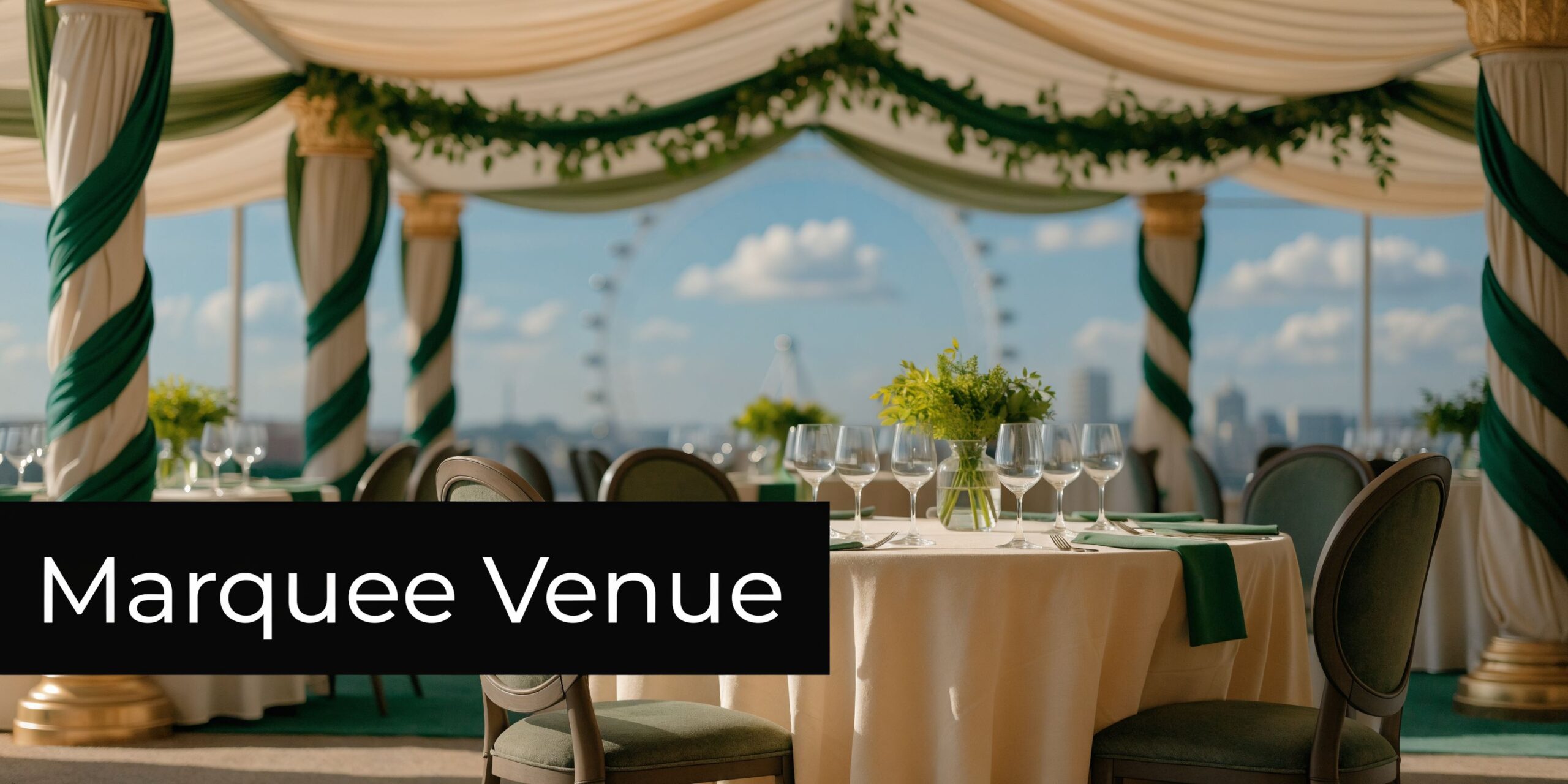
In Croydon, Bromley, Sutton and across Surrey, the main advantages are practical:
- Weather cover for guests, décor and henna drying time
- Flooring over grass so chairs, heels and serving equipment stay stable
- Controlled lighting for artists, photography and evening atmosphere
- Heating options when the temperature drops after sunset
- Flexible zoning for dining, dancing, the bride and guest henna
Layout decisions that make the event smoother
The strongest marquee layouts separate activities without making the event feel fragmented. One side can hold the bridal stage and artist area, another the dining or lounge seating, with an open middle section for music and dancing later in the evening.
For example, if a family wants a lively atmosphere but also wants the bride calm while her design is being applied, I would keep the henna stations away from speakers and food queues. Noise and traffic build quickly around buffets and bars.
A few layout choices usually pay off:
- Put the bride on a visual focal line so guests see her as they enter
- Keep the artist area bright with steady, flattering lighting
- Use flooring throughout, not only in the central section
- Leave clear walkways so people can circulate without bumping into seated guests
- Give caterers their own service zone rather than sharing guest traffic space
Garden reality in London and Surrey
Many homes have enough outdoor space for a very good Mehndi, but the shape of the garden matters as much as the size. Narrow side access, uneven lawns, low branches and neighbouring fences all affect what can be installed comfortably.
A proper site check is beneficial here. Companies that offer marquee planning for pre-wedding events, including details such as seating, lighting and furniture, can map out what is realistic before anything is booked. One local example is https://premiermarqueehire.co.uk/2026/01/02/mehndi-marquee-hire-london/, which outlines options for Mehndi-specific marquee setups in London.
A marquee should not just cover the party. It should improve how the ceremony works, from guest movement to the bride’s comfort to what happens if the weather turns.
How to Budget for Your UK Mehndi Ceremony
Budgeting for Mehndi works best when you split it into essentials and atmosphere. Essentials are the items that make the event function. Atmosphere covers the styling choices that make it feel personal.
Verified data puts a UK Mehndi at £2,500 to £3,750, with professional henna artists in London charging £300 to £800. The same verified source says 42% of couples are choosing cost-saving garden marquees over halls, saving an average of 30 to 40% on venue costs. That information comes from the verified reference to Wikipedia’s henna ceremony page.
Where the money usually goes
The main costs tend to sit in a few obvious areas. Henna, venue setup, catering and seating usually take priority before décor extras.
Here is a simple planning view.
| Expense Item | Estimated Cost (London/Surrey) | Notes |
|---|---|---|
| Overall Mehndi budget | £2,500 to £3,750 | Typical verified UK range |
| Professional henna artist | £300 to £800 | London pricing for professional artists |
| Venue choice | Varies | Garden marquees may reduce venue spend compared with halls |
| Catering | Varies | Depends on menu style and service format |
| Décor and furniture | Varies | Stage seating, tables, linens, florals and lighting can add up |
Hall versus garden marquee
A hall can look straightforward on paper, but it often brings trade-offs. You work around fixed access times, limited setup windows and a room shape you cannot change. You may also need to bring in décor to soften a space that feels generic.
A garden marquee often gives you more control. You can place the bride where natural photographs work best, keep the event close to home, and shape the guest areas around the natural flow of the ceremony.
That does not mean marquees are automatically cheaper in every case. If the garden needs extensive groundwork or specialist access, costs can rise. But for many families, the flexibility and potential venue savings make the numbers more attractive.
If you want to compare marquee spending in more detail, this guide offers a useful local overview: https://premiermarqueehire.co.uk/2026/02/07/cost-of-marquee-wedding/
A practical budgeting approach
Start with the essentials first, then add the details that matter most to your family. Usually that means:
- Henna artist and seating setup first
- Cover, flooring and guest comfort next
- Food and service format after that
- Decorative extras last
The easiest way to overspend is to commit too early to statement décor without locking in the basics. A lovely floral wall is no help if the bride is cold, the walkway is muddy and guests have nowhere sensible to sit.
Frequently Asked Questions About Mehndi Ceremonies
What should guests wear to a Mehndi?
Bright, festive clothing is usually welcome. Guests should also dress for the venue. If any part of the event is in a garden, advise people to think about practical footwear, especially if there may be lawn, decking or temporary flooring.
How should the bride care for her henna after the ceremony?
The bride needs a dry, comfortable place to sit while the paste sets and develops. This is one reason venue comfort matters so much. A cold, damp or cramped environment makes aftercare harder than it needs to be.
Can a Mehndi and Sangeet happen together?
Yes, many families combine them. The question is not whether it is allowed. The question is whether the space supports both. If you want formal performances, guest henna, food service and a bridal stage in the same event, the layout needs clear zones so one activity does not disrupt another.
Do you need power, lighting and heating in a marquee?
In most cases, yes. Henna artists need good light, caterers need reliable service space, and evening guests will notice the temperature drop even in warmer months. A marquee that only provides cover is rarely enough for a smooth Mehndi.
Is a garden Mehndi a good way to control costs?
Often, yes, especially if you already have suitable outdoor space. Families who are trying to keep the wider wedding budget under control may also find broader planning advice useful, such as this guide to planning a wedding on a budget, which helps with priorities across the whole celebration.
What is the one thing hosts underestimate most?
Comfort. People focus on colours and décor first. Guests remember whether the event felt easy, dry, welcoming and organised.
If you are planning a Mehndi in Croydon, London, Surrey or the surrounding counties, Premier Marquee Hire can help with practical marquee options, site visits, layout planning and weather-ready setups for garden celebrations.
Sorry, the comment form is closed at this time.