

12 Apr Bar Hire for Party: Ultimate Guide for Your Event
You’ve booked the marquee. The garden works. The guest list is growing. Then the practical question lands: what are you doing about drinks?
That is usually the point where people realise a few bottles on a trestle table will not carry the night. For a party in Croydon, Bromley, Sutton, Wimbledon or Surrey, the bar often becomes the busiest point on site. It shapes the first impression, controls queueing, affects staffing, and has a direct knock-on effect on licensing, power, flooring, access and clean-up.
For indoor venues, a bar can be an afterthought. For a marquee event, it rarely can. You are building a temporary venue, which means the bar has to be planned as part of the room, not dropped in at the end.
This guide is written from the practical side of event planning. It is for hosts arranging birthdays, weddings, Mehndi functions, corporate launches and private parties across London and the surrounding boroughs. If you are comparing dry hire against staffed service, wondering whether you need a Temporary Event Notice, or trying to work out where the bar should sit inside a marquee without creating mud, queues or electrical headaches, this will help you make sensible decisions.
Why Your Party Deserves More Than a Few Trestle Tables
A proper bar changes how a party feels.
I have seen this happen many times with garden marquee events around South London. The original plan is often simple enough: set up some drinks near the side wall, add ice buckets, and let guests help themselves. On paper, it sounds easy. In reality, someone ends up policing stock, glasses gather in odd corners, the area looks messy by early evening, and guests drift around searching for mixers, bin space or a bottle opener.
A hired bar solves several problems at once. It gives the event a social centre. It creates a natural meeting point. It keeps service organised. It also makes the whole marquee feel intentional.
At a wedding, that might mean a timber-fronted bar dressed with florals and candlelight. At a corporate function in Croydon, it could be a clean illuminated unit with branding and a back bar that matches the brief. At a family celebration in Bromley, it may be a compact staffed setup that keeps traffic away from the dining area.
The difference is not just visual. It is operational.
The bar is part of the event flow
Guests tend to orient themselves around three things: the entrance, the seating, and the bar. If the bar is improvised, the room often feels improvised too. If the bar is planned properly, the whole event feels calmer.
That same logic applies to furniture around it. In outdoor settings, uneven lawns quickly expose weak furniture choices, which is why resources on self-stabilising tables are useful when you want drinks areas to feel solid rather than wobbly. It is a small detail, but guests notice it immediately when glasses start rocking.
Practical takeaway: the bar should not be treated as a drinks station only. It is part service point, part focal feature, part traffic-control tool.
If you are still shaping the overall event layout, it helps to think about the marquee and bar together rather than separately. A broader planning guide on party marquees is useful at this stage: https://premiermarqueehire.co.uk/2026/01/07/marquees-for-parties/
Choosing Your Perfect Bar Setup for Any Event
“Bar hire for party” can mean very different things. Some clients picture a polished mobile cocktail bar. Others want a compact serving station for beer, wine and soft drinks. Some need a full-width custom frontage that feels built into the marquee.
The right choice depends on four things: space, style, service speed, and what kind of event you are hosting.
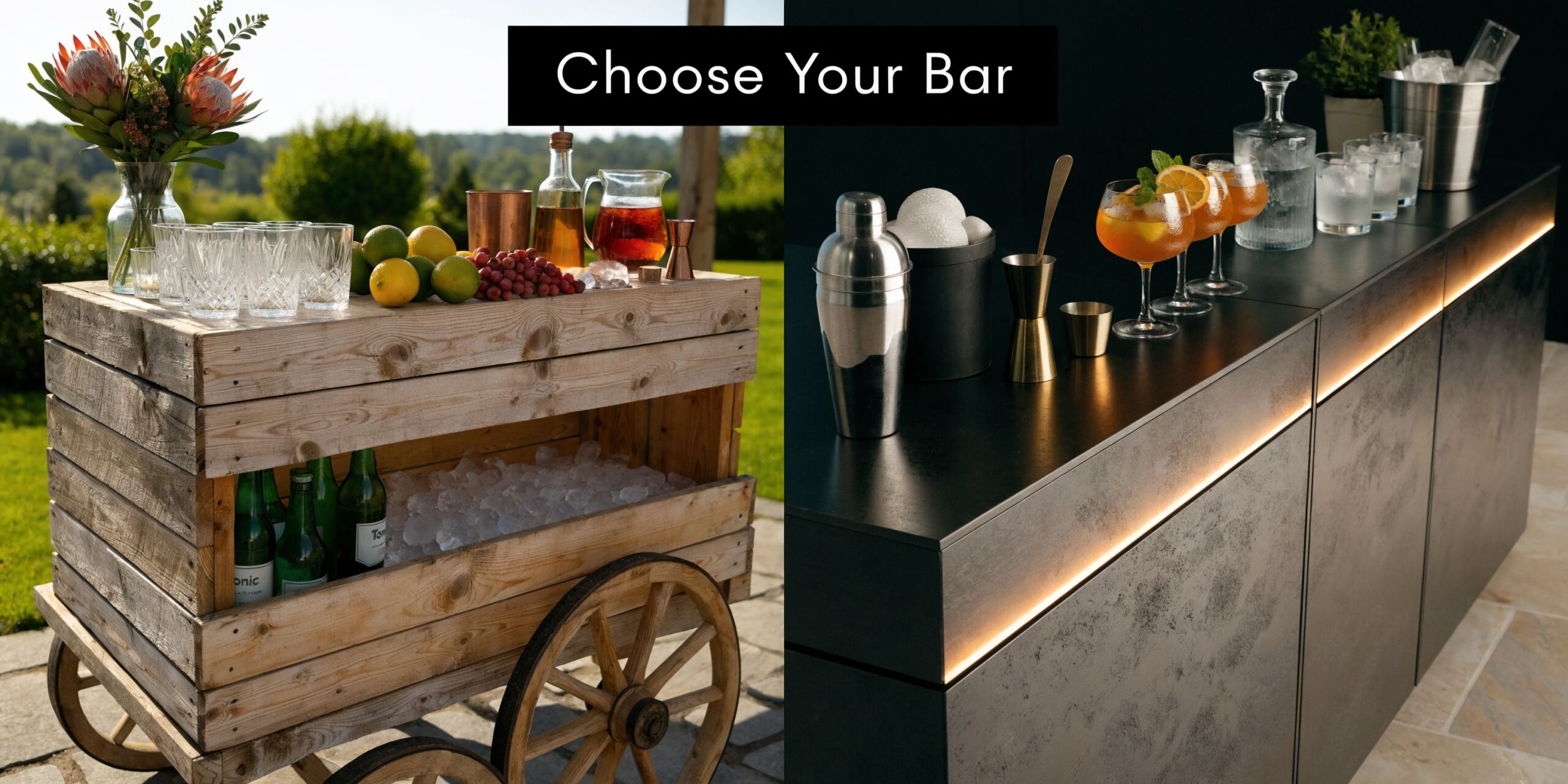
Mobile bar units
A mobile bar unit is the most common option for private parties and weddings in marquees. It usually arrives as a self-contained front bar with shelving, working space for staff, and room for under-counter storage or nearby refrigeration.
These bars work well because they look finished. They can also suit different styles, from black gloss and mirror finishes to rustic wood.
Best for:
- Weddings: They create a focal point without needing a permanent venue bar.
- Corporate events: They can look smart, branded and neat for launches or client evenings.
- Larger private parties: They handle steady footfall more comfortably than a makeshift setup.
Pros:
- Strong visual impact: The bar looks like part of the event design.
- Better service flow: Bartenders get a proper working area.
- Flexible placement: It can usually sit on one side of the marquee or anchor the back wall.
Trade-offs:
- Needs footprint space: A decent bar takes more room than people expect.
- Often needs power nearby: Especially if using fridges, till systems or illuminated fronts.
- Access matters: Narrow side paths and stepped gardens can limit what can be delivered.
For anyone exploring drinks-led event setups more broadly, this guide on setting up a mobile hot chocolate stand at events is useful because it shows how much service design depends on power, stock handling and guest flow, even when the drinks are non-alcoholic.
If you are comparing London-specific options, this page is a sensible next step: https://premiermarqueehire.co.uk/mobile-bar-hire-london/
Pop-up bars
Pop-up bars are lighter, simpler and often better for smaller parties. They are useful where space is tight or where the event is more casual.
In Purley or Streatham garden settings, this can be the right answer when you do not want a large structure dominating the marquee. A pop-up bar can serve wine, bottled beer, fizz, basic spirits and soft drinks very well.
These setups are less theatrical, but they are often more practical.
Where they work best
- Smaller birthdays
- Family gatherings
- Afternoon garden parties
- Events where most drinks are pre-selected and simple
What to watch
- The working area behind the bar can be tight.
- Cocktail-heavy service slows down quickly.
- They need careful dressing or they can look temporary in the wrong way.
Static or custom-built bars
At the top end, some events use a static or custom-built bar integrated into the marquee layout. This usually suits weddings, premium private parties, and corporate events where appearance matters as much as drinks service.
A custom bar can line up with the marquee walling, flooring, lounge furniture and dancefloor. When done well, it feels like a permanent venue installation.
A side-by-side comparison
| Bar type | Visual finish | Space needed | Service speed | Best event fit |
|---|---|---|---|---|
| Mobile bar unit | Strong, polished | Moderate | Good | Weddings, corporate parties, larger celebrations |
| Pop-up bar | Simple, adaptable | Low | Fair to good for simple menus | Smaller garden parties, informal events |
| Static or custom-built bar | Highest-end | Higher | Good with full staffing | Premium weddings, launches, large marquee receptions |
Which one usually works best
For most marquee clients in London and Surrey, the safest middle ground is a mobile bar unit. It is easier to site than a custom build, more polished than a pop-up, and flexible enough for most party styles.
Tip: choose the bar after you know your marquee layout, not before. A beautiful bar that blocks the dancefloor route or creates queueing at the entrance is the wrong bar.
Staffing, Licensing, and Legal Must-Knows for UK Parties
These aspects often catch out many private hosts.
The physical bar is only one part of the booking. The more important question is who is serving, what is being sold, and whether the legal setup matches the event. For UK private parties, that distinction matters a great deal.
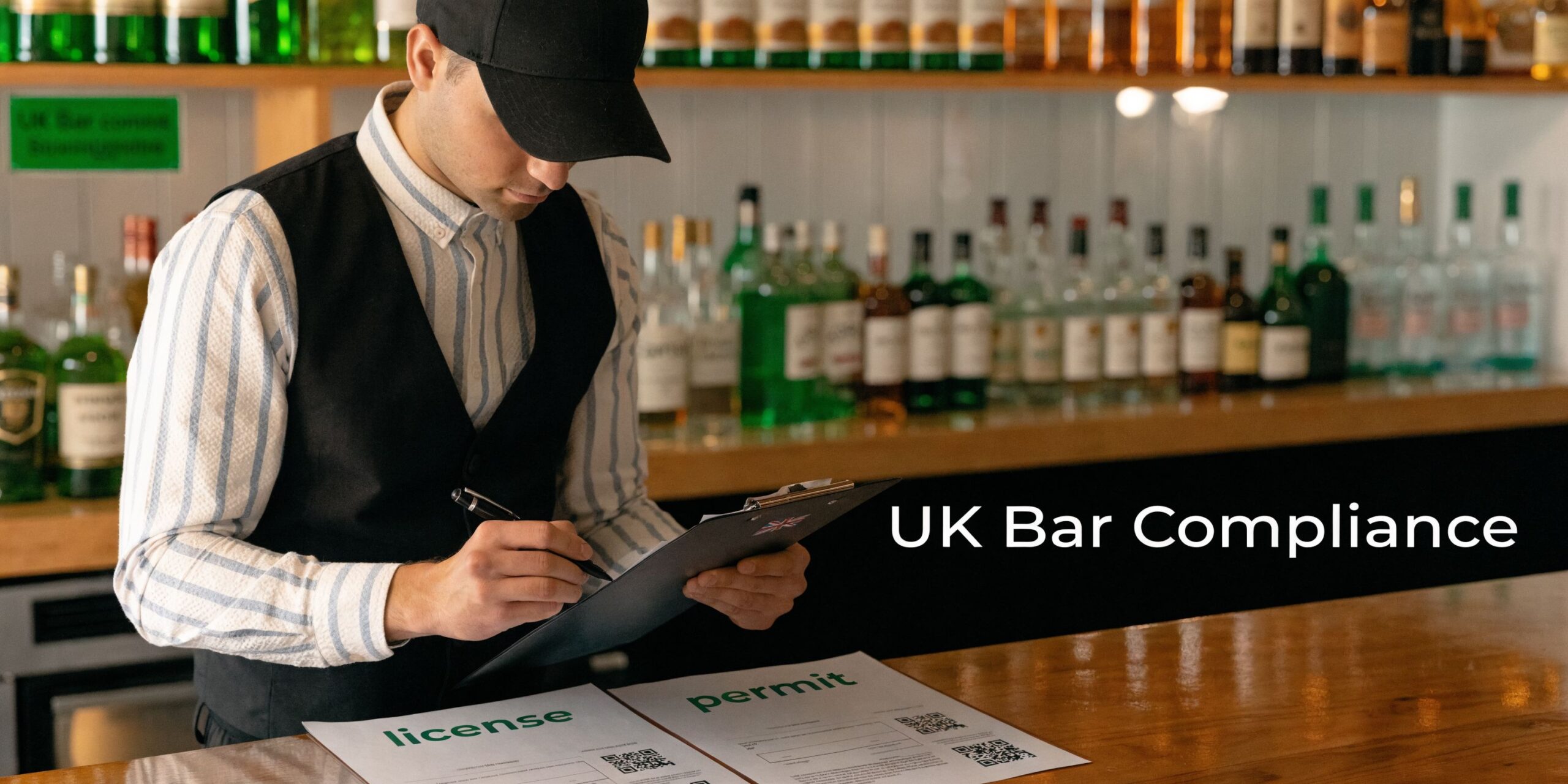
Licensing and legal compliance for private parties in the UK is strict. A Personal Licence holder must supervise alcohol sales under the Licensing Act 2003, and Temporary Event Notices are often required. With a 20% rise in licensing enforcement actions from 2024-2025 (supporting reference), getting this right is essential.
Dry hire and wet hire are not the same thing
People often use “bar hire” as if it means one service. It does not.
Dry hire usually means you hire the bar structure only, or the structure plus perhaps glassware and refrigeration. You then arrange the stock, staff and service model yourself.
Wet hire usually means a managed bar service. That may include staff, menu planning, stock handling, service setup and the licensing side, depending on the arrangement.
The reason this matters is simple. Dry hire can look cheaper at first glance, but it shifts responsibility onto the host.
When dry hire works and when it does not
Dry hire is usually fine when:
- You are not selling alcohol: Guests are helping themselves, or drinks are provided without sales.
- You already have an experienced team: Someone competent is managing stock, glassware, service and clean-up.
- The drinks offer is simple: Beer, wine, fizz, soft drinks and perhaps one or two straightforward spirit options.
Dry hire is often the wrong choice when:
- You want a cash bar
- You expect cocktails or a broad menu
- You need licensing handled cleanly
- You do not want family members tied to service all evening
A lot of hosts underestimate the burden. Someone still needs to receive stock, chill drinks, restock ice, monitor waste, manage refusals if needed, and keep the serving area tidy.
What a Temporary Event Notice means in practice
A Temporary Event Notice, often called a TEN.
For hosts, the practical point is not to try to outguess the rules based on what a friend did at another party. Boroughs can be strict, and marquee events attract attention if they are visible, busy or noisy.
A sensible process looks like this:
Decide early whether drinks are being sold
Free drinks for guests is not the same arrangement as a paid bar.Ask the bar provider exactly how the service will be structured
Do not accept vague answers. Ask who is responsible for the legal side.Check who holds the relevant licence responsibility
If alcohol sales are involved, supervision by a Personal Licence holder is the key point.Confirm the event location details
Private garden, hired land, marquee on venue grounds, and shared premises all introduce slightly different practical considerations.
Key point: if a host chooses a dry hire bar to save money, the legal and operational responsibility does not disappear. It usually moves onto the host.
A short video explainer can help if the terminology is unfamiliar:
Questions worth asking before you book
Use these questions with any mobile bar provider:
- Who supplies the staff
- Who supervises alcohol sales
- Whether a TEN is needed for this event model
- Who applies for it if required
- What insurance is in place
- Whether glassware, refrigeration and waste removal are included
- What happens if the event runs later than planned
These are not awkward questions. A serious provider should answer them clearly and comfortably.
Decoding Bar Hire Prices and Packages in London
Bar hire pricing confuses people because two quotes can look similar while covering very different things.
One supplier may be pricing for the physical bar only. Another may include staff, refrigeration, glassware and setup. A third may offer a cash bar with no direct drinks spend for the host, but with minimum trading expectations or restrictions on menu choice.
The cleanest way to compare quotes is to separate them into format, service model, and what the host is really paying for.
The three common pricing models
Dry hire
This is the simplest structure. You hire the bar itself and sometimes selected equipment.
It suits organised hosts who already have a plan for drinks service. It can work well for family events where drinks are supplied free to guests and the menu is straightforward.
The downside is workload. You become responsible for much more than many first-time hosts expect.
Cash bar
A cash bar means guests buy their own drinks. This is common at larger parties, community functions and some corporate events.
The host’s upfront spend is often lower than with a fully hosted bar. But the contract matters. Some providers expect a minimum level of trade or a guaranteed setup fee.
Open bar or hosted bar
An open bar means the host covers drinks costs. Sometimes that is unlimited for an agreed service period. Sometimes it runs to a set tab, after which the model changes.
This gives the smoothest guest experience. It also needs careful control. If your menu is broad and your service window is long, costs can drift quickly unless the package is tightly defined.
A comparison table for a typical private party
| Package Type | Host's Initial Cost | Guest Cost | Best For |
|---|---|---|---|
| Dry hire | Usually lower at the start, but the host also funds stock, staffing and setup extras | None if host provides drinks | Organised private parties with simple service |
| Cash bar | Usually setup-focused rather than drinks-led for the host | Guests pay per drink | Large parties, community events, mixed-budget occasions |
| Open bar | Highest host commitment because drinks are funded centrally | None until any agreed cap is reached | Weddings, premium celebrations, hospitality-led events |
What to look for in the quote
Do not focus on the headline figure first. Check the detail.
Look for:
- Bar unit included: what style and size is supplied
- Staffing: number of bartenders and hours covered
- Glassware: included, hired separately, or disposable only
- Fridges and cooling: especially important for marquee work
- Travel and access allowances: difficult sites can affect labour time
- Waste handling: empty bottles, cardboard, general rubbish
- Late finish charges: if the party overruns
A marquee event quote should also sit alongside your overall event budget. If you are still working out the wider spend, this pricing guide for marquees gives useful context: https://premiermarqueehire.co.uk/2026/01/21/prices-for-marquee-hire/
Practical rule: if one quote looks much cheaper, it usually includes much less. Ask for a line-by-line breakdown before comparing suppliers.
The trade-off
For London private parties, the cheapest option is not always the least expensive overall. Dry hire can save money if you are confident and well organised. It becomes false economy if you end up hiring extra staff late, buying emergency ice, or leaving family members tied to service instead of enjoying the event.
Perfecting Your Drinks Menu and On-Site Logistics
A strong bar setup does two jobs at once. It serves the right drinks for the crowd, and it operates smoothly in the prevailing conditions on site.
That second part matters more with marquee events than many people expect. You are not plugging into a ready-made venue bar. You are creating one in a temporary structure, often in a garden, on mixed ground, with residential access and weather to think about.
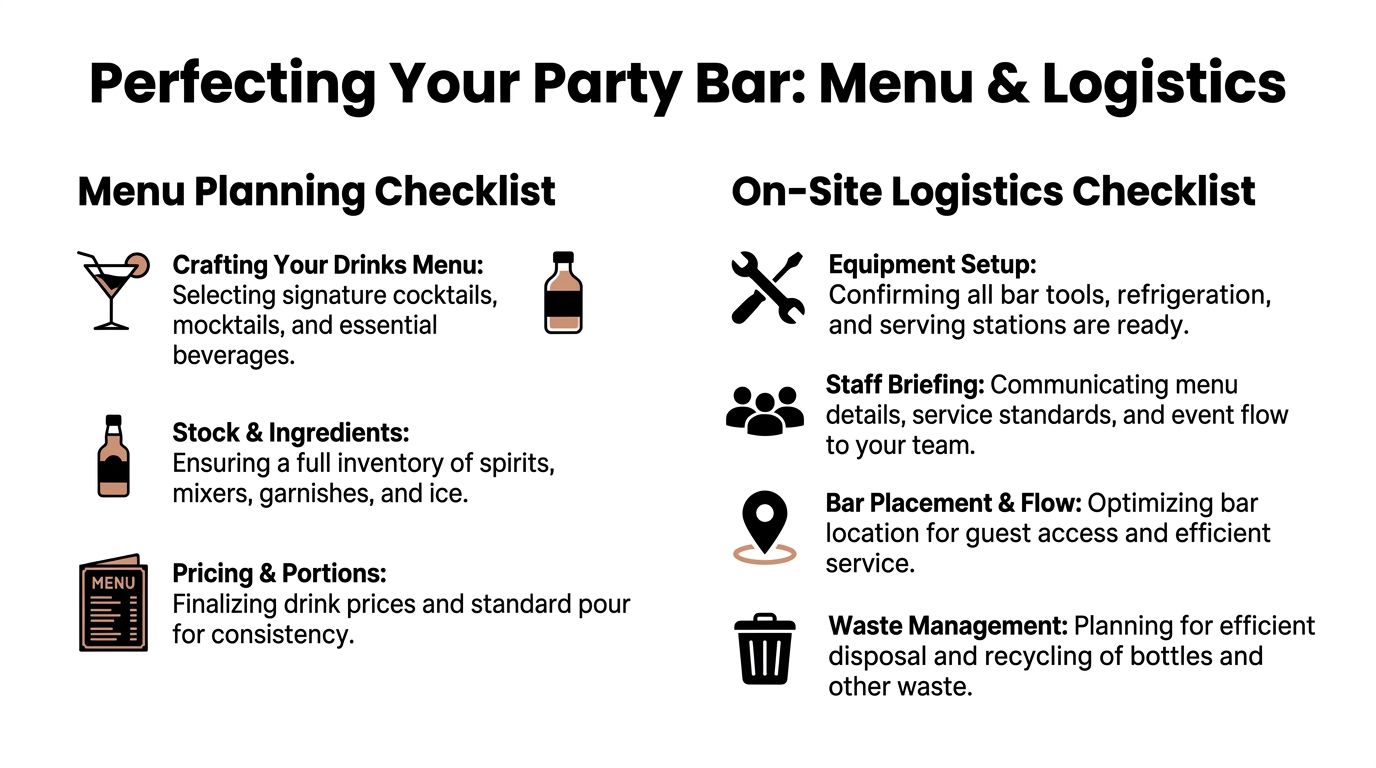
Build a menu people will order
Hosts sometimes overcomplicate the drinks menu because they want the bar to feel special. The better approach is balance.
A good party bar usually has:
- A familiar core: lager, wine, prosecco or Champagne, soft drinks, still and sparkling water
- A simple spirit range: vodka, gin, rum, whisky, plus standard mixers
- One or two signature drinks: enough to add personality without slowing service
- A proper non-alcoholic offer, not just cola and orange juice
For weddings and family celebrations, signature serves work best when they are quick to build. A spritz, a pre-batched welcome cocktail, or a simple gin-based serve is usually more practical than a long shaken menu.
For Mehndi events and community functions, the non-alcoholic side deserves real thought. Mocktails, fresh juices, flavoured sodas and well-presented alcohol-free options make the bar feel inclusive rather than split into “drinking” and “not drinking” camps.
Keep the cocktail ambition realistic
Cocktails are attractive on paper. They are slower in service.
If you expect a busy evening, choose from these models:
- Reception cocktail only: one featured drink at the start, then standard bar service
- Short menu: two cocktails and two mocktails
- Pre-batched serves: faster and more consistent than making everything from scratch
- Late-evening switch: start broad, then simplify the menu after peak time
This keeps the queue moving and helps stock planning.
Site logistics decide whether the bar works
For UK marquee events, weather resilience is key. With an increase in summer rain days in the South East, integrating waterproof bar units with proper marquee flooring is vital. Modern LED-lit and electrically heated bars can reduce slip risks by 35% in wet conditions (supporting reference).
That sounds technical, but the practical implication is straightforward. If the bar area is damp, dark or soft underfoot, service quality drops and the safety risk rises.
The marquee-specific checks that matter most
Bar placement
Do not place the bar right by the marquee entrance unless the event is very small. Guests arriving, smokers stepping out, and drinks queues all create a bottleneck.
A better position is often along one side wall or the far end of the marquee, with enough room for:
- guest queuing
- staff movement behind the bar
- nearby poseur tables or lounge seating
- access to power and stock storage
Flooring
This is one of the most overlooked details. A bar placed on soft or uneven ground never feels right.
Good flooring under and around the bar helps with:
- stable service
- safer movement with glassware
- easier cleaning
- protecting shoes and hems in wet conditions
If the event is in a garden with any slope or known drainage issues, address that before finalising the bar position.
Power
Many bar setups need more power support than hosts assume.
That may include:
- under-counter fridges
- back-bar refrigeration
- lighting
- tills or payment devices
- blenders or specialist equipment for some menus
Power runs should be planned before install day. Last-minute cables across walkways are messy and avoidable.
Access and load-in
In Croydon, Mitcham, Streatham and older parts of South London, access can be the hidden issue. Side returns may be narrow. Drives may be shared. Delivery teams may need to move equipment through the house or along a tight path.
Ask yourself:
- Can the bar physically reach the marquee position?
- Are there steps, gravel, gates or steep turns?
- Is there room for stock to be delivered separately?
- Where will empties and waste go during service?
Tip: if access is tight, mention it at enquiry stage. The right team can plan around it. The wrong team will discover it on delivery day.
Heating, lighting and guest comfort
A bar area often needs its own microclimate inside the marquee. People stand there longer. They spill drinks there. They gather in clusters there.
That is why lighting and warmth matter. Good light helps menu visibility and safer service. Gentle nearby heat helps keep that side of the marquee in use during cooler evenings rather than pushing everyone onto the dancefloor or into one warm corner.
When menu planning and logistics line up, the bar feels easy. Guests do not think about the cable run, the flooring beneath the unit, the drainage outside, or how the stock was moved in. They just notice that they got a drink quickly, the space looked smart, and the evening flowed.
The Final Steps Contract Checklist and Event Timeline
By the time you reach contract stage, most of the big decisions are already made. What protects you now is detail.
A bar booking should spell out exactly what is being provided, how the day will run, and who carries responsibility for each moving part. If anything is vague before signature, it usually becomes more frustrating later.
The contract checks worth doing properly
Read the paperwork with these points in mind.
What is included
Make sure the contract lists:
- The bar style and size
- Service hours
- Number of staff
- Glassware or disposables
- Fridges, back-bar equipment and lighting
- Delivery, setup and collection
- Breakdown and waste handling
Do not rely on “as discussed” if the detail is important to you.
Insurance and liability
Ask for confirmation of public liability insurance. If the service includes staff and alcohol sales, you want that documented clearly.
Also check who is responsible for guest damage, accidental breakages, and site-related delays.
Payment terms
Most disputes start with payment assumptions rather than dramatic failures.
Check:
- deposit amount
- balance due date
- whether extra hours are billed automatically
- how overages on hosted drinks are handled
- refund or cancellation terms
A practical event timeline
Around three months before
This is the point to secure the booking if your date is fixed.
Confirm:
- bar format
- service model
- provisional guest numbers
- marquee layout assumptions
- whether licensing steps need action
About one month before
This is when the details should tighten up.
Finalise:
- drinks menu
- opening and closing times
- staff count
- glassware choice
- bar position within the marquee
- power and refrigeration requirements
If there are dietary, cultural or non-alcoholic priorities, this is the right stage to make them explicit.
The week before
This is the admin week. It matters.
Create one clear confirmation note covering:
- delivery time window
- access instructions
- named on-site contact
- parking arrangements
- load-in route
- final run sheet
- emergency contact number for the supplier
A single written summary prevents a lot of last-minute phone calls.
Useful habit: send one final email that lists timings, access, and the exact setup location. It gives everyone the same reference point on the day.
On the event day
The host should not be solving bar logistics while getting dressed or greeting guests. Delegate one practical contact if possible.
That person should know:
- where the bar goes
- where power is coming from
- where stock can be stored
- where empties and rubbish should be placed
- who has authority to approve late extensions or extra spend
The last pre-signing sense check
Before you commit, ask yourself one blunt question: if something changes on the day, do I know who deals with it?
If the answer is no, keep asking questions. A good contract removes ambiguity. It does not create a false sense of reassurance.
Frequently Asked Questions for London & Surrey Events
Can I hire a bar for a private garden party in Croydon without it becoming complicated
Yes, if the setup matches the event.
For a smaller private party, the simplest route is often a modest bar footprint, a straightforward drinks menu, and a service model that does not create unnecessary licensing issues. Complication usually arrives when hosts mix an ambitious drinks plan with a vague staffing arrangement.
Is dry hire ever the best option for a wedding
Sometimes, but only when the couple or planner already has a capable team around them.
For most weddings, dry hire works best if the drinks offer is controlled and there is a trusted person managing stock, setup and service. If no one wants that responsibility on the day, a staffed model is normally the safer choice.
Where should the bar go inside a marquee
Usually not at the entrance and not hard against the dining layout.
The best position often gives the bar a visible presence without cutting through guest circulation. In long marquees, one side or far end tends to work well. In square layouts, a corner can be effective if queues have room to form without blocking tables.
Do I need a cocktail bar or just bartenders
That depends on the event mood.
If the party is drinks-led and style-conscious, a cocktail-focused bar can add a lot. If the guest list is broad and the aim is smooth service, a standard bar with a limited cocktail list usually performs better. Fast service beats an overcomplicated menu every time at busy private events.
What works for Mehndi events and alcohol-free celebrations
Treat the bar as a hospitality feature, not an alcohol feature.
A well-run alcohol-free bar can feel every bit as polished if it offers strong presentation, chilled service, proper glassware, fresh garnishes and a menu with variety. Mocktails, fresh juices, flavoured sodas and themed drinks often work well for family and community events.
How early should I book bar hire for party events in London
Earlier is usually better, especially for summer weekends and key wedding dates.
Even if the final menu is not ready, locking in the format and date gives you more control. Waiting too long narrows your choice of bar styles, staff availability and setup times.
What do hosts most often forget
Three things come up repeatedly:
- Power near the bar
- Enough flooring around the service area
- Clear responsibility for stock, waste and end-of-night breakdown
These sound minor. They are not. They are the details that decide whether the bar feels smooth or scrappy.
Can the bar be outside the marquee
It can, but it needs more protection and a stronger plan.
Outside bars can look brilliant for arrivals or summer receptions. In London and Surrey conditions, they need proper weather cover, lighting, stable ground and a backup plan if the weather turns. For longer service periods, most hosts prefer the reliability of keeping the main bar inside the marquee.
If you’re planning a party, wedding or corporate event and want practical help with marquee layouts, bar positioning and all-weather setup across Croydon, London and the surrounding counties, Premier Marquee Hire can help you map it out properly. Request a quote or site visit and get clear advice before you book.
Sorry, the comment form is closed at this time.