

14 Apr Long Term Marquee Hire: Your London & Surrey Guide
If you're looking at a site in Croydon, Bromley, Sutton or further into Surrey and thinking, “We need extra covered space, but not forever,” you're already in the territory where long term marquee hire makes sense.
That usually starts with a practical problem, not an event brief. A business needs trading space during refurbishment. A school needs overflow teaching space. A venue wants winter dining capacity without committing to a permanent extension. A religious organisation needs a dependable covered area across a festival season. In all of those cases, the marquee stops being a one-weekend shelter and becomes working infrastructure.
The difference matters. A short event marquee is about quick setup and presentation. A long-term structure has to cope with repeated use, changing weather, site wear, access routines, and the simple fact that people will treat it like part of the building once it's in place. That changes how you choose the frame, the flooring, the heating, the layout and the paperwork.
Beyond the Weekend When Is Long-Term Marquee Hire the Right Choice
A common London scenario goes like this. A hospitality business wants to keep covers up through the colder months, but its terrace isn't enclosed and a full build isn't realistic. Or an office in South London is refurbishing part of the main building and can't afford to lose meeting space for months. In both cases, the job isn't “hire me a party tent”. It's “give me usable space that works day after day”.
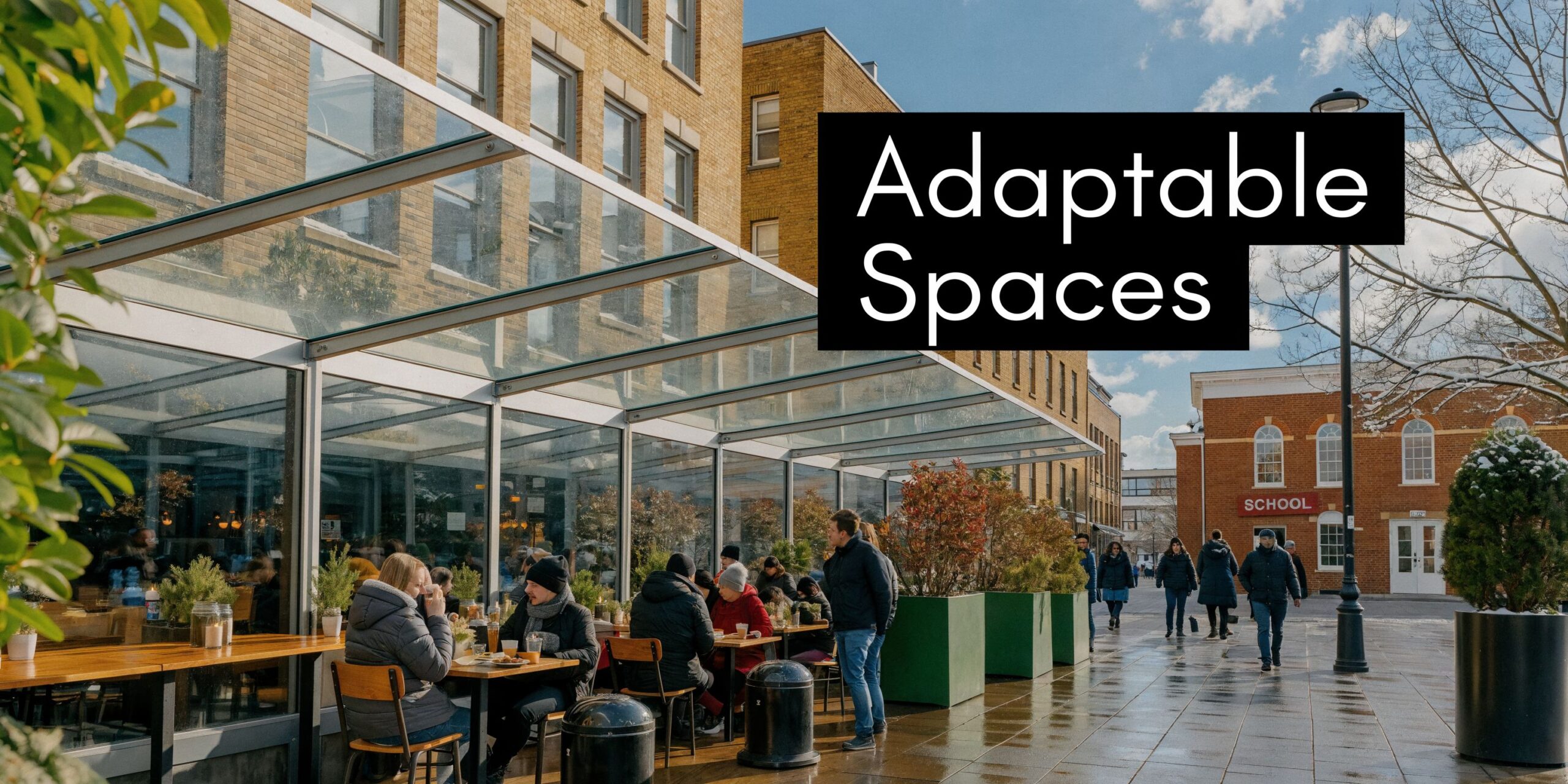
That is why long-term structures are being used for temporary cafés, meeting rooms, classrooms and workspace during renovations, as noted by Marquees and Events on long-term marquee hire. The appeal is continuity. You keep operating while the main site changes around you.
Projects that suit long-term hire
Some uses are an especially good fit:
- Venue transition space for offices, schools and community buildings that need to stay open during works
- Seasonal trading areas for restaurants, bars and food-led venues wanting more winter capacity
- Festival infrastructure where organisers need more than a pop-up footprint and want serviceable space for an extended run
- Religious and family functions where one site hosts multiple gatherings across a season rather than a single date
If you're planning food service around an outdoor programme, looking at examples of taste festivals in London helps because it shows how varied temporary hospitality spaces can become once catering, guest flow and weather cover all have to work together.
Signs you're not dealing with a normal event hire
You should be thinking long term if any of these apply:
- Daily use matters more than one-day appearance
- Staff need reliable access, not just guests arriving for a fixed start time
- Furniture, heating, power or storage stay in place
- You need the layout to function like a room, not just hold attendees
- The site will see changing weather over weeks or months
Practical rule: If the structure has to support operations rather than just host an occasion, treat it as a semi-permanent project from day one.
What tends not to work is trying to stretch a basic event setup into long-term duty. Clients sometimes focus on roof cover first and leave the rest for later. Then significant issues arise. Muddy thresholds, poor drainage, cold corners, awkward access, cable runs where people walk, and walls that made sense in mild weather but not in a wet South East winter.
A good long-term installation starts by accepting one truth early. You're not hiring “just a marquee”. You're creating temporary premises.
The Tipping Point Analysing Costs and Use Cases
The financial case for long term marquee hire usually becomes clear when you stop comparing headline hire rates and start comparing total disruption, repeat setup costs and actual time on site.
For one-off occasions, short hire is right. For repeated use over a season, it often isn't. Every fresh install means another delivery, another build, another takedown, another set of labour hours, and another round of site disturbance. Once a client knows the space will be needed again and again, that cycle starts to look expensive and inefficient.
Where the numbers start to favour long-term hire
Extended rentals can offer 25 to 50 percent savings compared with daily rates, with short-term pricing of £15 to £25 per m² per day dropping to £8 to £12 per m² per week for longer hires, driven by the efficiency of a single installation, as documented by One Six Events.
That doesn't mean every project should automatically go long term. It means the break-even point arrives sooner than many clients expect when the same structure would otherwise be installed repeatedly.
Short-Term vs. Long-Term Marquee Hire A Cost & Flexibility Comparison
| Factor | Short-Term Hire (e.g., 1-4 Days) | Long-Term Hire (3+ Months) |
|---|---|---|
| Best use | Weddings, weekend parties, single corporate events | Seasonal trading, refurbishments, repeat functions, operational overflow |
| Pricing pattern | Higher per-day cost | Lower effective rate over time |
| Installation frequency | Repeated if used multiple times | Usually one main installation |
| Site disruption | Repeats with every booking | Front-loaded, then managed |
| Layout stability | Often reset each time | Can stay configured for daily use |
| Weather planning | Focused on event dates | Must work across changing conditions |
| Operational suitability | Limited for ongoing business use | Better for continuity and workflow |
Use cases where long term makes commercial sense
A few examples come up regularly around London and Surrey:
Restaurants and hospitality venues
A covered dining extension through colder months can be more workable than repeatedly booking weekend structures around peak trading dates.
Office and building refurbishments
Temporary meeting or breakout space can keep teams on site instead of splitting functions across multiple locations.
Councils, schools and community groups
A semi-permanent covered area often solves a timetable problem faster than waiting for building works.
Festivals and recurring family events
If the same grounds host multiple dates, one stable installation is often easier to run than a string of separate builds.
Clients usually make the wrong comparison at first. They compare one weekend hire with one long-term quote. The real comparison is repeated short hires plus repeated labour, repeated downtime, and repeated site impact.
What to calculate before you decide
Use a simple checklist rather than guesswork:
- How many separate installs would short-term hire require?
- Will the space stay furnished or equipped between uses?
- Does your team need daily access?
- Would repeated build and breakdown affect trading, teaching or operations?
- Will the site surface suffer if crews keep returning?
If you're working through budgets, this guide on prices for marquee hire is a useful starting point for understanding how structure size, accessories and duration affect cost.
The tipping point isn't just financial. It's practical. Once a marquee becomes part of your weekly routine, long term usually stops being the “extra” option and starts being the sensible one.
The Crucial First Step Site Surveys and CAD Layouts
The best long-term projects are usually won or lost before installation day. Not on the frame. On the survey.
A proper site visit in London saves expensive corrections later because so many sites have hidden complications. Rear access through a narrow side return. Decorative paving that can't be damaged. Sloping lawns. Basement lightwells. Delivery restrictions. Shared service yards. Trees exactly where the corner wants to land. None of that shows up properly in a quick phone discussion.
What gets checked on a real survey
An experienced surveyor isn't just measuring length and width. They're checking how the site behaves.
- Ground condition matters first. Grass, concrete, block paving and mixed surfaces all need different approaches.
- Levels come next. Even a small slope changes flooring, thresholds and drainage planning.
- Access route can be the deciding factor. A structure that fits the garden means nothing if the kit can't reach it.
- Services need locating early. Power, water and surrounding buildings affect both layout and practical use.
- Neighbour impact matters on tighter sites, especially in built-up residential streets.
Why layout planning matters more on long hires
A short event can tolerate compromise for a day. A long-term setup can't. If people are using the space for months, poor layout becomes daily friction.
That is where CAD drawings earn their keep. They help clients see circulation routes, seating positions, catering zones, fire exits, furniture spacing and entrance points before build starts. For a wedding or a one-day party, that's helpful. For a workspace, school area or seasonal hospitality installation, it's close to essential.
A marquee can fit on paper and still fail in practice. The usual causes are door positions, pinch points, and service areas that were never planned properly.
Problems a survey prevents
The most common avoidable mistakes are rarely dramatic. They're irritating, cumulative and expensive.
- Thresholds that hold water
- Doors opening into busy walkways
- Generators placed too far from where power is needed
- Flooring transitions that create trip points
- Furniture plans that ignore column positions or support geometry
I always tell clients to treat the survey as part of the build, not an optional preamble. It's where the awkward questions get answered while changes are still cheap.
For anyone comparing options, this page on a marquee to hire gives a useful overview of how different structures suit different sites and uses.
What to have ready before the surveyor arrives
You don't need full technical drawings, but these details help:
- Your intended use of the marquee day to day
- How long you expect it to stay in place
- Who uses it, guests, staff, pupils, worshippers or mixed groups
- What needs to go inside, such as tables, bars, AV, heaters or storage
- Any site rules from landlords, venues or local authorities
A survey done well gives you two things. A realistic design and a list of constraints before money is committed. That clarity is what stops long term marquee hire from becoming a sequence of on-site compromises.
Building for Endurance Structural Integrity for All UK Seasons
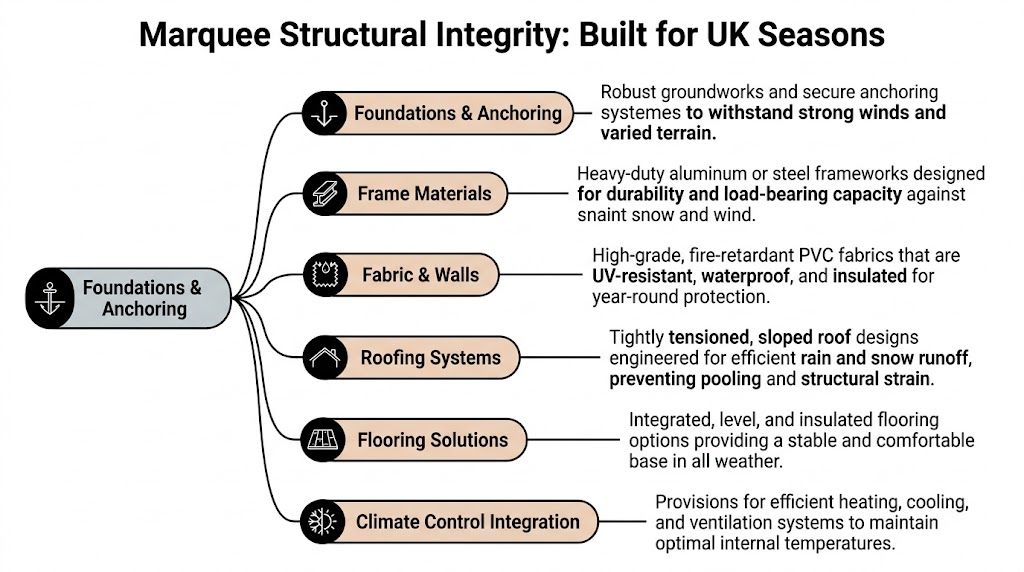
A marquee that stands for months in London or Surrey has to do more than look tidy on installation day. It has to hold its shape, resist weather, protect the interior environment and stay serviceable over time.
That changes the technical brief immediately. The frame, the bay spacing, the fabric, the anchoring and the flooring all matter more on a long-term job than they do on a weekend event.
Start with the right frame system
For long-term UK hire, modular frame tents commonly come in 6m, 9m or 12m widths, extended in 3m bays, and their aluminium frames with PVC-coated polyester fabrics are designed to withstand 5+ years of use with biannual inspections, handling wind gusts up to 60mph, according to Lifestyle Marquees.
Those dimensions matter because they tell you how adaptable the structure is. If a site is awkward but long, bay-based design gives flexibility without forcing a completely bespoke build. It also helps when clients want phased layouts, such as dining at one end and service or prep space at the other.
Materials separate durable builds from disposable ones
A long-term structure should use commercial-grade materials, not a lightweight system intended mainly for occasional social use.
Look for:
- Aluminium framing rather than lighter domestic-style alternatives
- PVC-coated fabric suitable for extended weather exposure
- A modular system that can be configured around real site constraints
- Inspection access so maintenance doesn't become awkward later
What doesn't work well is forcing a lighter structure into a long seasonal role and trying to compensate with add-ons. Once weather turns, every weakness starts showing up through movement, condensation, draughts, or wear at pressure points.
The roof cover is only one part of weather resilience. Long-term performance usually depends more on how the whole system is detailed at ground level and at junctions.
Flooring and edges are where comfort is won
Clients often think first about roof span and sidewalls. In practice, the success of a long-term installation is often decided lower down.
If flooring isn't level, stable and sensibly connected to entrances, the marquee never feels settled. People track in water. Furniture shifts. Doors catch. The structure may still be standing perfectly well, but the experience deteriorates.
A durable setup usually needs:
- Levelled flooring that suits the site condition
- Clean edge detailing at entrances
- Reliable water runoff planning around the perimeter
- Usable access points for both guests and staff
Heating, ventilation and seasonal habitability
A structure can be technically safe but still unpleasant to use. That's a common mistake with long-term hires arranged in a hurry.
Winter demands proper heating strategy. Summer demands airflow. Shoulder seasons need flexibility because warm afternoons can turn into cold evenings very quickly in South East England. The best installations are planned around occupancy patterns, not just outside temperature.
What actually fails on long-duration jobs
Long-term marquee issues usually come from planning shortcuts rather than dramatic structural faults.
- Underspecified flooring on uneven ground
- Poor drainage decisions around the perimeter
- The wrong entrance locations for prevailing weather
- No realistic maintenance access
- A layout chosen for looks rather than daily use
That is why endurance isn't just about stronger parts. It's about choosing a system that matches the site, the season and the way people will use it every week. When those three things align, a marquee feels less like temporary cover and more like a dependable extension of the property.
Navigating Permits Insurance and Local Compliance
Most problems with long term marquee hire don't start with the frame. They start with assumptions.
The biggest one is this: “It's temporary, so permission won't apply.” Sometimes that's true for short placements. For longer ones, it often isn't. If you're installing a marquee in Croydon, Bromley, Sutton or elsewhere in the South East for an extended period, you need to treat planning and compliance seriously from the start.
The short stay and long stay difference
In the UK, marquee deployments under 28 days often don't require permits under local council rules in places such as Croydon and Surrey, but installations intended for longer periods typically need to go through more formal planning permission processes. That distinction is outlined by One Six Events, referenced earlier in this guide.
The practical point is simple. Once your structure is staying beyond a short temporary window, don't rely on assumptions or what happened at a previous event.
What clients should check early
A few questions should be answered before dates are fixed:
- How long will the structure remain on site?
- Is the property residential, commercial, educational or community-use?
- Are there neighbours, shared access routes or landlord restrictions?
- Will the marquee function as operational space rather than occasional event cover?
If the answer to that final point is yes, due diligence matters even more because the marquee is acting like premises.
Compliance note: A long-term marquee may be temporary in construction terms, but local authorities and insurers will look closely at how it is actually being used.
Insurance is not a detail to leave until the end
Clients often ask whether the hire company's insurance covers “everything”. It usually doesn't, because responsibilities are shared.
The provider's public liability insurance and installation procedures are only one part of the picture. The client may still need to consider the insured use of the space, contents inside the structure, staff activity, public access and any third-party contractors working within it.
This is especially important if the marquee is being used for:
- Business operations
- Public attendance
- Food service
- Education or organised group use
- Religious or community gatherings
A structured planning mindset helps here. If you're building out your own checklist, this guide to risk assessment for events is a useful reference point for thinking through hazards, access, occupancy and responsibility, even though your own project will need UK-specific checks.
Common compliance mistakes
The avoidable errors are usually familiar:
- Assuming “temporary” means exempt
- Leaving landlord or venue consent too late
- Not confirming the intended use in writing
- Treating public access as if it were private family use
- Forgetting that utilities, heaters and generators may affect risk decisions
The safest approach is boring but effective. Ask early. Put the use in writing. Confirm whether the installation period changes the permission route. Keep insurance and operational details aligned with the actual function of the marquee.
That discipline saves far more trouble than it creates. On long hires, paperwork isn't admin clutter. It's part of the build.
Furnishing and Adapting Your Marquee Through the Seasons
A long-term marquee becomes useful when the inside works as well as the shell. That's where many projects either settle into daily life smoothly or become awkward after the first week.
Furniture, lighting, power and climate control need to be chosen for repeated use, not just first impressions. If the space is acting as dining cover, a temporary office, a school area or a family gathering venue, comfort has to hold up through changing weather and changing routines.
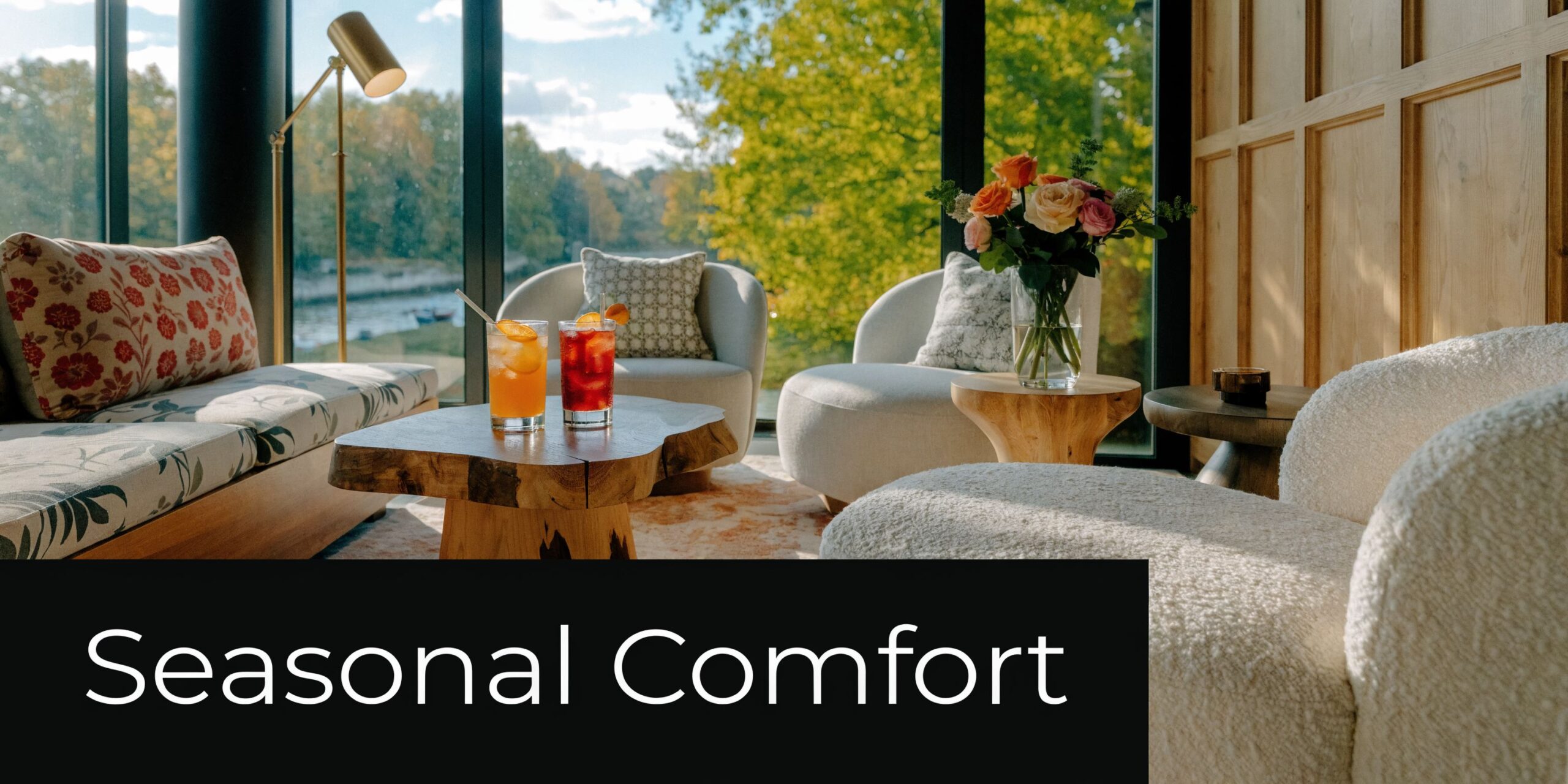
A key consideration for UK long-term hire is seasonal weather resilience, which means planning maintenance and structural adaptation around rainfall, wind and temperature shifts common in South East England, as noted by The Big Marquee Company.
What to decide before the structure goes up
The most efficient long-term installations are furnished with purpose from the outset.
- Seating style should match duration of use. Formal event chairs may suit occasional gatherings, but lounge seating or practical banqueting furniture often works better for ongoing use.
- Lighting plan should support the actual rhythm of the space. Trading, teaching, meetings and evening hospitality all need different lighting balance.
- Power distribution should be built around where people work and move, not where the nearest cable route happens to be.
- Storage needs should be considered early. Even a polished guest-facing marquee needs hidden zones for supplies, cleaning gear or staff use.
For winter-focused setups, this page on heated marquee hire is useful because heating choices affect layout, guest comfort and usable floor area.
Adapting the same space across seasons
A long-term installation shouldn't be locked into one weather pattern if it's meant to span several months.
In summer, clients often benefit from more open sides, lighter layouts and wider circulation. In colder months, the same footprint may need lining, stronger zoning and more deliberate entrance treatment to stop heat escaping every time someone comes in.
A practical seasonal checklist looks like this:
For warmer periods
- Airflow first: Keep openings and ventilation in mind when placing seating or service stations.
- Shade management: Direct sun can make one side of the marquee much less comfortable than the other.
- Flexible layout: Leave room to rework furniture if guest behaviour shifts toward the edges or entrances.
For colder periods
- Heat retention: Door positions and internal partitions make a bigger difference than most clients expect.
- Softening the space: Linings and textiles don't just improve appearance. They help the environment feel less exposed.
- Wet-weather entry planning: Mats, thresholds and sensible transition areas stop the interior looking tired quickly.
Here is a useful visual example of how enclosed event spaces can be styled and adapted for comfort over time:
What people forget until it's too late
The most overlooked items are usually the least glamorous:
- Cable routes
- Bin storage
- Cleaning access
- Coat space
- How deliveries enter without disturbing guests or staff
A marquee that looks excellent on handover can still be frustrating by week three if nobody planned for daily habits.
That's why furnishing isn't a finishing touch on long term marquee hire. It's part of the operating plan. Done properly, the same structure can feel open and airy in one phase, then warm and enclosed in the next, without needing to start again from scratch.
Frequently Asked Questions About Long-Term Hire
How often does a long-term marquee need maintenance
It depends on location, season and use, but regular checks are part of any sensible long hire. The key point is that maintenance should be planned, not improvised after bad weather or heavy use.
For clients, that usually means agreeing in advance how inspections, cleaning and call-outs will be handled. A marquee used daily for hospitality or public footfall will naturally need more attention than one used occasionally on private land.
Can the size or layout be changed part way through the hire
Often, yes, if the structure is modular and the site allows it. The practical limitation is rarely the idea itself. It's whether the access, permissions, and internal fit-out still work after the change.
A mid-hire reconfiguration is easiest when the original design leaves room for adaptation. That is another reason the initial survey and layout planning matter so much.
What happens if the ground changes during the hire period
Ground movement is one of the reasons long-term jobs need better planning than ordinary event hires. Wet periods, repeated foot traffic and soft lawn areas can all alter how the site behaves.
If the site starts showing signs of movement, drainage issues or awkward thresholds, the solution is usually an adjustment and inspection process rather than panic. The important thing is reporting changes early.
Is long term marquee hire suitable for winter
Yes, provided the structure has been specified for winter use and the interior has been planned properly. The usual weak points are entrances, flooring edges and underpowered heating rather than the concept of winter use itself.
Clients run into trouble when they assume a summer-oriented setup can be “heated later”. Winter comfort works best when it has been considered from the beginning.
Can a marquee be used like a normal room for staff or daily operations
It can, but only if the design reflects that role. Daily operational use demands better thought around access, power, furniture durability, storage, cleaning and user comfort.
A marquee used as overflow office, classroom, dining room or meeting area should be treated as working space. That mindset improves almost every decision.
Who is responsible for wear and tear
Normal wear from agreed use should be distinguished from accidental damage, misuse or unapproved changes made on site. The cleanest way to avoid disputes is to make responsibilities clear in the hire agreement before installation.
Clients should also be upfront about how the marquee will be used. A structure hired for light hospitality use is a different proposition from one exposed to heavy equipment, high-frequency deliveries or dense public footfall.
What is the most common mistake on long-term projects
Underestimating the everyday details.
People usually focus on the visible structure first, then realise later that thresholds, lighting levels, heating control, cleaning access and storage are what determine whether the installation feels easy to live with. The marquee itself can be perfectly sound while the user experience is still poor if those details were missed.
How far ahead should you start planning
Earlier than you think, especially if the project may involve permissions, landlord approval or a site with awkward access. Long-term installations usually move more smoothly when planning starts before the pressure is on.
That gives enough time to address issues properly instead of accepting avoidable compromises.
If you're planning a long-term setup in Croydon, London, Surrey or the surrounding counties, Premier Marquee Hire can help you assess the site, work through practical options, and get a clear quote without pressure.
Sorry, the comment form is closed at this time.