

15 Apr Large Marquee Hire: Your London & Surrey Event Guide
You’ve probably reached the point where a normal venue no longer fits the brief.
The guest list keeps growing. The hotel function room feels too tight. The garden, school field, temple grounds, or corporate site has potential, but it’s still just open space. That’s usually when people start looking into large marquee hire and realise there’s more to it than choosing a tent and a date.
In Croydon and across London, Surrey, and Kent, the challenge isn’t only size. It’s access through narrow drives, mixed ground conditions, neighbours close by, catering requirements, and making sure the space works for the kind of event you’re holding. A wedding dinner needs a different layout from a product launch. A Mehndi needs different zoning from a school celebration. A public event brings another layer of safety and flow.
Your Vision a Blank Canvas Your Guide to a Perfect Venue
A large marquee works best when you stop thinking of it as temporary cover and start treating it as a venue build.
That shift matters. Once the guest numbers move beyond a small private party, every decision starts affecting another one. Seating affects dance floor size. Bar position affects queuing. Catering access affects where entrances should go. On London and Surrey sites, even the route from the road to the build area can change the whole plan.
The UK Marquee & Tent Hire industry includes 261 active companies, which tells you this is an established and competitive sector rather than a niche sideline, according to Plimsoll’s market report on marquee and tent hire. That matters for clients because it means you’ve got options, but it also means quality and experience vary sharply.
For larger events, the strongest projects usually start with three practical questions:
- How many people are really attending. Not the hopeful number, but the actual count.
- What has to happen inside the structure. Dinner, speeches, dancing, staging, prayer area, catering support, cloakroom, or bar.
- What kind of site are you working with. Garden, hardstanding, school grounds, venue lawn, car park, or uneven field.
A good marquee plan solves movement and comfort at the same time. If guests can’t circulate easily, the event feels smaller than it is.
If you’re still in the early research stage, it helps to look through actual marquee options and structure types before worrying about styling. Security planning matters too, especially for larger public-facing events, and this guide to best practices for securing your event venue is worth reading alongside your layout planning.
Defining Dimensions What Qualifies as a Large Marquee
A client in Croydon might say they need "a big marquee" for 200 guests, then I arrive and find a side access barely wider than a van, a lawn that narrows at the back, and a plan that includes a stage, prayer space, and separate catering support. In that situation, "large" is not just about guest numbers. It means a structure big enough to handle the event properly and practical enough to build on the site you have.
In hire terms, large marquee discussions usually begin at 12m width and above.
At that size, the marquee becomes a working venue rather than simple cover. Sightlines matter. Fire exits need to sit in the right place. Power runs, flooring, catering access, toilets, and guest circulation all start affecting the size and shape of the build.
Width matters more than clients expect
The first measurement I usually explain is the span, which is the width across the marquee. For large events, the common starting points are 12m and 15m wide structures. Length is then added in 3m sections, so the footprint can be adjusted to the event and the plot.
That flexibility is what makes frame marquees so useful on London, Surrey, and Kent jobs. On a tight suburban garden, a 12m structure with extra length may work better than trying to force a wider footprint into fences, trees, and neighbouring boundaries. On a school field or venue lawn, a wider span may produce a cleaner layout with fewer compromises. The key advantage with frame construction is the clear internal space, without centre poles interrupting tables, staging, or dance floors, as explained by the Made Up guide to frame marquees.
Large for one event can be standard for another
A large marquee for a formal wedding looks different from a large marquee for an exhibition, Eid celebration, or South Asian wedding weekender.
For example, a reception with round tables, a long top table, a dance floor, and generous aisles needs width. A Mendhi or Walima often needs the room divided differently, with space for a stage set, family seating preferences, catering flow, and sometimes separate zones for prayer or food service. On corporate jobs, the issue is often not dining at all. It is branding walls, registration, breakout space, and AV positions.
That is why I size the event around use first, then dimensions.
A quick way to judge whether you are in large-marquee territory
A project usually belongs in this category if two or more of these apply:
- You need 12m width or more to get the layout working cleanly.
- You want uninterrupted internal space for staging, dining, or cultural set pieces.
- You need several zones inside one structure, such as dining, dancing, bar, lounge, prayer, or service areas.
- Your site shape is awkward, so the marquee has to be configured around walls, drives, trees, or access restrictions.
- The furniture plan is doing a lot of work, especially with round tables, long banqueting runs, or mixed seating. It helps to review typical table and chair hire options for marquee events before fixing the footprint.
Size is only useful if the build is realistic
On urban and suburban sites, the largest structure that fits on paper is not always the right one. I have seen clients push for extra width, only to lose sensible access for caterers, force awkward exits, or end up with poor sightlines because the marquee had to be twisted around the garden.
A better result usually comes from matching the marquee shape to the operating plan. Long and narrow can work brilliantly on a Croydon driveway-side plot. A squarer footprint can be better for weddings where the room needs visual balance, especially if you are drawing ideas from wedding reception setup ideas and want the layout to look good as well as function well.
A large marquee qualifies by what it has to do, how it has to fit, and whether the site can support it without compromising the event.
That is the practical definition clients can use early, before final guest counts and floorplans are locked down.
Planning Capacity and Visualising Your Layout
Capacity planning is where large marquee hire either becomes straightforward or starts going wrong.
The mistake isn’t usually booking a marquee that’s too small in an obvious sense. It’s booking one that sounds big enough until you add round tables, a dance floor, a bar, caterer circulation, a stage, and the fact guests don’t stand in neat squares.
For events with 200 guests, a minimum of 240m² is recommended for round tables where you also need space for dancing and catering, according to Dynamic Marquees’ guide to marquee sizes. The same guide notes that a 15x30m marquee gives 450m², which comfortably exceeds that requirement. It also gives the useful planning benchmark of approximately 3.5m² per 8 to 10 seated guests.
What the floorplan has to absorb
A marquee plan isn’t only about chairs and tables. It has to absorb all the event pressure points.
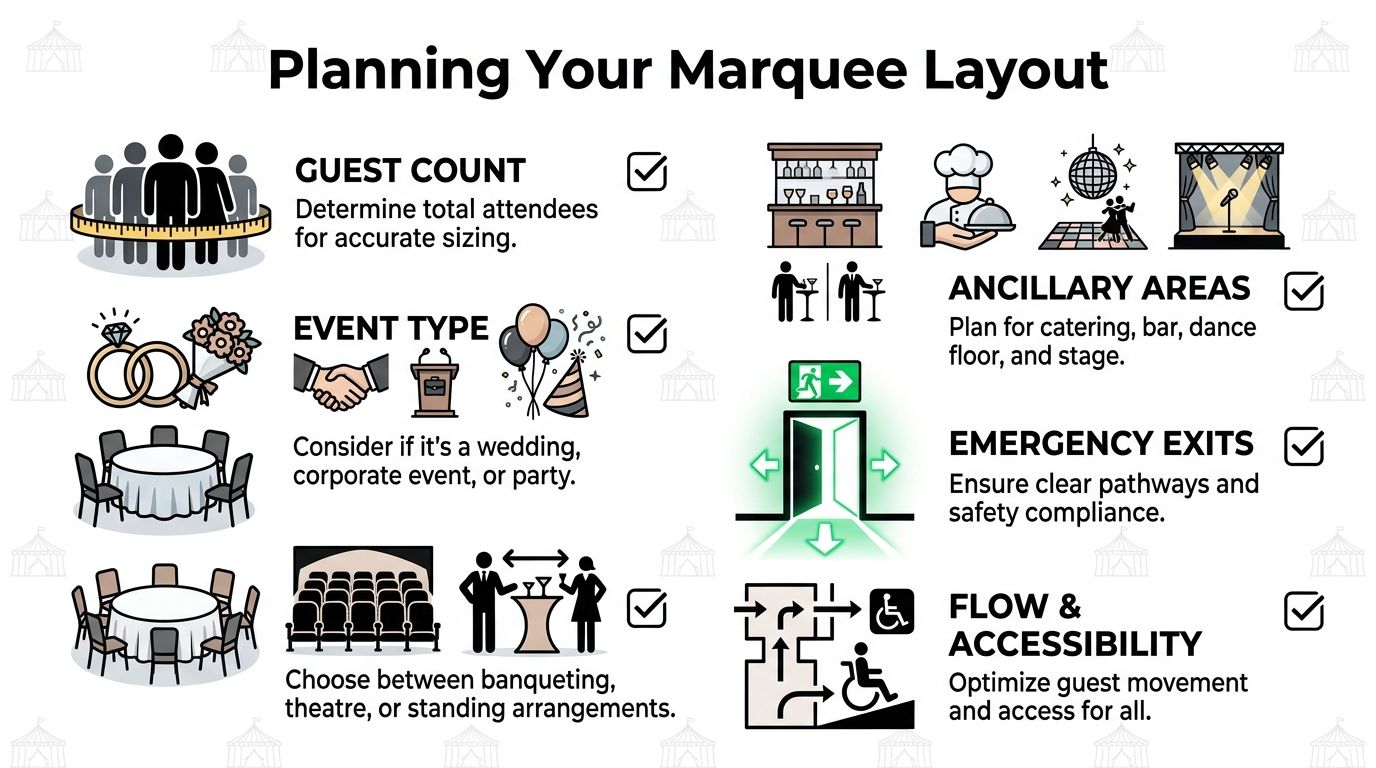
Some of those are visible to guests. Others are operational but still shape the room.
| Layout element | Why it matters |
|---|---|
| Dining area | Sets the base footprint and aisle widths |
| Dance floor | Changes table count and room balance |
| Bar position | Affects queueing and circulation |
| Catering route | Prevents service staff crossing guest flow badly |
| Entrance sequence | Shapes first impression and congestion |
| Stage or DJ location | Controls sightlines and speaker placement |
Why CAD makes large events easier to get right
For larger weddings and corporate functions, a scaled drawing removes a lot of guesswork.
A proper CAD layout lets you test whether the room works before anything is delivered. You can see whether the dance floor is eating too far into dining capacity, whether the bar should move to a side wall, and whether the caterer has enough clean access without crossing in front of the head table or stage.
That’s particularly useful for mixed-format events in London suburbs and the Home Counties. A Mehndi may need dining, a performance area, and space for family movement. A corporate event may need registration, branded focal points, and cleaner traffic lines.
If you’re shaping the look and feel of a wedding at the same time, it can help to browse wedding reception setup ideas while reviewing the practical floorplan. Style choices are easier when they sit on top of a workable layout.
For the furniture side of the plan, it also helps to think through tables and chair hire options early rather than leaving them until after the marquee size is fixed.
A workable way to brief your marquee supplier
Send more than a guest number. Send a use-plan.
Include:
Expected attendance
Give the likely final count and note whether numbers may rise.
Event format
Seated meal, part-standing reception, presentation-led, or mixed.
Must-have zones
Be specific about dance floor, bar, stage, prayer area, sweets table, or buffet.
Supplier list
Caterer, DJ, florist, production team, photographer, and any external furniture provider.
If a client can describe the event day from arrival to last dance, the layout can usually be solved cleanly.
Essential Site and Weather Considerations for UK Events
A large marquee can look straightforward when you stand at the back door and look across the garden. Build day usually reveals the complete story. The gap down the side of the house is tighter than expected, the lawn drops more than it looked from the patio, and the area that seemed ideal also needs to carry catering kit, toilets, generators, and guest flow.
That is routine across Croydon, South London, Surrey, and Kent. Urban and suburban sites bring constraints that country venue advice often skips. Boundary fences sit close to the build area. Access runs through side paths, shared drives, or car parks. Ground conditions can change within a few metres.
Access shapes the whole install
The first question is not how the marquee will look. It is how the build team will get the structure, flooring, lighting, and furniture into position safely.
On tighter residential sites, I check five things early:
- Clear side access width
- Steps, bends, and pinch points
- Low branches, cables, or extensions overhead
- Whether routes cross finished lawns, patios, or indoor spaces
- Working room around the marquee footprint for installation
A site can be large enough for the final structure and still be difficult to build on. That matters in places like Bromley or Sutton, where a generous rear garden may still be reached through a narrow side return. If access is limited, the answer is usually more labour, more build time, and sometimes a different structure or layout.
That is also why early site photos help, but they do not replace a proper survey.
Ground type changes the specification
Large marquees do not sit on every surface in the same way. Grass, gravel, paving, tarmac, and mixed ground each affect how we level the floor, protect the site, and secure the structure.
Lawns are common for weddings and family functions, but they can hide soft patches, sprinkler lines, recent landscaping, or drainage runs. Gravel often looks firm enough, then shifts under heavy footfall or service traffic. Hardstanding can be very useful on school sites, private car parks, and commercial premises, but it may need ballast rather than stakes. On split-level gardens, the marquee can still work, though the flooring package usually does more of the heavy lifting.
For South Asian events, this planning becomes even more important. A stage, dance floor, buffet line, sweet station, prayer area, and larger family circulation all place different demands on the floor and the site. The marquee has to stay level and comfortable for elderly guests, children, heels, serving staff, and production crews at the same time.
Structure choice matters on tighter and more exposed sites
For larger events, frame marquees are usually the practical choice. They give clear internal space without centre poles, which makes a real difference for dining layouts, stages, mandaps, dance floors, and wide circulation routes. They also suit built-up sites better because they can work within tighter boundaries and do not rely on the same perimeter arrangement as a traditional pole tent.
For public events and many larger private builds, temporary demountable structures should be supplied and installed in line with the relevant safety standard, BS EN 13782. The Health and Safety Executive outlines that framework in its guidance on temporary demountable structures.
The practical point is simple. Choose the structure for the job it has to do, the site it has to sit on, and the weather it may face.
Here’s a useful visual overview of weather-exposed marquee setups and structure planning:
Weather planning starts before the floorplan is signed off
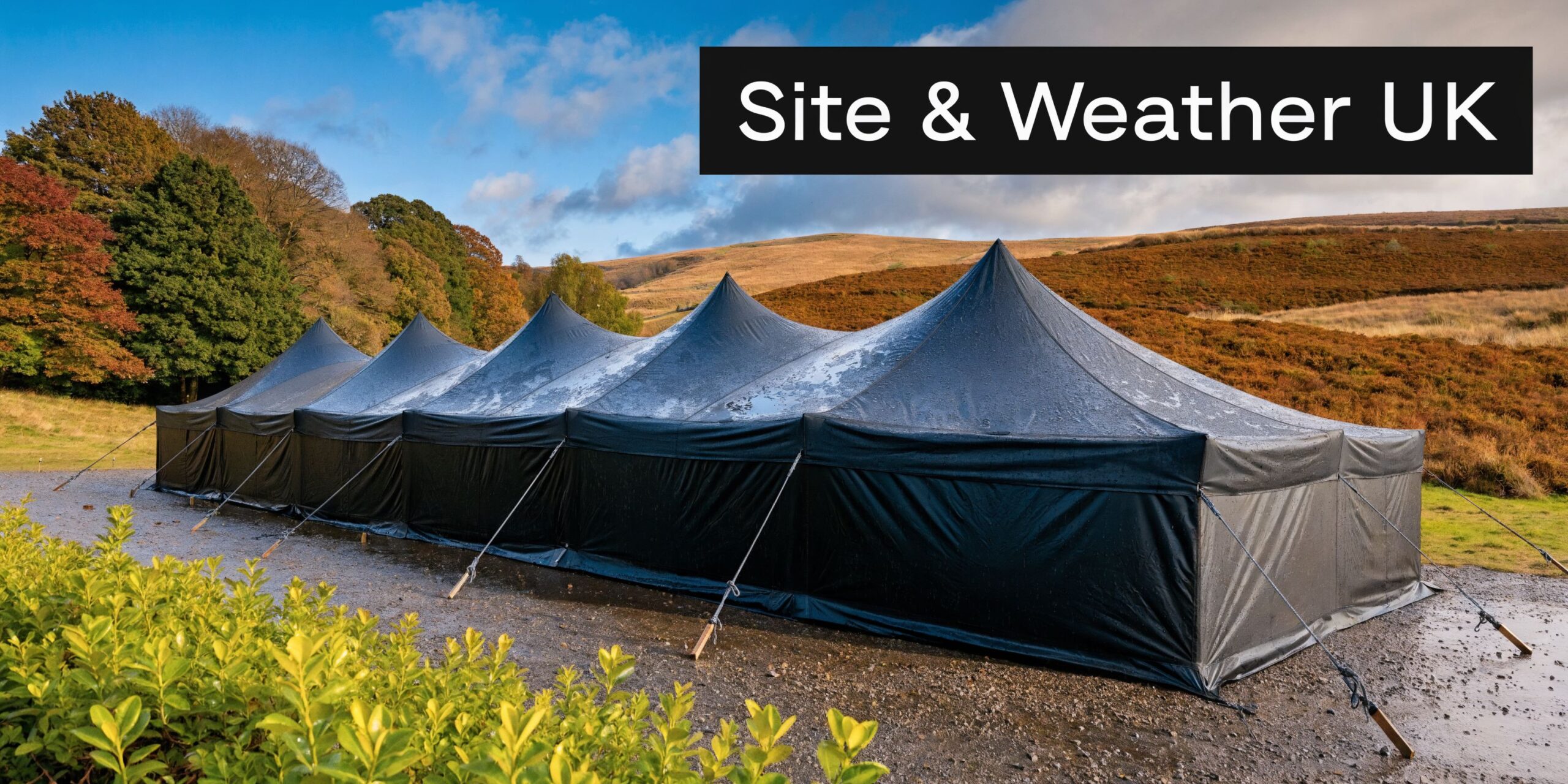
British weather rarely ruins an event on its own. Weak preparation does. Large marquees for UK use should be planned as proper temporary venues from the start, especially for autumn weddings, winter celebrations, spring functions on soft ground, or any booking on an exposed site.
The parts that usually matter most are:
A floor suitable for the ground conditions
Guests notice wobble, damp, and uneven levels straight away.
Heating sized for the volume of the marquee and the season
A large structure takes time to warm properly, especially once doors are opening and closing.
Entrances that stay usable in wet weather
Matting, covered walkways, and sensible door positions stop the entrance becoming the weak point.
Dry service access
Caterers, bar teams, florists, and production crews still need working routes even if the weather turns.
Walling and ventilation planned together
A packed dancefloor, catering heat, and changing temperatures all affect comfort inside the marquee.
I often tell clients to treat flooring, heating, and access protection as part of the venue build, not as last-minute extras. That avoids the common problem where the marquee looks right on paper but feels cold, damp, crowded at the entrance, or awkward for suppliers once the day begins.
What a Hire Package Includes and Key Add-Ons
A large marquee package usually starts with the shell of the venue, then builds outward.
The base hire normally covers the marquee structure itself, along with the core installation. Depending on the brief, clients may also include flooring, standard lighting, and the walling configuration needed for the season and style of event.
After that, the package becomes more venue-specific. That’s where large marquee hire gets interesting, because the add-ons aren’t just decorative. They solve practical problems.
What tends to sit in the core package
At minimum, most larger bookings need these elements confirmed early:
The structure
Width, length, and whether the event needs clear open floor space.
Basic weather envelope
Roof and sidewalls appropriate to the season and event type.
Installation and removal
Build timing matters, especially for private homes and working venues.
Add-ons that change how the event functions
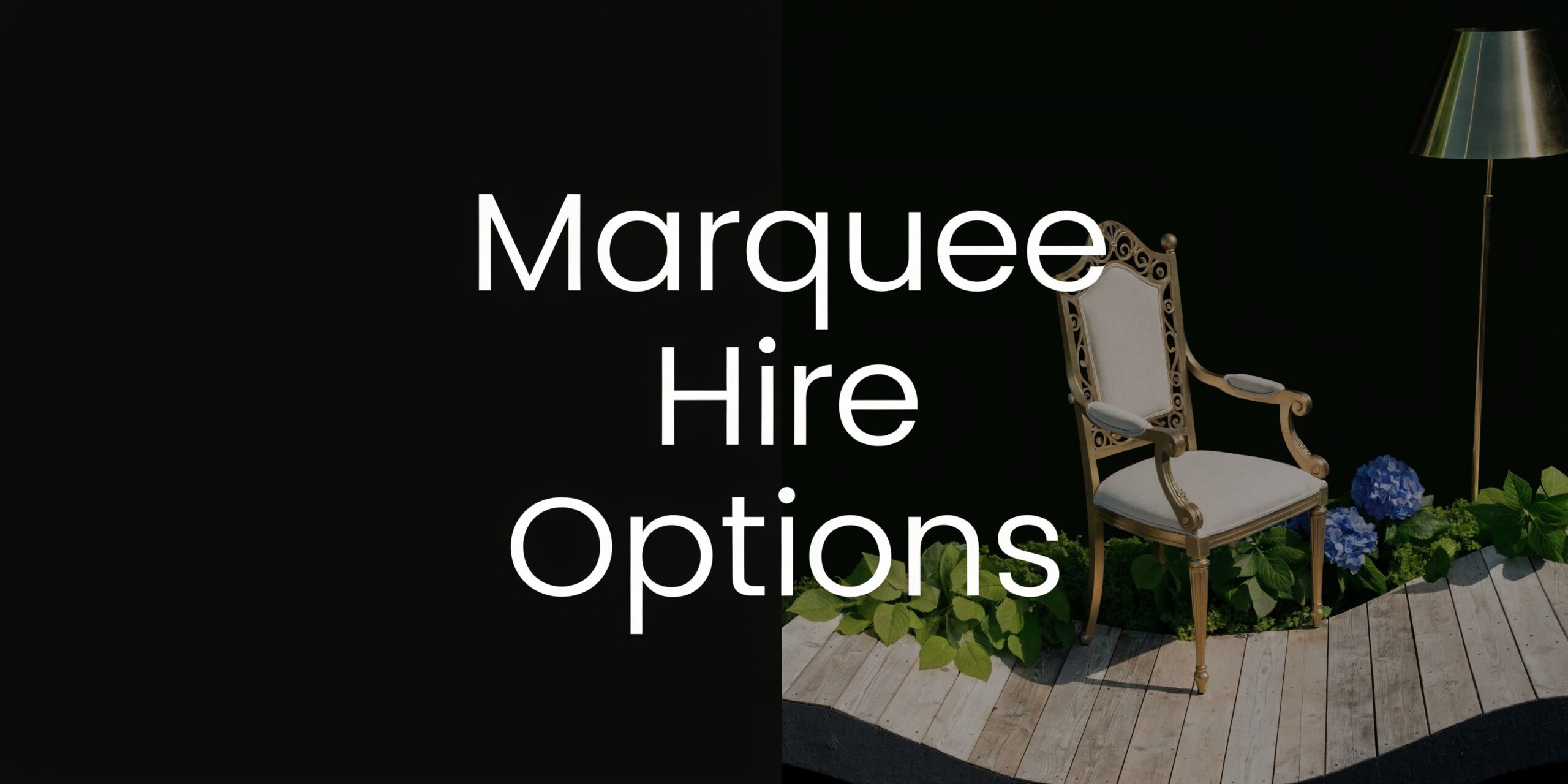
Furniture is the obvious one. The choice between practical tables and premium seating changes the feel of the room straight away. Chiavari chairs suit formal weddings well. Folding seating may be the better answer for festivals, school functions, or high-turnover public events.
Then there are the room-shaping extras:
- Mobile bar units for guest flow and service speed
- Dance floors to create a focal zone rather than letting dancing spill into circulation space
- Lighting packages to shift the room from daylight venue to evening setting
- Luxury linings when the event needs a softer or more formal finish
- Entertainment features such as a Magic Mirror or large decorative letters for social moments and photography
The best add-ons are the ones that solve a job first and look good second.
Sustainability is becoming part of the brief
Corporate clients ask about this more often, but it’s relevant across the board.
According to this guide on marquee hire and ground considerations, newer clearspan marquees support lower-impact event planning through recyclable PVC and energy-efficient LED lighting, with LED lighting able to reduce energy use by 70%. The same source notes that water-filled weights can also reduce transport emissions, which is worth considering on hard surfaces where that fixing method is appropriate.
That doesn’t mean every event needs a sustainability report. It does mean the choice of lighting, securing method, and material system is no longer just a technical detail for some clients.
Match extras to the event, not a package list
A few examples from real-world planning logic:
Wedding
Prioritise seating style, lighting mood, dance floor, and finishing touches.
Corporate event
Focus on branding space, presentation visibility, reception flow, and practical furniture.
Mehndi or family celebration
Think about family group seating, performance space, décor flexibility, and catering movement.
Festival or community event
Choose durable flooring, service counters, clear circulation, and easy-clean furnishings.
Understanding Costs and Your Booking Timeline
The price of large marquee hire is driven by scope, not just square footage.
Size is a major factor, but it’s only one part of the quote. The final cost depends on the structure dimensions, how long the hire runs for, the location, the surface conditions, how complex the installation is, and how much venue infrastructure you’re adding inside.
The other point clients often miss is that getting the size wrong can cost you both ways. Oversizing can inflate hire costs by 15 to 20%, while undersizing creates crowding and layout problems, according to this capacity and pricing guide for marquee sizing.
What usually pushes a quote up or down
A straightforward private-site booking is rarely priced the same way as a complex urban build.
The main cost drivers are:
Structure size and shape
Larger spans and longer builds use more material and labour.
Ground and access
Difficult access or uneven surfaces often increase installation complexity.
Duration
A one-day event and a multi-day occupation aren’t the same brief.
Fit-out choices
Flooring, heating, lighting, furniture, bars, linings, and entertainment all change the package.
A booking sequence that keeps things calm
For large events, the smoothest process usually looks like this:
Make the initial enquiry
Give the date, location, event type, and estimated guest numbers.
Arrange a site visit
During the site visit, practical issues are spotted before they become expensive.
Review the layout and quote
For larger or more detailed events, CAD layouts help keep the proposal accurate.
Confirm the booking
Once the structure and package are agreed, the date can be secured.
Finalise operational details
Caterers, furniture, power, timing, and access instructions should all be aligned before install.
If you want a clearer idea of how packages are priced, this page on prices for marquee hire is a sensible place to start.
Frequently Asked Questions for Your Event Type
Large marquee hire gets easier once the questions become event-specific.
Weddings
Can a marquee still feel polished for a formal wedding?
Yes, if the layout is disciplined. Formal weddings usually rely on strong table spacing, a clean entrance sequence, consistent furniture, and lighting that changes the room after daylight fades. The polished look comes from coordination, not from cramming in more décor.
Can caterers work efficiently from a marquee setup?
They can, provided access and service routes are built into the plan early. The problems start when catering is treated as an afterthought.
Corporate events
Can a marquee handle branding and presentations properly?
Yes. Large frame marquees work well when you need open sightlines, clear zoning, and room for registration, product display, or stage focus. The main thing is to brief the room around the guest journey, not just the seating plan.
Is it suitable for launches and staff events on hardstanding sites?
Often, yes. Corporate sites, car parks, and venue forecourts can work well if the structure, anchoring method, and access are assessed properly.
Festivals and community events
What changes for a public-facing event?
Public events need cleaner circulation, stricter layout discipline, and more attention to entrances, exits, and service areas. A private celebration can tolerate informal movement. A public event usually can’t.
Can the hire run across multiple days?
Yes, that’s common for festivals, school events, and community programmes, but the planning has to account for site use before, during, and after the public opening period.
South Asian functions and large family celebrations
What matters most for a Mehndi or pre-wedding event?
Space planning matters more than people think. These events often need room for extended family seating, décor features, performance or dance space, and catering that can handle a busy service pattern.
Can the marquee be adapted to the way the event unfolds?
That’s one of the biggest advantages. A marquee can be planned around how the celebration runs, rather than forcing the event into a rigid venue layout.
If you’re planning a wedding, corporate event, Mehndi, festival, or large private celebration in Croydon, London, Surrey, or Kent, Premier Marquee Hire can help you shape the right structure, layout, and package for your site. Get in touch for a quote, a site visit, or straightforward advice on what will work best for your date and guest numbers.
Sorry, the comment form is closed at this time.