

16 Apr Small Marquee Hire London: Your Complete 2026 Guide
You’re probably here because the venue is your venue. A back garden in Croydon. A narrow outdoor space behind a Wimbledon house. A side-return garden in Bromley. Maybe it’s a Mehndi at home, a birthday that has outgrown the dining room, or a company gathering where the office terrace isn’t quite enough.
That’s exactly where small marquee hire london becomes useful. A good small marquee doesn’t just cover people from the weather. It turns an awkward outdoor area into a working event space with a clear entrance, sensible guest flow, room for catering, and enough comfort that people stay longer and relax.
The first question is usually the right one. How big does it need to be? If you start there, most of the rest falls into place. A useful planning rule is that banquet seating needs about 1.5m² per guest, theatre-style seating needs about 1m² per guest, and conference layouts need about 1.2m² per guest, according to the Gala Tent marquee capacity guide. That matters in London because outdoor spaces are rarely generous, and a marquee that looks fine on paper can feel overcrowded once tables, catering and circulation are added.
If you’re weighing up whether your event still counts as a “small marquee” job or is edging into something larger, this practical guide to planning events with a larger tent is a sensible comparison point.
Your Guide to Small Marquee Hire in London
A small marquee suits London particularly well because many events happen in spaces that weren’t designed for entertaining. Terraced homes, split-level gardens, paved patios, church grounds, school courtyards, and compact venue lawns all need a different approach from a big open field.
In practice, the marquee size is only one part of the decision. Access matters just as much. A 4m x 8m structure can work very well in one garden and be completely wrong for another if the route in is tight or the ground changes level halfway down the plot.
What usually works well
For most first-time planners, these are the combinations that tend to make sense:
- Family celebrations: A compact layout with mixed seating, room for serving tables, and weather cover over the main social area.
- Pre-wedding functions: Flexible open space with seating around the edge and a dedicated area for food, music, or dancing.
- Corporate garden events: Standing layouts with high tables often make better use of smaller footprints than full dining setups.
- Community and faith events: Clear entrances, practical flooring, and simple furniture usually matter more than decorative extras.
Practical rule: In London gardens, the usable event space is often smaller than the measured footprint because fences, planting beds, sheds, steps and doors all eat into your layout.
A small marquee can feel generous when the plan is right. The same structure can feel cramped when too many functions are pushed into it. That’s why experienced planning starts with guest numbers, event style, and the actual space on site, not just a guessed marquee size.
Why local knowledge helps
Croydon and the surrounding boroughs throw up the same issues again and again. Narrow side access. Soft lawns after rain. Patio doors that need to stay clear. Neighbours close by. Power coming from the house rather than a dedicated event supply.
Those details aren’t problems if they’re handled early. They become problems when they’re discovered on installation day.
Choosing the Right Size Marquee for Your London Space
A common London scenario goes like this. The garden looks generous from the back door, the guest list feels modest, and a small marquee sounds straightforward. Then the installer arrives and finds a side return too narrow for standard panels, a flower bed taking a metre off the usable width, and patio doors that still need to open all evening.
That is why marquee sizing should start with the usable space, not the full garden measurement.
Measure the space you can actually build on
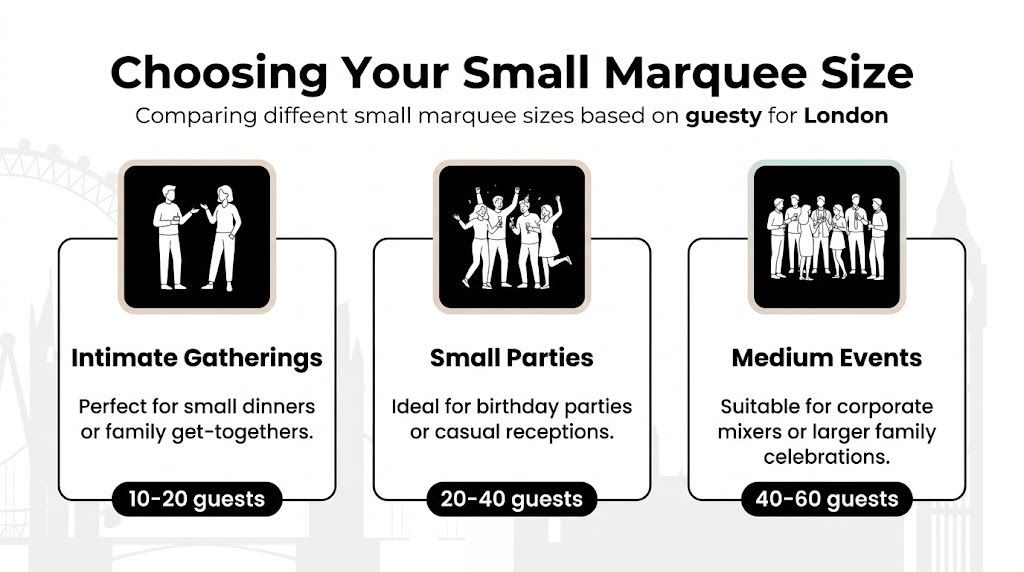
Guest numbers matter, but they are only part of the job. A small marquee for a sit-down meal needs more room than one used for drinks and mingling. The footprint also has to allow for entrances, table spacing, service points, and any awkward parts of the site such as steps, sheds, drains, raised borders, or uneven patio edges.
In London gardens, the usable rectangle is often smaller than clients expect. A garden may measure well on paper and still only offer one practical position for the marquee once access, neighbouring fences, and house doors are taken into account.
Floor area matters more than headline capacity
The safest way to size a marquee is by floor area and event type. Industry-standard capacity guides treat banquet seating, theatre rows, and standing receptions as different layouts because they place very different demands on the same structure.
A 3m x 6m marquee is a good example. On many Croydon, Bromley, and South London jobs, it fits neatly into a narrow garden and works well for a small seated gathering or a covered social space. It stops being comfortable once clients try to add dining, a buffet, gifts, speakers, and a clear circulation route into the same footprint.
Small marquee size and capacity guide
| Marquee Size (Metres) | Area (sq m) | Standing Reception (Guests) | Seated Banquet (Guests) |
|---|---|---|---|
| 3m x 6m | 18 | Depends on layout and furniture | 12 |
| 4m x 6m | 24 | Depends on layout and furniture | Depends on table plan |
| 4m x 8m | 32 | Often suits intimate to mid-sized gatherings | Depends on table plan |
Those cautious estimates are deliberate. Real capacity shifts quickly once furniture style, catering position, and guest flow are fixed. Two events with the same guest count can need very different marquee sizes.
Match the marquee to the way the event will run
A few practical rules help avoid costly mistakes:
- Dining-led events need more floor space because tables, chairs, and service access take up room fast.
- Standing receptions make better use of smaller marquees, especially for work events or family parties with high tables and a single drinks point.
- Mixed-use events need discipline. A small marquee can handle seating and standing guests together, but only if one activity stays dominant.
- Entertainment setups such as a DJ table, speaker area, or small dance space often push the marquee up by one size.
I often see this with birthday bookings in South Croydon. A client starts with a simple plan for a dozen or so guests, then adds a buffet table, presents, and a music corner. The original marquee size still fits the guest list, but it no longer fits the event.
London sites add constraints generic guides miss
Local experience saves a lot of frustration. Small marquee hire in London is rarely just about how many people can stand under a roof. It is about what can get through the gate, whether the ground will take the structure safely, and how much room is left around it for people to move comfortably.
Typical site limits include:
- narrow side access between terraced or semi-detached houses
- mixed surfaces, such as lawn meeting patio or decking
- sloping gardens that reduce usable headroom or complicate flooring
- house access that must stay clear for toilets, kitchen use, or family movement
- close boundaries where every metre of width matters
These details often decide the best marquee size before guest numbers do.
Why a slightly smaller marquee can work better
Bigger is not always safer in a London garden. If the marquee fills the whole plot, guests lose breakout space outside, installers have less flexibility on positioning, and the structure can feel cramped once walls, legs, and furniture are in place.
A well-sized small marquee usually feels calmer and functions better than an oversized one forced into a tight site. The goal is enough room for guests, staff, and furniture to work properly, while keeping the garden and the house usable on the day.
The right size leaves space to breathe.
Designing Your Perfect Small Marquee Layout
Once the size is set, layout becomes the difference between a marquee that feels polished and one that feels improvised. In a small structure, every table position matters. So does the entrance, the catering point, and the first thing guests see when they walk in.
A useful layout starts with movement. People need to arrive, get a drink, find their place, and circulate without cutting across service areas.
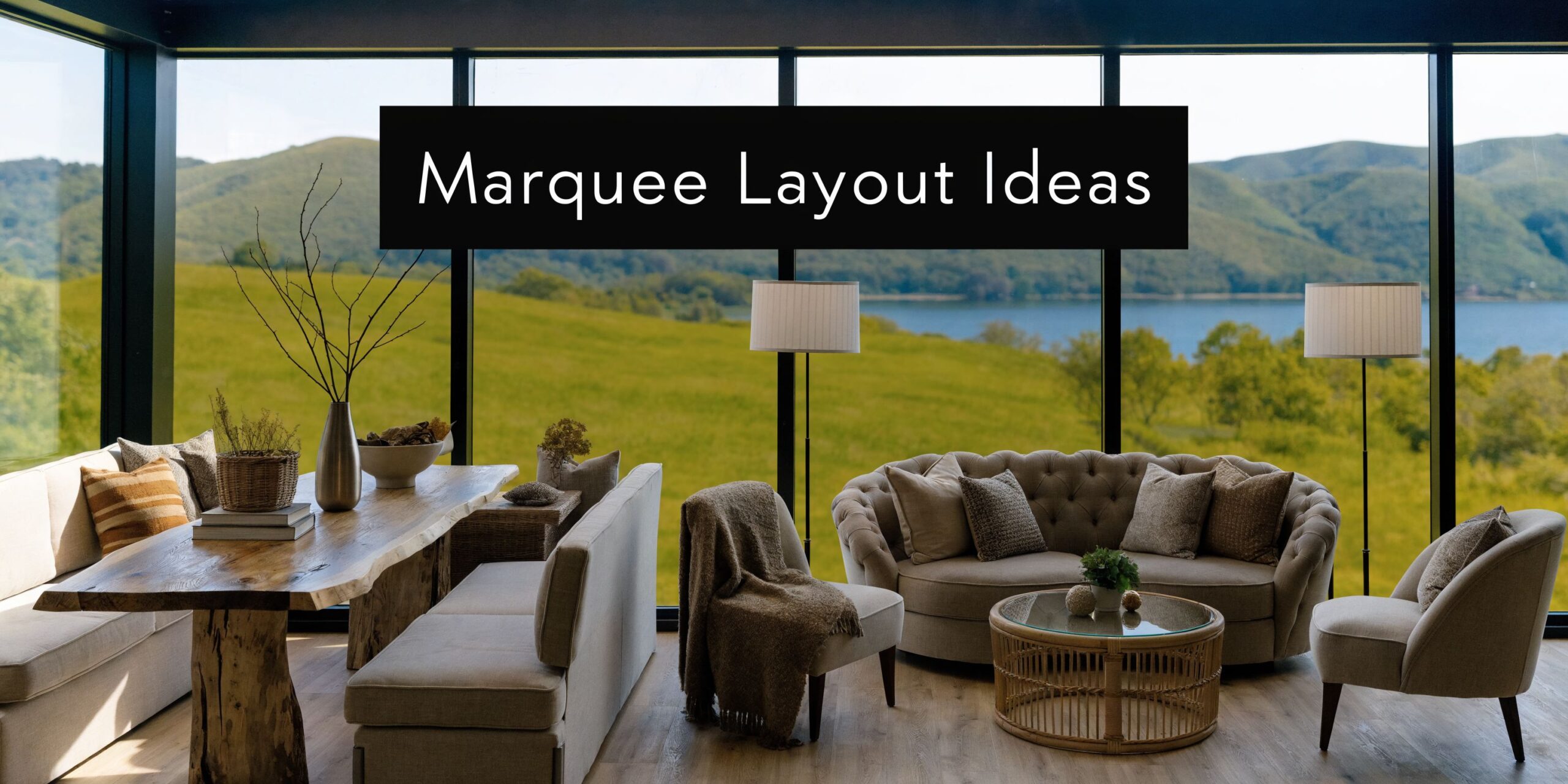
Three layouts that tend to work
Seated celebration layout
This suits birthdays, anniversary meals and smaller receptions. The key is not to push every table to maximum capacity. A little breathing space between tables makes service easier and the room quieter.
Good practice usually includes:
- Clear entrance line: Guests shouldn’t walk straight into the back of a chair.
- Perimeter furniture placement: Keep the centre more open where possible.
- Dedicated service edge: Buffets or drinks stations work better at one side than split across corners.
Standing reception layout
This often works best in smaller London marquees. Without full dining furniture, the space becomes more adaptable and easier to socialise in.
A standing plan is stronger when you include:
- One obvious drinks point
- Small clusters of furniture rather than heavy rows
- A clean route between entrance and bar
- A separate edge for catering or waiting staff
Party layout with dance floor
Dance floors are where many layouts go wrong. If the dance area is squeezed in as an afterthought, the room loses balance and guests crowd the entrance or the bar.
The sensible approach is to decide early whether dancing is central to the event. If it is, give it a proper zone and reduce other furniture accordingly.
A dance floor works best when it has a natural boundary, not when it’s wedged into leftover space.
The spacing question matters here. Guidance from Party In Your Garden in the verified data notes that a 3m x 4m dance floor fits 15-20 dancers, while 4m x 4m handles up to 40. That’s why dance-led events often need careful compromise in smaller marquees.
Why CAD planning helps
On paper, a marquee can seem larger than it feels once you add tables, chairs, catering stations and circulation. A proper 2D layout solves that before installation day.
That’s especially useful when a garden has:
- French doors that must stay accessible
- A patio step or raised level
- A side path that doubles as access
- One awkward corner that can still be used for storage or catering
This video gives a good visual sense of how marquee space can be structured in practice.
One practical option available locally is that Premier Marquee Hire provides CAD layout designs on request alongside site visits, which is useful when you need to visualise guest flow before confirming furniture or extras.
What doesn’t work well
Small marquees become uncomfortable quickly when too many jobs are given to the same area. Common examples include putting the gift table by the entrance, placing catering behind the main seating, or using oversized furniture that leaves no clean walkway.
The best layouts feel simple because the decisions were made early. Guests don’t notice the planning. They just notice that the event feels easy to move around in.
Understanding Small Marquee Hire Costs in London
A small marquee quote in London can change fast once site conditions are known. A neat rectangle on a lawn is one job. A Croydon garden with a side return, patio edge, and limited unloading space is another. That is why the headline figure only tells part of the story.
The broad market benchmark is still useful. The Poptop London marquee guide gives an average London marquee hire cost of about £1157 per event based on a 3-day rental period. It also shows that entry-level hires can start lower, while larger and more fully fitted structures rise sharply in price.
What actually changes the quote
Cost usually follows labour, equipment, and time on site.
Structure and specification
A simple shelter for a drinks party costs less than a marquee that needs to handle dining, service space, lighting, and a finished interior. The frame is only one part of the price. Once you add lining, flooring, clear walls, heating, or a hard-wearing entrance, the job changes from basic cover to temporary event space.
Hire period
Many London hires are priced around a 3-day window. One day for installation, one for the event, one for collection. That sounds straightforward, but local access can stretch the timetable. If a crew has restricted parking, set hours for unloading, or a longer carry through the house or garden path, time matters.
Ground and access
Small marquee jobs in London often stop being “standard”. A garden in Bromley with open side access is usually simpler than a terrace in Clapham or Dulwich where every panel has to be carried through a narrow passage. Mixed surfaces also affect the method. Grass, paving, decking, and gravel all call for different anchoring and floor decisions.
Interior items
Furniture, lighting, heating, power distribution, matting, and catering cover all add cost. They also make the marquee usable. A winter birthday on bare grass without flooring is cheaper on paper and poor in practice.
Cost checkpoint: The lowest quote often assumes the easiest install and the lightest specification. If your site is tighter than that, the final bill can shift later.
Why a survey protects the budget
Accurate pricing starts with seeing the site properly. That is not sales theatre. It is how you avoid late changes for extra labour, different fixings, protected flooring, or split delivery times.
First-time planners often focus on guest numbers and overlook the route in, the surface under the marquee, or whether doors and side paths need to stay clear. In London, those details have a direct cost attached because they affect crew time and equipment choice.
A sensible way to budget
Build the budget in layers so nothing important gets missed:
- Base hire: marquee structure and standard installation
- Site-related costs: flooring, anchoring method, access constraints, surface protection
- Operational items: lighting, heating, power, rain-safe entrance
- Event items: tables, chairs, bar units, catering space, dance floor
- Finish and comfort: lining, décor, upgraded furniture, extra weather protection
If you want a clearer breakdown of how suppliers usually build a quote, this guide on prices for marquee hire is a useful next read.
The same source also lists a 9m x 18m PVC marquee at around £1257 for the structure alone. That helps put small marquee pricing in context. The shell is only one part of the budget. In London gardens and compact venue spaces, access, flooring, and fit-out often have more effect on the final figure than people expect.
The Importance of a Site Survey and London Permits
The site survey is where a marquee plan becomes real. In London, that’s not a formality. It’s the stage where most preventable problems are found early enough to fix calmly.
A back garden might look straightforward in photos. Then the site visit reveals a narrow side passage, a drain cover where the main leg needs to go, a change from patio to lawn, and doors that must remain usable throughout the event. None of that makes the job impossible. It changes the setup.
What a proper survey checks
A useful survey looks at the ground, the route in, and how the space will function once guests arrive.
Ground and footing
The team needs to know whether the marquee is sitting on grass, patio, decking, mixed surface, or a site with a slight level change. That affects anchoring, floor options, and how the structure will sit visually.
Access
This is often the deciding factor in London homes. Sutton, Dulwich, Wimbledon and parts of Croydon all have properties where the garden itself is workable but the route to it is the challenge.
Common access issues include:
- Narrow side returns
- Shared passages
- Steps or tight turns
- Limited parking for unloading
- Neighbour-sensitive access times
Practical event use
The marquee must work with the property, not fight it. That means checking doors, kitchen access, waste routes, toilet access, and where guests are likely to gather before they enter.
Most difficult marquee jobs aren’t difficult because of the marquee. They’re difficult because the event plan ignored how people and equipment move through the property.
Permits and notices people often miss
This is another area where homeowners are often caught out. According to the AB Fab London Marquees page in the verified data, small marquees under 30m² do not typically require building regulations, but a Temporary Event Notice may be required for events with alcohol or music for up to 500 attendees. The same source says a 2025 report found 15% of home event planning queries were rejected due to unawareness of TENs.
That’s not a reason to panic. It’s a reason to check early.
A sensible permit checklist
Before confirming your event, ask:
- Will alcohol be sold or supplied in a way that triggers a notice requirement?
- Will there be amplified music?
- Is the event in a residential setting where neighbours are close?
- Does the local borough have specific guidance that applies to your setup?
For many small private functions, the marquee itself isn’t the regulatory issue. The event activity is.
Why this ties directly into peace of mind
Bad weather, noise concerns, and awkward sites all feel more manageable when someone has physically walked the space and flagged the likely pinch points. A professional setup doesn’t remove every variable, but it does remove avoidable surprises.
If a garden is soft underfoot, that can be planned for. If music may need a notice, that can be checked in time. If the access route is tight, installation can be organised around it.
That’s why the site visit matters so much in London. It protects the event before the first piece of framework arrives.
Weatherproofing Your Marquee for Any UK Season
A London garden party can start on warm paving in late afternoon and end with guests stepping around damp grass, a sharp evening chill, and wind pushing through side gaps you did not notice at first glance. That is the test for a small marquee. It is not whether it looks good at 2pm. It is whether it still feels stable, dry, and comfortable once the weather shifts.
A properly installed small marquee is built for that job.
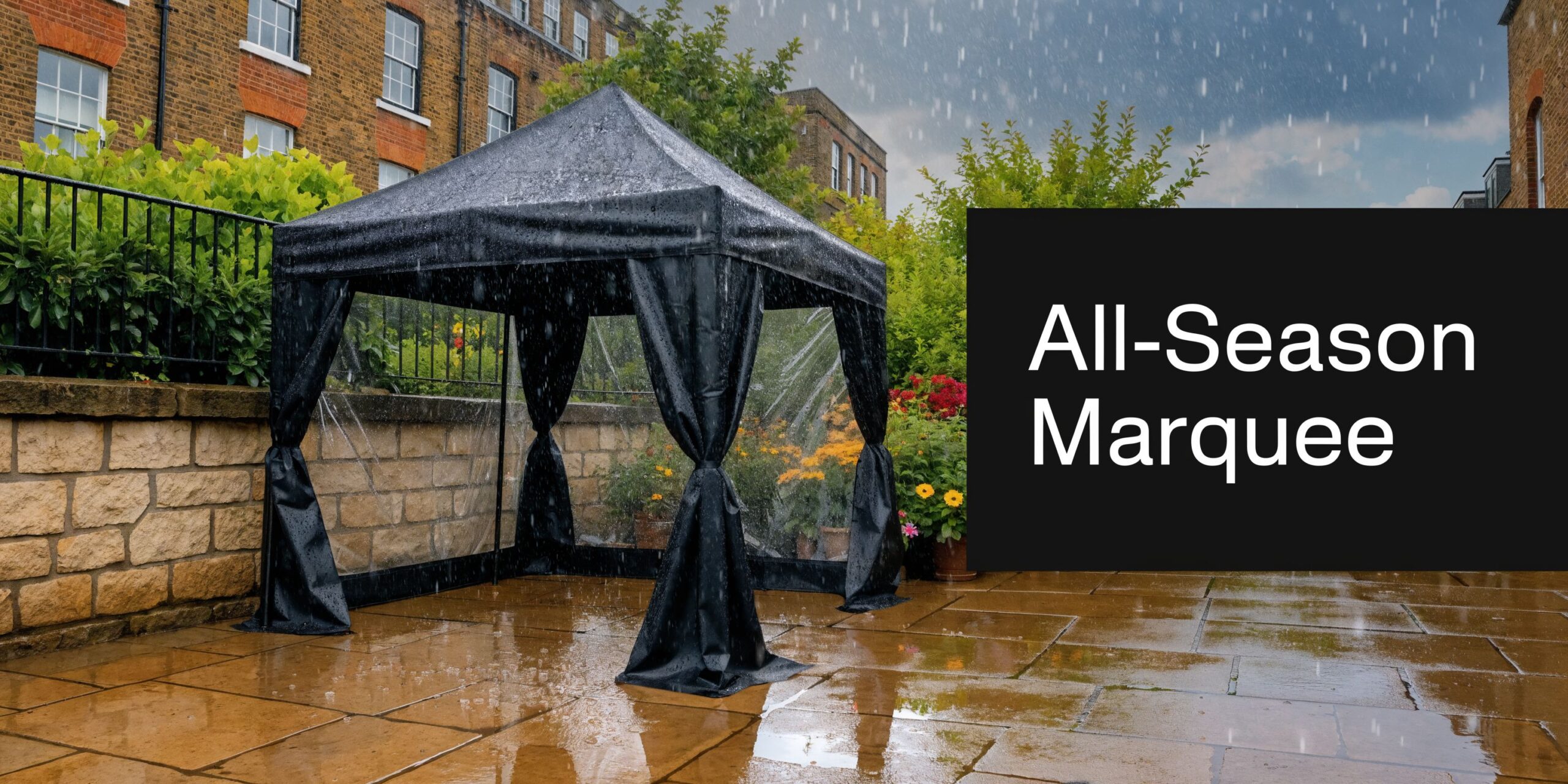
What makes a professional marquee weather-ready
The Marquee Magic guide notes that professional tubular frame marquees are commonly compliant with BS EN 13782:2015 and can resist wind gusts of 90 to 100km/h when properly anchored.
That last part matters most in London. Properly anchored means the fixing method suits the actual site. A small marquee in Croydon on a firm lawn needs a different approach from one on a paved terrace in Clapham, or a courtyard venue in Dulwich with limited staking options. Generic weather advice misses that. On the ground, surface type, surrounding walls, and access route usually decide how weather-ready the structure will be.
Anchoring depends on the site, not the brochure
I would never assume the fixing method before seeing the space. London sites are rarely straightforward. Rear gardens often have narrow side returns, mixed surfaces, raised patios, drains, flowerbeds, and fences close to the footprint. Some are sheltered on one side and exposed on the other. That affects wind pressure and how doors should face.
The basics are simple:
- Fix the marquee to the surface it is standing on
- Keep the frame correctly tensioned
- Position openings with wind and guest flow in mind
- Protect the edges where rainwater and draughts tend to become a problem
Guests may not notice the anchoring method itself. They do notice whether the marquee feels planted and secure when they step inside.
Keeping the inside comfortable in colder weather
The same source says winter setups with suitable heating can keep the inside at 18 to 22°C even when outside temperatures drop well below freezing. In practice, comfort depends on more than the heater output alone. Entrance points, flooring, draught control, and the amount of time doors stay open all affect how the space holds warmth.
For winter birthdays, Christmas parties, and late-autumn garden events, a heated marquee hire guide for colder weather events will help you work out what level of heating is sensible.
Warmth changes how people use the space. Guests sit down properly, stay for dessert, and stop treating the marquee like a place to pass through on the way back indoors.
Season-by-season priorities
Spring
Spring catches people out because the air can feel mild while the ground is still soft. In many London gardens, that means wet patches near fences, muddy thresholds, and furniture legs sinking by evening. Flooring and a protected entrance usually solve more problems than extra decoration.
Summer
Hot days bring a different set of issues. Small marquees can become stuffy if every side is kept closed for neatness. Airflow matters. So does shade. In compact London spaces, I usually pay close attention to where the sun sits in late afternoon, because one clear side panel can turn a pleasant marquee into a greenhouse.
Autumn
Autumn is one of the best times to hire a marquee in London because the light can be lovely and gardens still look good. It also gets dark earlier and cools down quickly after sunset. Good lighting, dry flooring, and background heating should be planned from the start, not added as an afterthought.
Winter
Winter needs a full weather plan. Heating is part of it, but so are lined walls, managed entrances, and realistic expectations about how guests will arrive and store coats. If the marquee is set up on paving or artificial grass, that can help with mud. If it is on natural lawn, the route in and out needs just as much thought as the structure itself.
Weatherproofing works best as a package. Structure, anchoring, surface management, and temperature control all have to suit the site. Get those decisions right, and a small marquee in London feels dependable even when the forecast is doing what it usually does.
Furnishing and Equipping Your Marquee
An empty marquee is only the shell. The furniture, lighting and practical add-ons decide whether the space feels formal, relaxed, festive, or corporate. They also decide whether the event runs smoothly.
In smaller marquees, every item has to earn its place. Oversized furniture can kill circulation. Too little lighting can flatten the atmosphere. A bar in the wrong position can turn one corner into a permanent bottleneck.
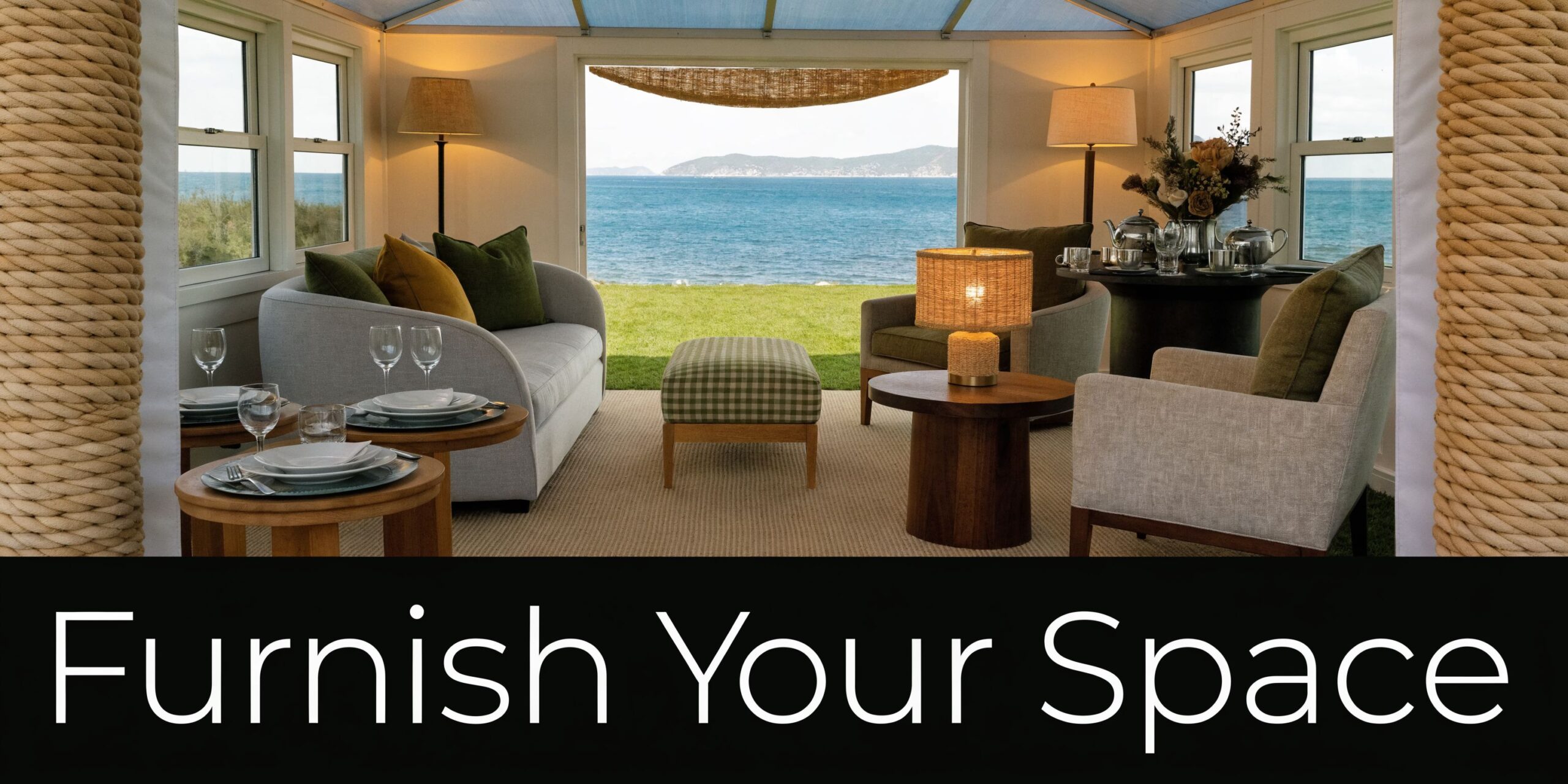
Start with the practical pieces
Before thinking about styling, decide what the event must physically support.
Seating and tables
A seated meal needs different furniture from a drinks reception. Trestle tables can be efficient in tighter spaces, while round tables create a softer social feel but use floor area differently. Chair choice matters too, both visually and in how much room each place setting takes up.
If you’re comparing options, this guide to tables and chair hire helps narrow down what suits different event types.
Lighting
Lighting does two jobs. It helps people see clearly, and it shapes the mood after dark. According to the Ascend Marquees sizes page, technical add-ons can make a noticeable difference, with insulated roof lining improving thermal efficiency by 15-20% and modern LED lighting providing 100-150 lux while often staying under 50W total.
That’s especially useful in London gardens where power may be limited and neighbours are close.
Lining and flooring
Lining changes the feel of a marquee quickly. It softens the interior and makes the space feel more finished. Flooring changes how the marquee performs in real use. On grass, it can be the difference between a comfortable event and one where guests spend the evening watching their footing.
Then add the event features
With these additions, the marquee starts to feel personal.
- Mobile bars: Useful when you want drinks service away from the house.
- Dance floors: Worth planning early rather than squeezing in late.
- Feature lighting: Helpful when you want a stronger evening atmosphere.
- Entertainment items: Photo booths, statement letters, and similar features can work well if the footprint allows.
What works in small spaces
The best-equipped small marquee is usually the one that shows restraint. A compact event doesn’t need every available hire item. It needs the right combination.
A sensible approach is to choose:
- one main furniture style
- one clear lighting plan
- one service point
- one focal feature
Small marquees look better when the interior is edited. Too many competing items make the space feel busy before the guests even arrive.
A note on sustainable choices
Clients ask more often now about low-waste planning, reusable equipment and avoiding unnecessary power use. That usually starts with sensible specification rather than big gestures. Hiring only the items you’ll use, choosing efficient lighting, and avoiding duplicate furniture all help keep the setup tighter and more considered.
In practical terms, the most successful marquee interiors are the ones that balance function with atmosphere. Guests remember how the space felt. Comfortable, easy to use, and clearly thought through usually wins.
Your Marquee Hire Timeline from Enquiry to Event Day
Most first-time clients feel better once they can see the process in order. Marquee hire is much easier to manage when each stage has a clear purpose.
Step one to step three
Initial enquiry
Start with the basics. Date, location, guest numbers, and the type of event. If you have photos of the garden or venue, send them.Site survey
This confirms what the space can realistically take. It’s where access, ground, layout constraints and practical setup questions are checked properly.Quote and layout
Once the site is understood, you can compare options properly. This is also the point where furniture, lighting, flooring and any catering or dance floor requirements should be refined.
Booking and installation
After approval, the booking is confirmed and the installation schedule is set around the event date and site access. For many London hires, the structure is installed ahead of the event rather than on the same day, which reduces pressure and allows time for dressing the space.
The event itself should feel simple because the complicated thinking happened earlier.
Collection and clear-down
After the function, the team returns to remove the marquee and hired equipment. A tidy de-rig matters more than people realise, especially at homes where the garden needs to go back to normal quickly.
Questions worth asking early
A few details are worth settling as soon as possible:
- How will guests enter the garden or venue?
- Will catering operate inside the marquee or separately?
- Do you need music, and if so, does a notice apply?
- Is the event mainly seated, standing, or mixed?
- Are there any access restrictions for setup vehicles?
Summer weekends and key celebration dates tend to book first, so earlier is always easier if your event falls in a busy period.
If you’re planning small marquee hire london and want the process to feel straightforward from the start, the simplest move is to begin with a real site conversation rather than guessing from measurements alone.
If you’re ready to explore options for your garden, venue or outdoor event, speak to Premier Marquee Hire for a quote and site visit. A clear survey, a practical layout, and an honest discussion about access, size and equipment usually answers most questions very quickly.
Sorry, the comment form is closed at this time.