


18 Apr Flooring for Marquee: Your Ultimate Event Guide
You can spend months choosing the marquee, the lighting, the tables and the flowers, then lose the feel of the whole event because the ground underfoot wasn’t dealt with properly.
That happens more often than people expect in London and Surrey. A lawn looks flat until you start placing dining tables on it. A patio seems easy until you notice the levels change at the doors. A lovely garden in Bromley or Dulwich can have a gentle slope that doesn’t matter for a barbecue, but it matters a great deal once guests are in formal shoes and staff are carrying trays.
Flooring for marquee isn’t a finishing extra. It’s what stops chairs rocking, heels sinking, bars leaning and walkways turning messy after a spell of rain. It also changes how the space feels. The same marquee can feel temporary on bare grass, or properly finished once the floor is level, firm and suited to the event.
The Foundation of a Flawless Event
A lot of clients start by thinking about the marquee roofline and guest numbers. Fair enough. That’s the visible part. The floor tends to get attention later, usually when someone asks a simple question: what are people walking on?
For a wedding in a garden, that answer affects almost everything. It affects guest comfort, how stable your furniture feels, whether a dance floor sits properly, and how confident people feel moving around in the evening. For a corporate event, it affects flow, presentation and safety. If you’re hosting a Mehndi, family celebration or community gathering, it also affects how easily different age groups can use the space.
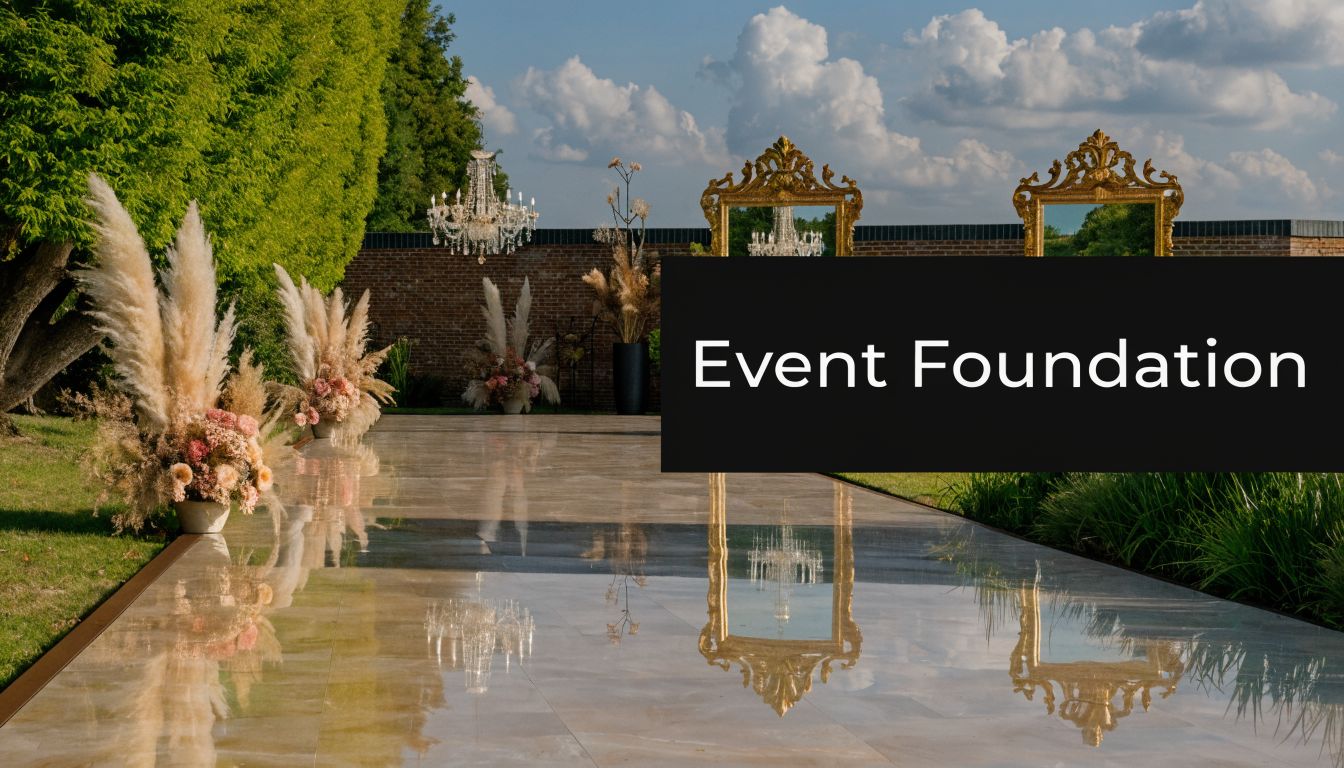
In Croydon and the surrounding boroughs, ground conditions are rarely identical from one site to the next. One garden has a neat lawn but awkward side access. Another has enough room for a good-sized marquee, but the ground is softer than it looks. A school field can take a structure well, yet need more thought for guest routes, entrances and service areas.
Practical rule: If the ground would be annoying to walk on during an ordinary gathering, it will be a bigger issue once you add formalwear, furniture, catering equipment and a full guest list.
The right floor solves problems before they show up on the day. It creates a steady base, improves the look of the interior and helps the marquee function like a proper venue rather than a tent set on grass.
An Overview of Marquee Flooring Systems
The main flooring systems do different jobs. Some are there to create a level structural base. Others are chosen for speed, weather resistance or ease of cleaning. The best option depends on the ground and what the event needs from the space.
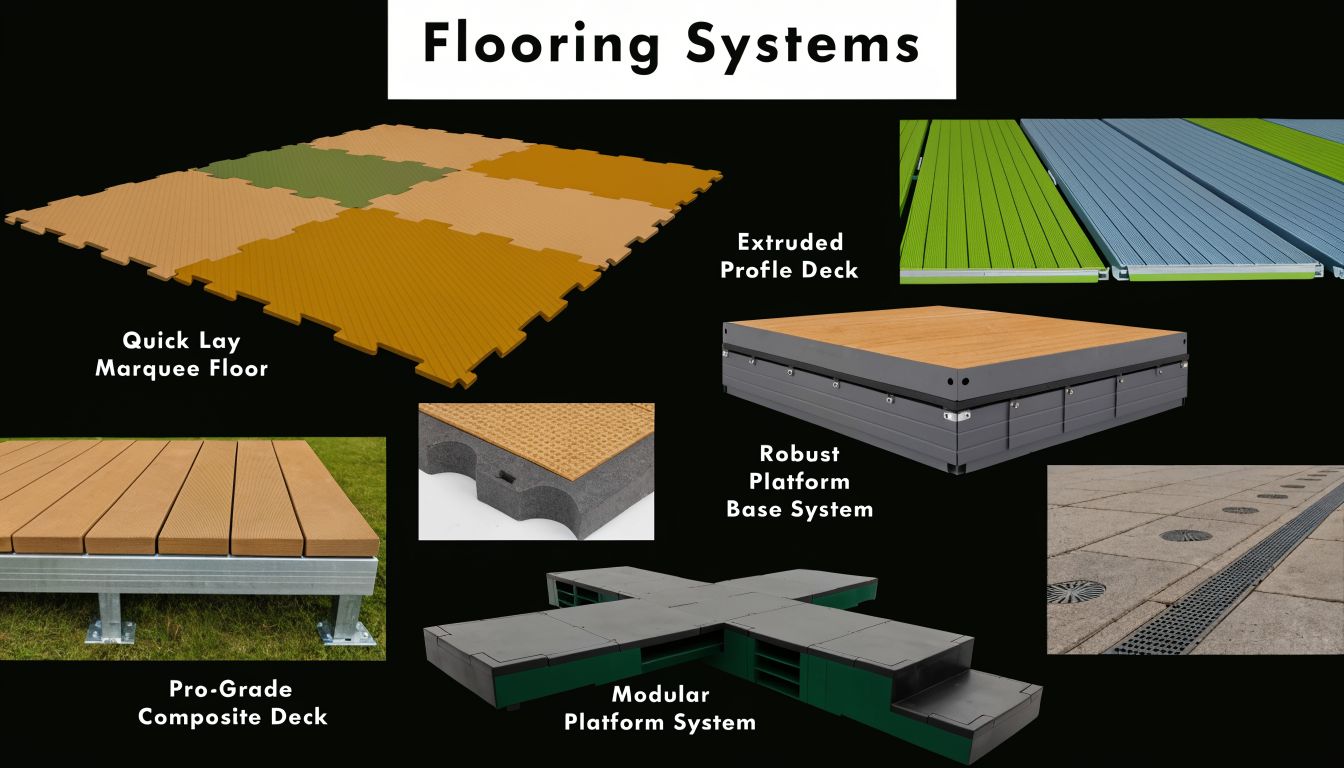
Raised boarded flooring
This is the option people usually imagine when they want a smart, finished event interior.
A raised boarded floor uses a sub-frame or battened base to bridge over minor unevenness in the ground, then boards on top to create a flatter, more dependable surface. It’s the usual answer for weddings, formal dinners and events where people will be seated for long periods or moving between dining, bar and dance areas.
It works well when:
- The lawn isn’t perfectly even and you need a proper level change managed professionally.
- You want carpet over the top for a softer, neater finish.
- The furniture layout is important because bars, top tables and buffets need a steady base.
- The event is dressy and guest comfort matters from the first step inside.
Raised boarding usually gives the best overall feel, but it does need more planning, more installation time and decent access for the crew and materials.
Interlocking modular tiles
These are a practical workhorse. Heavy-duty interlocking 500mm x 500mm tiles are designed for distributed loads of over 500kg/m², and their tongue-and-groove design helps spread forces laterally while allowing up to 80% drainage efficiency in heavy rain, according to the hard flooring specification here.
That makes them useful for busy events where the ground may be damp or the weather uncertain. They’re especially handy on grass in Kent and Surrey, and on outdoor sites where speed matters.
They suit:
- Festival-style events
- Service zones and catering areas
- Entrance sections
- Events where weather resilience matters more than a plush finish
They don’t usually give the same refined look as a fully boarded and carpeted floor, but they’re durable, practical and much better than leaving guests on open ground.
A short demonstration helps show how modular systems fit together in practice.
Matting and simple coverings
Basic matting has its place. It can protect a route, tidy an entrance, or make a short-term setup more usable. On firm, dry, flat ground, it may be enough for a modest gathering with light footfall.
It’s not a substitute for a proper floor where the site is uneven, damp or heavily used. That’s where people get caught out. Matting follows the shape of the ground below it. If the base is poor, the result is still poor.
Dedicated dance floors
A dance floor isn’t just another patch of flooring. It’s a purpose-built surface placed on top of a suitable base. If dancing is part of the event, this usually deserves separate thought.
A good dance area needs to feel firm and predictable underfoot. That matters for guest confidence, for appearance, and for keeping the party in the part of the marquee designed for it.
Choosing the Right Floor for Your Venue and Event
The easiest way to choose flooring for marquee is to start with the site you have, then match it to the event you’re hosting. Trying to do it the other way round often leads to compromises later.
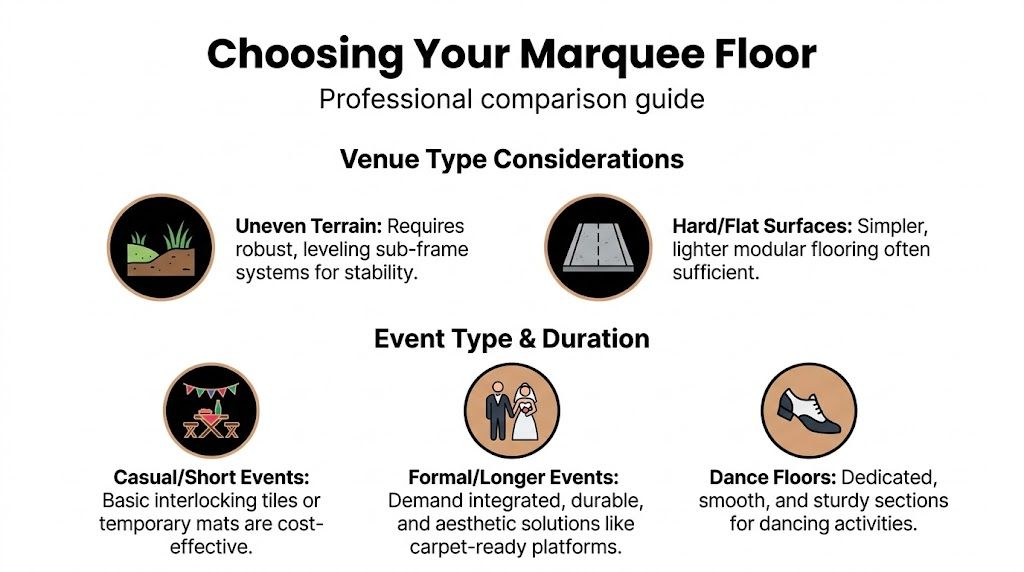
If your venue is a lawn or garden
London garden events vary wildly. A lawn in Purley might be broad and open, while a garden in South Croydon could have tighter access, established planting and subtle level changes.
If the lawn is reasonably even and the event is casual, interlocking flooring can work well. If the event is formal, or if the ground is bumpy enough that tables may wobble, a raised boarded floor is usually the safer choice.
A site can look level from the kitchen door and feel completely different once furniture is set out across the full footprint.
For gardens, think about these points first:
- How soft is the ground after rain or watering?
- Are there hidden slopes that affect table lines and guest movement?
- Will suppliers need trolley access for bars, catering or décor?
- Is there a pinch point through a side gate or driveway?
If your venue is a patio, terrace or hardstanding
Hard surfaces remove one problem and introduce another. You don’t need to deal with soft grass, but you may have drainage falls, different paving levels, expansion joints or awkward edges where the marquee meets the house.
For flatter hardstanding, lighter modular systems can be enough, especially for short events. If the finish needs to feel polished and integrated, a boarded and carpeted system still tends to give the cleaner result.
If your event is formal
Weddings, awards evenings and company dinners usually need a floor that feels complete.
A simple comparison helps:
| Event type | Usually works best | Why |
|---|---|---|
| Wedding reception | Raised boarded floor with carpet, plus separate dance floor | Better appearance, steadier tables, more comfortable guest movement |
| Corporate hospitality | Boarded floor or modular floor depending finish level | Depends on whether the event is presentation-led or purely practical |
| Garden party | Modular floor or selective matting | Good for lighter use if the site is already cooperative |
| Festival or community event | Interlocking modular flooring | Handles weather and traffic more robustly |
If your event is busy and practical
A family function with constant movement, children running about, buffet service and regular trips in and out needs flooring that can cope with wear and dirt without becoming awkward to maintain.
That’s where durability often matters more than appearance alone. A surface that cleans easily and stays steady under repeated foot traffic is usually the right call.
For clients who want a straightforward planning route, Premier Marquee Hire includes flooring options as part of the site visit and layout discussion, which is useful when the ground and the event brief need to be looked at together rather than as separate decisions.
Finishing Touches Carpets Dance Floors and Walkways
Once the structural floor is sorted, the top layer is what gives the marquee its character.
The UK has a long tradition of quality floor coverings. Thomas Whitty founded Axminster Carpets in 1755, a landmark in durable, high-quality carpet production that still shapes how people think about elegant, hard-wearing event finishes, as noted in this history of flooring and carpets. That heritage still matters in marquee work. People want a floor that looks refined but can cope with a real event.
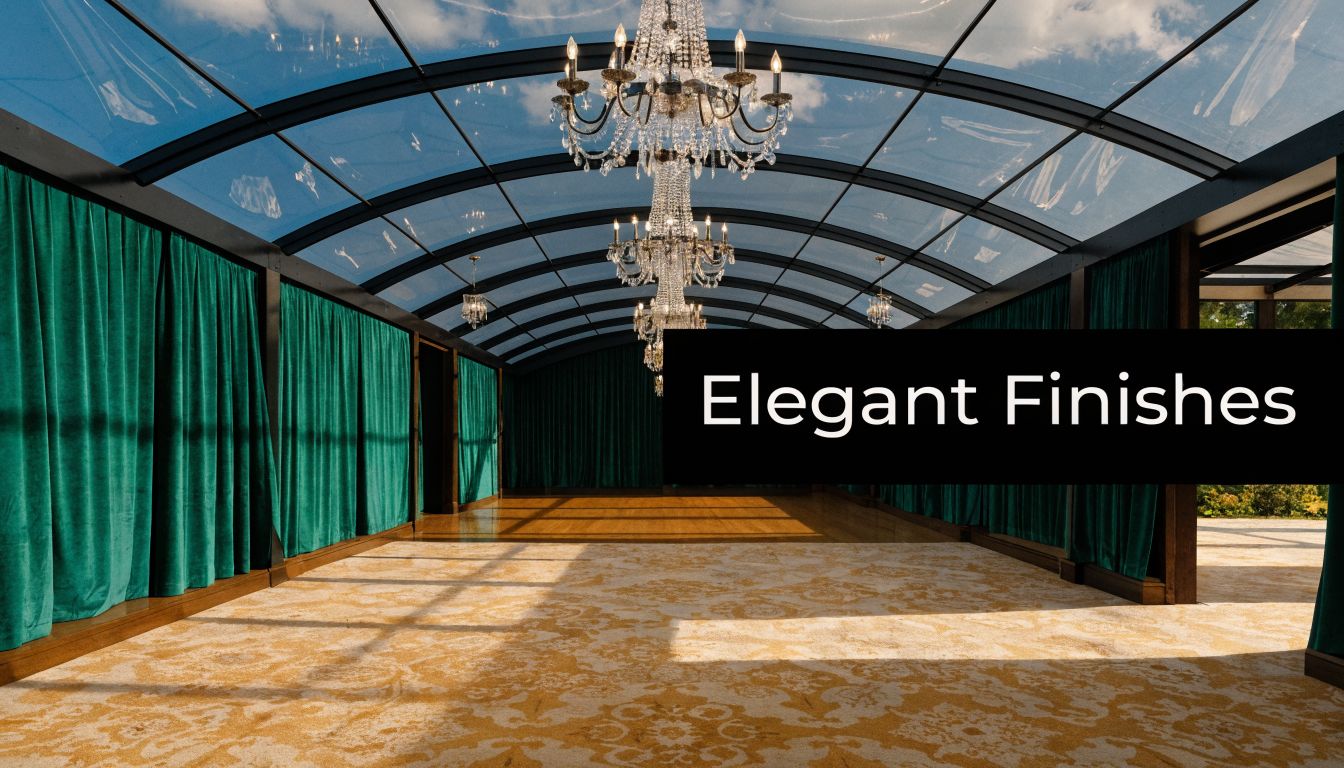
Carpet choices that actually suit events
Not every carpet is doing the same job.
A practical event carpet can soften the feel of a boarded floor, improve the look of the interior and make the room quieter underfoot. For elegant receptions, darker or neutral tones often help hide day-of marks while still looking smart. More textured entrance matting can help where guests are bringing in moisture from outside.
If the event has layered décor, ceiling lining and draping also affect how the floor reads visually. Drapes for ceilings can make the whole in…co.uk/2026/02/21/drapes-for-ceilings/) can make the whole interior feel more joined up rather than like separate hired elements.
Why a dedicated dance floor matters
People do dance on all sorts of surfaces. That doesn’t mean they should.
A dedicated dance floor gives the evening a focal point and creates a surface intended for repeated movement. It also helps keep the dancing where you want it, instead of guests spreading into dining aisles or around table edges.
If you’re comparing looks and styles beyond the UK market, this guide to South African wedding dance floors is a useful reference for seeing how different finishes change the feel of a reception space.
Keep the dance floor proportionate to the guest flow, not just the marquee size. Too small and it feels cramped. Too large and it can look empty until later in the evening.
Walkways and transition areas
Walkways are easy to overlook and expensive to ignore.
Entrances, catering runs and links between house and marquee often take the worst wear. A protected route keeps shoes cleaner, helps staff move more safely and stops the nice interior finish from being undermined by a muddy approach.
Preparing for UK Weather Winter Events and Site Drainage
British weather doesn’t need much encouragement to expose weak planning. A floor that seems acceptable in dry conditions can become the first problem once the ground turns cold, wet or soft.
That’s why site preparation matters so much. If the base is wrong, no carpet or dance floor on top will fix it. A proper visit to inspect levels, access and drainage paths is far more useful than trying to judge everything from photographs.
Winter ground changes the decision
For winter events around Croydon, boarded insulated flooring can make a noticeable difference to comfort. According to Dynamic Marquees’ flooring guidance, insulated boarded floors can achieve U-values of 1.5-2.0 W/m²K and retain 25-30% more heat than simple matting, while uninsulated floors can account for 15-20% of total heat loss.
That matters because guests feel the cold from below long before they comment on heater output. You can have warm air in the marquee and still have an uncomfortable room if the floor is pulling heat into damp ground.
If you’re planning a colder-season event, heating and flooring need to be chosen together rather than as separate line items. This is why many clients look at hire heated marquee options at the same time as the floor build-up.
Drainage isn’t only about rain during the event
Sites in Surrey and South London often have another issue. Ground can already be holding moisture before setup starts.
That changes the flooring conversation. A pretty lawn may still need a more substantial solution if the soil has stayed damp. It’s also why the entrance route deserves attention. Guests judge the setup from the moment they arrive, not from the moment they step onto the dance floor.
A sensible drainage-minded approach usually includes:
- Checking where water naturally runs across the site, especially near fences, patios and low points.
- Protecting the threshold areas where people enter from the house, driveway or garden path.
- Choosing a floor that matches the season rather than assuming a summer-style solution will be fine in November.
- Allowing for service traffic so caterers and suppliers aren’t crossing vulnerable ground repeatedly.
If a winter marquee is comfortable at ground level, the whole event feels more settled.
Don’t cut corners on the survey
Access can be as important as the flooring type itself. In Croydon, narrow side paths, steps, shared drives and tight turn-ins are common. A system that is ideal in theory can become awkward if it can’t be moved efficiently to the setup area.
That’s why a flooring plan should always be based on the actual venue, not a generic package.
Accessibility Safety and Budgeting for Your Floor
The best marquee floor is the one guests don’t have to think about. It feels steady, routes people clearly, and doesn’t create awkward edges or hidden trip points.
Accessibility and safety first
If older guests, wheelchair users, children or anyone with reduced mobility will be attending, transitions matter as much as the main floor area. Sudden lips between surfaces, loose edges and poorly planned cable runs create avoidable problems.
A safer layout usually includes:
- Gentle transitions at entrances so guests aren’t stepping up unexpectedly.
- Clear routes between dining, bar and toilets without squeezing past furniture legs.
- Non-slip thinking in wet conditions especially near doors and walkways.
- A separate plan for cables so power and lighting runs don’t cross guest traffic areas.
There’s also a maintenance angle. Frederick Walton’s 1863 patent for linoleum introduced a smooth, durable and hygienic floor covering in Great Britain, and that legacy still informs modern easy-clean event surfaces such as portable dance floors and interlocking tiles, as described in this flooring evolution article. For marquee use, that matters because easy-clean surfaces are often the safest and most manageable during a live event.
How to think about budget
There isn’t one fixed price for flooring for marquee because cost depends on the ground, access, finish level and how much of the marquee needs structural flooring rather than a lighter covering.
A useful way to budget is to separate the decision into three bands:
| Budget level | Likely approach | Typical use |
|---|---|---|
| Entry level | Basic matting or selective route coverage | Short casual gatherings on cooperative ground |
| Mid range | Modular interlocking flooring | Garden parties, practical corporate use, busy family events |
| Higher finish | Raised boarded floor with carpet and dedicated dance area | Weddings, formal receptions, premium presentation-led events |
If you’re pricing the whole event, it helps to compare flooring choices alongside the wider package rather than in isolation. This guide to marquee hire prices in London is a good starting point for understanding how flooring sits within the overall budget.
How We Help You Plan Your Perfect Marquee Floor
Most flooring problems are solvable once someone sees the site properly and matches the floor to the job it needs to do.
A good process starts with the ground. Is it level enough for a lighter system, or does it need a boarded build-up? How will guests enter? Where will the bar sit? Will the event be formal, weather-exposed, dance-heavy or winter heated? Those answers shape the floor more than any brochure photo does.
In practice, the smoothest projects usually follow a simple path:
- Assess the venue in person. That shows up slopes, soft areas, tight access and drainage concerns.
- Match the floor to the event type. Dining, dancing, service access and guest comfort all pull in slightly different directions.
- Visualise the layout before install. That helps avoid awkward circulation and wasted space.
- Build the finish from the base upward. Structure first, then carpet, dance floor and walkways where needed.
Clients often feel relieved once flooring is treated as part of the venue plan rather than an add-on. That’s where site visits and CAD layouts are useful. They turn a vague concern about grass, levels or weather into a practical plan that can be costed properly and installed cleanly.
If you’re planning an event in Croydon, London, Surrey, Kent or Middlesex, the simplest next step is to get the site looked at early and decide the floor before the styling details start stacking up.
If you’d like practical advice on flooring, layout and marquee setup, contact Premier Marquee Hire for a pressure-free quote and site visit.
Sorry, the comment form is closed at this time.