

21 Apr Planning Birthday Party: Your Guide to Marquee Fun
You’re probably staring at a garden, a rough guest list, and a message thread that’s already getting out of hand. One person wants a bouncy castle, someone else wants a buffet, and you’re watching the forecast like it might personally ruin your week.
That’s a normal place to start.
Planning birthday party celebrations at home can feel bigger than it should, especially when it’s a proper garden event and not just cake in the kitchen. The good news is that most of the stress comes from trying to decide everything at once. When you sort the decisions in the right order, the whole thing becomes far more manageable.
The First Big Decisions Your Budget Guest List and Vision
The easiest way to lose control of a party is to begin with decorations or entertainment before you’ve settled the basics. Budget, guest list, and overall feel come first. Everything else follows from those three.
Start with the spending limit
For children’s parties, UK families spend an average of £250 to £350, and 42% of parents in London and the South East overspend by at least 20%. For outdoor events, marquees and garden setups can account for 25% of the total spend, and 70% of UK parents book party services at least two months in advance to secure availability, according to these UK birthday party statistics.
That tells you two useful things straight away. First, overspending is common, so if you don’t set a firm ceiling, the extras creep in fast. Second, good suppliers get booked early, particularly for weekends and school holiday dates.
A simple budget sheet works better than a vague mental total. Split it into groups such as:
- Structure and shelter: marquee, flooring, sidewalls, heating
- Food and drink: catering, cake, serving tables, drinks station
- Furniture: tables, chairs, linen, lounge seating
- Entertainment: DJ, games, soft play, photo booth
- Finishing touches: lighting, balloons, signage, table styling
Practical rule: Decide what the party must have before you price the nice-to-haves.
If you need a clearer sense of what marquee costs usually include, this guide to prices for marquee hire is a sensible starting point.
Keep the guest list realistic
A lot of planning birthday party stress comes from guest numbers changing every few days. The mistake isn’t inviting people. It’s planning the layout before the list settles.
Start with your core group. Family, close friends, classmates, neighbours, whichever applies. Then separate them into three categories:
- Definitely invited
- Would like to invite
- Only if space allows
That sounds obvious, but it stops a common garden party problem. You book for one number, then add extra tables, extra catering, extra chairs, and suddenly the garden feels cramped instead of festive.
Choose a clear party style
A good party doesn’t need ten themes at once. It needs one clear identity.
For most garden birthdays, the style usually falls into one of these:
- Relaxed daytime gathering: buffet, lawn games, casual seating, family mix
- Milestone celebration: drinks area, smarter furniture, speeches, evening lighting
- Children’s themed party: activity zone, food station, parent seating, weather cover
If you’re short on ideas for the entertainment side, these planning ideas are useful for prompting what might suit the age group and space you’ve got.
The clearest plans are usually the cheapest to run, because you stop paying for bits that don’t match the event.
When the budget is defined, the guest list is under control, and the atmosphere is clear, the rest of the decisions become practical rather than emotional. That’s where most overwhelmed hosts start to relax.
Choosing Your Perfect Marquee and Layout
A marquee shouldn’t just fit in the garden. It should fit the party.
That’s where many homeowners get stuck. Generic party advice often mentions venue size, but it rarely helps with actual UK gardens or explains how layout affects guest comfort. Guidance on accessibility and space planning is often too vague, even though the right width can range from a 3m walkway to a 15m main tent, as discussed in this piece on inclusive and accessible party planning.
Measure the garden properly
In Croydon, Bromley, Sutton, and similar parts of South London, gardens often look larger on paper than they feel in use. Fences narrow the footprint. Trees interrupt the corners. Side access can be tight. Patio doors need clearance. Washing lines always seem to be exactly where you don’t want them.
Check these before speaking to any supplier:
- Usable width: measure fence to fence, not just lawn to lawn
- Usable length: leave room for entrances and movement around the structure
- Access route: note side passages, steps, gates, and tight turns
- Ground condition: slopes, soft patches, raised beds, drains, and uneven paving
- House connection: think about whether guests will move between kitchen, loo, and garden
A free site visit matters because photos rarely show the actual constraints. What looks straightforward from the back door can be awkward once tables, catering, and walking space are included.
A few practical layout ideas are easier to grasp when you can see them in action.
Match the marquee to how the party will work
People often ask for a marquee size based only on guest count. That’s only half the calculation. A standing drinks party uses space differently from a sit-down meal. A children’s party with soft play, gifts, and buggy parking needs a different layout again.
Here’s a practical guide for comparing formats.
| Marquee Size (Width x Length) | Standing Reception Capacity | Seated (Trestle Tables) Capacity | Seated (Round Tables) Capacity |
|---|---|---|---|
| 3m x 6m | Small gathering | Limited seating | Not ideal |
| 3m x 9m | Small to modest gathering | Suitable for a compact setup | Limited |
| 6m x 6m | Moderate gathering | Good for smaller seated parties | Works for a compact round-table layout |
| 6m x 9m | Comfortable for lively garden parties | Strong option for dining plus circulation | Good balance of seating and movement |
| 6m x 12m | Larger reception-style event | Comfortable for bigger seated groups | Strong option for milestone birthdays |
| 9m x 12m | Large celebration | Spacious with buffet or dance area | Spacious round-table layout |
| 12m x 15m | Major private event | Suitable for substantial seated plans | Well suited to larger formal celebrations |
This table is a starting point, not a promise. Add a dance floor, DJ booth, bar, buffet run, cake table, children’s corner, or lounge seating and the required footprint changes quickly.
Leave more room than you think you need around entrances, food stations, and the path back into the house. Guests remember ease, not tight packing.
Think in zones rather than one open box
The best marquee layouts feel natural because each part of the party has its own place. Guests shouldn’t have to cross the dance floor to get a drink, and children’s activities shouldn’t block the route to the buffet.
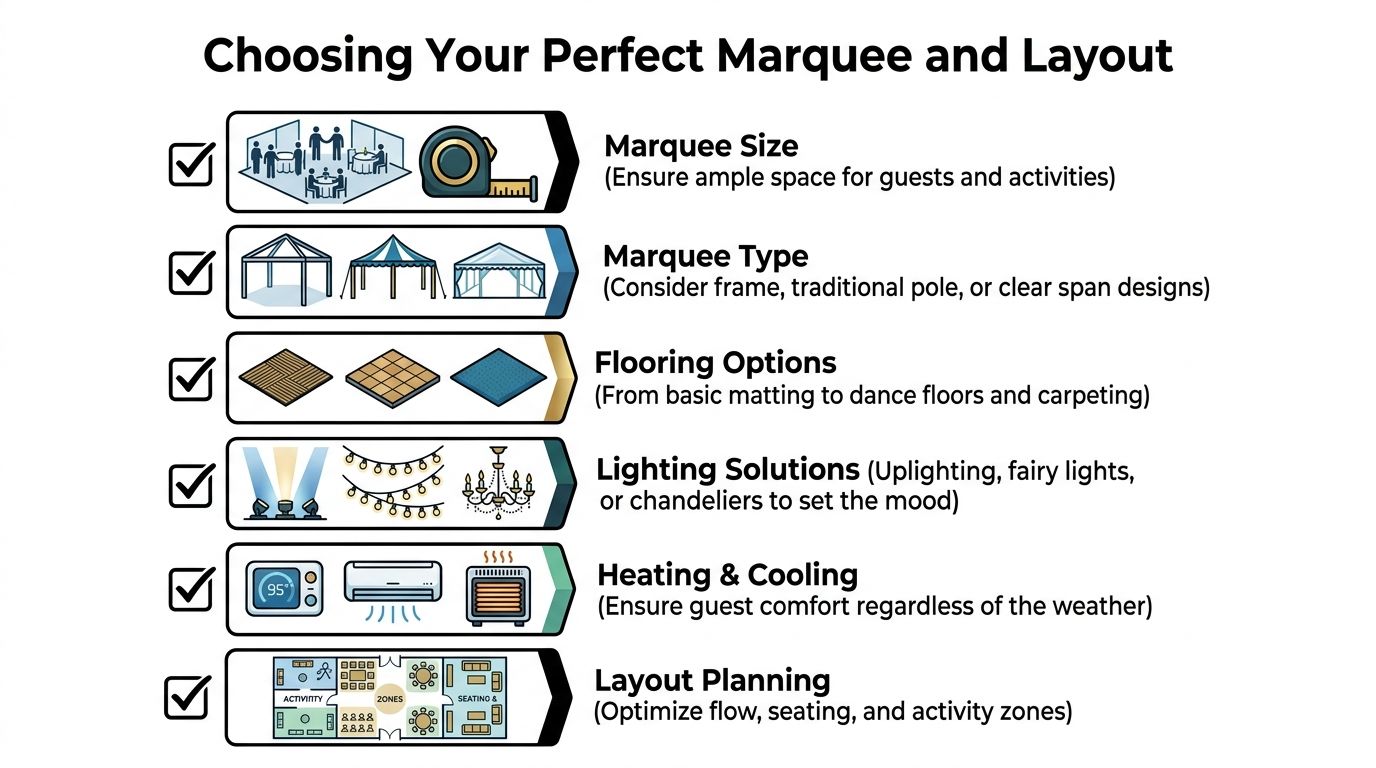
A clean layout usually includes:
- Arrival area: a clear entrance with enough room for greeting guests
- Main social zone: dining tables or open standing space
- Food point: buffet, cake table, or serving line away from bottlenecks
- Entertainment zone: music, games, or dance floor with its own footprint
- Quiet edge: seating for older relatives, parents, or anyone needing a calmer spot
If you’re comparing structure options and want a broad overview of what’s available for different event styles, this page on marquee hire is a useful reference.
Clear span structures are often popular for birthdays because there are no central poles interrupting the usable floor. That gives you more freedom with tables, dance floors, and activity stations, especially in gardens where every metre counts.
Creating the Atmosphere with Furniture and Lighting
A marquee on its own is just the shell. The mood comes from what you put inside it.
I’ve seen the same garden host two completely different birthday parties with the same structure. One felt like a practical overflow space because the furniture was pushed to the edges and the lighting was too harsh. The other felt warm, polished, and inviting because every item had a purpose.
Choose furniture that suits the kind of party
Furniture changes both the look and the behaviour of your guests.
For a children’s party, practical often wins. Folding chairs, trestle tables, wipe-clean surfaces, and open floor space make life easier. Parents can supervise, children can move about, and nobody worries if juice goes over.
For an adult milestone birthday, the room usually benefits from softer edges. Round tables encourage conversation. Chiavari chairs dress the space instantly. A small lounge corner gives people somewhere to talk away from the music.
A useful way to decide is to ask what you want guests to do most of the time:
- Sit and eat together: round tables feel more social
- Drop in and mingle: poseur tables and scattered seating work well
- Watch children and chat: mixed seating with open central floor space helps
- Stay into the evening: add bar furniture, lounge seating, and a defined dance area
Let the layout create the feeling
A good party layout doesn’t announce itself. It feels effortless.
One arrangement that works well in garden marquees is to keep the central area flexible and build the functions around the edges. Dining or standing space in the middle. Lighting overhead. Buffet on one side. Gifts or cake display on another. Lounge seating in the quieter corner.
A packed marquee can still feel calm if guests know where to go without thinking.
When clients ask for CAD layouts before committing, that’s usually why. It’s not just about capacity. It helps you spot practical issues before the day, such as a bar area pushing into the main walkway or a cake table ending up too close to the entrance.
Lighting does more than decorate
Lighting has two jobs. First, it makes the space usable. Second, it changes the tone.
Good marquee lighting usually layers both:
- Functional light: enough brightness for dining, serving, and safe movement
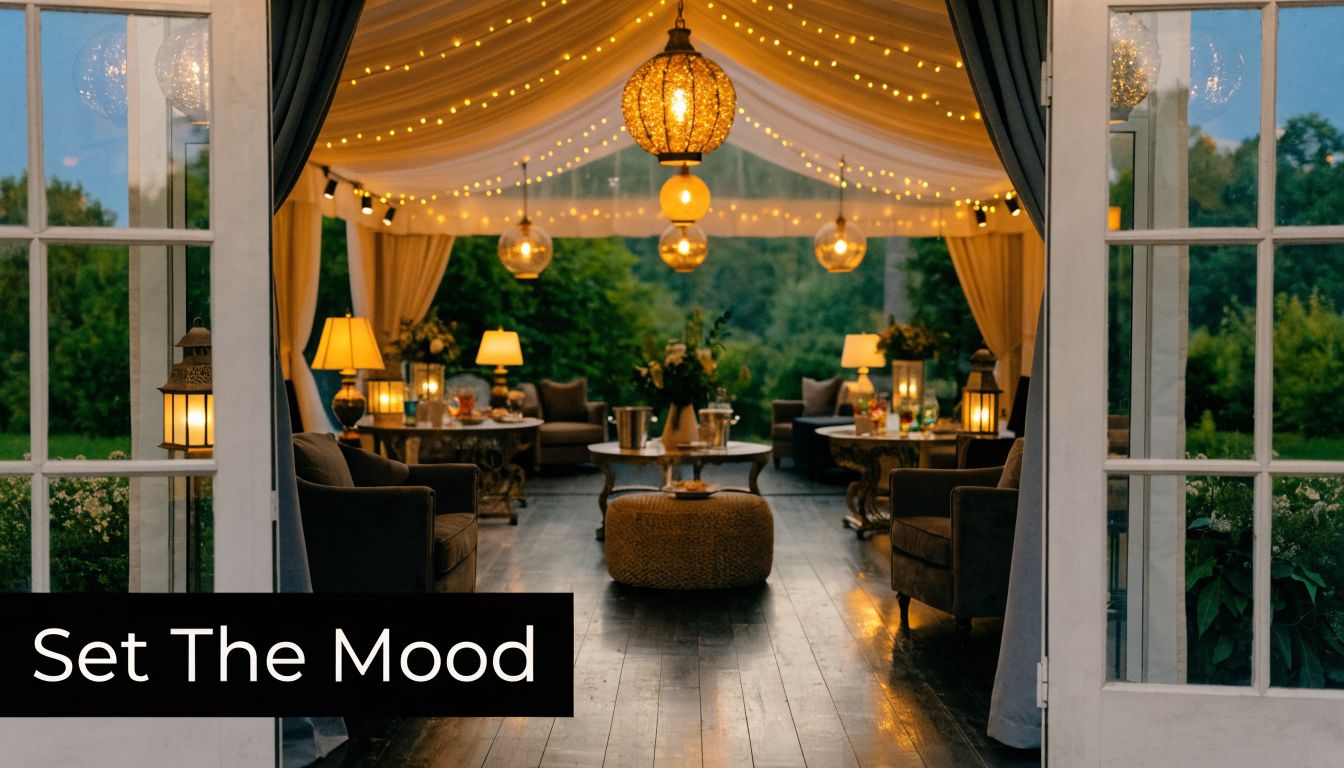
- Ambient light: fairy lights, uplighters, warm washes, or decorative fittings
- Feature light: cake table, bar front, dance floor, or entrance point
If the party starts in daylight and runs into the evening, don’t assume natural light will carry the event. Garden spaces become flat and gloomy quite quickly once the sun drops, even in summer.
This guide to lighting for marquees is helpful if you want to compare practical lighting with mood-focused options.
Warm lighting usually flatters people and softens the structure. Cool bright light can make even a well-dressed marquee feel temporary. That’s fine for service areas. It’s rarely what you want where guests are eating, drinking, and taking photos.
Planning for Food Fun and Functionality
This is the part that catches people out. They book the marquee, choose the seating, maybe line up entertainment, and then realise the whole event depends on practical details nobody sees in the photos.
That’s one reason planning birthday party events can feel heavier than expected. 51% of parents find guest list management challenging, 59% report feeling overwhelmed by the planning process, and in the South East 34% of parties are described as somewhat elaborate, involving professional services such as marquee hire and catering. Financial stress affects 33% of parents in that same reporting, according to this birthday party planning analysis.
Food needs space and a workflow
Food isn’t just a menu choice. It affects timing, staffing, tables, waste, power, and guest movement.
A buffet is flexible, but it needs a proper serving run and room for queuing. A plated meal feels more formal, but it usually calls for a clearer service plan and stronger coordination between kitchen access and dining layout. Food trucks are fun, though they need parking access and a sensible location so guests aren’t crossing the whole garden with hot plates.
If you’re still deciding what style of menu suits the event, these 12 Crowd-Pleasing Party Foods are a helpful prompt for balancing easy service with broad appeal.
Entertainment has technical needs
A DJ setup doesn’t stand alone. It needs power, a sensible position, and room for people to gather without blocking seated guests. A children’s entertainer needs clear sightlines and enough open area to hold attention. A photo booth works best when it’s visible but not parked in the busiest traffic route.
This is why separate choices need to be made together. Food, music, furniture, and guest flow all compete for the same space.
A sensible way to plan is to write down each element and ask three questions:
- Where will it go
- What does it need
- What might it interfere with
That last question saves headaches. A bar next to the children’s craft table sounds harmless until both become noisy bottlenecks. A cake display near the entrance looks lovely until coats, bags, and arriving guests take over the same corner.
The smoothest parties usually have the dullest plans on paper. Power is accounted for. Catering has room. Staff know where to unload. Guests never notice the work behind it.
Don’t leave utilities to the last week
Some of the least glamorous decisions matter most on the day:
- Power supply: for lighting, sound, catering kit, and any added features
- Toilet arrangements: especially for longer parties or larger groups
- Heating or airflow: based on season, guest age range, and time of day
- Waste handling: bins, bottle disposal, food clear-up
- Supplier access: who arrives first, where they unload, and how they exit
Hosts often focus on the visible centre of the party. The event succeeds or fails at the edges, where service, storage, access, and power have been thought through properly.
The Essential Weather Contingency Plan for UK Parties
Weather anxiety is the reason many people hesitate over a garden birthday in the first place. That’s fair. In this part of the country, you can wake up to sunshine, get a shower by lunch, and spend the evening wondering where the wind came from.
Generic party articles usually stop at “have a rainy day plan”. That isn’t enough. There’s a real gap in advice around UK weather-specific planning, especially for homeowners in London, Surrey, and Kent who need practical infrastructure rather than vague reassurance, as noted in this discussion of outdoor birthday planning gaps.
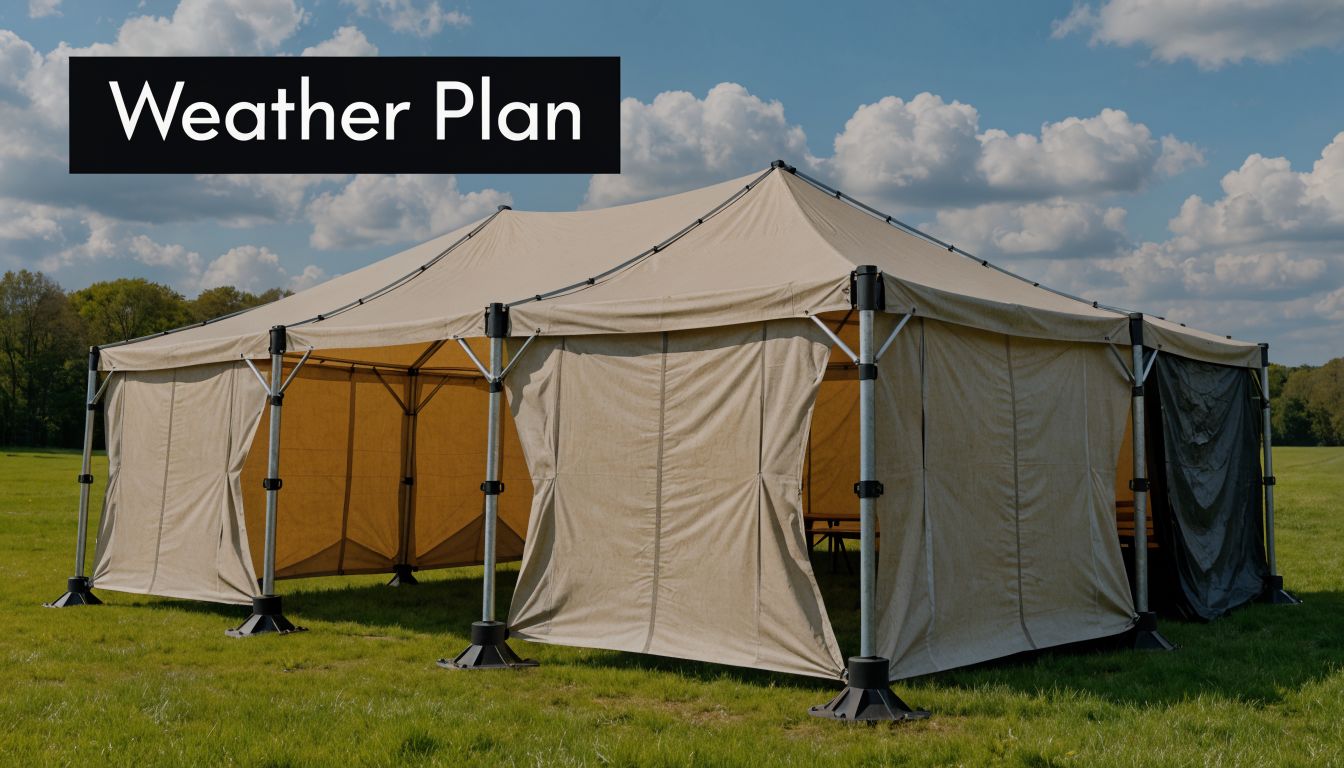
Treat weather cover as part of the venue
A marquee isn’t just a backup. For a UK garden party, it often is the venue.
That shift in mindset matters because it changes your planning. Instead of hoping the lawn stays dry and trying to rescue the event if it doesn’t, you build around a structure that already protects the key parts of the day.
The practical benefits are straightforward:
- Rain cover: guests, food, gifts, and furniture stay protected
- Wind shelter: sidewalls reduce exposure and help the space feel settled
- Temperature control: heaters or open sides can make the same structure work across seasons
- Ground protection: flooring prevents the soggy, muddy feel that spoils shoes and hems
Comfort matters more than optimism
British hosts often gamble on “it’ll probably be fine”. Sometimes it is. Sometimes everyone ends up huddled indoors while the buffet sits outside getting damp.
A proper weather plan is calmer and cheaper than a last-minute scramble. If the event may run into the evening, assume the temperature will feel cooler than it did during setup. If children are involved, remember they feel uncomfortable sooner when ground conditions are poor, seating is limited, or the space gets stuffy.
Guests are very forgiving about the forecast. They’re much less forgiving about being cold, wet, or cramped.
Flooring is one of the biggest differences between a garden setup that feels professional and one that feels improvised. The same goes for entrance planning. If people are stepping directly from wet grass onto a dance floor or carpeted area, the whole event becomes harder to keep tidy and comfortable.
The value of a weather-resilient setup isn’t only protection. It gives you confidence to keep the party outdoors without checking the sky every ten minutes.
Final Steps and On-The-Day Coordination
The last stretch should be about confirming, not reinventing. If you’re still changing major decisions in the final week, the pressure rises quickly.
Four weeks out
Lock in the guest list as firmly as you can. Confirm timings with caterers, entertainers, and anyone delivering hired items. If you’re doing a playlist, speeches, or a cake moment, decide the rough running order now.
One to two weeks out
Send a final reminder to guests with start time, parking guidance if needed, and anything practical they should know. If children are attending, tell parents whether the party is mainly outdoors, whether there’s cover, and whether they should bring layers.
Check the house side as well. Clear access routes, decide where coats or gifts will go, and make sure suppliers know how to reach the garden without confusion.
On the day
Installation runs best when access is clear and someone is available to answer quick questions. Gates open, pets kept in, cars moved if they block delivery, and one point of contact identified. That alone avoids a lot of avoidable faff.
A short run sheet helps more than people expect. Keep it simple:
- Supplier arrival windows
- Food service time
- Cake moment
- Entertainment start points
- Wind-down and collection plan
If everyone knows what happens next, the host gets to enjoy the party instead of managing it minute by minute.
You don’t need military precision. You just need enough structure that the day can unfold without constant decision-making.
If you’re planning a garden birthday in Croydon, London, Surrey, Middlesex, or Kent and want calm, practical help with the setup, Premier Marquee Hire can help you sort the space, layout, and weather cover properly from the start. A clear quote and a sensible site visit can make the whole job feel much lighter.
Sorry, the comment form is closed at this time.