

22 Apr Outdoor Party Tent Hire The Ultimate London & Surrey Guide
You’ve probably got a date in mind, a guest list that keeps changing, and a group chat full of opinions. One person wants a relaxed garden party. Another wants something that feels like a proper venue. You’re also trying to second-guess the weather, the layout, the power supply, the catering route, and whether your garden or venue can take an outdoor party tent without turning the day into a logistical headache.
That’s normal. Individuals typically hire a marquee only a handful of times in their lives, usually for something that matters a great deal. A wedding in Surrey, a milestone birthday in Croydon, a Mehndi in a family garden, a school event, a company summer function. The event feels personal, but the decisions are technical.
There’s a long history behind that process. The modern party tent industry took shape after the Second World War, with a key turning point in the 1920s when outdoor weddings became popular enough to drive dedicated rental services, as outlined in this history of party tents. That matters because it explains why marquee hire today is not about throwing up a cover and hoping for the best. It’s a proper trade built around structure, safety, planning and guest comfort.
Your Expert Guide to Planning the Perfect Outdoor Event
A good outdoor event rarely starts with the marquee itself. It starts with the occasion.
A couple in South Croydon might need a clean, elegant setup for a wedding breakfast and evening dancing. A family in Sutton may want a covered space for a birthday that can handle children running in and out all afternoon. A business in Wimbledon may need a professional environment that feels branded and organised rather than temporary. The outdoor party tent is only the shell. The essential task is making it function properly for your event.
The first thing to get right is your priorities. Usually, they fall into four areas:
- Guest comfort. Will people sit, stand, eat, dance, queue, mingle, or stay for hours?
- Weather resilience. Do you need full cover, partial cover, side walls, flooring, heating, or all of the above?
- Layout flow. Where will the entrance, catering, bar, dance floor and tables go?
- Site reality. Is the event on grass, paving, mixed ground, or a tighter urban space?
The best marquee plans look simple on the day because somebody solved the awkward parts early.
If you’re hosting a summer gathering with food outdoors, it also helps to think beyond the marquee. Catering style, serving space and guest movement affect the footprint more than commonly realized. For anyone planning a more casual celebration, this guide on how to host a successful BBQ party is a useful companion because it deals with the practical side of feeding people well outdoors.
Once the purpose is clear, the rest becomes easier. You can choose the right frame, the right width, and a layout that feels comfortable instead of cramped.
Choosing Your Marquee Frame and Width
Most problems with marquee planning start when people choose based on appearance alone. Shape matters, but structure matters more.
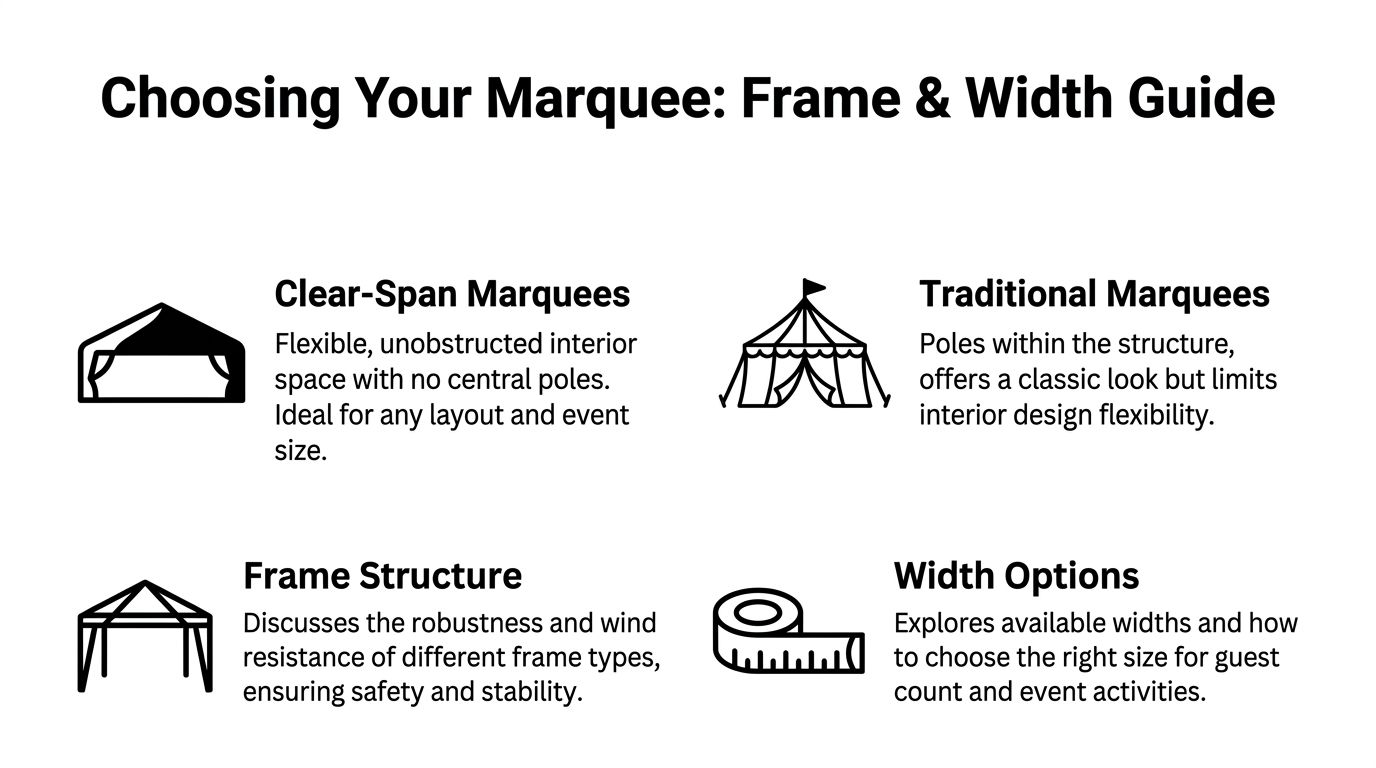
For most events in London, Surrey and the wider South East, frame marquees are the more practical choice. According to Mastertent’s frame tent data sheet, frame tents outperform pole tents on varied terrain by eliminating central poles, offering clear spans up to 15m, and using adjustable legs to compensate for uneven ground. In plain terms, that means more usable space, fewer internal obstructions, and easier installation on the sort of gardens and hardstanding areas we see locally.
Frame tents versus traditional pole marquees
A traditional pole marquee still suits some events. It has a classic look and can feel very striking from the outside. The drawback is inside the tent. Centre poles affect table plans, stage positions, dance floors and sightlines.
A clear-span frame marquee gives you a cleaner interior. That matters if you want long banquet tables, a central dance floor, a bar on one side, or a wedding top table that doesn’t compete with support poles.
The practical differences are easy to summarise:
| Type | Best for | Main advantage | Main trade-off |
|---|---|---|---|
| Frame marquee | Gardens, driveways, corporate sites, mixed terrain | Unobstructed interior and flexible layout | Less of the classic pole-marquee look |
| Pole marquee | Open grassy sites with a traditional aesthetic | High-peaked, classic appearance | Internal poles reduce layout freedom |
What width actually means on site
Width is where the marquee begins to feel real. A difference of a few metres can completely change what fits comfortably inside.
Common width choices include:
- 3m width. Best used for walkways, covered catering runs, side extensions or compact shelter spaces.
- 6m width. Works for smaller garden parties, a narrow dining arrangement, or service areas.
- 9m width. Often the sweet spot for private celebrations because it handles dining and circulation well.
- 12m width. Suits larger weddings and events where you need space for multiple functions inside one structure.
- 15m width. Best for major celebrations, corporate hospitality, community events and larger audience-style layouts.
How to narrow the choice quickly
If the event is mostly seated dining, width matters because chairs need pull-back space and guests need to move around without squeezing past each other. If the event is more informal, width helps you create zones. Entrance area, bar, lounge space, buffet, cake table, dance floor.
Practical rule: choose the width based on the busiest use of the tent, not the quietest moment.
A wedding breakfast with speeches and evening dancing needs a different width from an afternoon drinks reception, even if the guest count is similar.
If you want to compare formats in more detail, it helps to look at a real fleet rather than generic illustrations. This overview of marquee styles and configurations is useful for understanding how different widths and structures translate into real event setups.
Planning Your Capacity and Layout
Once you know the type of outdoor party tent you want, the next decision is size. Many people, when making this choice, either under-order and create a squeeze, or over-order and end up with a space that feels oddly empty.
Demand for professional event structures has grown strongly. The global party tent market was valued at USD 23.1 billion by 2025 and is projected to grow at a 7.8% CAGR through 2033, with large-scale tent rentals making up about 30% of all rental items, according to party tent market data. That growth reflects what most planners already know. Guests expect a polished setup, not a last-minute shelter.
Start with event style, not just guest count
The right size depends on how people will use the space.
A seated wedding meal needs room for tables, chairs, service circulation and usually a top table or feature area. A standing drinks reception can hold more people in the same footprint, but only if you don’t overload it with furniture. A party with a DJ, dance floor and bar often needs more room than clients first assume because those features compete for the best internal space.
Three questions settle the first draft quickly:
- Will everyone be seated at once?
- Do you need a dance floor or stage area?
- Will catering happen inside, alongside, or from a separate service tent?
Space that people forget to include
The guest area is only part of the plan. Most marquees also need some or all of the following:
- A bar area with queueing room
- Buffet or serving space
- DJ or band position
- Cake, gift, or display table
- Entrance and welcome area
- A clear route for staff
That’s why layout drawings matter. A simple CAD plan often prevents the two biggest mistakes. Cramming too much into the footprint, or leaving key functions in awkward corners where guests bottleneck.
If your first plan only counts tables and chairs, it’s incomplete.
Marquee size and guest capacity guide
Use this as a starting point, not a final quote. Furniture choice, table shape, stage needs and bar size all affect the finished plan.
| Marquee Size (Width x Length) | Seated Guests (Round Tables) | Standing Reception Guests |
|---|---|---|
| 6m x 6m | Small private dining setup | Small informal reception |
| 6m x 12m | Medium seated gathering | Comfortable drinks reception |
| 9m x 12m | Wedding or party dining for a moderate guest list | Larger standing event |
| 12m x 18m | Large seated celebration | Busy reception with multiple zones |
| 15m x 30m | Large-format event layout | High-capacity corporate or community event |
A useful benchmark from the verified technical data is that a 12m x 30m marquee can support 400 seated guests at 1m² per person in one configuration, while 15x9m can suit a smaller wedding-style setup. Those figures depend on layout style and should be tested against your actual furniture and event plan rather than copied blindly.
Why CAD planning pays off
On paper, a marquee can seem huge. Once round tables, chairs, a bar, a DJ booth and a dance floor go in, it shrinks fast.
A scaled layout lets you check practical details before anything is ordered. Can waiting staff pass behind chairs comfortably? Does the dance floor sit naturally or block the bar? Can older guests reach toilets or exits without crossing the busiest part of the room? That’s the difference between enough space and usable space.
Weatherproofing for a British Summer and Winter
The weather question comes up in nearly every first conversation, and for good reason. In the UK, “outdoor” never means “weather ignored”.
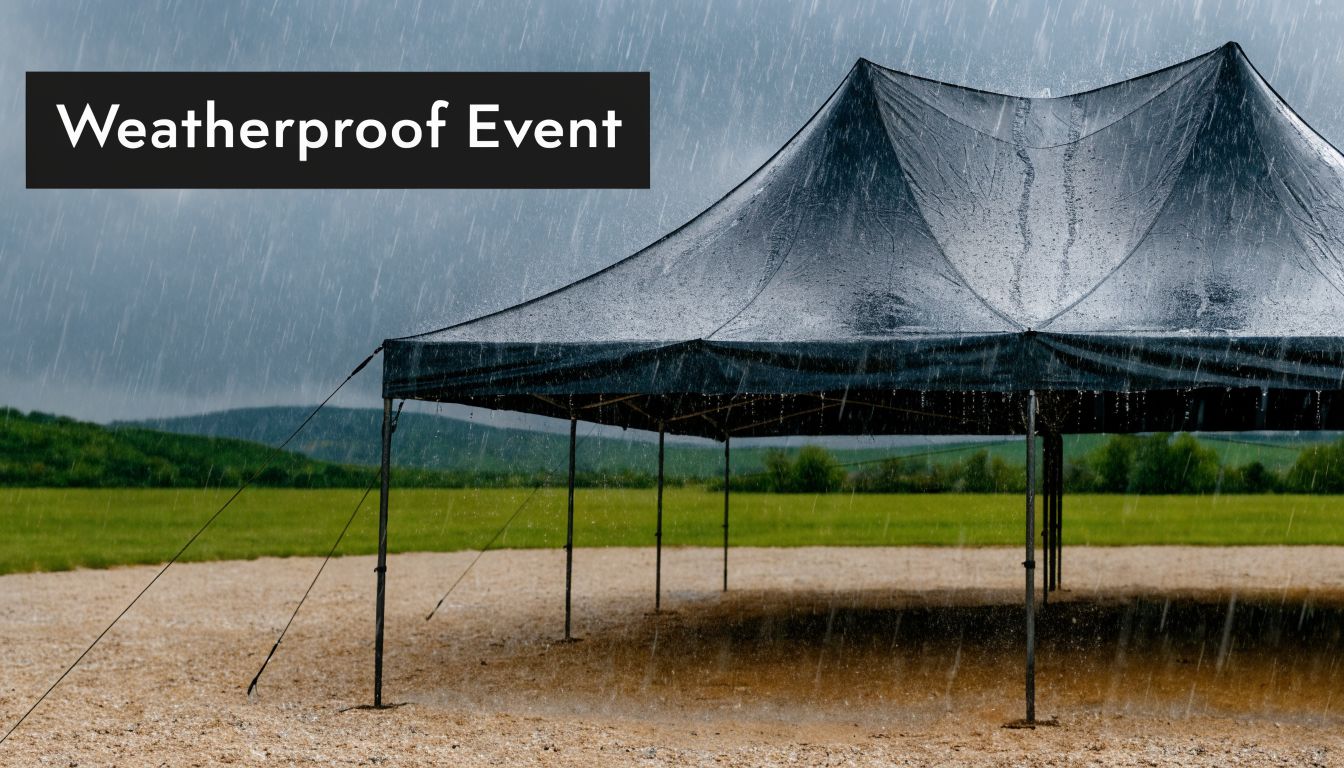
A proper marquee is not the same thing as a retail gazebo or lightweight party shelter. In the UK, commercial-grade outdoor party tents must comply with BS EN 13782:2015, and the verified data states that this standard requires structures to withstand wind speeds up to 97 km/h. It also makes proper anchoring critical, with site assessment playing a major role in reducing failure risk, as detailed in this technical reference on compliant temporary structures.
What weatherproofing actually includes
Clients often think weatherproofing means “add side walls if rain is forecast”. It’s broader than that.
A resilient setup usually combines several elements:
- Commercial-grade frame and roof covering so the structure stays stable
- Correct anchoring method for grass, clay, paving or hardstanding
- Side walls where exposure, wind direction or temperature make them sensible
- Flooring to keep guests off wet or soft ground
- Heating or ventilation depending on season and guest use
The biggest mistake is to treat these as optional extras without context. A summer wedding on an exposed lawn may need more protection than a sheltered winter event in a walled courtyard.
Grass, paving and mixed surfaces
Ground conditions matter more than many people expect. A marquee in a Surrey garden behaves differently from one on a Croydon car park or a mixed site with lawn and patio sections.
On grass, anchoring depends on soil condition and the available perimeter. On hard surfaces, ballast solutions may be needed. On sloped sites, the frame and floor need to be planned together. That’s why a site visit matters so much. The right weatherproofing solution starts with the actual ground, not the brochure image.
Professional marquee work is mostly won before install day. It’s won in the survey.
Winter marquees can work very well
There’s a persistent idea that marquees are only for summer. That’s not how many modern setups are used now.
Winter events can feel excellent under canvas when they’re planned properly. You need an enclosed structure, appropriate flooring, and heating sized for the event use. A wedding meal, for instance, feels different from a standing Christmas party with frequent door movement. Entrances, draft points, and how often side walls stay open all affect comfort.
For clients planning colder-month events, it helps to understand the available marquee heating and winter setup options before committing to a layout. Heating works best when it’s treated as part of the design, not an afterthought.
This short video gives a useful visual sense of how professional marquee structures are assembled and stabilised in practice.
British summer planning still needs a rain plan
Even in June, July and August, the safe assumption is variable weather. That doesn’t mean you need to plan pessimistically. It means building in options.
A good summer setup often includes flexible side walls, solid flooring where guests will spend time, and a layout that still functions if everybody moves fully inside for a spell. If the marquee only works in perfect sunshine, it hasn’t been planned well enough.
Essential Accessories to Complete Your Event
An outdoor party tent only starts to feel like a venue when the inside is thought through properly. Proper interior planning often reveals that budget and experience pull in opposite directions. People want the marquee to look finished, but they don’t always realise how much guest comfort depends on the details around seating, lighting, service space and entertainment.
That gap is common. Existing content often talks about the marquee itself while skipping the joined-up planning around furniture, lighting and layout. In reality, the tent and the accessories need to be chosen as one package in design terms, even if you price them separately.
Furniture that matches the event style
Furniture sets the tone quickly.
For a relaxed birthday or community event, folding chairs and practical tables can be exactly right. They’re straightforward, durable and easy to arrange. For weddings and more polished private functions, Chiavari chairs usually create a much cleaner visual line and work better in photographs.
The same goes for table format. Round tables encourage conversation and suit formal dining. Long banquet tables create a stronger visual statement and can use space very differently. Neither is universally better. It depends on how you want the event to feel once guests are inside.
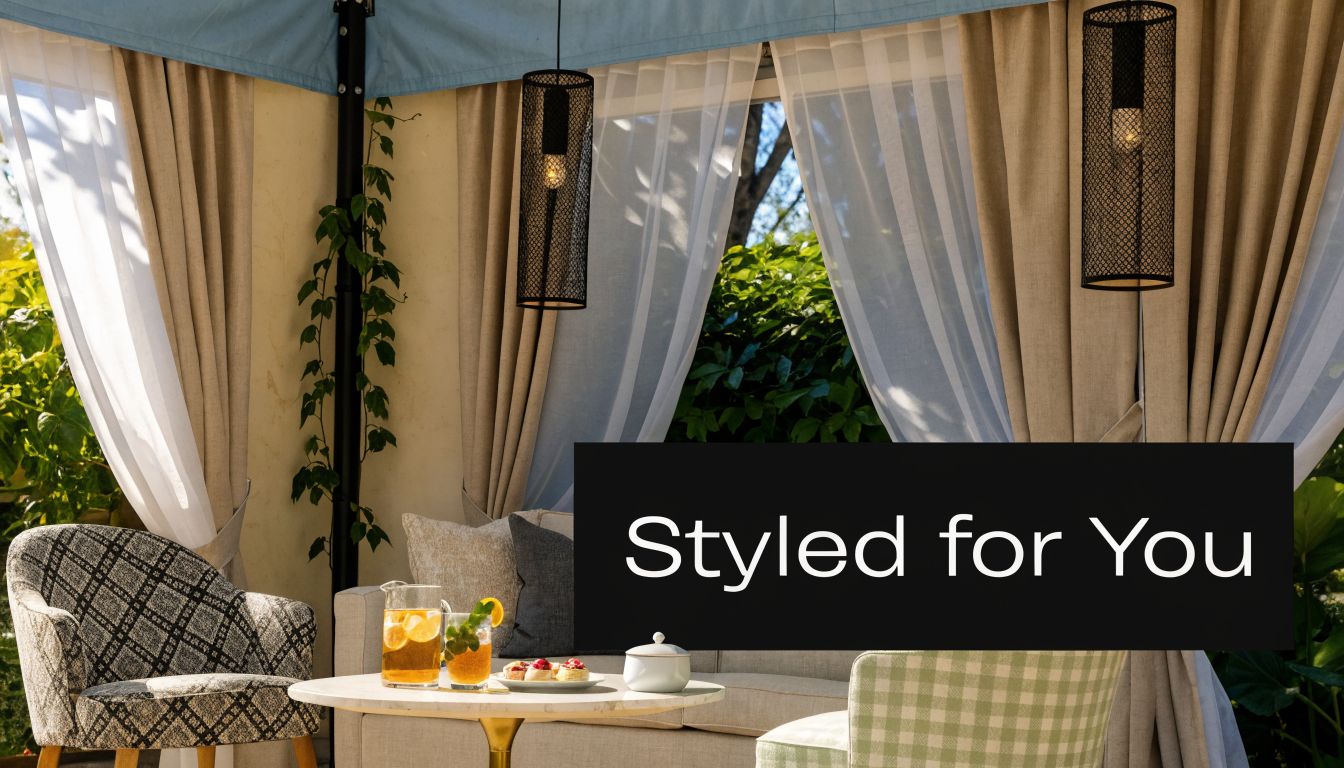
Lighting changes everything after dark
Daytime and evening marquees are almost two different venues.
Useful lighting choices often include:
- Functional lighting for entrances, catering zones and service points
- Ambient lighting such as fairy lights or warm decorative fittings
- Feature lighting for bars, cake tables, stages or lounge corners
A common mistake is using one lighting type for everything. Good event lighting needs layers. Guests should be able to see clearly where they walk, while the main event space still feels warm rather than clinical.
Bar, catering and service flow
The bar often gets planned late, but it affects the whole room. Put it too close to the entrance and you create an immediate crowding point. Put it beside the dance floor and queues cut across the main social area.
Catering space is just as important. If your caterer is serving from inside the marquee, the footprint needs to allow that without pushing guests into tight circulation routes. If catering is outside or in a separate prep tent, the route between spaces needs to stay protected and practical.
A marquee looks expensive or economical largely because of how the inside works, not just what the roof looks like.
Entertainment and guest experience
Entertainment should fit the layout, not be squeezed in at the end. A DJ needs power, sightlines and sensible speaker positioning. A photo area needs waiting space. Giant letter features need placement that doesn’t block guest movement.
If you’re planning a family event with children, it can also help to look at a variety of inflatables as part of the wider event plan, especially where you want to split activity zones between adults and younger guests. That works best when the marquee, entertainment area and food space are designed to complement each other rather than compete for the same patch of lawn.
The Importance of a Site Visit and Professional Planning
A site visit is where a marquee plan stops being an estimate and starts becoming real. Without one, too much gets left to assumption.
The obvious checks are measurements and access. Can installation equipment reach the setup area? Is there enough clearance through gates, side passages or driveways? But the less obvious checks are often the ones that save the day. Uneven ground, tree branches, underground services, awkward steps, drainage runs, neighbouring boundaries, soft lawn edges, and where guests will approach from.
What gets checked on a proper survey
A useful site visit usually covers several layers at once:
- Ground condition. Grass, hardstanding, mixed surfaces, slope and drainage.
- Access route. Width, turns, obstructions and carrying distance.
- Overhead and underground issues. Trees, cables, lighting, irrigation, utility lines.
- Operational space. Where catering, toilets, generators or staff routes might need to go.
In London and the surrounding counties, that matters because sites vary so much. A Bromley garden may have a generous lawn but difficult side access. A Wimbledon property may have excellent hardstanding and tight delivery constraints. A venue in Kent may have plenty of open land but exposed conditions that affect orientation and anchoring decisions.
Why measurements alone aren’t enough
Clients sometimes send rough dimensions and ask for a quote based on that. It’s a sensible first step, but not enough for final planning.
A rectangle on paper doesn’t show whether the best marquee position leaves enough room for guest arrival, catering setup or emergency access. It doesn’t show whether a patio edge creates a flooring issue. It doesn’t show whether the ground falls away enough to affect door alignment or visual finish.
How the survey links to layout planning
The best layout plans come from real measurements taken on site. That’s what makes a CAD drawing useful rather than decorative.
Once the survey is done, you can position tables, bars, dance floors and entrance points with confidence. You can also make better decisions about whether to extend length, change orientation, add a walkway, or keep service areas separate. In practice, the site visit is risk management disguised as planning. It removes surprises for the client, the crew and everyone else involved in the event.
Budgeting Your Marquee Hire in London and Surrey
The question often sought early is simple. What will it cost?
The honest answer is that marquee hire isn’t one price. It’s a collection of decisions. That’s why generic online price figures can be misleading, especially in London and the South East where access conditions, event style and weather requirements vary so much.
There’s also a gap in the market here. UK planners often struggle to find useful information on how seasonal conditions affect budgeting. Existing vendor content tends to treat summer and winter as if they cost the same to deliver, even though weather resilience, heating and more sturdy enclosure can change the final scope of the job.
What drives the quote up or down
The main cost factors usually include:
- Marquee size and structure. Wider spans and longer lengths naturally require more materials and labour.
- Flooring choice. A basic covered ground approach differs from a more finished floor system.
- Walls and weather protection. Open-sided, partially enclosed and fully enclosed setups are not the same job.
- Furniture and styling. Practical seating costs differently from a more refined wedding setup.
- Lighting and power needs. Simple illumination is one thing. Feature lighting and entertainment support are another.
- Seasonal add-ons. Winter heating or extra weatherproofing should be budgeted from the start.
- Location and access. A straightforward Croydon install differs from a tighter or more distant site with longer carrying distances.
Why the cheapest quote often isn’t the cheapest event
A low headline figure can hide missing essentials. Flooring may not be included. Delivery may be added later. Side walls may be priced separately. The quote may assume easy access that your site doesn’t have.
That doesn’t mean you should always choose the highest quote either. It means you should ask what is included, what site assumptions have been made, and what changes if the weather forecast turns or the layout expands.
Budgeting principle: price the event you want to hold, not the bare structure someone can deliver.
How to budget sensibly from the start
The cleanest approach is to separate your thinking into three layers:
| Budget layer | What belongs here |
|---|---|
| Core structure | Marquee, installation, basic weather cover |
| Guest function | Flooring, seating, tables, lighting, bar, catering support |
| Comfort and finish | Heating, styling upgrades, entertainment features, specialist layout needs |
This helps you identify where you can flex and where you shouldn’t compromise. In most cases, structure, safety, and weather protection are elements that should not be compromised. Decorative upgrades are where you usually adjust to protect the budget.
For a more detailed breakdown of how suppliers usually structure quotations, this guide to marquee hire pricing considerations is a useful starting point before requesting a bespoke quote.
Your Marquee Booking Checklist and Timeline
The easiest marquee jobs are nearly always the ones booked with enough lead time and clear information from the start. That doesn’t mean you need every detail finalised immediately. It means having the basics ready so the planning can move quickly.
What to prepare before you enquire
Have these details to hand:
- Event date and rough timings
- Venue or property address
- Estimated guest numbers
- Event style, such as seated meal, standing reception, Mehndi, corporate function or party
- Known extras, including dance floor, bar, DJ, catering area or heating
If some of those are still flexible, that’s fine. The important thing is to say what is confirmed and what is still open.
Questions worth asking any hire company
A strong enquiry should cover more than size and availability.
Ask about:
- Safety compliance and professional installation standards
- Whether a site visit is recommended
- What the quote includes, especially flooring, walls, lighting and labour
- How weather contingencies are handled
- Setup and takedown timing
- Insurance and operational procedures
A practical timeline
For bigger summer dates and wedding weekends, earlier is always better. Prime dates tend to move first. Corporate events can sometimes be planned on shorter notice, but site complexity often matters more than the calendar alone.
A sensible rhythm looks like this:
- Initial enquiry once you know the date and approximate numbers
- Site visit or measurement review once the location is confirmed
- First layout and quotation based on actual event use
- Refinement stage when furniture, lighting and service details are added
- Final confirmation once guest numbers and event schedule settle
The most useful mindset is simple. Book the bones of the event early, then refine the finish.
If you're planning an outdoor event in Croydon, London, Surrey or the surrounding counties, Premier Marquee Hire can help you turn early ideas into a practical, well-planned setup. Whether you need a compact garden marquee or a large all-season structure with flooring, furniture and layout support, the team offers pressure-free advice, site visits and customized quotations to help you book with confidence.
Sorry, the comment form is closed at this time.