

23 Apr London Marquee Hire: The Complete 2026 Guide
You’ve got the guest list. You’ve got the reason to celebrate. What you haven’t got is a venue that fits the event you want to host.
That’s a familiar point for people across Croydon and wider London. A couple wants a wedding at home but the garden looks too tight. A business has yard space or a car park, but no room indoors for a launch. A family is planning a Mehndi, milestone birthday, or community gathering and wants the atmosphere to feel personal rather than hired-in and generic. The space exists, but it doesn’t yet work as an event venue.
That’s where marquee hire changes the conversation. A well-planned marquee lets you use the space you already have, shape it around your guest numbers, and control the flow of the day far better than many fixed venues allow. In practice, that means dining space where you need it, a separate bar or serving area, room for entertainment, and weather protection that makes the event workable in real UK conditions.
From a project manager’s point of view, the job is rarely just “put up a marquee”. The core work sits in the details that people don’t always see at first. Access through side passages, soft ground after heavy rain, overhead cables, where the caterer will set up, how guests move from house to garden, whether the dance floor should sit central or separate, and whether the chosen structure suits a Croydon patio, a Bromley lawn, or a hard-standing corporate site.
Your Vision Your Venue The Ultimate Guide to Marquee Hire
A client in Croydon calls after walking the garden with a tape measure. On paper, the space looks too awkward. There is a side return just wide enough for access, a patio that drops onto lawn, and a row of planted borders stealing width from one side. That sort of site can still work well, but only if the venue is planned properly from the start.
The mistake I see most often is treating marquee hire as cover over an open space. It works better when it is planned as a temporary venue with its own entrance route, service areas, power plan, flooring strategy, and guest flow. That is usually the difference between an event that feels calm and one that feels squeezed.
London sites rarely fail because they are too small. They fail because the usable space is smaller than expected once real event requirements are added. A garden in South Norwood, Purley, or Sutton might have enough square metres for the structure itself, but the working footprint also has to allow for access, anchoring or weighting, catering setup, toilets, and safe movement around the marquee. Corporate sites have similar constraints. A forecourt or car park can look straightforward until delivery routes, underground services, and fire exits are considered.
Local ground conditions matter as well.
Across Croydon and into Surrey and Kent, clay-heavy soil can become soft after a spell of rain and hard enough to complicate staking in dry weather. Terraced house gardens often bring another issue. The marquee may fit the lawn perfectly, but the route to get the equipment in is through a narrow side passage, past fences, sheds, bins, or low rooflines. Those are not minor details. They shape what structure can be installed, how long setup takes, and whether extra flooring or build time is sensible.
A good plan starts with the event itself and the way people will use the space. The practical order is usually:
- Define the event clearly. Standing reception, formal meal, mixed family party, and corporate launch all place different demands on the same footprint.
- Check the site in person. Access width, surface type, slopes, overhead cables, nearby trees, and drainage all affect the setup.
- Map the guest journey. Arrival, dining, drinks, dancing, service access, and toilets should work as one layout, not as separate decisions.
- Leave styling until the framework is right. Linings, lighting, and furniture look better and cost less to correct when the structure and layout have already been settled.
For clients in Croydon, Bromley, Sutton, Surrey, and Kent, that local approach saves time and avoids expensive changes late in the process. A marquee can turn a home garden, school grounds, courtyard, or business premises into a strong event space. The result depends less on the idea itself and more on how carefully the site is read before anything is booked.
Choosing Your Marquee Type and Size
The first choice isn’t colour scheme or furniture. It’s structure.
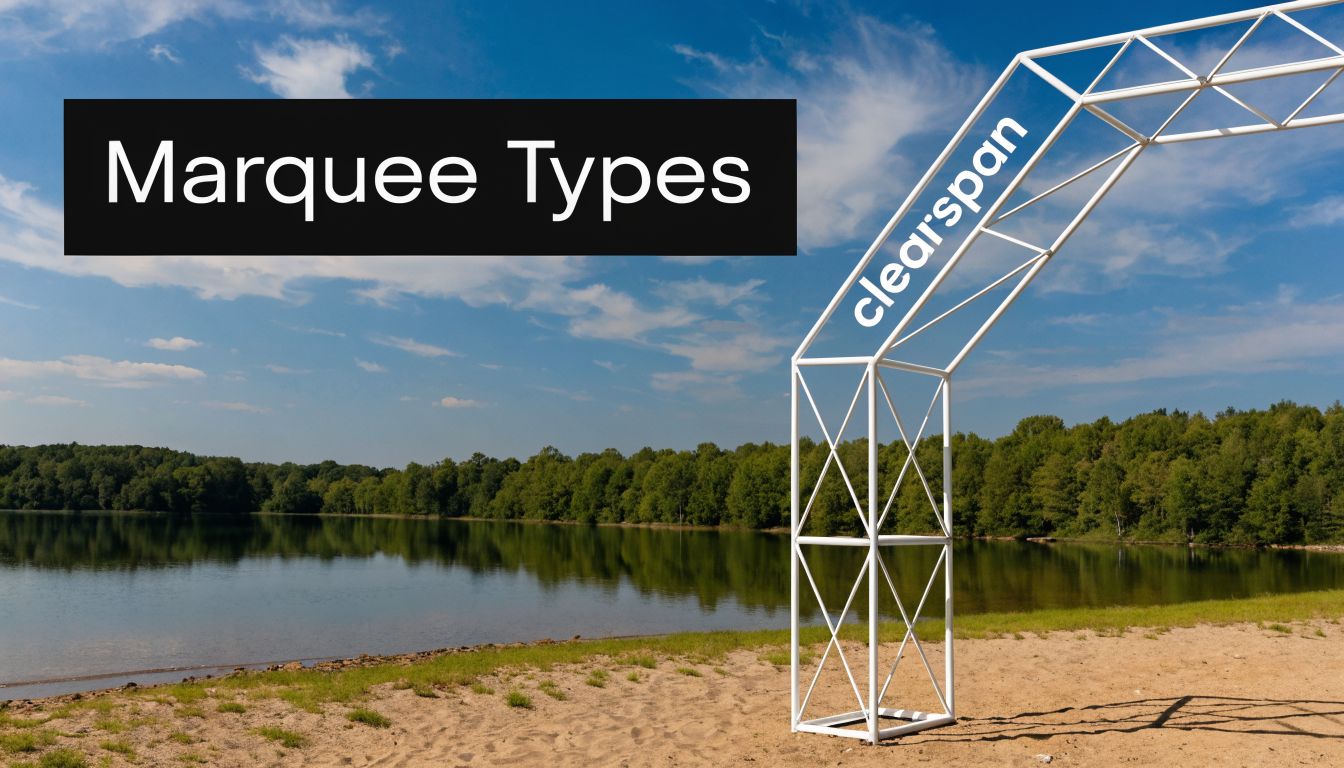
For most London events, the practical decision is between a modern frame marquee, often called a clearspan marquee, and a more traditional pole-style structure. They don’t behave the same way on site, and they don’t give you the same freedom inside.
Why frame marquees suit London sites
A frame marquee is the one most clients picture when they want a clean, open event space. The key advantage is structural. Frame marquees use aluminium frames with no internal support poles, creating unobstructed interior space, and they typically stand at 2.6 metres in lateral height. Their modular format works in 3m increments, including widths such as 6m, 9m, 12m, and 15m, which makes them practical for patios, tarmac, and other hard surfaces where traditional pole marquees can’t be anchored in the same way, as outlined in this explanation of marquee types.
Think of it as the difference between an open-plan room and one broken up by structural walls. If you’re laying out round tables, a dance floor, staging, a bar, or a ceremony aisle, that clear internal span gives you more usable room and fewer compromises.
That’s especially useful for:
- Wedding layouts where sightlines matter
- Corporate events needing clean branding space and open circulation
- Patio and driveway installs where ground fixing options are limited
- Multi-use interiors combining dining, speeches, dancing, and service zones
When traditional thinking still affects the decision
Some people still ask for “a marquee with poles” because they associate it with a classic look. That can work for the right event and the right site, but it’s not always the best choice for modern London layouts. Internal poles can interrupt table plans, block stage views, and complicate dance floor placement.
There’s also the question of the surface. In Croydon and surrounding boroughs, plenty of home events sit partly on paving and partly on lawn. A structure that relies on a different anchoring approach may narrow your options quickly.
The marquee that looks simplest in a brochure can become the hardest one to place in a real garden.
How size should actually be chosen
A marquee isn’t chosen by guesswork or by what “sounds about right”. Start with the width available on site, then look at length, then test whether the event format fits the footprint.
For example, a narrower garden may still take a workable marquee if the length is available and the layout is planned carefully. On a corporate site, width may be less of a constraint than guest flow, delivery access, or how close the structure sits to existing buildings.
The other point clients often miss is that modular sizing is a good thing. You don’t need to force your event into a one-size structure. The better route is to build the marquee around what the site and guest plan need.
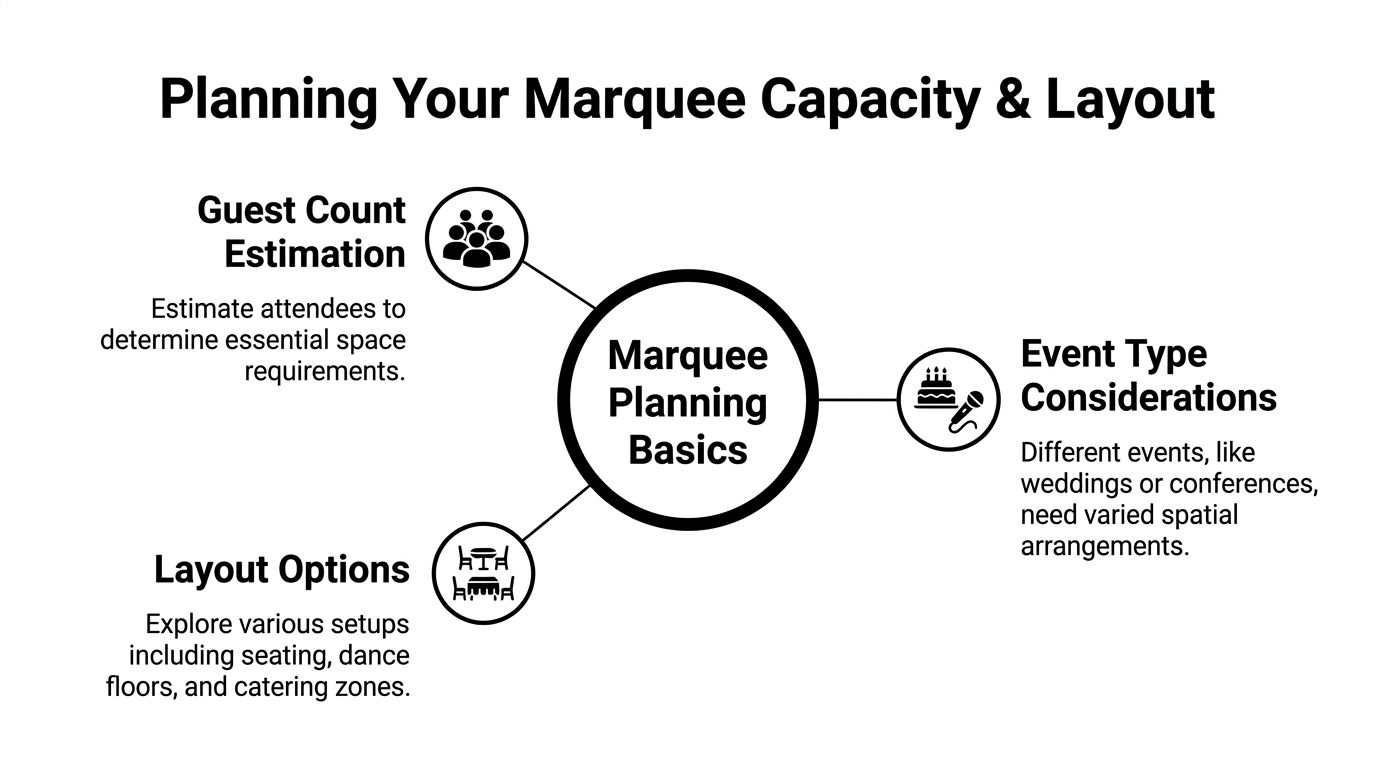
Planning Your Marquee Capacity and Layout
The question clients ask most is simple: how big does the marquee need to be?
The answer depends less on guest numbers alone and more on how those guests will use the space. A drinks reception, a sit-down wedding breakfast, and a presentation event can all have the same attendance and need very different footprints.
The benchmarks professionals use
For working estimates, UK marquee planning follows standard space benchmarks. Standing events need around 0.8 to 1 square metre per person. Seated events need around 1.5 to 2 square metres per person. Dance floor planning adds roughly 2 to 3 square metres for every 10 guests expected to use it, according to this UK marquee sizing guide.
Those figures give you a sensible starting point, not the final drawing. Once you add a bar, catering area, DJ setup, cake table, gift table, or entertainment features, the layout needs refining.
The same guide notes that ancillary items such as bars, catering stations, and entertainment features can take 8 to 15% of available floor space. That’s why a marquee that fits the guest count on paper can still feel tight if the layout hasn’t been thought through properly.
Two common planning examples
A standing reception is usually the most space-efficient format. Guests circulate, there are fewer fixed furniture positions, and the room can flex more easily around a bar or presentation point.
A seated event is different. Once tables, chairs, access aisles, and serving routes are in place, the usable space reduces quickly. Round tables also tend to demand more circulation room than simpler dining layouts.
If you want guests comfortable, staff able to serve, and the room to feel calm rather than cramped, layout matters as much as headline capacity.
Marquee Size and Capacity Quick Reference
| Marquee Size (Width x Length) | Approx. Standing Capacity | Approx. Seated Capacity (Long Tables) | Approx. Seated Capacity (Round Tables) |
|---|---|---|---|
| 4.5m x 12m | 54 to 67 | 27 to 36 | 27 to 36 |
| 6m x 12m | depends on final layout using standard space benchmarks | depends on final layout using standard space benchmarks | depends on final layout using standard space benchmarks |
| 9m x 12m | depends on final layout using standard space benchmarks | depends on final layout using standard space benchmarks | depends on final layout using standard space benchmarks |
| 12m x 15m | depends on final layout using standard space benchmarks | depends on final layout using standard space benchmarks | depends on final layout using standard space benchmarks |
The first row is the one benchmark example available from the verified data. For other sizes, the right approach is to calculate from floor area and event use, rather than pretending every marquee of a given width has one fixed capacity.
What clients should count before asking for a quote
Before you request marquee hire pricing, pin down these practical details:
- Confirmed guest style. Mostly standing, fully seated, or mixed day-to-evening use.
- Furniture plan. Long dining tables, round tables, poseur tables, lounge furniture, or open floor.
- Entertainment footprint. DJ, band, stage, dance floor, or photo booth all change the geometry.
- Service areas. Catering prep, bar units, waiting space, and storage need dedicated room.
- Access inside the marquee. Guests should move without squeezing past chairs, speakers, or queue points.
That’s exactly why CAD layouts are valuable. They stop people buying a footprint that only works in theory.
All-Season Marquee Hire and Weather-Proofing
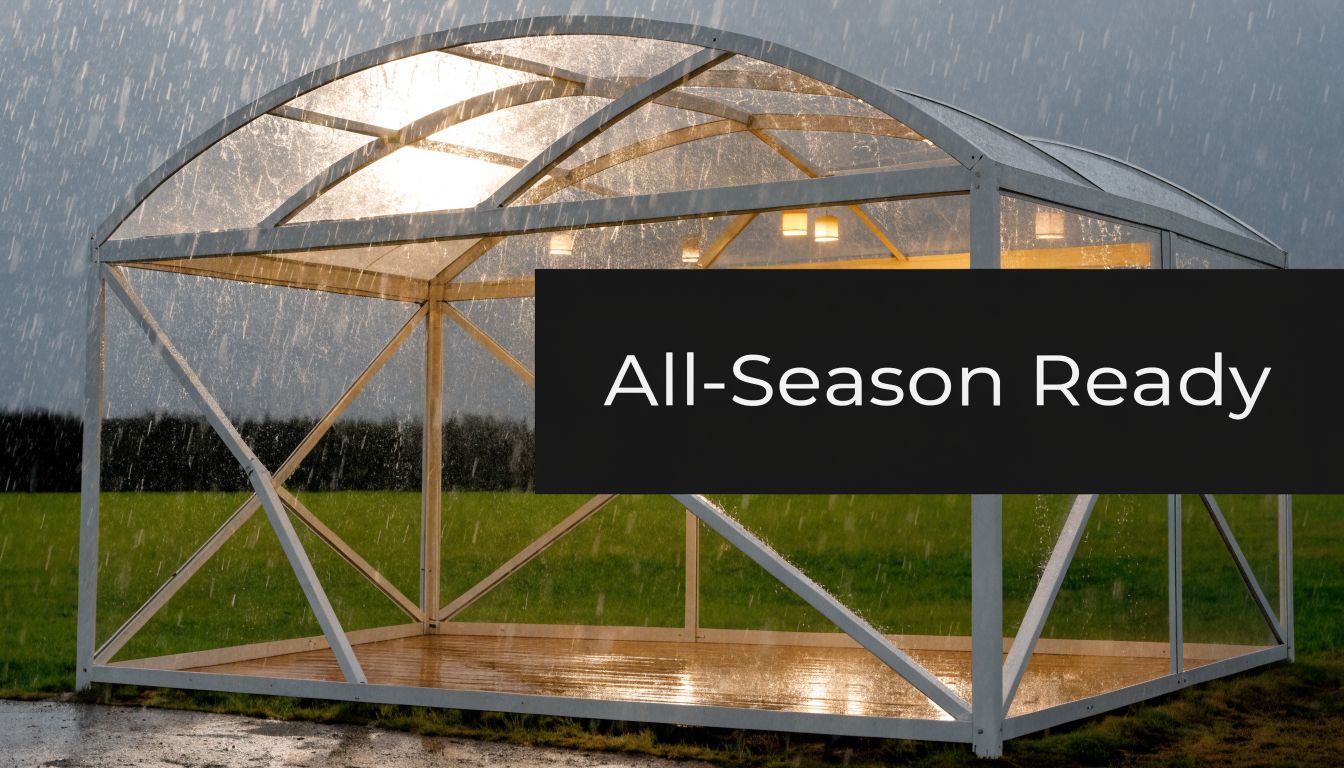
The weather question comes up on nearly every enquiry, and fairly so. If you’re hosting in the UK, you can’t plan around hope.
A professionally installed marquee should be treated as a controlled event space. That means thinking about heat, airflow, flooring, and the surface underneath, not just the roof overhead.
Winter comfort needs more than a heater
For winter events, the biggest mistakes are underestimating heat loss and ignoring condensation. Religious gatherings, community events, and winter celebrations often run for longer periods, with guests seated or standing in one place for more of the event. That changes what “comfortable” really means.
One overlooked issue is lining choice. A verified industry note highlights that condensation and heating are key challenges for winter marquee events, and that many guides fail to cover the rising cost of mandatory electric heaters, which are up 35% versus gas, making budgeting harder for larger functions. The same source also notes the moisture issue with some linings in humid winters, discussed in this guide on clear-span marquee benefits.
If you’re planning a cold-weather function, it helps to look at dedicated advice on heated marquee hire for winter events, especially if guests include children, elderly relatives, or attendees arriving in formal dress rather than heavy outdoor clothing.
Summer and shoulder-season planning
Warm-weather events have a different set of problems. A marquee can overheat if it’s sealed too tightly, especially when the space is full, lighting is on, and catering equipment adds warmth. Sidewall options and ventilation planning matter far more than people expect.
The best summer layouts usually keep the marquee flexible. Open sections, sensible entrance positioning, and careful placement of bars or catering points all help prevent heat building up in one area.
Flooring and wind readiness
Ground conditions decide whether the marquee will feel solid underfoot. On a dry day, a lawn can seem fine. After rain, that same area may become soft, uneven, and messy around entrances or high-traffic points.
What works in practice:
- Raised or solid flooring for uneven, damp, or heavily used ground
- Protected threshold areas where guests enter from house to marquee
- Appropriate anchoring for the actual surface rather than a standard assumption
- Room planning that avoids congestion at exits and service zones
Bad weather rarely ruins an event on its own. Poor preparation does.
A well-planned all-season marquee doesn’t fight the weather by chance. It manages it by design.
Furnishing and Styling Your Marquee Interior
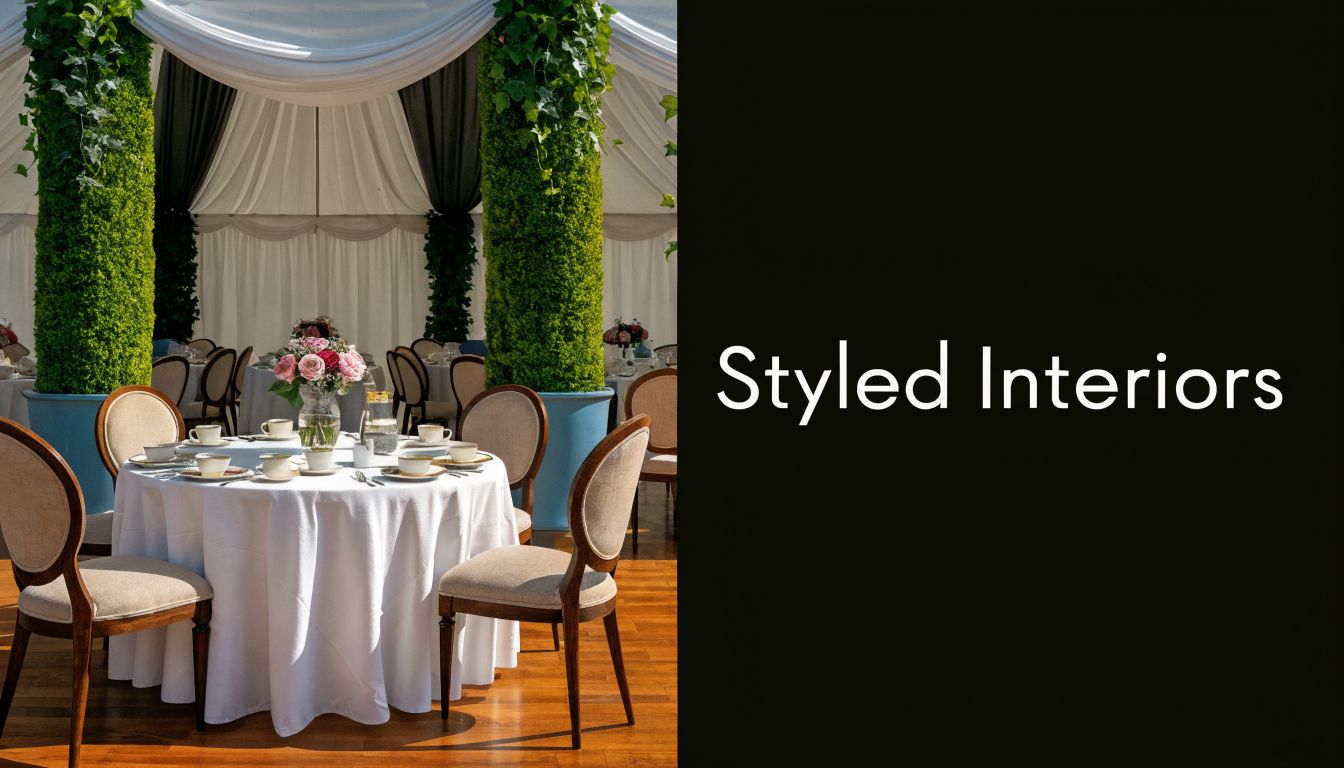
Once the structure is chosen, the marquee stops being a shelter and starts becoming a venue. That shift happens through layout, furniture, lighting, and the details that give the event its character.
A blank white interior can go in several directions. It can feel formal and polished for a wedding, sharp and branded for a launch, or warm and social for a family celebration. The trick is to make every hire item earn its place.
Start with function before decoration
People often begin with colour palettes and Pinterest references. There’s nothing wrong with that, but the better order is practical first, aesthetic second. Guests notice comfort, spacing, lighting levels, and where they naturally gather long before they notice a finishing detail.
Three interior zones usually need separate thinking:
- Dining and seating areas where furniture spacing affects comfort and service
- Social areas such as bars, standing tables, and informal corners
- Feature points including dance floors, photo areas, cake displays, or staging
For corporate events, printed branding also needs planning beyond the marquee itself. If you’re building a launch space, exhibition stand, or hospitality area, it’s worth reviewing practical ideas for trade show materials so signage, handouts, and display elements feel consistent with the structure and layout.
Furniture, draping, and lighting choices that change the room
Chairs and tables do more than fill space. They set the tone. Folding furniture can work perfectly for straightforward community events and garden parties. Chiavari seating suits a more formal wedding look. Poseur tables help standing events feel organised rather than scattered.
Lining and draping make a major difference too. A frame marquee has a clean structural shape, but softening the ceiling and wall lines changes the atmosphere quickly. If you’re weighing up that option, this guide to ceiling drapes for marquees is useful for understanding how fabric treatments affect the feel of the room.
Lighting should be layered. Practical lighting gets people in and out safely. Ambient lighting gives the event warmth. Accent lighting picks out focal areas such as the top table, bar, or entrance.
A short walkthrough helps people visualise how those elements work together:
The extras that justify their footprint
Some add-ons take more room than people expect, so they should be chosen because they improve the event, not just because they look fun on a checklist.
A mobile bar gives a natural gathering point. A Magic Mirror photo booth creates activity and keeps guests engaged between formal moments. Giant LOVE letters work well as a visual anchor at weddings, especially when placed where they don’t block circulation.
Premier Marquee Hire offers those kinds of complementary items, including furniture, lighting, bar units, and entertainment features, which is useful when you want the layout and the hire list planned together rather than pieced together from separate suppliers.
The Booking Process From Site Survey to Setup
A smooth marquee job usually looks easy from the outside. The reason it looks easy is that the awkward parts were dealt with earlier.
The first useful conversation isn’t about fabric colours or chair styles. It’s about the site. In Croydon, that might mean checking whether access is through a side gate or through the house. In Wimbledon or Bromley, it might be whether the lawn falls away at the back or whether mature trees limit the footprint. On a commercial site, the questions shift to vehicle access, operating hours, and where the install team can work safely.
What the site survey is really for
A proper survey doesn’t just confirm measurements. It identifies the problems that could derail the event if they’re ignored.
The significance of this is frequently overlooked. A 2025 report noted that 42% of wedding cancellations stemmed from unassessed ground stability issues, particularly on soft clay soils in areas such as Middlesex and Surrey. The same report notes that a professional site visit can prevent £850 to £1,500 in remediation costs and help address wind-load certification requirements for larger marquees, as covered in this guide to marquee hire on different surfaces.
That’s why a serious survey checks more than just length and width. It should include:
- Ground surface and firmness
- Changes in level across the proposed footprint
- Access width for equipment and crew
- Overhead obstructions, including trees and cables
- Entrance and exit routes for guests and suppliers
- Where ancillary items will sit, such as bars or catering space
A marquee that fits the lawn but ignores the access route doesn’t fit the site.
From sketch to CAD layout
Once the practical limits are clear, the next useful step is layout planning. At this point, many clients stop guessing and start making decisions.
A CAD drawing helps answer the questions that matter on the day. Will round tables crowd the dance floor? Can the caterer serve cleanly from the side you’ve chosen? Does the bar belong near the entrance or further into the room? If guests are moving from ceremony to reception, can the layout shift naturally without furniture being moved mid-event?
How installation day should feel
By the time setup arrives, the main decisions should already be done. Install day shouldn’t be a design meeting on the lawn.
A tidy professional team will work from the agreed plan, place the structure according to the site survey, and allow for the finishing elements in the right order. Flooring, lining, furniture, and power-dependent items all need sequencing. The result clients want isn’t just a marquee standing up. It’s a site that feels organised before the first guest appears.
Budgeting for Marquee Hire and Understanding Costs
A Croydon client can look at two marquees that appear similar in size and get quotes that are far apart. The difference usually sits in the site and the finish, not the roof area alone.
Budgeting works best when the marquee is treated as a temporary venue build. In a terraced garden near South Croydon, labour can rise because every board, panel, and chair has to come through a side passage by hand. On clay ground, common across parts of Surrey and Kent, flooring and levelling can become a bigger part of the cost after wet weather. Those are the details that catch people out if they only compare a headline figure.
What changes the price most
The structure matters, but the quote is usually shaped by a handful of practical decisions made early.
- Marquee type and span. Clearspan structures, framed marquees, and smaller garden setups all build differently and need different amounts of labour and material.
- Ground conditions. Flat hard standing is usually simpler. Soft lawns, sloping gardens, and clay soil often need extra work to create a safe level floor.
- Access. A clean run from road to build area keeps labour under control. Narrow gates, steps, basement lightwells, and long carry distances push setup time up.
- Fit-out. Lining, lighting, heating, power distribution, furniture, toilets, catering tents, and bars can easily outweigh the basic shell.
- Hire period and timing. Weekend builds, tight turnaround schedules, and late derigs affect crew planning and transport.
One line on a quote can change the whole budget. Solid flooring is a good example. It may be optional on a dry summer lawn for a casual party, but I would treat it differently for a wedding on uneven Croydon garden ground where heels, catering traffic, and a wet forecast are all in play.
That is why cheap-looking quotes often grow later. One supplier may price the frame and roof first, while another includes the items that make the space usable from the start.
If you want a realistic benchmark, this guide to marquee hire prices and what’s included gives a useful breakdown of the parts that usually appear on a proper quotation.
What to ask for before you compare quotes
Ask each supplier for the same level of detail. If one quote includes flooring, delivery, setup, lighting, and collection, and another leaves half of that to be confirmed later, they are not comparable.
A clear quotation should show:
- What is included as standard
- What is provisional or subject to site check
- Delivery, installation, and collection charges
- Flooring type
- Power and heating allowances
- Any extra labour linked to restricted access or difficult ground
This matters in London and Croydon more than many clients expect. Parking suspensions, limited vehicle access, and tight residential roads can add real cost and need planning well in advance.
Permissions, compliance, and costs people leave too late
Private garden hires are often straightforward, but straightforward does not mean automatic. The questions are usually about duration, use, noise, generators, access, and whether the event remains a private function or starts to look more like a public one.
Larger events need more care. If guests are attending in higher numbers, if the public is involved, or if the site has more than one supplier operating at once, the support services around the marquee need budgeting too. That may include stewarding, traffic control, and planning effective event security.
The best quote leaves very little to guess. You should be able to see what you are paying for, what assumptions the supplier has made about the site, and which decisions still affect the final figure. That is how budgets stay under control and install day stays calm.
Event-Specific FAQs and Your Decision Checklist
Different events stress a marquee in different ways. A wedding needs flow and atmosphere. A corporate function needs branding and guest circulation. A Mehndi may need open floor space, flexible seating, and a layout that supports a lively programme rather than a formal sit-down meal.
Questions that come up by event type
For weddings, can the space feel different from day to evening?
Yes, if the layout is planned with transitions in mind. Dining can sit forward of the dance area, or the marquee can be zoned so the room changes character as lighting shifts and evening guests arrive.
For corporate events, can the marquee support branding properly?
Usually yes, but branding works best when it’s designed into the room rather than added at the last minute. Entrance points, stage backdrops, registration areas, and printed materials all need to sit naturally within the space.
For South Asian functions, is floor seating workable?
Often it is, provided the footprint is planned around circulation, serving routes, and where focal moments will happen. That’s especially important for family events with mixed seating styles and strong decorative elements.
For community and public events, what’s often forgotten?
Power, service access, queue management, and security. If you’re planning a larger gathering, it’s worth reviewing practical guidance on planning effective event security so entry control, staffing, and public safety aren’t treated as afterthoughts.
A short booking checklist worth using
Before agreeing to any marquee hire, ask these questions:
- Has the company seen the site properly and checked access, levels, and surface?
- Have you been given a layout plan that matches your guest format?
- Does the quote show what is and isn’t included?
- Have weather needs been addressed for the season of your event?
- Do the furniture and add-ons fit the available space without crowding it?
- Is the install and takedown plan clear for your date and venue type?
The best marquee booking decisions are usually the calmest ones. No rushing, no assumptions, and no unanswered practical questions.
The right marquee isn’t just the one that fits on site. It’s the one that lets the event run properly once guests arrive.
If you’re planning an event in Croydon, London, Surrey, Middlesex, or Kent, Premier Marquee Hire is worth contacting for a practical conversation about site suitability, layout options, and a quotation that reflects how your event will function.
Sorry, the comment form is closed at this time.