

27 Apr Rent Outdoor Heating for Marquee Events in London
If you're planning an outdoor event in London or around Croydon, heating is usually one of the last things people sort out and one of the first things guests notice when it’s wrong. A marquee can look superb, the lighting can be spot on, and the catering can run perfectly, but if people feel cold they won’t relax.
That’s why it helps to treat heating as part of the event layout, not an add-on. When people search rent outdoor heating, they often picture a few patio heaters by the entrance. Sometimes that works. Often, especially in a marquee, it doesn’t.
In the South East, planners are also working in a market that’s clearly established. The UK sits within Europe’s €480 million heater rental market in 2024, and Europe is projected to grow at a 6.2% CAGR through 2033, according to heater rental market data from Dataintelo. For weddings, corporate functions and community events, hiring remains the practical route because you get the right equipment for a short window without the burden of purchase, storage, servicing, or transport.
First Steps Assessing Your Venue and Guests
The first question isn’t “Which heater should I hire?” It’s “What exactly am I trying to keep warm?”
A fully enclosed marquee behaves very differently from an open-sided canopy, and a seated dinner needs a different heating plan from an evening drinks reception where people are moving around. Before you rent anything, look at the event as guests will experience it, minute by minute.
Start with the structure
If your marquee is enclosed with solid or clear sidewalls and the doors stay mostly shut, you can hold warmth far more effectively. If you’ve got open sides, frequent access points, or catering staff moving in and out constantly, heat will escape quickly and you’ll need a different approach.
A simple rule in practice is this:
- Enclosed dining marquee: Aim for steady, even background warmth.
- Open-fronted party space: Create warmer zones where guests gather.
- Walkway or entrance marquee: Focus on taking the edge off, not fully heating the space.
- Covered terrace or garden extension: Expect wind to reduce performance.
If you’re still deciding on structure and layout, it helps to review common setup options before finalising the heating plan. A guide to choosing a marquee to hire can make that part clearer.
Think about guest behaviour, not just guest numbers
Two events with the same headcount can need completely different heating.
A wedding breakfast with older relatives, children, and guests seated for a long period needs consistent comfort across the whole space. A standing reception with a dancefloor, bar queue, and lounge furniture can work well with targeted warmth in the busiest areas.
Practical rule: Heat people where they’ll stay still the longest. Dining tables, lounge seating, ceremony seating, and welcome areas matter more than empty perimeter space.
Questions worth asking early:
- Will guests sit for long periods? If yes, cold spots become far more noticeable.
- Will doors be opening often? Frequent traffic changes heater performance.
- Are there draughty points? Corners near openings are usually the first places people complain about.
- Is the event daytime, evening, or all day? A bright winter afternoon can feel mild until the temperature drops suddenly after sunset.
Match the thermal experience to the occasion
Not every event needs the same standard of warmth. For a casual garden party in Sutton or Purley, guests may accept a fresher feel if there’s movement and hot food. For a black-tie corporate event or wedding in Croydon, they won’t.
That’s where planners often go wrong. They order “some heaters” instead of deciding what comfort level they want. If your goal is cosy dining, speeches without shivering, and guests staying late, the heating plan has to support that from the start.
Choosing the Right Heater for Your Marquee Event
A marquee in Croydon on a still September evening needs a different heater plan from the same structure on a damp November night with guests arriving in coats. The heater type matters because temporary structures lose heat differently from solid venues. Roof height, sidewalls, and how often the openings are used all change what feels comfortable on site.
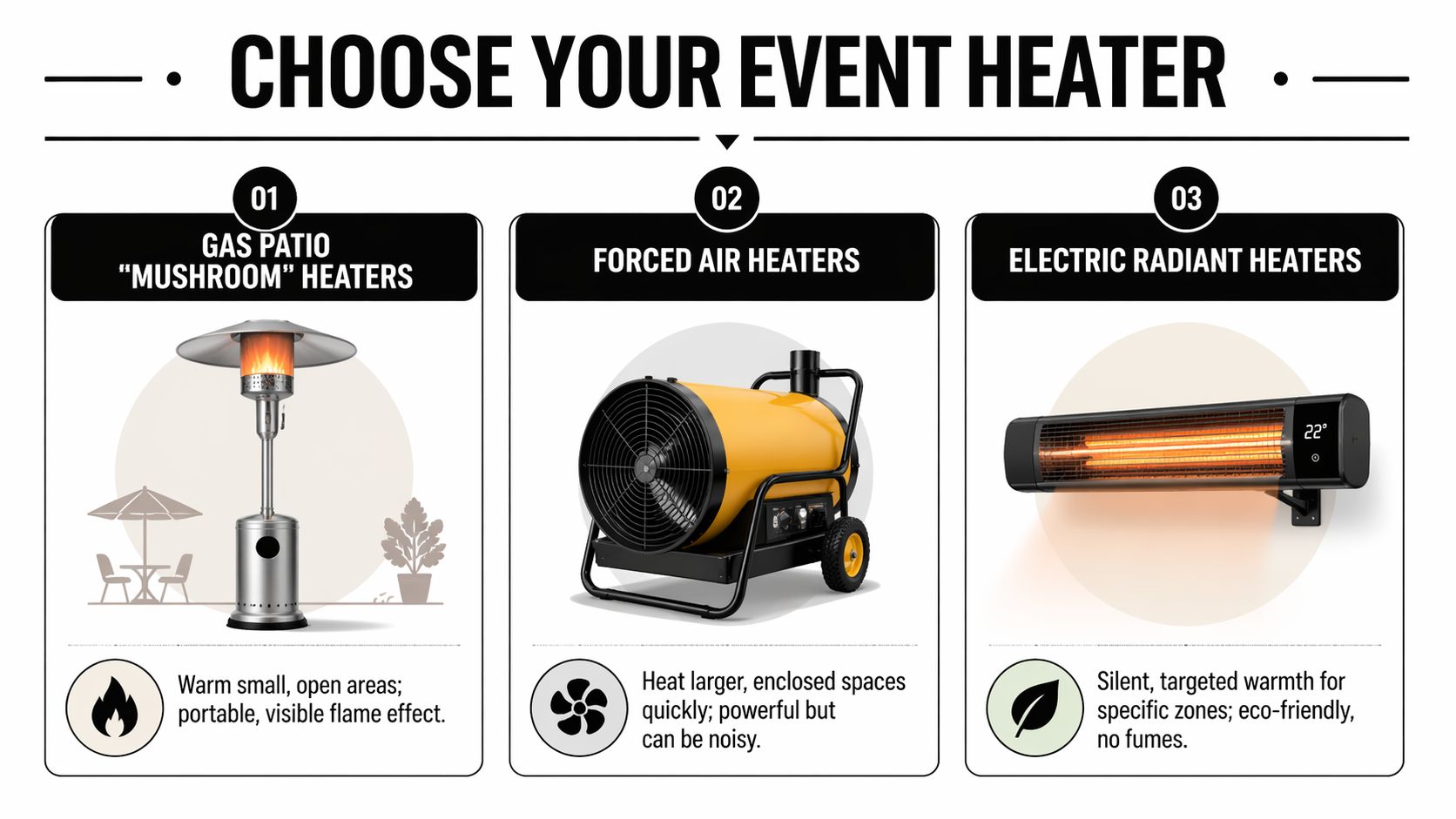
Gas patio mushroom heaters
Patio mushroom heaters suit open edges and outside gathering points better than enclosed marquees. I use them most often for entrance areas, smoking zones, terraces, and patio spill-out space where guests want a visible heat source close by.
Inside a marquee, their limits show quickly. Warmth sits strongest near the unit, the upper canopy collects a lot of the heat, and the bases can interrupt service routes or table layouts. In a dressed wedding marquee, they can also look bulky unless the style is deliberately casual.
They work best when you need:
- Portable spot heat: Handy for small groups standing with drinks outdoors.
- Fast deployment: Useful for short evening periods and simple terrace layouts.
- A familiar format: Some private clients prefer a heater they recognise straight away.
Forced air heaters
Forced air heaters are usually the practical answer for enclosed marquees that need a strong base temperature. They push warm air into the space quickly, which helps on winter mornings during setup or before guests arrive.
The trade-off is finish. They are effective, but they can sound more mechanical than discreet radiant systems, and the warmth can feel less even if doors are in constant use. For larger receptions, charity events, and trade marquees across Greater London, they are often the unit that makes the whole structure workable in the first place.
| Heater Type | Best For | Pros | Cons |
|---|---|---|---|
| Gas Patio "Mushroom" Heaters | Open sides, terraces, entrance areas | Portable, familiar, simple for spot heating | Uneven warmth in marquees, affected by draughts |
| Forced Air Heaters | Larger enclosed marquees, fast warm-up | Strong output, practical for cold starts | Can be noisy, less discreet |
| Electric Radiant Heaters | Dining zones, lounge areas, premium guest spaces | Silent, targeted warmth, no fumes at point of use | Needs suitable power supply, coverage must be planned carefully |
Electric radiant heaters
Electric radiant heaters are often the best-looking option for guest-facing areas. They warm people and surfaces directly rather than wasting output on air that escapes every time a marquee entrance opens.
That makes them a strong choice above dining tables, near lounge seating, and in ceremony or speech areas where guests remain still for longer stretches. They are quiet, clean at the point of use, and easier to integrate into a polished layout than freestanding gas units.
The constraint is power. A venue in Croydon with a reliable supply can support them well. A field setup with limited distribution may be better served by another system, or by a mixed approach. If you are comparing formats, it helps to review practical marquee heaters for hire with the event layout before choosing on price alone.
A patio heater warms the people standing nearest it. A well-positioned radiant heater protects the areas where guests need to stay comfortable.
What usually works best
For many marquee events, one heater type is not enough. The best results often come from combining them properly.
A common setup is forced air for the background temperature, radiant heat over dining or lounge zones, and patio heaters outside for smokers or guests taking a break from the main space. That gives better comfort, cleaner sightlines, and fewer complaints once the evening cools down. In temporary structures, the right mix nearly always outperforms a single heater used for every job.
Calculating Heater Quantity and Coverage
“How many heaters do I need?” is a fair question, but it only gets a useful answer when the layout is known. A marquee’s width, height, entrances, sidewalls, and event style all affect coverage.
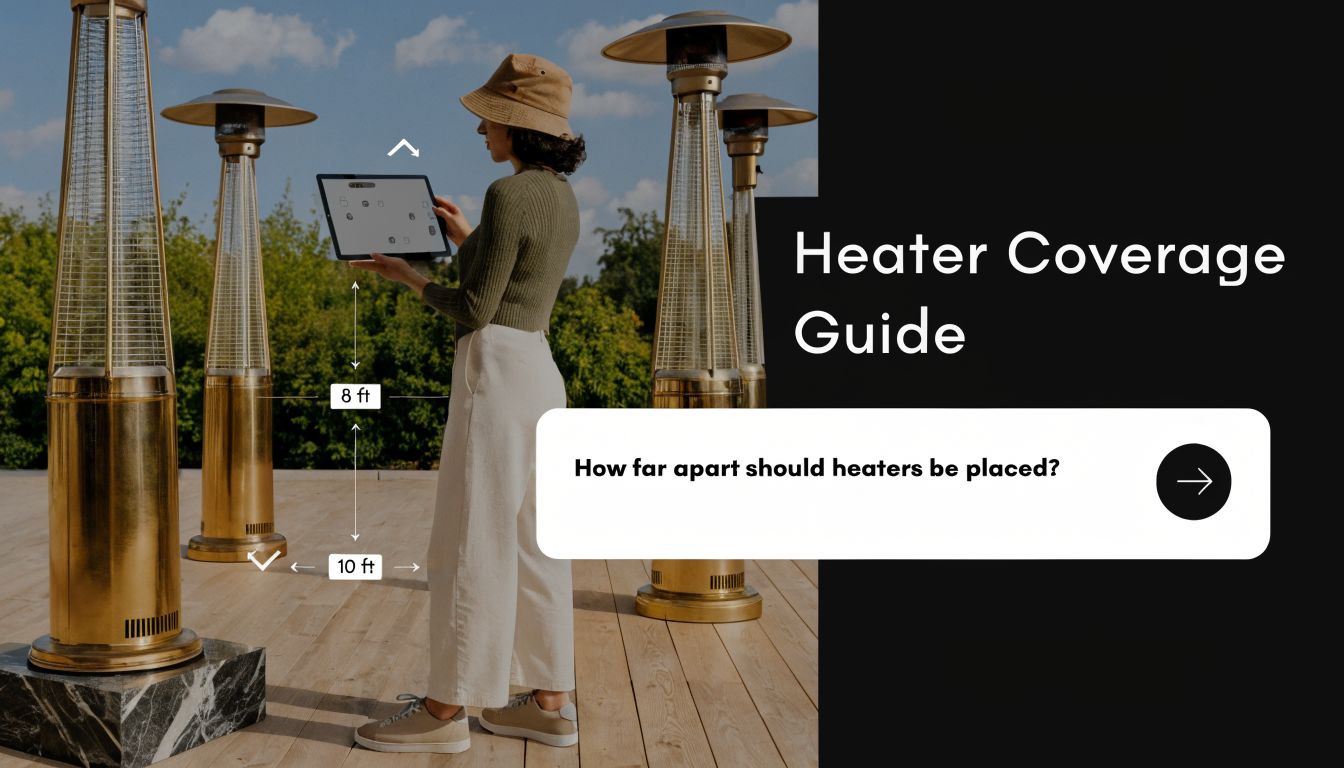
Use the marquee plan before the guest list
People often start by counting guests. In practice, the better starting point is the floorplan.
A 6m x 12m marquee used for dining, with lined walls and controlled access, needs a different heating arrangement from the same footprint used as a bar and dance space with doors constantly open. The air volume may be the same, but the comfort demand isn’t.
That’s why layout drawings matter. If you’re comparing options, reviewing marquee heaters for hire alongside the event floorplan usually gives a clearer answer than trying to guess from square metres alone.
What changes the calculation
The number of heaters isn’t just about size. It’s about heat loss and guest expectation.
Factors that change the requirement include:
- Marquee enclosure level: Full walls hold warmth better than open bays.
- Entry points: Every frequently used entrance leaks heat.
- Season and forecast: Damp cold in Greater London often feels sharper than the temperature number suggests.
- Use of space: Dining areas need steadier warmth than circulation routes.
- Roof height and span: Larger structures need more considered distribution.
A practical way to think about coverage
For first-time planners, it helps to divide the marquee into comfort zones instead of trying to think in technical language.
One zone might be dining. Another might be a lounge corner. Another might be a stage or speech area. Once you do that, the heater count becomes more logical because you’re assigning heat to how the space is used.
Site note: A marquee rarely feels cold everywhere. It feels cold in specific places first, usually entrances, edges, and seated areas furthest from the heat source.
That’s why under-ordering is such a common mistake. People see one large heater and assume it will “do the marquee”. In reality, one powerful unit in the wrong place can leave half the event space noticeably cooler.
Don’t chase maximum output without control
Bigger isn’t automatically better. Too much concentrated heat near one area can make that section uncomfortable while the opposite side still feels cool.
The best setups create balanced coverage. In practical terms, that often means using more than one heat source, spaced sensibly, instead of relying on a single point of output. For weddings and formal receptions, evenness matters more than brute force.
Safe Placement Power and Logistics
A marquee can feel perfectly warm during setup, then turn awkward once 120 guests, two service teams, and a band are all sharing the same temporary space. That is usually a placement problem, not a heater problem. In Croydon and across Greater London, I see the same issue at winter weddings and corporate receptions. Heat was ordered, but nobody planned where the units, cables, fuel, and airflow would sit once the room was live.
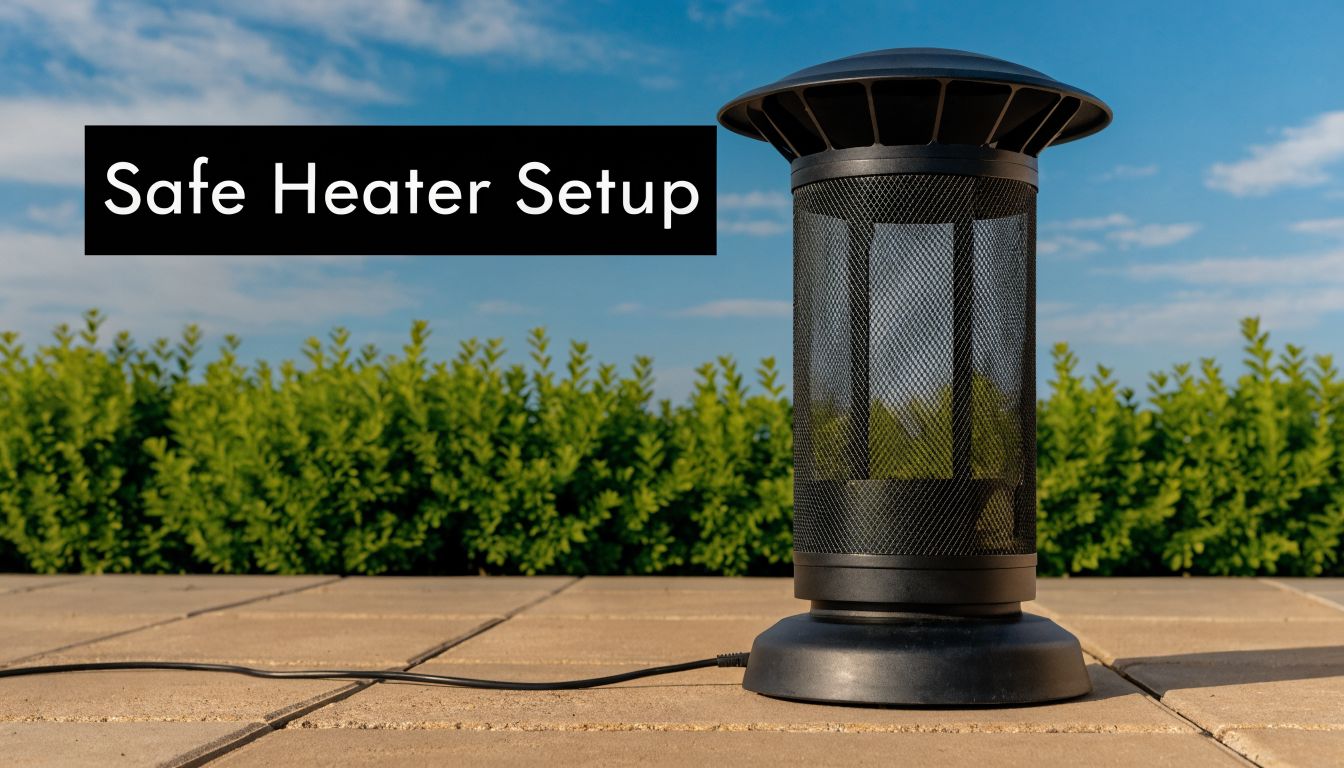
Keep heaters clear of fabric and decor
Marquees bring hazards that permanent venues do not. Linings hang lower than people expect. Entrance drapes move in the wind. Florists often add foliage walls, ceiling installs, and table styling close to likely heater positions.
Clearance has to be planned before build day. Heaters need space from walling, roof fabric, drapes, décor, furniture, and guest routes. If a unit sits where people queue for the bar, cut through to the toilets, or gather near an exit, it is in the wrong place even if the output is right.
Direct-fired equipment needs extra care. UK event teams should assess ventilation, moisture, and combustion risks in line with HSE guidance such as HSG195. That matters more in enclosed marquees on cold still evenings, where poor airflow can quickly turn a warm setup into an unsafe one.
Match placement to heater type
Different heater types solve different site problems.
- Patio heaters: Best for open-sided sections, smoking areas, terraces, and short-stay gathering points.
- Electric radiant units: Useful where you want targeted warmth over dining tables, lounge seating, or a ceremony area.
- Indirect or ducted heaters: Usually the best choice for enclosed marquees because the heater body stays outside and warm air is ducted in.
For formal events, indirect systems are often the tidiest option. Guests are not walking around fuel bottles or hot casings, and the room layout stays cleaner for catering and service. On tighter London sites, that outside position also needs checking early. A heater is no use if the only external space is a narrow side passage blocked by fencing, bins, or neighbouring access.
If guests have to step over cables or squeeze past hot equipment, the heating plan is not ready.
Power and cable planning matter more than people expect
Electric heating is only as good as the supply behind it. Some Croydon venues have a usable mains feed close to the marquee. Garden builds and pop-up sites often do not. In those cases, the primary question is not whether power exists. It is whether it is enough, where it comes from, and how it reaches the units without crossing busy walkways.
Cables need protecting, taping down is rarely enough on its own, and connection points need to stay dry and accessible to the crew. If you want a practical primer on eliminating electrical hazards in temporary setups, that guide covers the sort of cable and equipment risks that are easy to miss during a fast event build.
A useful visual reference for heater planning and event setup is below.
Decide who is responsible during the event
Heating should have an owner. At a private party, that may be the hire company on setup and the host for basic checks. At a larger marquee wedding or company event, one named person on site should know what is running, what can be adjusted, and who to call if a unit trips or fuel runs low.
That person needs four things clear before guests arrive:
- Which heaters stay on for the full event
- Which settings can be adjusted during service
- Where spare fuel or backup power support is kept
- Who to contact if a unit stops working
This avoids the usual scramble at 8:30 pm when the temperature drops, the dancefloor fills, and the caterer gets asked to fix equipment they were never briefed on.
Budgeting for Your Outdoor Heating Hire
A heating quote for a marquee is rarely just the heater. In Croydon and across Greater London, the actual cost usually sits in the details: the right output for the space, the fuel or power to keep it running, transport, setup, and the time needed to install it properly.
That matters because the cheapest unit on paper can become the expensive option on site.
I see this often with first-time planners. They compare day rates, then get caught out by extra gas bottles, longer cable runs, difficult garden access, or crew time needed to position ducted heaters outside the marquee and feed warm air in safely. A higher-spec unit can cost more to hire but less to run over the course of the event if it heats the space properly and needs less attention.
Hiring also makes more sense for one-off events. You avoid storage, transport, maintenance, and the problem of owning equipment that may not suit the next venue. If you are weighing up options for a winter wedding or party, this guide to marquee and heater hire for temporary event spaces will help you compare setups more realistically.
What a clear quote should include
A proper quote should break the cost into parts so you can see what is fixed and what may change on the day. Ask for these lines to be shown separately:
- Equipment hire: The charge for each heater and any controls or ducting.
- Fuel: Gas bottles, diesel, refills, or estimated consumption.
- Power support: Generator hire, distribution, or extra cabling for electric units.
- Delivery and collection: Often affected by distance, timing, and access.
- Setup and testing: Placing the equipment, checking operation, and confirming it is ready for guests.
If those items are bundled into one vague total, it becomes much harder to compare suppliers properly.
Where budgets usually slip
The usual mistake is underestimating how much support the heater needs around it. A marquee may need more than one unit, or a different type of heater than you first expected, especially if the event is in an exposed garden, on hardstanding, or running late into a cold London evening.
Access is the other common issue. Venues in Croydon, Bromley, and central London often have narrow side paths, stairs, restricted loading times, or long carries from the nearest parking point. That adds labour. It can also affect which equipment is practical to deliver and install.
Cheap heating often costs more in the end if guests stay cold, staff keep adjusting the setup, or the equipment runs inefficiently because it was chosen on price alone.
Set the budget around guest comfort and the style of event. A formal seated dinner in a marquee needs steadier, more even heat than a short drinks reception. Once that is clear, the quote tends to make sense, and you are far less likely to pay for last-minute fixes later.
Booking Your Heaters A Checklist for Success
By the time you’re ready to book, you don’t need more theory. You need a shortlist of checks that help you avoid awkward surprises.
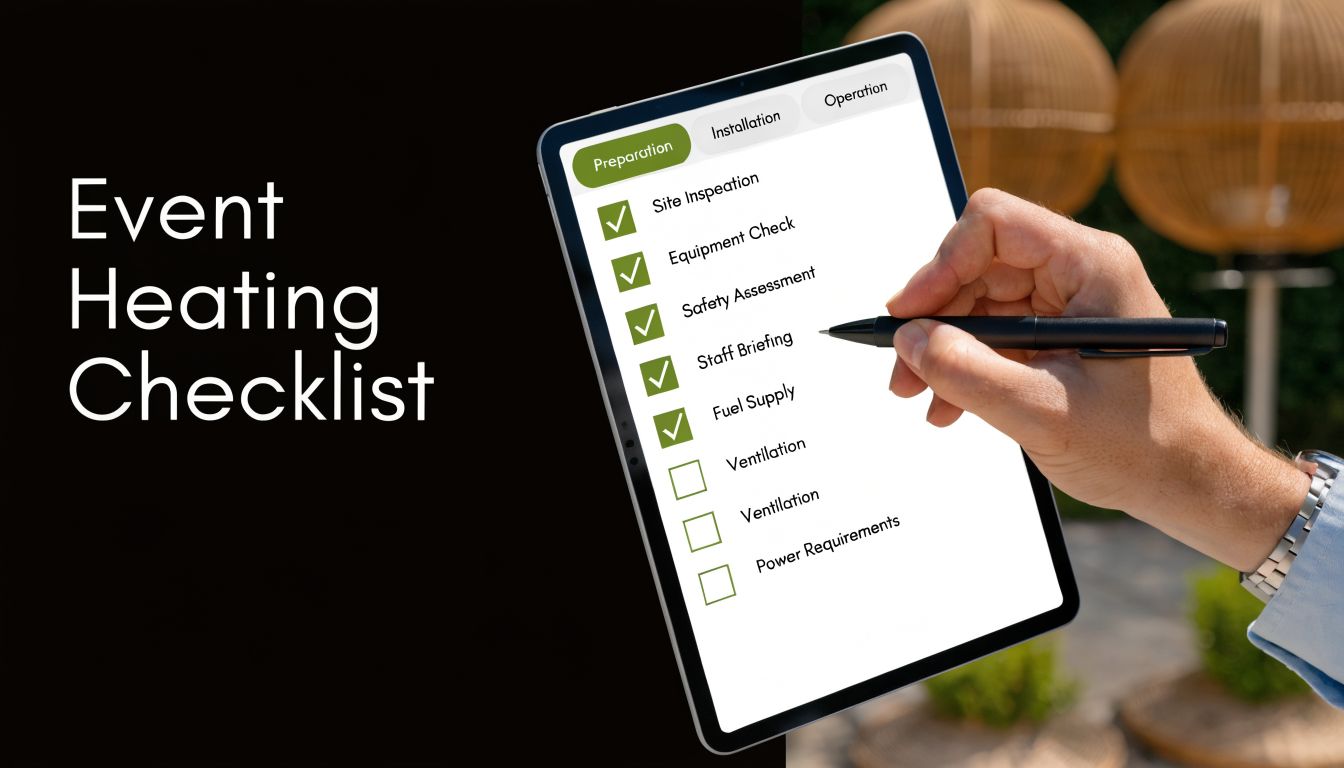
Questions that make the booking safer
The strongest heating bookings usually come from asking practical questions early, not chasing them the week of the event.
Use this checklist:
- Ask for a site visit: Gardens, terraces, and venue courtyards often look simpler on paper than they are in person.
- Request a placement plan: You want to know the exact placement of heaters, fuel, ducting, or power routes.
- Check who handles setup: Don’t assume equipment is just dropped off and left.
- Ask about contingency: If a heater fails or weather worsens, what support is available?
- Confirm compliance approach: Temporary event heating should come with clear safety thinking, not vague reassurance.
- Discuss guest profile: Elderly guests, children, and formal seated events need a more careful comfort plan.
Good suppliers answer specific questions clearly
A reliable hire company should be comfortable discussing access, timing, safety, load-in, power, and layout. If answers stay vague, that’s usually a warning sign.
For marquee events especially, it helps to work with a provider that understands the structure and the heating as one joined-up system. Information on marquee and heater hire together is useful because it reflects how these decisions work on site.
The best booking is the one where the heater plan is settled before the first table, bar, or dancefloor panel goes in.
Final check before you confirm
Before you sign off, make sure you know:
| Check | Why it matters |
|---|---|
| Access times | Heating install may need to happen before dressing and catering setup |
| Exact heater locations | Stops clashes with tables, exits, bars, and decor |
| Fuel or power responsibility | Avoids confusion during the event |
| Weather backup plan | Useful if the evening turns colder or wetter than expected |
That level of detail is what turns “we’ve hired some heaters” into an event that feels comfortable.
If you’re planning a marquee event in Croydon, London, Surrey, Middlesex or Kent and want clear advice without pressure, Premier Marquee Hire can help with marquee layouts, heating options, site visits and practical guidance to make sure your guests stay comfortable from arrival to the last dance.
Sorry, the comment form is closed at this time.