


26 May Drapes for Marquees: Transform Your 2026 Event
You're usually looking at drapes for marquees at the same point in the planning process. The marquee is booked, the guest list is growing, and you've realised that a bare frame on its own won't give you the finish you want. It will keep the weather out, but it won't automatically feel like a wedding venue, a polished corporate space, or a lively pre-wedding celebration.
That's where draping changes everything. A plain marquee can feel open, bright and practical, but also a bit exposed. The right drapes soften the structure, control what guests see first, and help the whole space feel intentional rather than temporary. In and around Croydon, where we see everything from garden receptions to business launches and large family events, that difference matters more than people expect.
Most competitors stop at appearance. The prettier photos get the enquiry. In practice, drapes for marquees affect far more than the look of the room. They influence how light falls, how sound travels, how warm the space feels, and whether the marquee comes across as basic or properly finished. That's the part worth understanding before you choose fabrics, colours, or layout.
Why Drapes Are More Than Just Decoration
There's a long British habit of using fabric to create status and atmosphere. By the Regency period, luxurious textiles such as silk and velvet were already being used in homes not just for privacy, but to signal refinement and wealth, as noted by the Royal Town Planning and historic drapery record. That same instinct still sits behind modern marquee draping. Fabric turns a temporary shell into somewhere people immediately read as dressed, warm, and special.
That historical point isn't just interesting. It explains why a lined marquee feels more premium the moment you walk in.
Sound changes first
A naked marquee frame has hard lines, open spans, and plenty of surfaces for sound to bounce around. Add guests, a DJ, speeches, or a live dhol player, and the room can quickly feel noisy in the wrong way. Drapes help soften that edge.
They won't make a marquee silent, and they're not a substitute for proper sound planning, but they do take the harshness out of the space. Conversations become easier at the tables. Music feels less sharp. The room tends to feel fuller rather than hollow.
Bare marquees often sound bigger than they look. Draping helps the room feel calmer without taking any energy out of the event.
Heat and light are part of the finish
In the London area, especially for spring, autumn and winter events, comfort matters just as much as styling. Linings create another layer between guests and the outer skin of the marquee. That changes how the room feels, particularly once evening arrives and temperatures drop.
Light behaves differently too. A white or ivory lining can bounce light softly around the room. A sheer overlay can take the edge off strong daylight. A darker or blackout treatment can turn an all-purpose marquee into a presentation space, party room, or dramatic evening venue.
Here's what drapes usually improve in real terms:
- Acoustic softness helps reduce the sharp, echoey feel you get in an untreated structure.
- Thermal comfort improves because the marquee feels less exposed and less draughty.
- Light control lets you diffuse bright daylight or darken the room where needed.
- Visual coherence ties the flooring, lighting, tables and stage areas into one finished scheme.
They also define the mood
The strongest reason clients choose drapes is still emotional. A marquee can be large and practical, but draping gives it personality. Soft pleats make a wedding feel romantic. Clean wall linings can make a corporate event feel tidy and branded. Rich colours and layered fabrics can make a Mehndi feel festive before the music even starts.
That's why drapes shouldn't be treated as an optional extra added at the end if budget allows. In many events, they are the element that makes the marquee feel like a venue rather than a shelter.
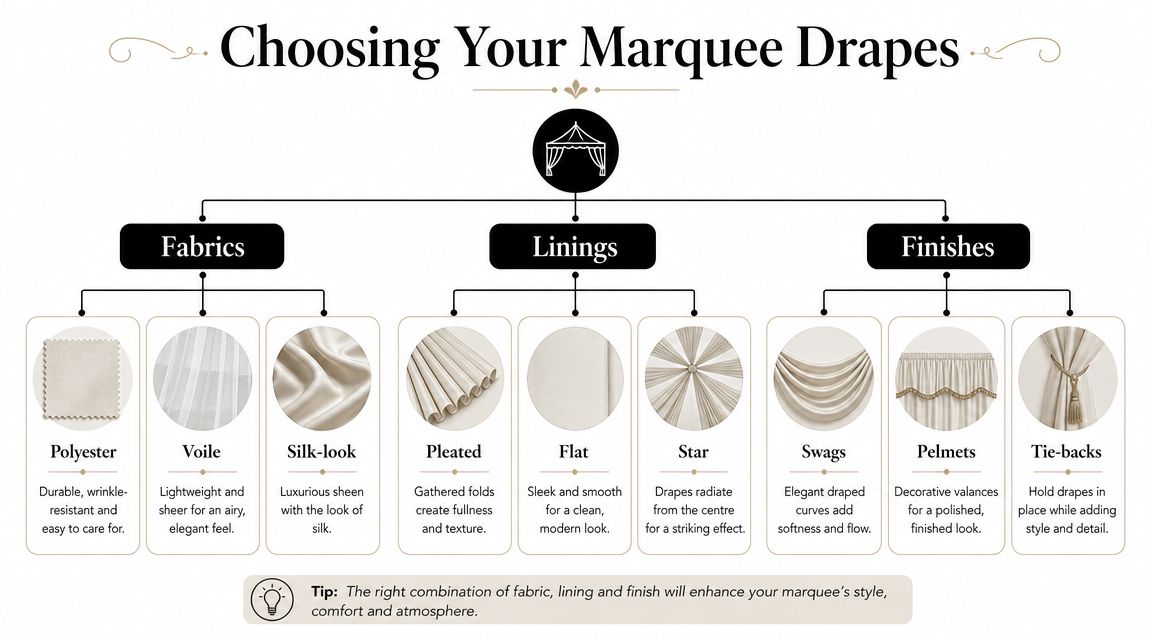
Choosing Your Marquee Drapes Fabrics Linings and Finishes
When clients say they want drapes, they often mean several different things at once. Sometimes they mean wall linings. Sometimes they mean a fully dressed ceiling. Sometimes they mean soft swags, star cloth, or a backdrop behind the top table. Getting the wording right helps you get the right quote and the right finish.
Start with the lining type
The first choice is usually between wall drapes, roof linings, or both.
Wall drapes run around the perimeter of the marquee. They hide framework, soften sidewalls, and clean up the room line. If the event is in a garden in Purley, South Croydon, or Bromley and the outside view is attractive, we might leave some sections more open. If the view includes fencing, neighbouring buildings, catering clutter, or service areas, full wall draping is often the smarter move.
Roof linings change the room more dramatically. These are what give that fully dressed interior look. In frame marquees, they can turn visible rafters and roof sections into a soft ceiling line that reads more like an indoor venue.
Fabric choice affects both look and practicality
For UK events, fire safety is essential. Professional marquee linings are commonly made from flame-retardant polyester, typically around 65gsm, with wide-width rolls available up to 300cm, which helps reduce visible seams under uplighting or fairy lights, according to Direct Fabrics' marquee liner specification.
That matters on site for two reasons. Lighter FR fabric is easier to tension cleanly across large spans, and wider widths mean fewer joins. Fewer joins usually mean a neater finish under evening lighting.
A few common options come up again and again:
- FR polyester lining is the trade standard for most full marquee linings. It's clean, reliable, and gives you that pleated event look.
- Voile works like a soft-focus layer. It's useful when you want lightness and movement rather than a heavy formal finish.
- Organza gives a more decorative, dressy feel. It catches light nicely but needs to be used carefully so it doesn't tip into looking fussy.
- Silk-look fabrics can work beautifully in focal areas, especially for backdrops, stage zones, or entrance treatments.
If you want background reading on the compliance side of decorative fabrics, this flame retardant curtain guide for Tampa Bay is useful as a general material primer, even though UK event decisions still need to follow local safety requirements.
The finish is where the style shifts
The same marquee can feel completely different depending on how the drapes are finished.
| Finish | Best used for | What to watch |
|---|---|---|
| Pleated lining | Weddings, formal dinners, polished corporate events | Clean and classic, but it needs accurate measuring |
| Flat lining | Modern corporate setups, simple contemporary styling | Shows errors more easily if the frame isn't perfectly dressed |
| Ceiling swags | Weddings, parties, Mehndi events | Beautiful with lighting, but too much swag can crowd a lower roof |
| Star cloth or star ceiling | Evening receptions and dancefloor-led events | Strong visual effect, but it can compete with other decorative features |
| Tie-backs and entrance drapes | Ceremony entrances, reveal moments, stage framing | Best used sparingly so they look intentional |
Practical rule: if you're unsure where to spend the budget, line the roof first, then improve the focal points, then add specialist finishes.
A lot of poor marquee styling comes from trying to do every decorative idea at once. One clean lining, one strong focal area, and one lighting plan usually works better than mixing swags, bold colours, heavy drapes, lanterns and star cloth in the same sightline.
How We Measure for a Perfect Fit
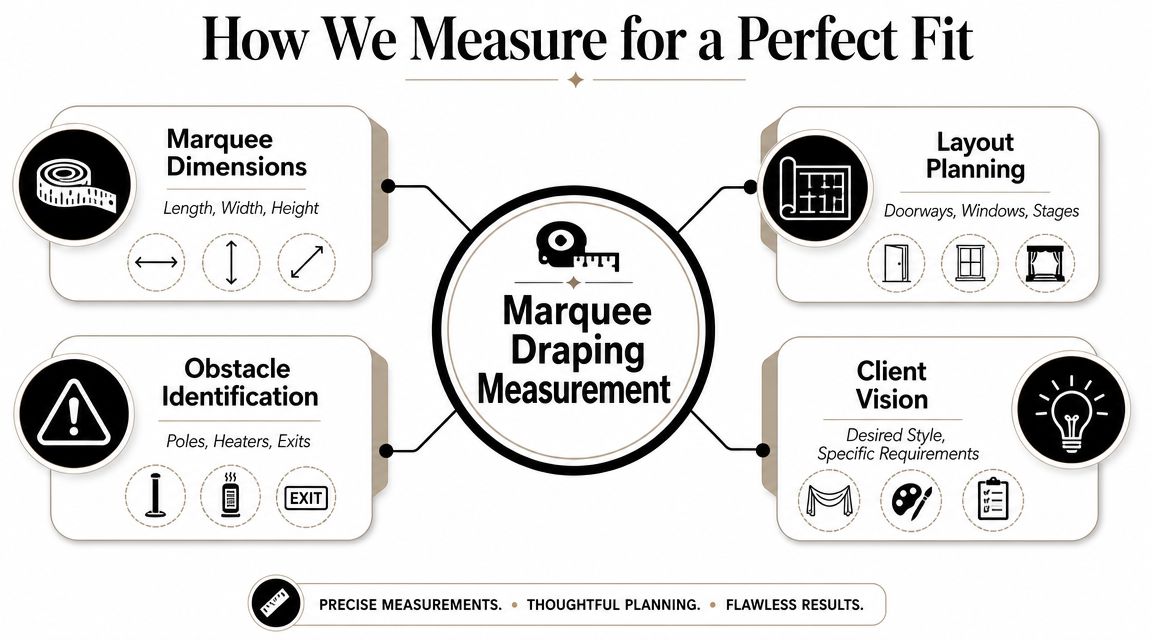
Good draping doesn't come out of a standard pack. It's measured to the marquee, the ground conditions, the access route, and the event layout. That's why two marquees with the same floor area can still need different drape plans.
In Croydon and across London, site conditions vary more than people think. A neat private garden in Sanderstead behaves very differently from a school field, a corporate courtyard, or a tight urban venue with restricted loading access.
The marquee terms that matter
Clients don't need to know the trade language, but it helps to recognise a few words when they come up during a survey.
- Bay length means the repeating structural section of the marquee. The full length is built from these bays, and drape spacing usually follows them.
- Gable end is the front or back triangular end of the marquee. These are often the most visible sections and can need special treatment around doors or glazing.
- Eave height is the height at the side where the roof begins to rise. This affects how much drop the wall drapes need and how dramatic the interior feels.
Those three measurements decide a lot. They influence pleat spacing, fabric drop, fixing positions, and whether decorative swags will sit nicely or fight the frame.
What gets checked on a proper visit
A proper measure-up goes beyond width and length. The team needs to know how the marquee will function once it's live.
That usually includes:
- Entry and exit points so drapes don't interfere with guest flow or emergency routes
- Stage, dancefloor, bar and catering positions because each changes what should be hidden and what should be highlighted
- Heaters, lighting points and power routes so the fabric design works with the technical setup
- Obstacles and awkward features such as uneven ground, attached structures, trees, walls, or site restrictions
If a client wants more detailed planning support, Premier Marquee Hire offers free site visits and CAD layouts on request, which is useful when the draping needs to tie in with table plans, staging, and service zones.
The best-fitted drapes don't look measured. They look effortless.
Why precision matters visually
Bad measuring shows up quickly. Pleats don't line through properly. Swags sit unevenly. Gaps appear around the edges. Fabric bunches where it should fall cleanly.
The opposite is what people notice when the job is done well. The eye moves around the room without catching on awkward joins or stretched corners. That's usually the point where a client says the marquee looks bigger, softer, or more expensive, even though what they're really seeing is a layout that has been properly planned.
Styling with Drapes for Your London Event
Different events need different drape treatments. Trying to style every marquee like a wedding is one of the most common mistakes I see. A corporate launch in Bromley needs a different rhythm to a Mehndi in Croydon, and both need a different approach again from a formal wedding reception in Surrey.
The fabric should support the event, not dominate it.
Weddings that feel soft rather than overdone
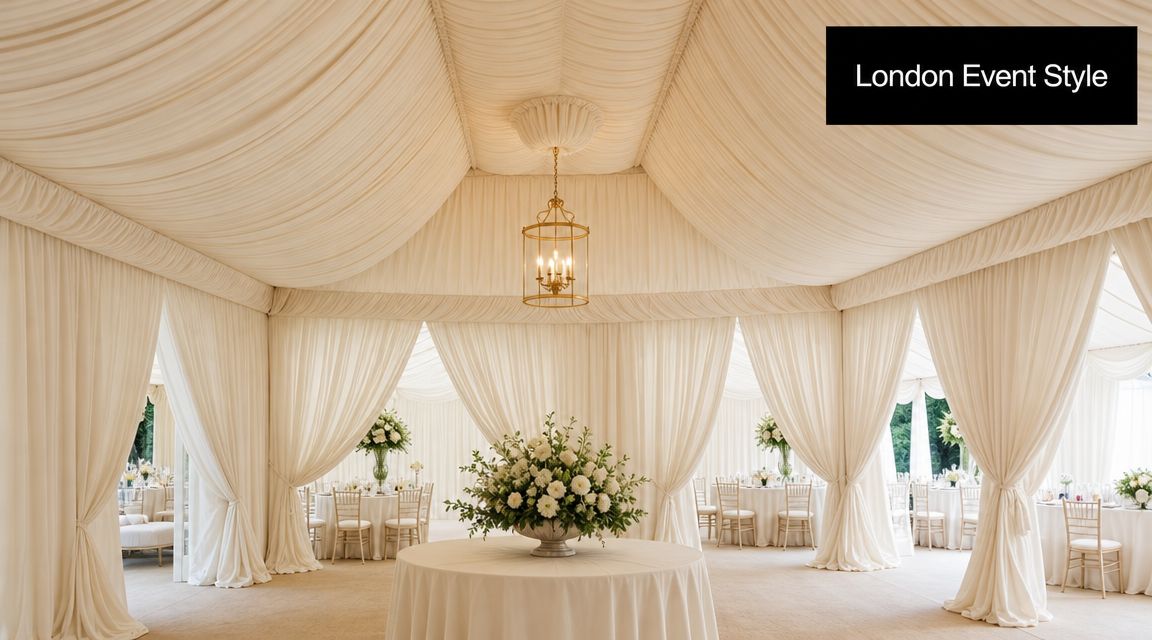
For weddings, the safest route is usually still the strongest. Ivory or cream pleated linings work because they flatter almost every lighting scheme and don't fight with florals, stationery, or table décor. They also make the marquee feel brighter during the day and warmer in the evening.
Ceiling drapes paired with warm fairy lights are a classic combination because they create a diffused glow and soften the roof line. That pairing is widely used by UK event stylists, and it works especially well when you want the room to feel elegant rather than theatrical.
A strong wedding setup often includes:
- A full or part roof lining to hide the structure and create softness overhead
- A focal backdrop behind the top table, ceremony space, or cake display
- Consistent wall drapes to keep the room coherent from every angle
- Lighting that works with the fabric, not against it. If you're planning that side of the room design, this guide on lighting for marquees is worth reading alongside your drape plan
Corporate events need control
Corporate styling usually works better when it's restrained. Crisp wall linings, cleaner lines, and controlled colour use tend to look more professional than decorative swags everywhere.
For presentations, product launches, or awards evenings, blackout sections can be more useful than purely decorative draping. They help manage screen visibility and keep the room focused. For networking events, softer wall linings and branded colour washes often do more than elaborate fabric treatments.
The mistake here is making a business event look like a wedding. Too much draping can dilute the message. Used properly, drapes can hide service areas, shape circulation, and sharpen the presentation space.
If guests remember the room but not the brand, the styling has gone too far.
Mehndi and pre-wedding events can carry more colour
Drapes can become part of the celebration rather than just the background. Richer tones, layered swags, entrance treatments, and bolder backdrop work can all make sense, especially when the event includes a stage area, family seating focus, or a strong musical element.
For Mehndi events around London, colour usually needs balancing. Vibrant drapes can look fantastic, but if every wall, ceiling panel, tablecloth and chair sash is competing, the room starts to feel busy instead of joyful. A better result often comes from picking where the strongest colour belongs. That might be the stage backdrop, the entrance reveal, or one side of the room used for photos.
Private parties benefit from focal points
Birthdays, anniversaries and family celebrations often don't need full visual drama across every metre of fabric. Sometimes a simpler marquee lining with one stronger draped feature gives a better result and keeps the spend sensible.
Good focal points for private events include the bar, cake table, DJ wall, or entrance. Those are the places guests naturally look first, so they're the places where drapes earn their keep.
Installation Rigging and Site Constraints
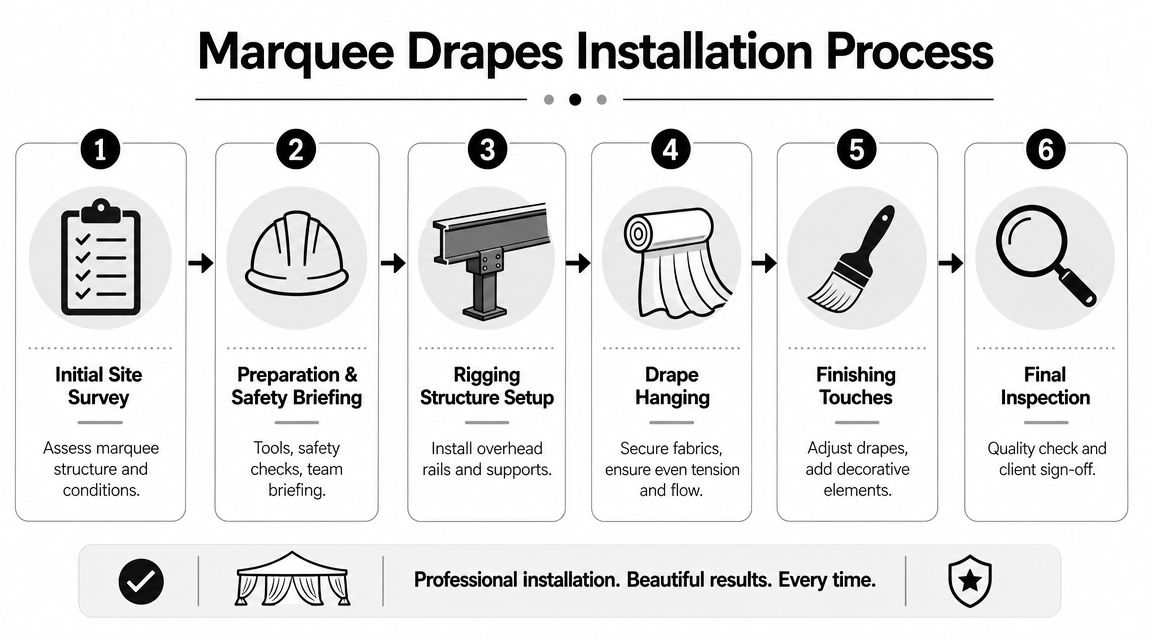
This is the part that often goes unnoticed. Observers notice the finished pleats and the lighting glow, but not the work needed to make metres of fabric sit neatly and safely inside a temporary structure.
That hidden part matters. Hanging marquee drapes properly isn't just clipping cloth to a frame. It involves rigging, load awareness, access planning, and constant adjustment on site.
What the crew is managing during install
A marquee frame gives you fixing opportunities, but it also gives you limits. Fabric has weight. Lighting has weight. Decorative features have weight. The rigging plan has to respect the structure rather than fight it.
That usually means working with a combination of tracks, tensioned lines, clips, and frame-specific fixings. The choice depends on the marquee type and the finish required. A smooth lined roof needs different handling from a swagged ceiling or a draped reveal at an entrance bay.
A professional crew is also watching for practical conflicts such as:
- Heater positions that can't be blocked or trapped by fabric
- Fire exits that must stay clear and obvious
- Power runs and cable routes that need to remain accessible
- Wet or windy conditions that can slow installation or affect how materials are handled on site
For a broader view of what goes into a full marquee setup, this guide on hiring a marquee helps put the draping stage in context.
Why site constraints change the design
The ideal drape plan on paper sometimes changes on the day. A garden wall may stop a full outer access route. A tree branch may interfere with one elevation. A narrow side passage may limit what can be brought in pre-dressed. In tighter London sites, the install sequence can matter almost as much as the design itself.
That's why DIY draping often disappoints. It's not just about style. It's about knowing how to get fabric into place without sagging, twisting, blocking equipment, or slowing down the rest of the build.
A short visual of tent draping in action helps show why sequencing and fixing matter:
Finish quality comes from adjustment
The final half hour of a drape install often matters more than people realise. That's when pleats are dressed, lines are evened out, and any visual wobble is corrected before guests arrive.
You can always spot a rushed install. Corners sit awkwardly, joins telegraph under light, and one side of the marquee never quite matches the other. Proper installation isn't only safer. It's what gives the room that calm, deliberate finish.
Pricing Drapes Rental vs Purchase and Seasonal Care
The price of drapes for marquees depends less on one headline figure and more on the shape of the job. Size matters, but so do fabric type, access, rigging complexity, and whether you're asking for clean linings or a more decorative scheme with swags, reveals, backdrops, or specialist ceiling work.
That's why two clients hiring the same marquee size can receive different drape quotes. One may want straightforward wall and roof lining. Another may need blackout sections, stage dressing, layered fabrics, and a more demanding install schedule.
What usually affects the price
The main variables are practical rather than mysterious.
| Cost factor | Why it changes the quote |
|---|---|
| Marquee size and shape | More area means more fabric, more rigging, and longer install time |
| Type of lining | Standard pleated lining is different from specialist blackout or decorative treatments |
| Design complexity | Straightforward runs are quicker than custom swags, reveals, or focal backdrops |
| Access and site conditions | Tight access, awkward ground, or restricted build windows increase labour complexity |
| Season | Colder months can call for layered or more protective interior treatments |
If you're budgeting the wider structure as well as the interior finish, this guide on prices for marquee hire helps frame the bigger picture.
Renting usually makes more sense than buying
For one-off events, renting is usually the practical choice. Buying marquee drapes means taking responsibility for storage, transport, cleaning, maintenance, and keeping the fabric suitable for repeated use. That's before you deal with fitting, rigging, and getting the finish right.
Rental also gives you flexibility. A wedding client may want soft ivory linings. A company may need a blackout presentation setup. A family hosting a Mehndi may prefer something more colourful and layered. Hiring lets the treatment fit the event rather than forcing every event into the same stock.
Seasonal care matters more than people expect
Winter marquee work is where draping earns its keep. The Energy Saving Trust notes that around 25% of heat in an average home is lost through the roof. A marquee isn't a house, but the principle is still useful. A layered or insulated drape setup can help trap warmth and improve how the interior feels during colder UK events.
That doesn't mean every winter marquee needs the heaviest possible lining. Sometimes the better answer is balancing drapes, heating, and ventilation so the room feels warm without becoming stuffy or damp. Condensation is often the overlooked issue. If you only think about appearance, you can end up with a lovely-looking marquee that feels cold around the edges by late evening.
Guests rarely comment on insulation. They do notice when the room feels comfortable enough to stay longer.
Frequently Asked Questions About Marquee Drapes
A few questions come up on nearly every enquiry, especially for public events, family functions, and winter bookings. The answers below are the practical version.
| Question | Answer |
|---|---|
| Are marquee drapes just for weddings? | No. They're used for corporate events, community functions, religious gatherings, parties, and pre-wedding celebrations. The style changes, but the practical benefits carry across event types. |
| Do the fabrics need to meet safety rules? | Yes. For public events in the UK, organisers should verify that fabrics meet fire safety standards, as required through the event's safety responsibilities. Material choice is part of compliance, not just décor, as discussed in this UK event styling and safety overview. |
| Should I choose sheer drapes or blackout linings? | It depends on the event. Sheer drapes are useful when you want softness and glow. Blackout linings suit presentations, screenings, and spaces where light control matters more than transparency. |
| Are drapes worth it for a daytime event? | Usually, yes, if the marquee needs softening or if you want to hide structure and service areas. Daylight can be flattering, but a completely bare interior often looks unfinished in person. |
| Is renting more sustainable than buying? | For many one-off events, renting durable, reusable textiles is often the lower-impact option compared with buying decorative materials for single use. |
| Can drapes help with warmth? | They can improve the feel of the marquee, especially when used as part of a wider winter setup with heating and sensible ventilation. |
| Do I need to know exactly what I want before asking for a quote? | No. It helps to know your event type, guest numbers, and general style. A proper site visit and layout discussion should do the rest. |
If you're planning an event in Croydon, Greater London, or the surrounding boroughs and want straight advice on what drapes will improve the space, Premier Marquee Hire can help with a quote, a site visit, and a practical layout discussion suited to your marquee and event style.
Sorry, the comment form is closed at this time.