

05 Jun The Premier Guide to Chair Chiavari Hire in London
If you're planning a wedding, awards night, Mehndi, or private party in a marquee, the chair choice often feels like a small decision until you start laying out the room. Then it affects everything. The look of the tables, how open the marquee feels, whether guests can move around comfortably, and how polished the whole setup appears in photographs.
That's why so many clients end up asking about the Chair Chiavari style, even if they don't know the name at first. They usually describe it as the elegant chair with the slim frame and classic lines. In practical terms, it's one of the most useful seating options for formal marquee events in Croydon and across London, but only if it's chosen with the venue, floorplan, event length, and guest profile in mind.
An Introduction to the Iconic Chiavari Chair
A Chiavari chair is often first noticed for the atmosphere it creates. A plain folding chair can do the job, but it won't change the room. A Chiavari chair does. It immediately pushes the setting towards wedding breakfast, black-tie dinner, formal reception, or polished celebration.
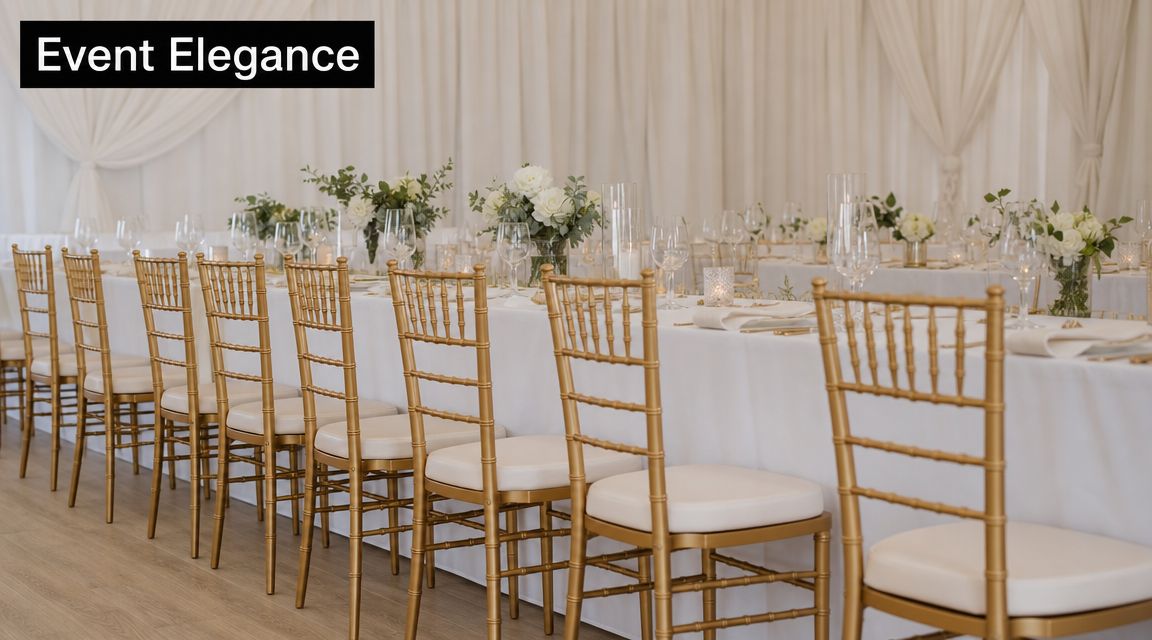
That reputation isn't accidental. The Chiavari chair was first designed in 1807 in Chiavari, Italy, by Giuseppe Gaetano Descalzi, and its mix of lightness and strength helped it become a long-running formal event staple. Its status was reinforced when it was used at John and Jackie Kennedy's 1953 wedding reception for 900 guests, a moment often cited in the chair's rise to wider international popularity, as noted in this history of the Chiavari chair.
Why the style still works
What keeps the style relevant is that it doesn't fight the rest of the event design. It frames the table nicely, photographs cleanly, and suits everything from gold-and-ivory wedding schemes to more neutral corporate dining setups.
In a marquee, that matters even more. The structure itself gives you a blank canvas, so every visible item carries more weight. Chairs aren't tucked away against existing décor as they often are in a hotel ballroom. Guests see them the moment they walk in.
A good marquee layout can be undermined by the wrong chair. The reverse is also true. The right chair can make a simple setup look intentional and finished.
What clients usually mean when they ask for one
In everyday event hire language, some people ask for Tiffany chairs, some ask for Chiavari chairs, and some point to a photo. What they usually want is the same thing:
- A formal look that feels suitable for weddings and smart receptions
- A lighter visual footprint than a bulky banqueting chair
- A flexible style that can work with different linen, florals, and colour palettes
That's why the Chair Chiavari remains a default choice for premium marquee seating. It has heritage behind it, but it still solves modern event problems without looking purely functional.
Choosing Your Chiavari Chair Material and Finish
Once you've settled on the style, the next decision is the frame itself. Many clients then focus on colour first and only ask about material later. From an event hire point of view, that's the wrong order. In the UK, material affects how the chairs cope with transport, damp conditions, quick turnarounds, and repeated handling between events.
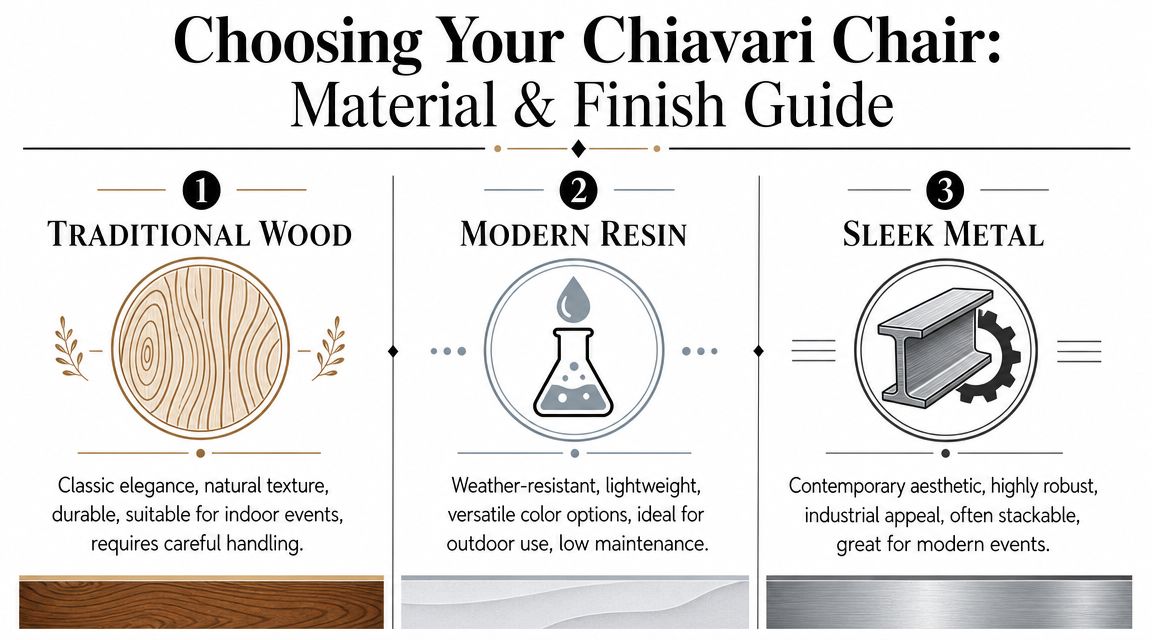
A practical rule is simple. Choose the finish with your event designer's eye, but choose the material with your hire manager's caution. As noted in this guidance on whole-life durability in the UK climate, planners need to weigh resin, wood, and metal not just by appearance, but by maintenance, transport, and resilience to damp conditions between hires.
Wood, resin, and metal compared
| Material | Best suited to | What works well | What to watch |
|---|---|---|---|
| Wood | Classic weddings, traditional venues, softer styling | Natural character and a more traditional feel | Needs careful handling to keep the finish looking tidy |
| Resin | Marquees, mixed indoor-outdoor use, frequent hire cycles | Generally easier to live with in a busy hire environment and better suited to changeable conditions | Quality matters, because not all resin stock feels the same |
| Metal | Contemporary events, cleaner modern palettes, sharper styling | Strong visual structure and a more modern edge | Can feel less warm if the rest of the décor is also minimal |
What works best in British conditions
For London and Croydon events, resin often makes the most practical sense when the chairs may move through loading bays, paved access, lawns, and temporary storage in one hire cycle. It's usually the safer option when the event includes outdoor elements, uncertain weather, or a fast turnaround.
Wood still has a place. For a church hall wedding, a formal family reception, or a marquee dressed in softer textures, it can look excellent. But wood rewards careful handling. If the event is busy, the turnaround is tight, and the chairs will be moved repeatedly, a well-kept resin frame is often easier to manage.
Finish matters just as much as material
Clients usually choose by finish because that's what they see in mood boards and venue photos. Common requests include:
- Gold for formal weddings and richer colour schemes
- White for fresh, bright marquee interiors
- Limewash or natural-style tones for softer wedding styling
- Silver or darker finishes for corporate dinners and evening receptions
Practical rule: Ask to see the cushion and frame together, not separately. A chair can look right in stock photos and wrong under marquee lighting if the tone clashes with the linen or flooring.
The right material and finish combination should survive the realities of hire while still looking considered on the day. That balance is what clients should be paying for.
Sizing and Marquee Layout Planning
The main reason Chiavari chairs remain so useful in marquees isn't just appearance. It's geometry. Their slim frame gives planners more flexibility in a temporary space where every row, aisle, and table edge matters.
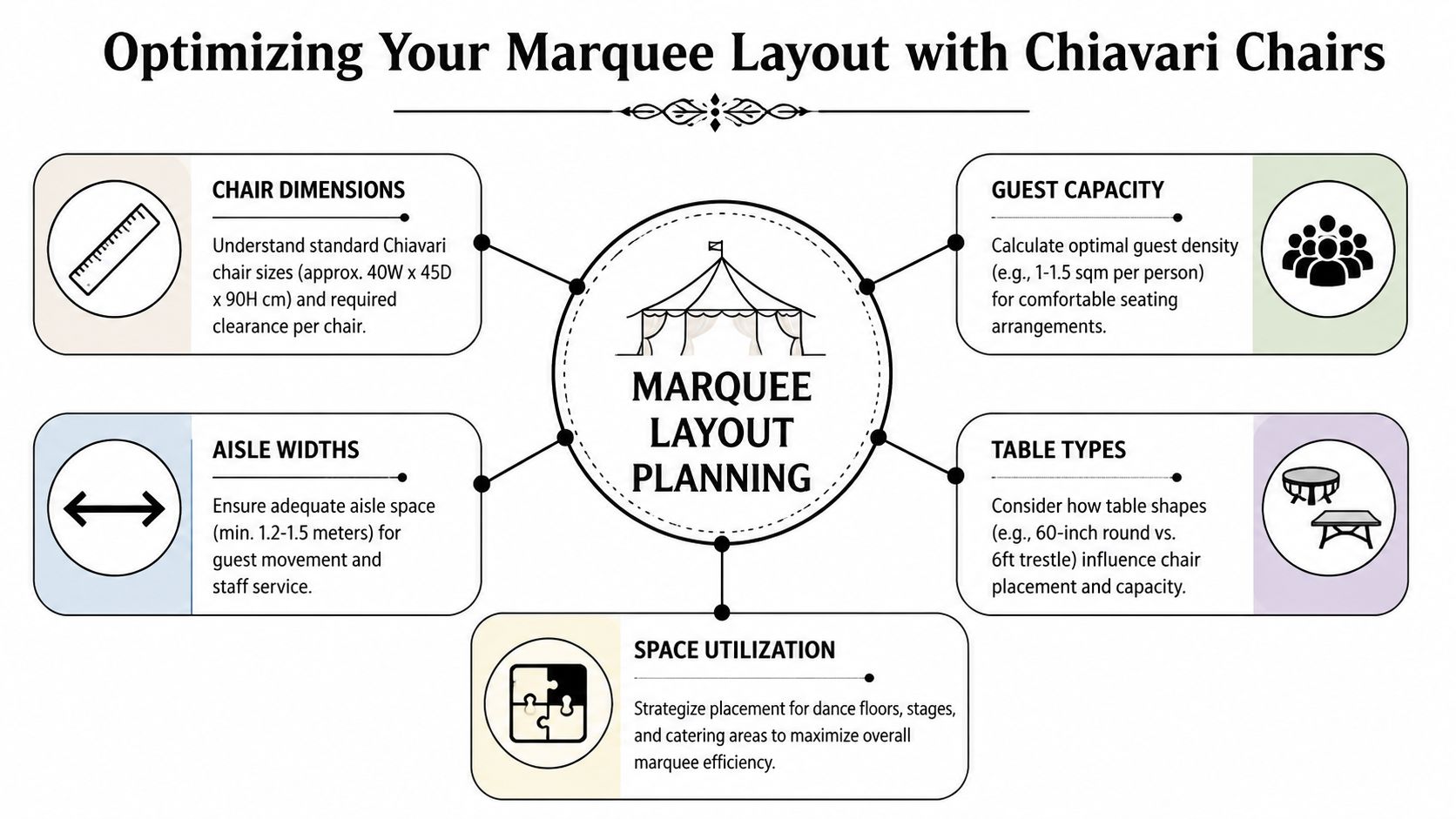
Published trade dimensions place a typical Chiavari chair at roughly 15.5 to 16 inches wide and about 7.5 lbs in weight, which is one reason they're so useful for dense marquee layouts where service routes still need to function, according to this event seating specification guide.
Why the slim profile helps
In a Croydon garden marquee, space usually disappears in the same places. Near the entrance, around the cake table, by the dance floor edge, and behind guest chairs once everyone is seated and staff are trying to serve.
A slimmer chair helps in three practical ways:
- Tables feel less crowded because the chair frame doesn't dominate the edge of the setting.
- Aisles stay more usable for guests, staff, and family members moving between tables.
- The room feels calmer because the seating doesn't create a heavy visual block.
This becomes even more important when access is tight or the garden shape is awkward, which is common in London and the surrounding boroughs.
A better way to plan chair numbers
Don't start with the maximum guest count and try to squeeze chairs in afterwards. Start with movement. Work out where guests need to pass, where catering needs to move, and where anyone elderly or less mobile needs a clearer route.
A digital wedding seating chart is useful at this stage because it helps couples test who sits where before the final floorplan is fixed. It's much easier to spot crowding problems on a seating plan than when the marquee is already built.
If a layout only works when every chair is tucked in perfectly, it doesn't really work. Guests move. Staff pull chairs back. Space must still function once the event starts.
Key checks before you confirm the order
For marquee events, these checks save trouble later:
- Match chair style to table type. Round tables, long banqueting tables, and top tables all create different chair pressures.
- Allow for service flow. Guests only move a few times. Waiting staff move constantly.
- Review ceremony and dining separately. A room that works for dining may not work for an aisle-led ceremony setup.
- Check the full marquee footprint. Dance floor, bar, stage area, cake display, and gift table all take room from seating.
If you're still unsure how many guests the structure can realistically hold once furniture is added, this marquee hire sizes guide helps clients think about capacity in a more useful way than headline numbers alone.
Styling Your Event with Chiavari Chairs
The reason Chiavari chairs stay popular is that they can shift character very easily. The same frame can feel formal, romantic, modern, understated, or celebratory depending on the finish, cushion, and surrounding décor.
At weddings, gold frames with lighter seat pads often suit warmer schemes and more traditional floral styling. White works well in bright marquees, especially when the couple wants the room to feel airy rather than richly layered. Darker or metallic finishes can sharpen the look for gala dinners, black-tie events, and evening receptions.
Cushions are not a minor detail
This is the part clients often leave until late, but it affects comfort more than generally expected. Chiavari chairs are elegant because they're narrow and visually light. That same narrowness means the seat pad matters more, particularly for long events.
As noted in this guidance on Chiavari chair comfort, a quality, well-fitted cushion isn't just decorative. It plays a real part in keeping guests comfortable through a multi-hour wedding or awards dinner.
What usually looks good and feels right
For marquee use, the best styling choices are often the least fussy:
- Neutral cushions if the flowers and table styling carry the colour
- Chair sashes sparingly when you want detail without visual clutter
- Consistent frame finish throughout rather than mixing formal dining chairs with other styles
- A slightly better cushion for long seated events, even if the chair itself is visually simple
I'd always tell clients to think about who'll be sitting for the longest. Elderly relatives, guests at a full wedding breakfast, and attendees at speeches all notice seat comfort far more than they notice decorative extras tied to the back of the chair.
The smartest-looking chair setup is usually the one that feels considered, not overloaded.
If you want a more dressed look, fabric detailing can work well, but it needs restraint. Too much on the chair back can make the marquee feel busy, especially once centrepieces, charger plates, signage, and floral installations are all in place. For clients exploring that route, this chair cover hire guide is a useful reference point when comparing a cleaner Chiavari finish against a more decorative seat treatment.
Key Considerations for Outdoor Marquee Events
A Chiavari chair can look excellent in a marquee. It suits the formality of the setting and helps the room feel lighter than it would with bulkier seating. But outdoor events have their own rules, and there, practical planning matters more than showroom appearance.
Where Chiavari chairs suit marquees well
Their light frame is useful during installation and changeovers. Staff can reposition them quickly for a ceremony-to-dining flip or a last-minute table adjustment. They also work well visually with clearspan marquees, pleated linings, chandeliers, and formal dining tables because the chair doesn't overpower the rest of the design.
For events in Croydon, Sutton, Bromley, or Wimbledon gardens, that visual lightness is valuable. Many private events are held in spaces that aren't perfectly square and don't have endless spare room. Slim, elegant seating helps the marquee feel organised rather than overfilled.
Where clients need to be realistic
There are limitations, and it's better to say them plainly.
- Soft ground causes problems. If chair legs are placed straight onto grass or damp ground, stability becomes an issue.
- Uneven surfaces show up quickly. A formal chair looks wrong if the floor line isn't level.
- Outdoor movement is harder to control. Guests drag, pivot, and shift chairs more than they would in a fixed indoor venue.
That's why flooring matters so much. If the event is on a lawn, the chair choice and the floor choice should be treated as one decision, not two separate hires.
What tends to work in practice
For a proper marquee event, a Chiavari chair is at its best when paired with a stable floor and a layout that gives enough movement space around the dining area. If the event is very informal, fully outdoor, or partly on grass without a built floor, another seating type may be more forgiving.
This is also where stock quality matters. A chair that looks fine online can tell a different story after repeated transport and storage. In the UK, damp conditions, regular loading, and fast event turnarounds all punish weak finishes. The better question isn't whether a Chair Chiavari looks elegant. It's whether the actual hire stock will still look tidy by the time it reaches your marquee.
Why Renting Chiavari Chairs Makes More Sense
Buying chairs sounds sensible when clients compare it to a single hire invoice. It feels like ownership should save money. In reality, buyers underestimate the awkward part of the equation, which is everything that happens after the purchase.
Ownership creates jobs you didn't want
Once you own event chairs, you also own the problems attached to them:
- Storage: They need clean, dry, protected space.
- Transport: Moving dozens of chairs safely is more challenging than it appears.
- Cleaning: Marks, dust, damp residue, and cushion issues all have to be dealt with between uses.
- Repairs and presentation: One chipped frame or worn pad stands out immediately at a formal event.
For occasional hosts, that's rarely worth taking on. Even for venues and regular organisers, storage and maintenance can become a constant background task.
Hire keeps the focus on the event
Hiring makes more sense because the chairs arrive for the date, in the quantity needed, and leave afterwards. You don't have leftover furniture filling a garage, storeroom, or back-of-house area for months.
That's especially true if you're also hiring the wider event setup. A provider such as Premier Marquee Hire's London chair hire service can supply seating as part of a broader marquee furniture plan, which is usually more workable than splitting the structure, furniture, and logistics across multiple disconnected suppliers.
Renting isn't only about convenience. It reduces the chances of mismatched stock, transport damage, and day-of handling problems.
If your event count is low or irregular, hiring nearly always stays the cleaner decision operationally. You pay for use, not for long-term responsibility.
Booking Chiavari Chairs in London and Croydon
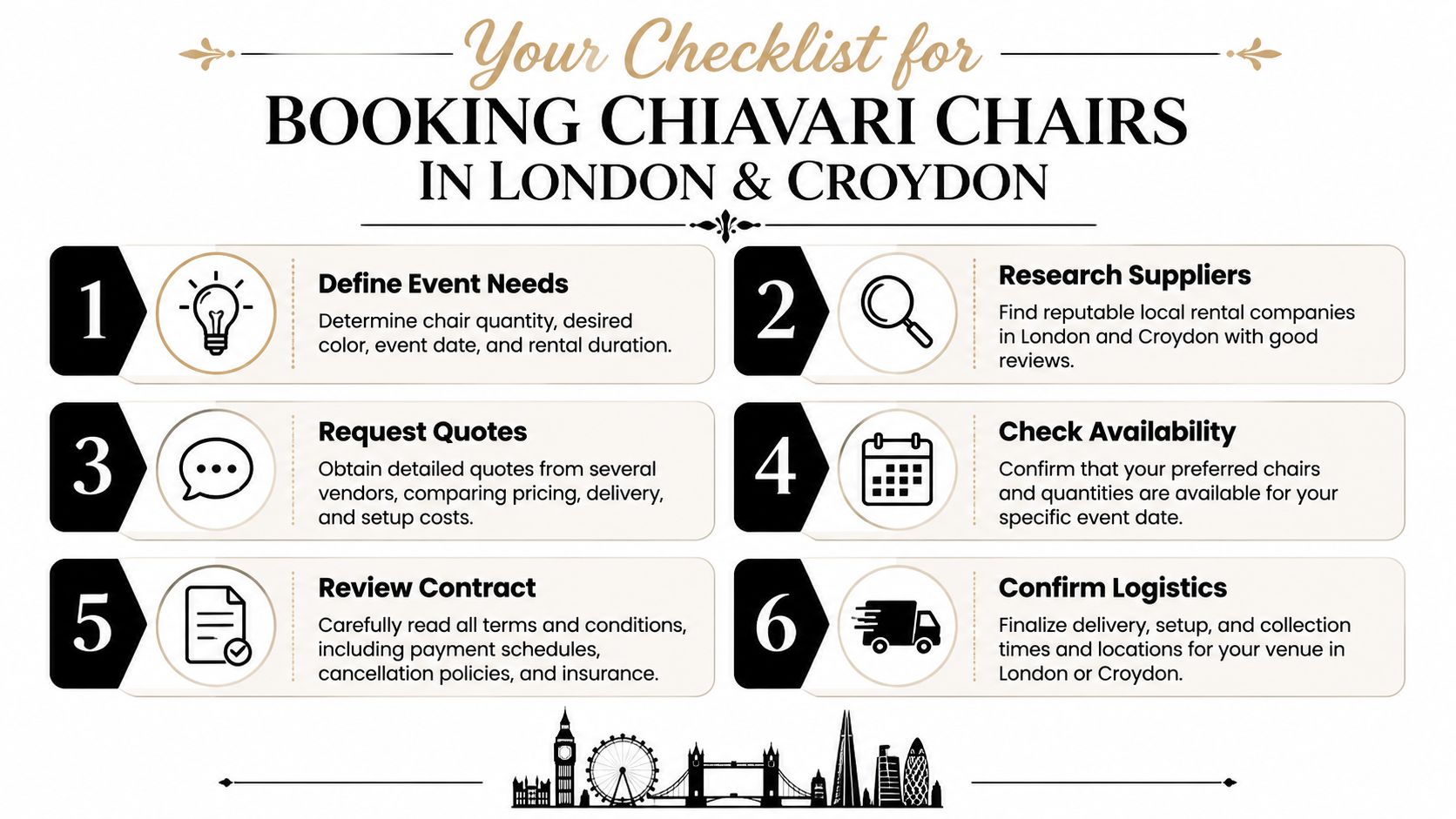
Booking Chiavari chairs is straightforward when the key details are clear early. The problems usually start when the client books a marquee first, confirms guest numbers late, and only then starts thinking about seating style, cushion colour, and table layout. By that stage, options can narrow.
The reason these chairs remain such a dependable booking choice is simple. The design has lasted for more than 200 years, from 1807 to its continued use today, which reflects how well it balances elegance, lightness, and strength, as described in this history of Chiavari chairs in modern event use.
What to confirm before you enquire
Have these points ready:
- Your date and venue location, whether that's Croydon, Purley, Bromley, Sutton, Wimbledon, or elsewhere in Greater London
- An estimated guest count, even if the final number isn't confirmed yet
- The chair finish you prefer, such as gold, white, or another formal tone
- Whether you need dining only or ceremony and dining
- Any access issues, especially side access, steps, restricted parking, or garden-only entry
That information makes the quote process much smoother and reduces the chance of assumptions later.
How to compare suppliers properly
Don't compare chair hire on image alone. Ask what's included, how the chairs are delivered, whether cushions are included as standard, and how the supplier handles layout planning.
If you want an outside perspective on the style itself, this guide to hiring Tiffany chairs is a useful read because many clients search under that name rather than Chiavari. It helps when you're narrowing down the visual direction before discussing logistics.
A sensible booking conversation should also cover:
Condition of stock
Ask whether all chairs will be from the same finish batch and presentation standard.Layout support
This matters far more in a marquee than in a fixed venue.Delivery timing
Early setup windows are useful if florists, caterers, and stylists are arriving in sequence.Collection arrangements
Make sure there's a clear plan for end-of-event or next-day collection.
In the Croydon and wider London market, the smoothest events usually come from early planning, practical floor layouts, and one coordinated seating decision rather than several last-minute compromises.
If you're planning a marquee event and need clear advice on Chiavari seating, Premier Marquee Hire can help with chair quantities, layout planning, and practical setup considerations for venues across Croydon and surrounding London boroughs. A site visit or quote request is often the easiest way to work out what will fit, look right, and feel comfortable on the day.
Sorry, the comment form is closed at this time.