

29 Apr Unique Photo Booth Ideas for Weddings 2026
You can usually spot the moment a marquee reception needs something extra. Guests have a drink in hand, the couple are tied up with photos or table rounds, and there is a lull before dinner or before the band starts. A well-placed photo booth fills that gap and gives people a reason to gather, laugh and stay involved.
In practice, the best photo booth ideas for weddings do more than produce a strip of prints. They help break up mixed family groups, keep older guests engaged early in the evening, and give friends something to do without dragging everyone straight onto the dance floor. Event professionals at The Knot note that interactive guest entertainment has become a regular part of wedding planning, with photo booths remaining one of the most commonly booked reception extras for guest participation and keepsakes according to The Knot wedding planning advice.
In a marquee, the technical side matters just as much as the fun. The booth has to suit the floor plan, cope with temporary flooring, sit clear of catering and fire exits, and run reliably from the power supply available on site. If the wedding is in a garden or open-sided structure, weather protection matters too. Guidance from Hitched on planning marquee weddings repeatedly points couples back to layout, access, shelter and power because those points affect how smoothly every supplier can operate on the day in its marquee wedding planning guide.
That is the part generic photo booth round-ups often miss.
For weddings across Croydon, Surrey and Kent, the best results usually come from matching the booth style to the marquee itself, not just to the Pinterest board. A sleek mirror booth needs clear frontage and good lighting. A 360 booth needs more operating space and firmer flooring. A print station works best where guests can pause without blocking a walkway. Those small decisions make the difference between a booth that is busy all night and one that gets ignored after the first hour.
Below are the booth styles that tend to work well in marquee weddings, along with the setup trade-offs couples are glad to know before they book.
1. Magic Mirror Photo Booth
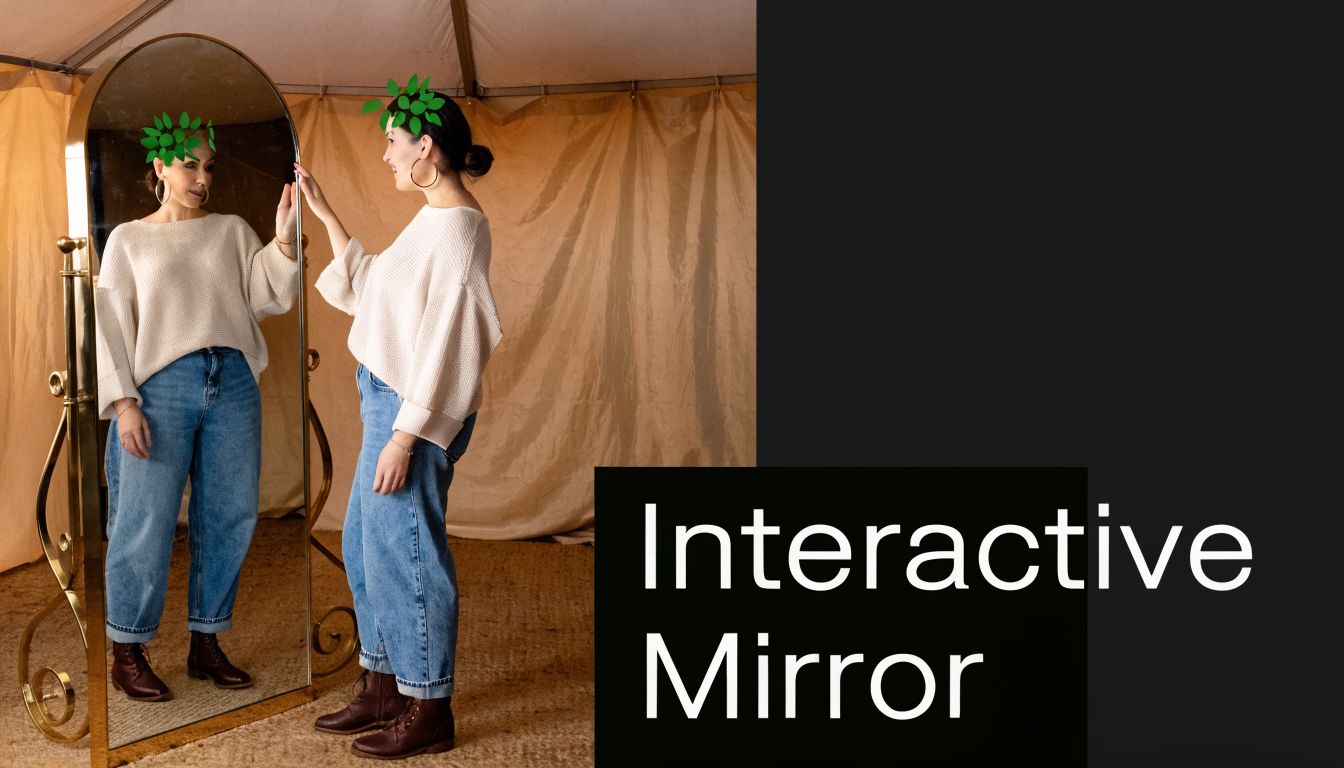
Guests have finished dinner, the bar is busy, and people are starting to drift toward whatever catches the eye first. In a marquee, a Magic Mirror often gets that attention quickly because the setup is visible from across the room and the instructions are obvious. People walk up, see themselves, touch the screen and join in without needing an attendant to explain every step.
That open format is the main reason it works so well under canvas. A mirror booth gives you the interaction of a photo booth without adding another bulky box to the layout. In white-lined marquees and clearspan structures, it also sits more comfortably with the styling than a fully enclosed unit. I recommend it regularly for marquee receptions across Croydon and the surrounding area because it suits formal weddings, relaxed garden parties and larger family celebrations equally well.
Where it works best in a marquee
The best position is usually along a solid marquee wall or in a side section with clear frontage. Guests need to notice it easily, but the queue cannot spill into the route between tables, bar and dance floor. In marquee venues, that balance matters more than couples expect. A booth can be popular and still be badly placed.
Weather is part of the setup decision too. British outdoor weddings need proper cover, level flooring and a dry power source. A Magic Mirror is well suited to a fully enclosed marquee because the screen, printer and lighting stay protected while guests still get an open, social experience. If you are still mapping the layout, it helps to plan the booth at the same stage as the bar, DJ and dining zones in your marquee wedding layout and planning.
Practical rule: Allow space for the mirror, the printer table, and a small group waiting nearby. The queue area is part of the footprint.
A few setup choices make the difference:
- Match the frame to the marquee interior: Ornate gold frames suit warmer, more traditional schemes. Cleaner frames sit better in modern linings and minimalist styling.
- Check the floor before load-in: Mirror booths need a firm, level base. Temporary flooring with joins or soft ground underneath can affect stability.
- Plan power during the site visit: The mirror, lights and printer need a dependable supply, ideally on a circuit that is not sharing heavy catering equipment.
- Keep the backdrop simple: In a marquee, pleated linings, florals or statement drapes often do enough already. Too much behind the booth can make photos look busy.
- Use a host or clear prompt signage: Guests join in faster when they can see exactly where to stand and how to start.
The trade-off is straightforward. A Magic Mirror is social and space-efficient from the front, but it still needs breathing room around it to perform properly. Give it that room, and it usually becomes one of the easiest photo booth styles to fit into a marquee without compromising the rest of the reception.
2. Classic Enclosed Photo Booth with Props
The enclosed booth usually gets chosen for one reason. At some point in the evening, four friends disappear behind the curtain, cram in shoulder to shoulder, and come out with a print strip everyone wants to see. It still has that appeal.
In a marquee, though, this is one of the booth styles that needs proper planning before the structure goes up. The shell takes more floor area than couples expect, the queue builds faster because only a few guests can use it at once, and the boxy shape can look heavy against soft linings or clearspan walls. If you are still mapping tables, bar position and evening entertainment, include the booth in your marquee wedding layout and planning rather than dropping it in later.
Privacy is the strength and the weakness. Guests who like a bit of cover tend to use it more freely, especially late in the night. Larger family groups, older relatives and anyone in fitted formalwear often prefer something less cramped.
The marquee environment matters more with enclosed booths than couples realise. Heat builds up inside the booth, condensation becomes a risk on humid evenings, and printers perform better when they are not fighting damp air or extension leads running across grass. I usually advise placing enclosed booths on a solid, level floor section, away from catering doors and not too close to the marquee entrance where temperature changes are sharper.
A few choices make them work better:
- Keep the prop selection tight: Better props photograph better, stay tidier, and stop the table turning into clutter after the first hour.
- Allow room around the booth: You need space for the curtain, the prop station, and a short waiting line without blocking the walkway.
- Check the backdrop and shell colour against the interior: Black booths can feel stark in light, elegant marquees. White or neutral finishes often sit better.
- Plan lighting, not just power: Enclosed booths bring their own flash, but the area outside still needs enough ambient light to feel inviting.
- Use camera-friendly styling nearby: If you are dressing the booth zone, these tips for perfect photo backdrops help keep the setup clean on camera.
This format still earns its place, especially at traditional weddings where guests want printed keepsakes and a more tucked-away experience. It just needs more discipline in the layout than an open booth. In a marquee, that extra planning is usually the difference between a charming feature and an awkward box taking up the wrong corner.
3. Open-Air Selfie Station with Branded Backdrop
The open-air selfie station usually earns its keep fastest in a marquee. Guests spot it from across the room, understand it straight away, and can step in without waiting for a curtain to open or a booth to clear. For couples who want the photo area to feel part of the styling rather than a separate unit, this format is often the better fit.
It also suits the way marquee receptions run. Space has to work harder. One corner might need to handle drinks, guest movement, and evening entertainment across the same few hours. An open setup keeps that area visible and flexible, which is useful if the room changes after dinner.
Why this style suits modern marquee weddings
This format is strong on group shots and steady guest flow. Friends can gather around it quickly, older relatives do not have to squeeze into a booth shell, and the backdrop becomes part of the wider room design in photos all evening.
That design point matters more in a marquee than it does in a fixed venue. Linings, clear-span frames, window walls and festoon lighting all affect how a backdrop reads on camera. A branded panel, monogram wall or floral build can look polished, but only if it is scaled to the bay width and lit from the front rather than left to compete with coloured uplighting or daylight spill from an open side.
If you’re designing the backdrop, these tips for perfect photo backdrops are useful for keeping it readable and camera-friendly.
The best backdrop is usually the one that photographs cleanly from ten feet away, not the one with the most detail up close.
A few setup choices make the difference in a marquee:
- Build the station against a stable wall line or solid drape run: Freestanding backdrops can shift if the ground is uneven or the marquee side is open to a breeze.
- Leave more depth than you think you need: Open booths need space for the camera, the group, and people waiting nearby without spilling into a main walkway.
- Match the backdrop finish to the light conditions: Gloss boards can reflect flash badly under evening lighting. Matte panels or fabric often give cleaner results.
- Treat branding with restraint: Initials, a crest or a short message usually read better than a full slogan once guests start posting and printing.
- Place it where the floor stays firm: Grass can be fine in dry weather, but camera stands and backdrop feet are more reliable on boarded or levelled sections.
This is a practical choice for couples who want photos to feel social, visible and easy to join. In marquees, it also gives more freedom with layout than a closed booth, provided the backdrop is properly anchored and the lighting is planned around the structure rather than added as an afterthought.
4. 360-Degree Video Booth
The evening reception starts to lift, the bar is busy, and one feature begins pulling a crowd before the dance floor even opens. That is where a 360 booth earns its keep. In the right marquee, it gives guests a reason to gather, watch, laugh and join in.
It also asks more of the venue than a standard booth. A rotating platform needs level flooring, clean cable routing, reliable power and enough clearance around it for both the arm and the spectators. In a marquee, those practical points decide whether the booth feels exciting or awkward.
Best fit for the format
A 360 booth suits weddings with a strong evening party element, especially where guests are happy to perform a bit on camera. It tends to work best in larger marquees with a separate entertainment pocket, such as near the bar, beside a lounge area, or at the far end of the reception space rather than close to dining tables.
Mixed-age weddings need a more careful call. Some guests love the theatre of it. Others will watch once and leave it to the younger crowd, particularly if they are less steady on their feet or do not enjoy spinning camera movement. That trade-off matters. A 360 booth can be a highlight, but it rarely has the universal ease of a mirror booth or open-air setup.
Before booking one, watch a working example:
From a marquee hire point of view, placement is the whole job. I would only sign off a 360 booth once the floor build, furniture plan and power run are settled. If the platform ends up squeezed between the dance floor and guest tables, the queue spills into circulation space and the booth becomes harder to use safely.
- Set it on boarded, level flooring: Grass or soft ground is a poor match for rotating equipment and guests in formal shoes.
- Allow proper clearance around the platform: Guests need room to step on and off, and onlookers need space to stand back without blocking a walkway.
- Plan cables before dressing the marquee: Extension leads can be hidden neatly under flooring edges or along structure lines, but only if they are considered early.
- Use an attendant: Quick direction keeps each turn short, helps nervous guests, and stops the queue from stalling.
- Keep it away from ceremonial focal points: If you are also planning culturally specific areas, such as those used during events connected to what happens during a Mehndi ceremony, give each feature its own space so neither one competes.
For couples who want spectacle, this booth delivers. For couples who want every guest to use it easily, I usually suggest testing that assumption against the guest list and marquee layout before committing.
5. South Asian Wedding Photo Booth with Cultural Elements
A Mehndi booth in a marquee succeeds or fails on whether it feels built for the celebration from the start. If it looks like a standard wedding booth dropped into a highly styled event, guests notice straight away.
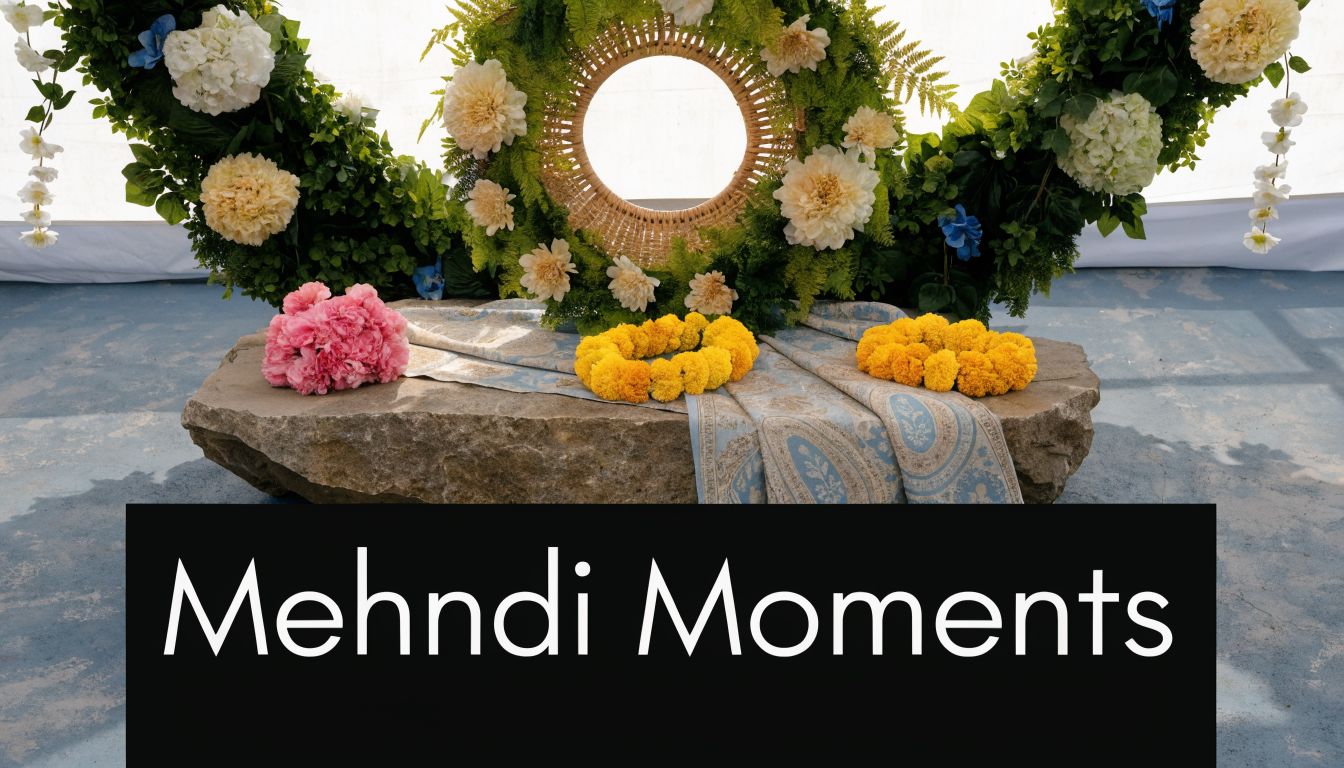
For South Asian weddings, the strongest setups borrow from the rest of the function room design. In a marquee, that gives you more control than a fixed venue. Draping, patterned panels, floral runs, gold accents and signage can all be matched properly, so the booth reads as part of the event rather than a separate supplier add-on. At busy Mehndi functions, I usually advise treating it as a styled feature with its own footprint, not a small extra pushed to one side.
Make it culturally specific, not vaguely themed
Bright colours on their own are not enough. A few generic props and a patterned backdrop will not carry the look, especially with family members who know exactly what the setting should feel like. If the event is tied to traditions such as what happens during a Mehndi ceremony, the booth should reflect that context in its wording, styling and use.
The practical details matter more than an extra lighting effect. Bilingual signs help older relatives use the booth without needing someone to explain every step. Prop wording should suit the tone of the event, whether that means playful, formal or family-focused. Backdrop colours need testing against the marquee lining and stage decor, because shades that look rich in a sample book can look flat under temporary event lighting.
One good decision is often enough to improve guest engagement. A printed sign in two languages, a backdrop that matches the decor team’s scheme, and props that feel relevant will usually get used more than a booth stuffed with random accessories.
For marquee weddings, I recommend focusing on these points:
- Set the booth near related features: It can work well beside the sweets table, dhol area or henna zone, but only if queues will not block service routes.
- Use proper flooring under the setup: Rugs alone can ruck up under heavy footfall. Boarded or solid flooring keeps the booth safe and the photos cleaner.
- Match the lighting to skin tones and outfit detail: This matters with richly coloured lehengas, sherwanis and jewellery, which can lose detail under harsh LED light.
- Allow for family group shots: South Asian weddings often produce larger group photos, so leave enough width and depth for grandparents, siblings and children to get in comfortably.
Done well, this style of booth feels personal and well judged. Done badly, it looks generic very quickly. In a marquee, the advantage is control. The layout, power, flooring and decor can all be planned around the booth early, which is usually what makes the difference.
6. Vintage Film Camera Photo Booth
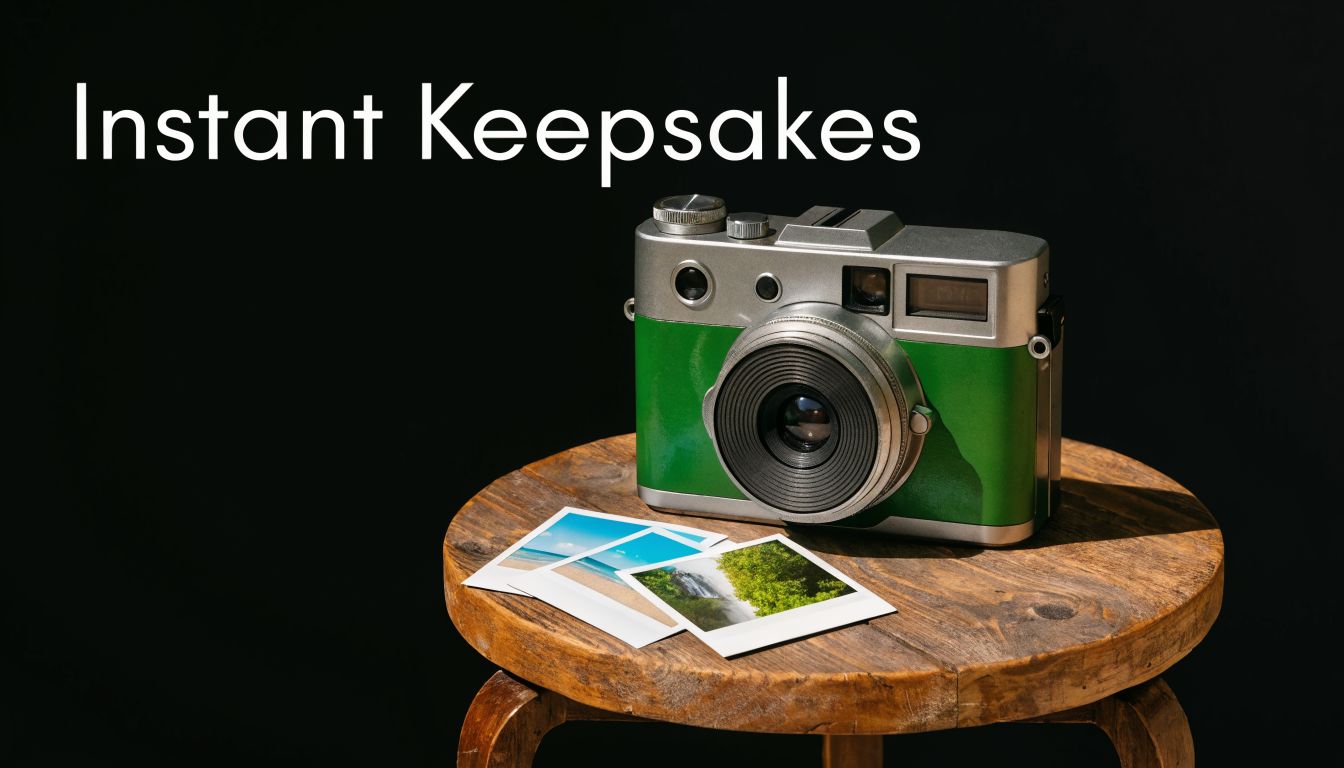
Not every wedding needs a screen, sharing station and animated overlay. Sometimes the most charming option is the simplest one. A vintage film booth, or a staffed instant camera station, gives guests a physical keepsake that feels relaxed and personal.
This style suits garden marquees particularly well. It works nicely with rustic florals, timber furniture, festoon lighting and a more laid-back timeline. The whole setup feels less like entertainment hire and more like part of the wedding styling.
The appeal and the limitation
Guests love the tactile side of instant film. They can hold the picture, pin it into a guestbook and write on it while the moment is still fresh. That’s hard to beat for atmosphere.
The limitation is consistency. Instant film is part of the charm because it isn’t flawless. Exposure varies, colours shift, and low light will affect the result. In a marquee, that means this option works best when you give it soft, steady lighting and an operator who understands analogue cameras rather than treating them like point-and-shoot toys.
Useful ways to make it work:
- Create a message table beside it: The print becomes more meaningful when guests can leave a note with it.
- Use a simple backdrop: Film usually looks better against texture and colour than against busy graphics.
- Order stock well ahead: Film availability can be patchy, and running out early ruins the point of the station.
This style won’t deliver the speed of a digital booth, but it gives a warmer, more sentimental result.
7. Green Screen Chroma Key Photo Booth
Green screen booths are all about customisation. If you want guests appearing in a favourite city, a fantasy setting, a stylised version of your venue or a themed graphic linked to the wedding, this is the booth that does it.
Done well, it’s impressive. Done badly, it looks cheap very quickly. Marquee conditions make that difference even sharper because lighting shifts, reflective surfaces can interfere, and rushed setups tend to show up in the final images.
Why setup quality matters more than the idea
The concept always sounds exciting in the booking stage. The actual result depends on spacing, lighting and operator skill. Guests need enough distance from the backdrop for the effect to cut cleanly, and the booth lighting needs to stay controlled even when the rest of the marquee lighting changes through the evening.
This style suits weddings with a strong theme, couples who want a more playful experience, or events where a branded visual element matters. It can also work for destination-inspired weddings where you want a bit of humour without physically transporting everyone to Lake Como.
Green screen booths are technical, not forgiving. If the supplier can’t explain the lighting plan clearly, that’s usually a warning sign.
A few strong practices help:
- Limit the background options: Too many choices slow the queue and dilute the idea.
- Keep a standard photo option available: If a guest doesn’t want the themed background, they should still have an easy way to take part.
- Test in marquee lighting conditions: A booth that looked fine in a warehouse demo may behave differently under lined ceilings and coloured uplighting.
8. GIF and Boomerang Video Booth
The drinks are flowing, the dance floor has not quite peaked, and guests want something quick to do between conversations. This is usually the point where a GIF or Boomerang booth starts earning its keep. It is fast, easy to understand, and better suited to a lively marquee reception than a slower, posed booth format.
What makes it work in a marquee is not the software. It is the setup. These booths rely on movement, so they need a clean background, consistent front lighting, and enough room for guests to step in and out without blocking a walkway or bar queue. In a marquee, I would usually place this type of booth near the evening action, but not directly beside the dance floor speakers. Guests need energy around it, not noise so loud that the operator cannot guide anyone.
Best for lively evening receptions
This style suits weddings where guests are happy to be playful on camera and want something they can send straight to friends. It also gives you a different record of the evening. Formal photos capture how the wedding looked. Short looping clips capture how it felt.
The trade-off is that GIF and Boomerang booths can fall flat if the backdrop is too busy or the lighting shifts as the evening lighting package comes up. That matters more in marquees than fixed venues, because the whole room changes character after dark. If you are already investing in wedding marquee decorations that frame key guest areas well, keep this booth visually simple so the motion stays clear on screen.
If guests want to reuse footage after the wedding, this guide shows how to turn existing videos into boomerangs.
A few practical decisions make the difference:
- Check signal before the wedding day: Instant sharing sounds great, but marquee Wi-Fi and mobile coverage can be patchy in the wrong corner of a field.
- Use a simple prompt board: Guests copy examples quickly, so two or three suggested actions work better than a long explanation.
- Allow proper clearance around the booth: People jump, wave, and crowd in. A tight setup causes queues and clipped footage.
- Keep the frame uncluttered: Movement reads best against a plain or lightly styled background.
For couples who want a booth that feels current without taking over the room, this is often a strong middle ground. It is less demanding than a 360 setup, more animated than a still-photo station, and particularly effective once the evening crowd has relaxed.
9. Print Station with Guest Signing and Customisation
If you want a booth that leaves you with something more personal than a folder of digital files, pair the photo setup with a print-and-sign station. This is one of the most reliable ideas for weddings because it combines entertainment with a keepsake you’ll look through later.
The flow is simple. Guests take the photo, collect the print, write a message, then add it to an album or display board. That extra step slows the process slightly, but in a good way. It turns a throwaway photo into part of the wedding record.
Why it works so well in a marquee
Marquees naturally create zones. You can place the photo capture point in one area and the writing table directly beside it without the whole thing feeling crowded. It’s also easy to tie the station into your styling so it feels like part of the room rather than a hired machine parked in a corner.
This setup works particularly well when paired with thoughtful wedding marquee decorations because the album table, pens, signage and display boards all become visible design details.
A few practical choices make a big difference:
- Use proper pens: Cheap markers smear on glossy prints and frustrate guests.
- Keep the station staffed: Someone should tidy prints, replace supplies and stop the table turning messy.
- Add writing prompts: Short prompts help guests who freeze when handed a blank card.
This idea is especially good for family weddings, smaller receptions and celebrations where sentimental detail matters more than flashy tech.
10. Marquee-Integrated LED Photo Frame Booth
The best version of this booth starts before guests arrive. In a marquee, an LED photo frame booth can be built into the room plan so it feels like part of the evening lighting, not a separate hire item pushed against a wall. Guests step in for a photo, then see selected images appear on illuminated panels or screens elsewhere in the marquee. Done well, it adds movement and atmosphere without taking over the space.
I recommend this option for couples who care about the overall look of the reception and want the booth to sit neatly within it. It works particularly well at larger marquee weddings where there is enough room to position the capture point away from dining tables, bar queues and main walkways. In a tighter layout, the effect can still work, but the screen placement has to be much more controlled or it starts to feel busy.
The trade-off is straightforward. This is more of a production feature than a simple booth drop-off. Power supply, cable routes, screen brightness, truss or frame fixing, and sightlines all need sorting alongside the marquee build. In outdoor venues, weatherproofing matters too. The booth may sit under cover, but any linked display equipment still needs a dry, stable position and protection from condensation later in the evening.
Recent reporting from Google Trends shows steady interest in marquee weddings and wedding photo booth searches in the UK. That lines up with what we see on site in Croydon and across the South East. More couples want the booth to feel integrated into the venue design, especially when the reception is under canvas and every feature is more visible.
A few decisions make this setup work better:
- Match the LED tone to the marquee lighting: Cool white screens can fight with warm festoon or chandelier lighting and make the booth area look disconnected.
- Control the live display feed: A moderated gallery usually works better than showing every image the moment it is taken.
- Plan the cable run early: Hiding power and data lines is much easier before flooring, draping and furniture go in.
- Keep the booth usable on its own: If a screen or media feed drops out, guests should still be able to take photos without interruption.
For design-led marquee weddings, this is one of the strongest options available. It looks polished, uses the structure well, and gives the whole space a bit more life, provided the technical side is handled properly from the start.
Top 10 Wedding Photo Booths: Comparison
| Photo Booth Type | 🔄 Implementation Complexity | ⚡ Resources & Efficiency | 📊 Expected Outcomes | ⭐ Key Advantages | 💡 Ideal Use Cases & Tips |
|---|---|---|---|---|---|
| Magic Mirror Photo Booth | Moderate–High: sensor, touchscreen & printer integration | Medium: reliable power, printing supplies; fast real-time prints & sharing | High engagement; professional prints and digital copies | Interactive, space-efficient, hybrid print+digital | Weddings 150+; place in well-lit area, ensure generator and staff for supplies |
| Classic Enclosed Photo Booth with Props | Low: simple frame, controlled lighting | Low: minimal electrics, props; slower throughput | Nostalgic, consistent photo quality | Affordable, easy setup, wide age appeal | Budget or intimate weddings; assign operator and stock paper/toner |
| Open-Air Selfie Station with Branded Backdrop | Low: backdrop + lighting; simple setup | Low-Medium: backdrop, lighting, WiFi for sharing; very efficient if guest-led | High social reach; many hashtagged uploads | Affordable, highly customisable, social-media focused | Modern weddings & younger crowds; ensure strong WiFi and shelter from wind |
| 360-Degree Video Booth | High: multi-camera sync or rotating rig | High: significant power, 3m+ space, technical crew; slower processing | Very high engagement; premium video content for socials | Unique, cinematic keepsakes; luxury feel | Premium weddings & brand events; allow power/IT support and guest briefing |
| South Asian Wedding Photo Booth with Cultural Elements | Moderate: bespoke design and authentic props | Medium: specialised props, bilingual signage, warm lighting | High cultural resonance and guest participation | Culturally authentic, highly customisable | Mehndi and South Asian ceremonies; work with cultural consultants and source authentic props |
| Vintage Film Camera Photo Booth | Low–Medium: analogue operation with maintenance | Medium: film stock supply, occasional maintenance; slower output | Tangible, nostalgic keepsakes with analogue character | Authentic retro aesthetic; personal physical prints | Bohemian/intimate weddings; order extra film, provide guestbook for prints |
| Green Screen Chroma Key Photo Booth | High: precise lighting and studio workflow | High: studio lights, DSLR, post-event editing time | Studio-quality customised images; not instant | Unlimited background options; high-end results | Luxury/themed weddings; hire experienced operator and schedule editing timeline |
| GIF and Boomerang Video Booth | Medium: rapid-fire capture and GIF software | Medium: good WiFi, fast cameras; very quick guest experience | Highly shareable looped clips; strong social engagement | Fast, entertaining content optimised for social platforms | Millennial/Gen‑Z events; ensure WiFi, demo poses and test software |
| Print Station with Guest Signing & Customisation | Medium: photo + adjacent signing station setup | Medium: printers, markers, album space; requires staffing | Personalised keepsakes with guest messages | Interactive, meaningful guestbook alternative | Intimate & family-focused weddings; position station near printer and staff to manage flow |
| Marquee-Integrated LED Photo Frame Booth | Very High: full décor integration and sync | Very High: extensive electrical, distributed LED displays, IT support | Immersive atmosphere; continuous visual impact | Seamless decor integration; premium event statement | Luxury 200+ guest events; early planning with marquee provider and dedicated IT team |
Bring Your Wedding Vision to Life with Premier Marquee Hire
The best photo booth isn’t always the newest one or the most expensive one. It’s the one that suits your guests, your wedding style and your marquee layout. A vintage instant camera corner can feel perfect in a relaxed garden reception, while a Magic Mirror or LED-integrated setup makes far more sense in a polished, high-energy evening celebration.
In practice, the success of a booth nearly always comes down to logistics. Space, flooring, power, lighting, queue position and weather protection all affect whether guests use it once or keep coming back to it. That matters even more in South East England, where marquee weddings are popular and conditions can change quickly across one day. According to the same wedding planning source already referenced earlier, only a small share of online guides really deal with weatherproof marquee use, which is why couples often end up with good ideas and poor execution.
That’s where practical planning makes a difference. We know which booths need a quieter side bay, which work better near the bar, and which should never be squeezed beside your dining tables just because there’s a spare corner. We also know that some options look brilliant on social media but don’t suit a mixed-age wedding, while others tend to outperform them because they’re easier, quicker and more welcoming for guests.
From Croydon to Bromley, Purley, Sutton, Surrey and Kent, couples regularly need help with the same questions. Will the booth fit comfortably within the marquee? Does it need a dedicated power run? Should it sit inside the main reception structure or under a linked section? Will guests in formalwear or family groups use it? Those are the details that shape the final result.
Premier Marquee Hire can help you answer those questions before anything is booked in the wrong place. We offer free site visits and can advise on practical booth placement, circulation, weather protection and the wider event layout. If you want, we can also help you visualise the setup so the photo booth works as part of the whole wedding, not as an afterthought added once everything else has already claimed the space.
If you’re choosing between different photo booth ideas for weddings and want honest advice on what will work in your marquee, speak to the team. We’ll help you build a layout that looks good, functions properly and gives your guests something they’ll enjoy using.
If you’re planning a wedding in Croydon, London, Surrey, Middlesex or Kent, Premier Marquee Hire can help you create a marquee layout that makes your photo booth work beautifully from the start. Get in touch for a free site visit, a pressure-free quote and practical advice on space, power, styling and all-weather setup.
Sorry, the comment form is closed at this time.