

30 Apr Clear Span Marquees: A London Event Planner’s Guide
Planning an event around London often starts with one awkward question. Where do you put everyone?
A Surrey garden looks ideal until you start thinking about dining space, a dance floor, catering access, weather cover, toilets, and how guests will move around once the evening gets going. A corporate team in Croydon may have the opposite problem. Plenty of purpose behind the event, but no venue that feels flexible enough, branded enough, or practical enough. Family celebrations bring their own pressure, especially when you need room for multiple generations, changing weather, and a setup that still looks smart in photos.
That’s where clear span marquees tend to make the most sense. They give you the freedom of a temporary structure without the usual compromises people associate with older-style tents. No awkward centre poles. No layout built around the structure instead of the event. No need to accept that a temporary venue has to feel basic.
From a hiring and installation point of view in Croydon and across the South East, its value is straightforward. A clear span marquee gives you a controlled, usable event space on the site you already have or the site you’ve chosen, while still leaving room to tailor the finish properly.
Your Guide to Choosing the Perfect Event Space
A good marquee should solve problems, not create new ones. If you’re planning a wedding, a community event, a Mehndi, or a company function, you need a structure that works with guest numbers, the site, and the British weather. That sounds obvious, but many event planners only realise the importance of structure after they’ve started thinking about décor.
A clear span marquee is easiest to understand as an open-plan room built inside a temporary frame. Instead of holding the roof up with internal poles, the strength comes from the outer engineered framework. That leaves the middle open for the part that matters. Your event.
What matters first
Before choosing any marquee, get clear on these points:
- Guest use: Are people mainly standing, dining, dancing, presenting, or moving between zones?
- Site type: Is the marquee going on a lawn, patio, car park, school grounds, or mixed surface?
- Season: Summer and winter setups need different planning around flooring, heating, and enclosure.
- Access: A beautiful garden in South Croydon can still be difficult if the only route is through a narrow side gate.
Those basics usually tell you whether a traditional structure will cope or whether you need something more adaptable.
Practical rule: Choose the space around how the event needs to function, not just how the roofline looks on first glance.
Why clear span marquees suit London events
In London and the surrounding boroughs, sites are rarely simple. Gardens slope. Driveways are tight. Venues often need tidy boundaries and efficient layouts. Clear span marquees suit that reality because they’re designed as professional event structures rather than decorative shelters.
They also work across a broad range of events. The same style of structure can be configured for a private dining setup one week and a public-facing branded event the next, with the internal layout completely changed.
That flexibility is what makes them such a dependable starting point when you want an event space that looks polished and works hard.
What Exactly Is a Clear Span Marquee
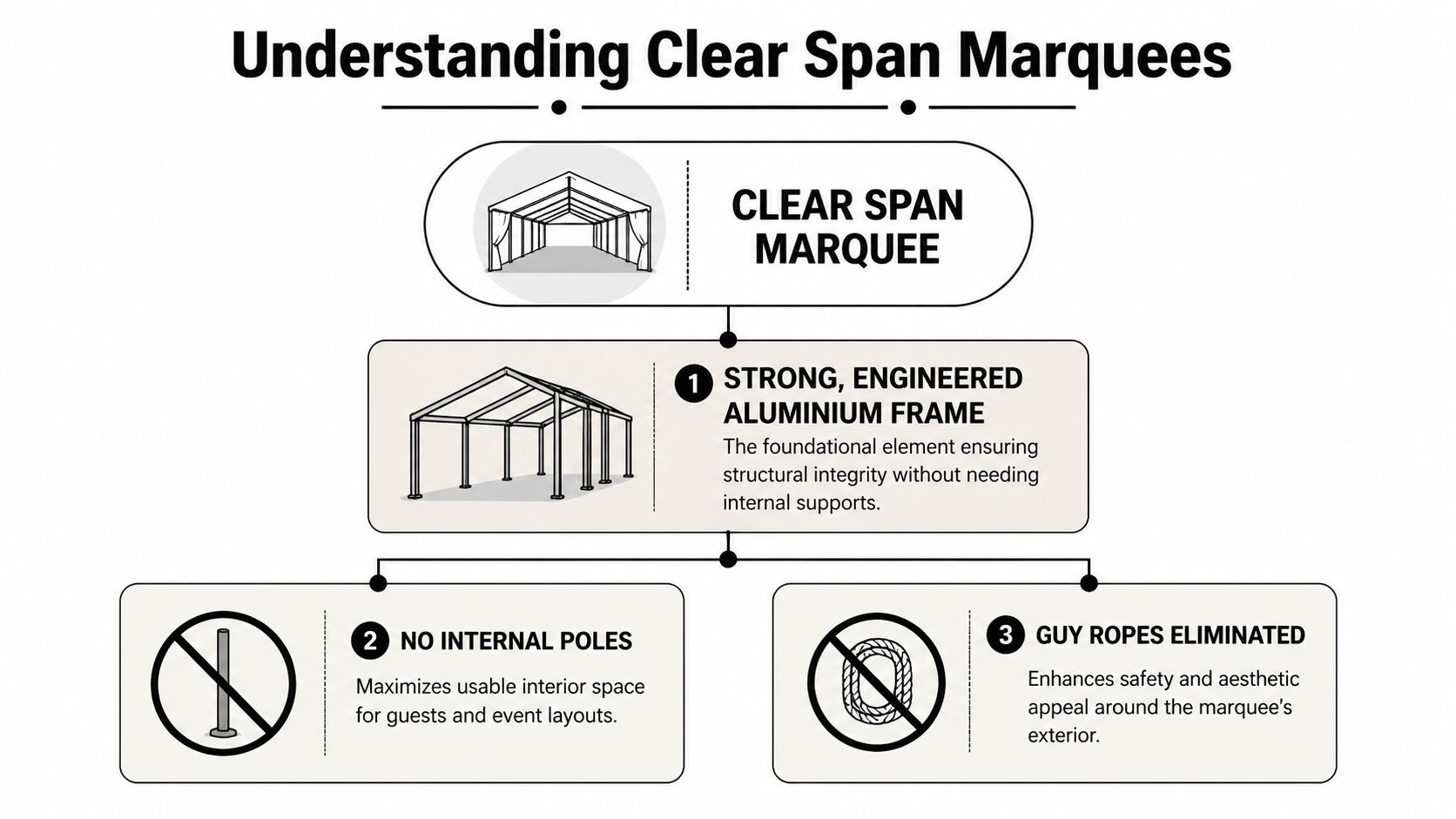
A clear span marquee is a freestanding structure built around an engineered aluminium frame, with no internal support poles breaking up the space. That’s the key distinction. The load is carried through the frame itself, so the interior stays open from side to side.
The modern version took shape in the latter half of the 20th century, when aluminium frames replaced traditional central pole systems. That shift changed the market because it allowed column-free interiors and much larger modular event spaces. Modern clear span marquees now range from 3 metres to over 60 metres in span width, with lengths extendable using standardised bays, making them suitable for everything from private parties to events for 1,000+ guests according to this history of marquee development.
The parts that define it
In practical terms, the structure comes down to two main elements:
- The frame: Rigid aluminium sections create the strength of the building.
- The covering: Durable PVC outer panels provide weather resistance and a clean finish.
That combination gives you something closer to a temporary venue than a traditional tent. It can be lined, glazed, floored, heated, lit, partitioned, and styled in a way that feels deliberate rather than improvised.
Why the structure matters more than the label
People sometimes hear “marquee” and picture a soft-sided garden tent with ropes, poles, and a layout that has to bend around the structure. Clear span marquees are different. A better comparison is a temporary open-plan hall.
That’s why they suit serious event use. If you need space for a dance floor, a stage, a bar run, round tables, buffet stations, ceremony seating, or production equipment, you don’t want the building dictating where those things can go.
An open interior isn’t just a visual benefit. It changes how guests move, how staff work, and how easily the event flows.
Why they’ve become the standard choice for many events
For weddings and corporate events across London, this style has become the practical default because it combines scale, cleaner sightlines, and stronger usability. It also removes exterior clutter. Without guy ropes spreading into surrounding space, the area around the marquee stays neater and easier to manage.
That makes a real difference on tighter residential plots, school grounds, and commercial sites where every metre counts.
The Structural Benefits for Your London Event
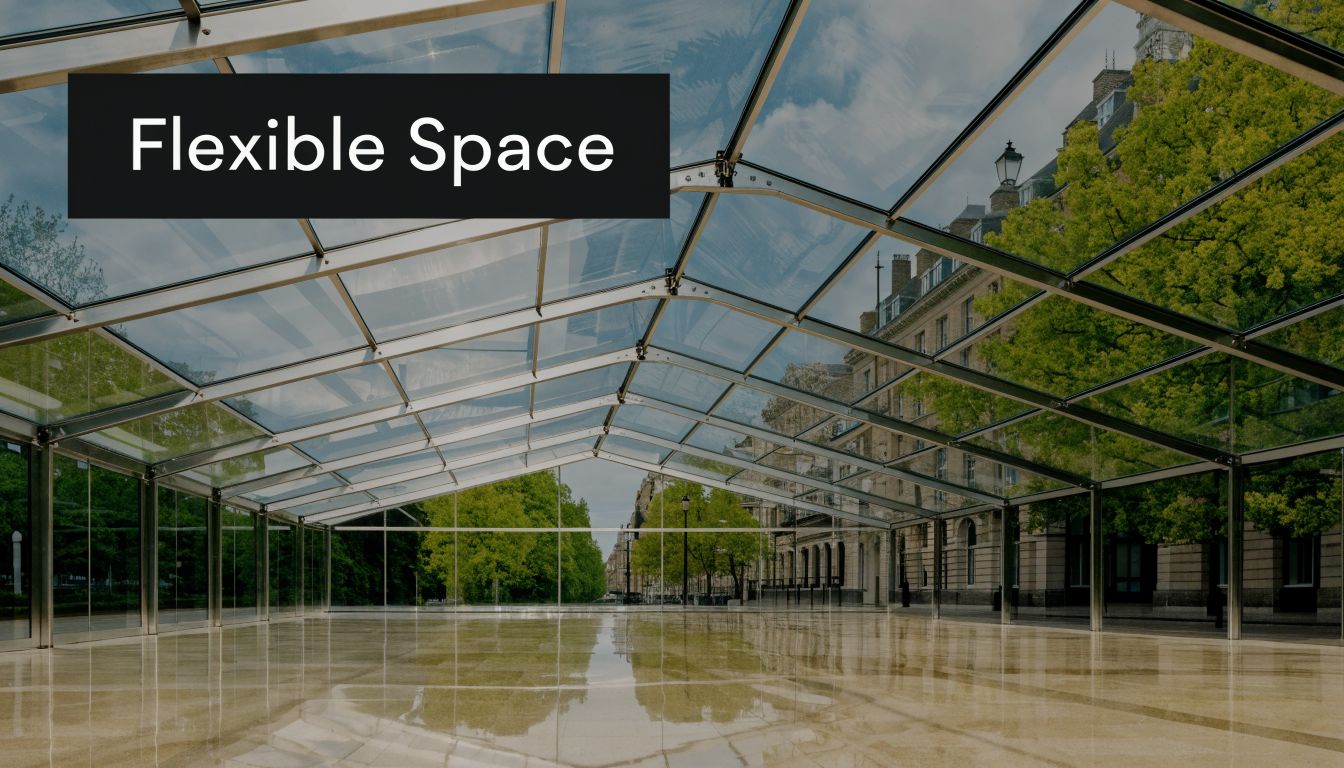
The most immediate benefit of a clear span marquee is simple. You can use the whole interior.
In the UK, clear span marquees are engineered to comply with BS EN 13782 standards for temporary structures, including wind load resistance up to 97 km/h, and this design delivers 100% usable floor space compared with 70 to 80% in traditional pole marquees. A common 15m x 30m structure can support flexible layouts for 200 to 500 guests, as outlined in this UK clear span marquee specification guide.
Clear span compared with traditional planning limits
For event planning, that difference shows up in ways clients notice immediately.
| Planning factor | Clear span marquee | Traditional pole marquee |
|---|---|---|
| Interior use | Full open floor area | Internal poles reduce layout freedom |
| Table planning | Easier to centre tables and aisles | Tables often need shifting around poles |
| Stage or dance floor | Cleaner placement options | Positioning can be constrained |
| Sightlines | Better across the full room | Centre supports interrupt views |
| Perimeter use | Cleaner outside footprint | Guy ropes take up surrounding space |
A wedding planner usually values this because top tables, dance floors, and guest seating can sit where they should. A corporate organiser values it for branding walls, presentation areas, registration desks, and service routes.
Why standards matter in the South East
Space is one thing. Structural confidence is another.
London, Surrey, and Kent don’t need extreme conditions to expose a poor installation. A marquee can look fine on a still afternoon and become a problem when weather changes, especially on exposed sites or larger guest-facing events. That’s why compliance matters more than brochure language.
What works well is a structure designed and installed with the site, expected use, and season in mind. What doesn’t work is choosing purely on appearance and assuming all marquees are built to the same standard.
- For winter functions: enclosed sides, proper flooring, and heating become part of the structural planning, not just optional extras.
- For public events: the scale of the event raises the importance of certification and proper anchoring.
- For residential sites: layout has to account for gardens, boundaries, and access without compromising stability.
On site: The right marquee isn’t just the one that fits the guest list. It’s the one that fits the ground conditions, anchoring method, and event use.
What this means for your event
For a London event planner, the practical upside is reassurance. You’re not trying to make an older-style structure behave like a venue it was never designed to be. You’re starting with a structure that already supports open layouts, weather-conscious planning, and professional finishing.
That’s what makes clear span marquees the safer choice for many modern events. Not because they’re fashionable, but because they solve more of the actual problems.
Clear Span Versus Traditional Pole Marquees
Traditional pole marquees still have their place. They carry a classic look and they’re tied to the longer history of marquees becoming more widely available during the Industrial Revolution, when canvas and metal poles helped move them beyond royal and elite use into broader public use, as explained in this overview of marquee history.
But when clients ask which style is more practical for modern events around Croydon, Bromley, Sutton, or Wimbledon, the answer usually depends on the site before it depends on taste.
Where traditional pole marquees suit best
Pole marquees tend to work best when the setting already does a lot of the visual work. Think wide lawns, open country spaces, and summer occasions where the romantic shape is part of the appeal.
They’re less forgiving if the site is tight, irregular, or hard-surfaced. They also ask more of the surrounding footprint because the ropes and staking need space.
Where clear span usually wins
Clear span marquees are better suited when the event needs clean logistics and fewer limitations.
- Mixed surfaces: Grass, patios, tarmac, and other awkward footprints are easier to plan around.
- Urban and suburban sites: London venues often don’t have spare perimeter space for ropes.
- Structured layouts: Dining, staging, bars, and service zones fit more neatly into an open plan.
If you’re comparing options for a real event rather than a styled photo shoot, it helps to look at a broader guide to marquee hire options in Croydon and nearby areas.
A simple decision test
Choose a traditional pole marquee if the main priority is atmosphere, soft ground is available, and the site is generous enough to support the wider footprint.
Choose a clear span marquee if the priority is flexibility, tidier installation, and fewer layout restrictions.
That’s why clear span tends to be the stronger all-rounder. It isn’t replacing tradition because tradition is wrong. It’s replacing it in situations where modern events ask more from the structure.
Sizing Your Marquee With Widths Lengths and Capacity
Sizing starts with width, but most clients benefit more from thinking in zones. You’re not only hiring cover for people. You’re creating room for furniture, movement, catering, entertainment, and sometimes storage or service space behind the scenes.
The good news is that clear span marquees are modular. Common event widths in the UK include 10m, 12m, and 15m, and modular bays can be added in 3m increments, which makes it much easier to match the structure to the site and event layout, as described in the earlier UK specification reference. For larger guest numbers and broader layouts, it helps to look at large marquee hire options and event configurations.
Start with how the event will be used
A standing drinks reception needs a different footprint from a seated dinner with a dance floor. The same guest count can feel comfortable in one format and cramped in another.
Use this as an initial guide only. Final sizing should always follow a proper site survey and layout plan.
Clear Span Marquee Capacity Guide Approximate
| Marquee Size (Width x Length) | Standing Guests (Reception) | Seated Guests (Dining Only) | Seated Guests (with Dance Floor) |
|---|---|---|---|
| 10m x 12m | Suitable for a smaller reception-style event | Suitable for a compact seated event | Better only if guest numbers are modest |
| 12m x 18m | Suitable for a medium-sized reception | Suitable for a comfortable dining layout | Often works well where dining and dancing share space |
| 15m x 30m | Suitable for large receptions | Suitable for large dining layouts | Commonly used for larger mixed-format events |
What people often forget to include
Clients usually count chairs and tables, then stop too early. A useful layout also needs space for:
- Entrance flow: Guests need room to arrive and circulate without blocking the room.
- Service areas: Catering, bar access, cake tables, gift tables, or production desks all take space.
- Entertainment footprint: DJs, stages, speakers, dance floors, and photo setups need breathing room.
- Clear routes: Staff and guests need obvious movement paths throughout the event.
The marquee size that “fits” on paper can still feel wrong in person if circulation space hasn’t been planned properly.
Why a site survey matters before locking in size
London and Home Counties installations often involve narrow access, garden levels, paving changes, or neighbouring boundaries. A marquee that looks ideal by dimensions alone may need a different orientation, a different bay length, or a different anchoring solution once the site is checked.
That’s why professional planning matters so much. The structure has to match the actual plot, not the assumed rectangle in your head. CAD layouts are especially helpful because they let you test table plans, dance floor position, bar placement, and service routes before the build date arrives.
Site Preparation and Installation in London Gardens
The installation side is where experience shows. A clear span marquee might look clean and simple once it’s finished, but getting it right on a London garden site can involve careful decisions about access, levels, anchoring, and working room.
In South East England, average gusts of 20 to 30 mph make compliance with UK wind load standards such as BS EN 13782 especially important. The same source notes that HSE guidelines for public events over 500 guests require certified structures, and that non-compliant installs face significantly higher failure rates. That’s why a professional site visit matters for places such as Croydon and the Kent coast, where anchoring needs to reflect the actual conditions on site, according to this guide on clear span marquee wind-load compliance.
What installers assess before build day
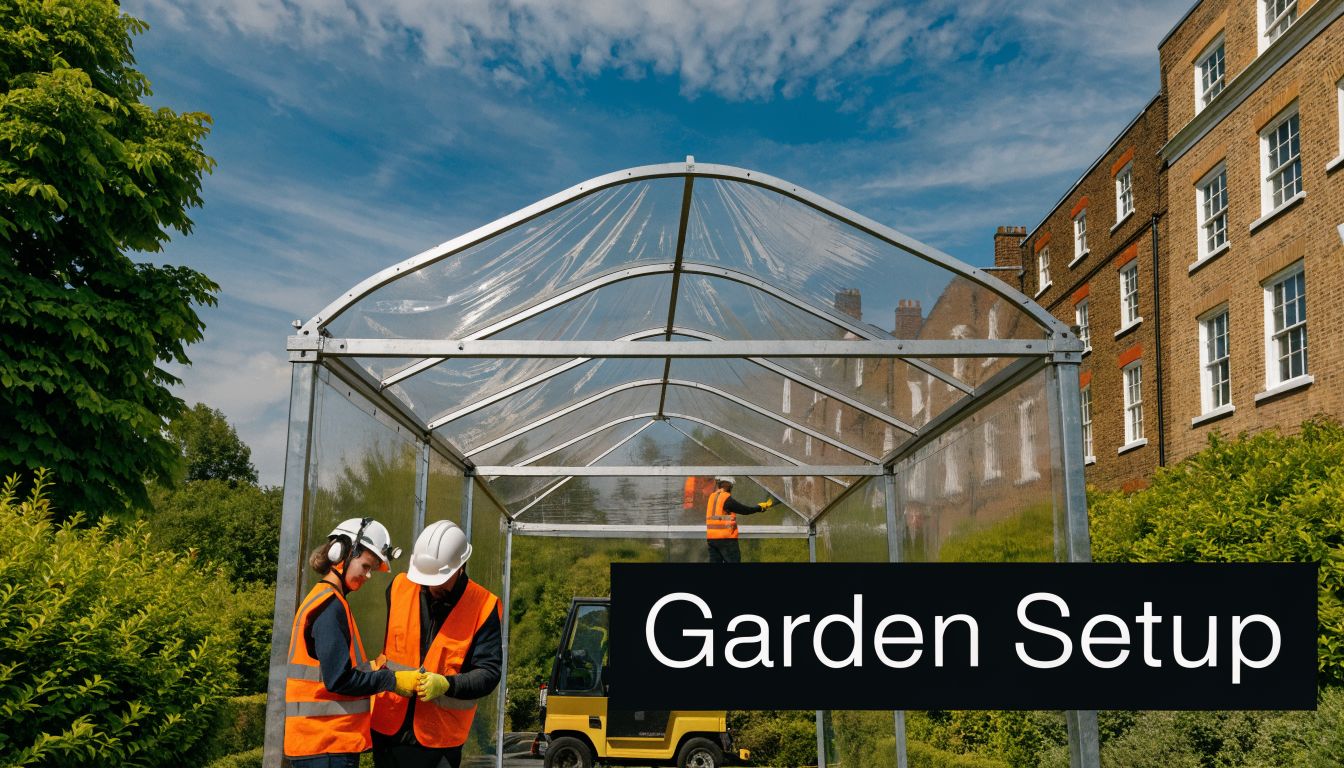
A proper site visit usually focuses on practical issues first.
- Access routes: Can equipment reach the build area without damaging walls, lawns, or planted borders?
- Ground type: Grass, patio, block paving, and mixed surfaces all affect how the marquee is secured.
- Levels and slope: A slight fall in the garden may be manageable, but it changes flooring and set-out decisions.
- Obstacles: Trees, sheds, fences, conservatories, and neighbouring boundaries can all affect the footprint.
This is why local knowledge helps. Gardens in Croydon, Purley, and Sanderstead often look spacious from the house but narrow significantly at the access point.
Two very different event examples
A wedding reception in a Bromley garden usually needs a balanced room. Dining at one end, dance floor central or slightly offset, bar tucked where queues won’t block the tables, and clean access from the house or catering tent. The marquee becomes a polished extension of the home, with the structure doing its job, blending into the background.
A corporate launch on a hard-standing site in Greater London usually needs something else. Registration at the front, product display or presentation area facing one direction, branded walls or lighting features, and a back-of-house section that guests barely notice. The same clear span principle works, but the priorities change completely.
If your event is home-based, a guide to garden party marquee hire and practical setup considerations helps frame the questions worth asking before you commit.
A marquee install goes smoothly when the site has been understood properly. Most problems start when access, anchoring, or levels are assumed rather than checked.
What works and what doesn’t
What works is early planning, honest discussion about the site, and choosing a structure that suits the ground conditions. What doesn’t work is trying to force a marquee into a footprint that leaves no room for safe installation, tidy anchoring, or guest circulation.
That matters even more for public events, religious festivals, and larger gatherings where safety checks and certification aren’t optional details. They’re part of the event plan itself.
Styling and Accessorising Your Clear Span Space
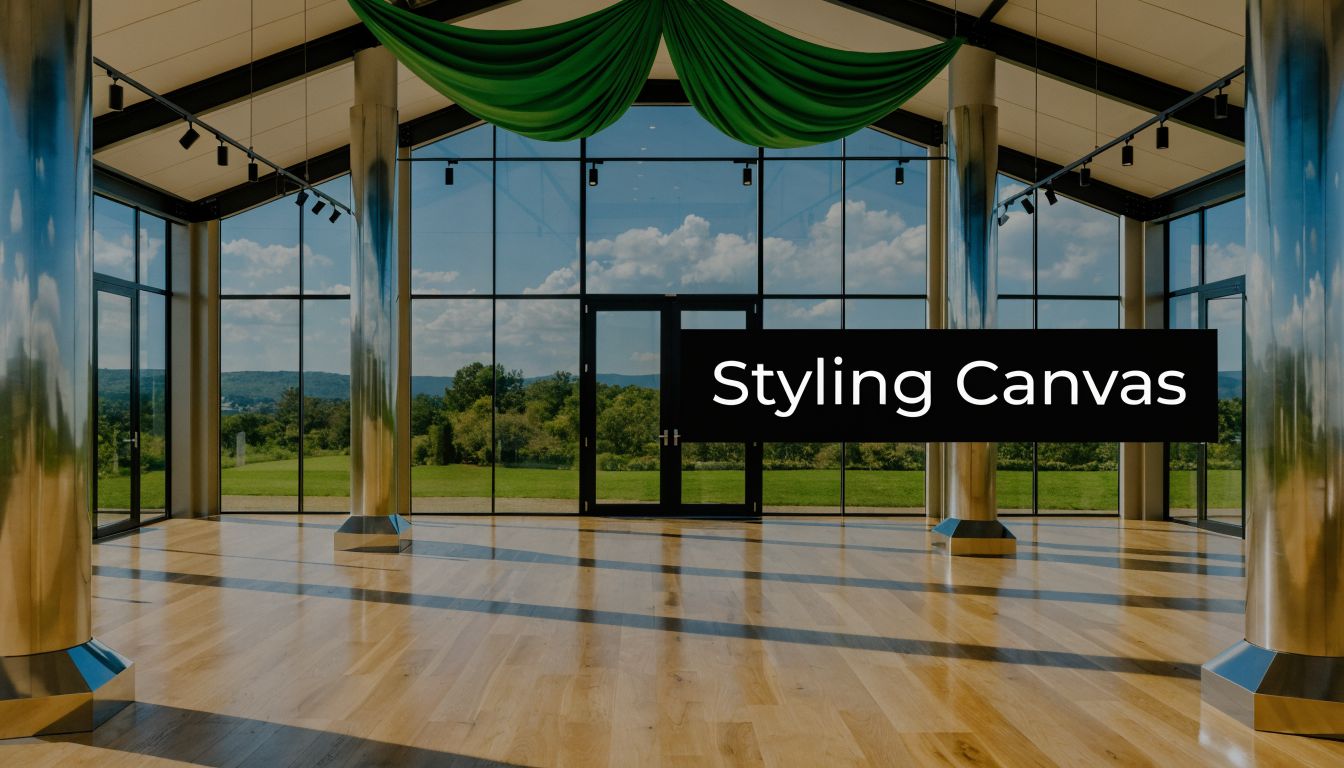
A clear span marquee does its best work once the practical side is settled. The structure gives you the blank canvas. The styling decides whether the space feels romantic, modern, formal, relaxed, or fully branded.
One reason clients like this format is that the interior can change completely without changing the building itself. A daytime family celebration can feel light and open. The same footprint can become a polished evening venue once flooring, furniture, lighting, and lining choices are added.
Wedding finish versus corporate finish
For weddings, people usually want warmth and softness. Ivory linings, chandeliers, Chiavari chairs, a dedicated dance floor, and gentle lighting tend to create that classic reception feel. If the event includes a Mehndi or multi-part wedding weekend, the same structure can also be adapted with lounge furniture, vibrant table styling, and more open social space.
Corporate clients usually take the space in the opposite direction. Cleaner furniture lines, stronger branding opportunities, practical bar positioning, controlled lighting, and defined zones for presentations or guest flow often matter more than decorative softness.
The accessories that shape the room
The accessories make the marquee usable, not just attractive.
- Flooring: Essential for comfort, especially on gardens or uneven ground.
- Lighting: Functional lighting keeps the room safe. Feature lighting changes the mood.
- Furniture: The wrong chair or table plan can make a well-sized marquee feel awkward.
- Bars and entertainment: Mobile bars, photo features, and statement pieces need to be placed as part of the layout, not added as an afterthought.
Premier Marquee Hire provides clear span marquee hire along with furniture, lighting, mobile bars, and event extras across Croydon and surrounding areas, which is useful when you want the structure and interior elements planned together rather than sourced separately.
A well-styled marquee doesn’t feel temporary. It feels intentional.
Bringing the space together
Video can help you visualise how an open marquee shell becomes a finished venue in practice.
The most effective styling choices usually come from matching the finish to the event type and the season. Heavy decorative ideas that look strong on a mood board can crowd the room if the guest flow is already tight. Minimal styling can look elegant, but only if lighting and furniture carry enough of the visual weight.
A good rule is to decide the room’s priority in advance. Dining-led, dance-led, ceremony-led, or brand-led. Once that’s clear, the accessories tend to fall into place more naturally.
Your Clear Span Marquee Questions Answered
Are clear span marquees suitable for weddings as well as corporate events
Yes. That’s one of their strongest points. The same structure can support a formal wedding breakfast, an evening party, a branded company event, a school celebration, or a community gathering. The difference comes from the layout and fit-out rather than the shell itself.
Can a clear span marquee go on a patio or driveway
Often, yes. Hard surfaces are common across London properties and commercial venues. What matters is how the structure will be secured and whether the site gives enough room for safe installation. That needs checking during a survey rather than guessed from photos.
Are they only for large events
No. Clear span marquees work for both smaller and larger events because the system is modular. You don’t need to think of them only as festival-sized structures. They can be scaled to suit a more compact private event just as effectively.
How far in advance should I book
Earlier is usually better, especially for summer weekends, wedding season, and dates around bank holidays. If your event also needs flooring, furniture, lighting, heating, or specialist extras, planning ahead makes the process easier and gives more room to fine-tune the layout.
Can you attach a marquee to a house or venue
In many cases, a layout can be designed to work neatly alongside an existing building, depending on access, heights, doors, and the available footprint. This is a common request for garden parties and home weddings where guests need easy movement between the house and marquee.
What if my garden isn’t level
Uneven ground is common. It doesn’t automatically rule a marquee out, but it does change the installation approach and may affect flooring choices, entry points, and orientation. That’s exactly why site visits are worth doing early.
If the site is challenging, the answer usually isn’t “no”. It’s “let’s assess it properly first”.
Do I need flooring
For most events, yes. Flooring improves comfort, appearance, and usability. On grass, it helps protect guest footwear and keeps furniture stable. For dining, dancing, and corporate use, it usually makes the whole event feel more finished.
Can clear span marquees be heated
Yes, they can be set up for colder-weather use. Heating needs to be considered as part of the event plan, along with enclosure, guest numbers, and how often doors will be opening. Winter marquee events can work very well when they’re planned properly.
Are they a good option for religious festivals and community events
Yes, especially where open internal space matters. Religious and community events often need flexible layouts for seating, serving, circulation, and stage or focal areas. Clear span marquees are well suited to that because they don’t interrupt the interior with centre supports.
What should I prepare before asking for a quote
A few basics help a lot:
- Date and location: Even an approximate date is useful at the enquiry stage.
- Estimated guest numbers: A realistic range is better than a rough guess.
- Event format: Standing, seated, mixed use, ceremony, dining, or performance.
- Site photos: A few clear images of the garden or venue can help start the conversation.
- Access notes: Mention narrow side paths, steps, low arches, or restricted parking.
What usually causes problems with marquee planning
Late decisions on guest numbers are a common one. So are underestimating access issues and leaving the internal layout too vague for too long. Another frequent problem is treating the marquee as just the roof, when the event depends on flooring, lighting, furniture, and service space being coordinated from the start.
Is a site survey really necessary
If the event matters, yes. A site survey helps avoid avoidable mistakes. It gives you a clearer sense of fit, access, anchoring, orientation, and how the event will function once the marquee is in place. For larger gatherings and exposed sites, that step becomes even more important.
If you’re planning an event in Croydon, London, Surrey, Kent, or the surrounding areas, Premier Marquee Hire can help you assess the site, work through layout options, and quote for a clear span marquee setup that matches the event properly.
Sorry, the comment form is closed at this time.