

03 May Heavy Duty Marquees for Sale: A Buyer’s Guide (2026)
If you're looking at heavy duty marquees for sale, you're probably in one of three positions. You're planning a one-off event and wondering whether buying makes more sense than hiring. You run a venue, school, business, or community organisation and need a structure you can rely on more than once. Or you've realised that a cheap party tent won't survive a proper London or South East event season.
That last point matters. A lightweight gazebo and a professional marquee aren't in the same category. It's the difference between a family hatchback and a commercial van. Both move things from one place to another, but only one is built to work hard, carry a load, and keep doing it in bad conditions.
Around Croydon, Sutton, Bromley, Wimbledon, Surrey and Kent, the usual problems are familiar. Narrow side access. Sloping gardens. Hardstanding instead of lawn. Wind channels between buildings. Winter setups that need to stay safe and tidy. Those are exactly the situations where buyers need to understand what they're paying for, what is important in the specification, and when buying is sensible compared with hiring.
Introduction Your Guide to Investing in a Professional Marquee
A wet Saturday in Croydon is a poor time to discover your marquee was chosen on looks alone. By the time guests are arriving, the questions that matter are practical ones. Will the structure sit properly on the ground you have, will it meet the standard your event requires, and will it still look presentable after hours of wind, rain, foot traffic, catering kit, and constant use?
That is why buying a professional marquee needs a businesslike approach, even for a private event. Schools need a structure they can put up for sports days, exams, open evenings, and prizegivings without worrying each season. Venues and businesses need something that presents well in front of clients and staff. Couples planning a garden wedding need more than shelter. They need a space that feels deliberate, safe, and properly finished.
Demand is not standing still. The wider events sector remains active, with event activity still running ahead of pre-pandemic levels according to 2023 Business Visits & Events Partnership (BVEP) figures. Wedding demand has also stayed strong, as noted in UK wedding registration reporting. In practice, that means buyers in London and the South East are comparing more suppliers, asking harder questions about compliance, and paying closer attention to long-term value.
First-time buyers often focus on what guests will notice first. Roofline, window panels, lining options, and whether the marquee suits the style of the event. Those details matter, but they are not where costly mistakes usually start. The real buying decision sits in the specification. Frame material, corrosion protection, fabric grade, wind performance, bay spacing, expandability, and how the structure can be fixed on grass, tarmac, or mixed ground all have a direct effect on safety, lifespan, and running costs.
Practical rule: Buy for the worst weather and the most awkward site you expect to face, not the best-looking event photo.
Hire is often the better choice for a one-off function. Buying starts to make sense when the marquee will be used repeatedly, stored correctly, maintained between jobs, and set up on sites that justify a commercial-grade structure. Around London, that usually means thinking ahead about access through narrow side returns, hardstanding school yards, council requirements, and that British weather does not care what was on the seating plan.
What Truly Makes a Marquee Heavy Duty
The phrase gets used too loosely. Plenty of products are marketed as heavy duty when they're really just a sturdier version of a domestic party tent. In trade terms, a heavy-duty marquee is one built for commercial use, repeated installation, and real weather exposure.
The frame does most of the hard work
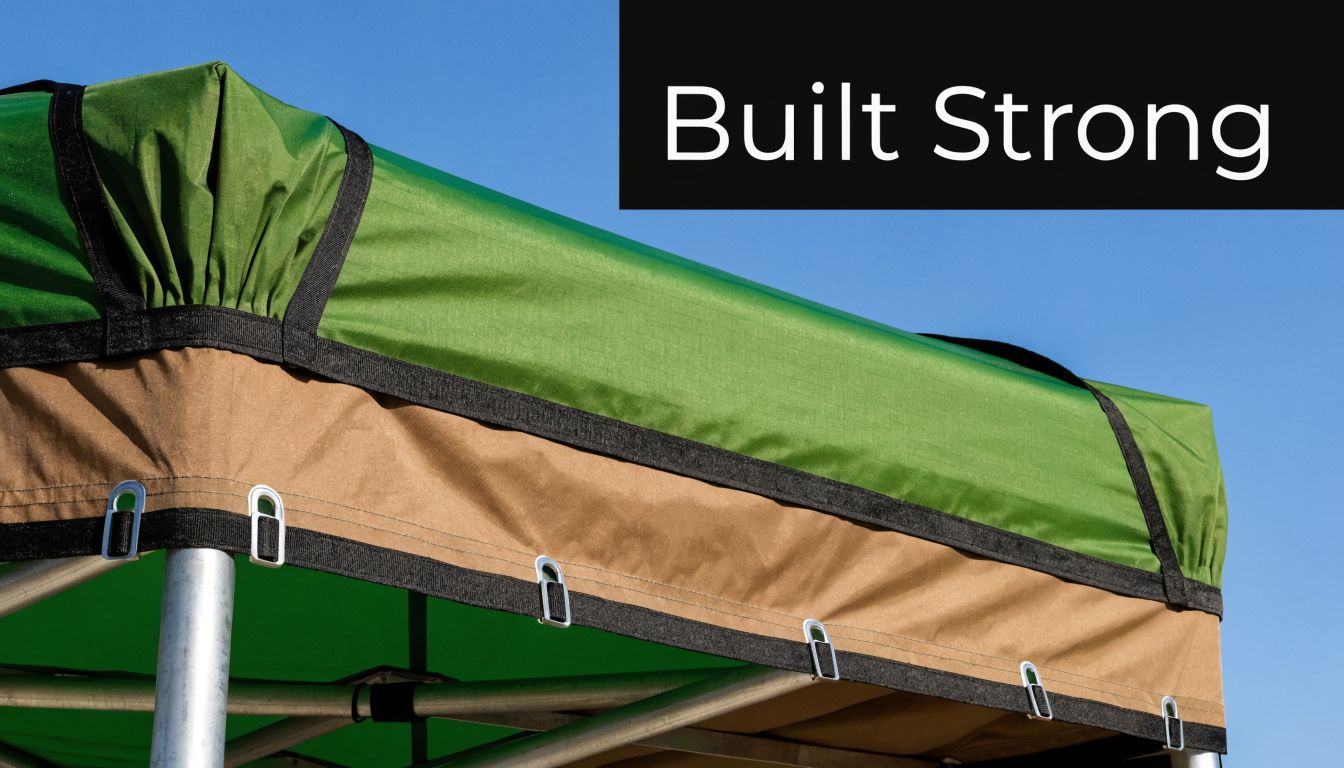
The frame is the first place to look. Commercial-grade models commonly use galvanised steel or engineered aluminium systems. For many buyers in London and the South East, the practical question isn't which material sounds better on paper. It's which one suits the job, the storage conditions, and the frequency of use.
According to commercial marquee engineering details from Expandasign, heavy-duty marquees use thick polyester roofs with UV and water resistance and can achieve wind ratings of 80 to 120 km/h because of hot-dip galvanised steel frames with over 60μm thickness. The same technical benchmark notes that frames with at least 60μm galvanisation reduce corrosion rates by 70% over 5 years in humid coastal areas such as Kent and Surrey, and can support spans up to 15m without deflection exceeding 2cm under BS EN 13782 standards.
That sounds technical, but its practical meaning is simple. The frame keeps its shape. It resists corrosion better. It copes with repeated use without becoming unreliable.
Fabric weight and finish matter more than buyers expect
The cover isn't just cosmetic. Lighter materials can be fine for occasional private use in settled weather, but they don't behave like heavyweight commercial fabrics under stress. A serious marquee needs a roof and sidewall system that can take rain, UV exposure, repeated tensioning and transport without quickly degrading.
In practical terms, buyers should be wary of anything that focuses only on appearance and avoids talking about the actual material, fire treatment, or weather rating. If a supplier can't explain the canopy properly, that's usually a warning sign.
A good starting point is to compare the construction standards used across professional marquee ranges. You don't need to become an engineer, but you do need enough knowledge to separate a proper event structure from a dressed-up party tent.
A marquee isn't heavy duty because the seller says so. It's heavy duty because the frame, fabric, fixings and certification support commercial use.
Heavy duty means engineered, not just oversized
Bigger doesn't automatically mean stronger. Some of the weakest structures on the market are just larger lightweight tents. What matters is how the load moves through the frame, how the bays connect, how the roof tension is maintained, and whether the anchoring system matches the site.
First-time buyers often make this mistake. They assume width equals quality. It doesn't. A well-specified smaller frame marquee will outperform a poorly engineered larger one every time.
Decoding the Technical Specifications You Need to Know
A first-time buyer in London usually sees the same problem. Two marquees can look similar in a photo, yet behave very differently on a wet school field in Croydon or a tight corporate site in the City. The difference sits in the specification sheet.
You do not need to read it like an engineer. You do need to know which figures affect how the marquee fits the site, how it performs in bad weather, and whether the supplier can stand behind it if a council, venue manager, or insurer asks questions.
Start with span and bay length
Commercial marquees are normally built on a modular system. The span is the width across the frame. The bay length is the repeated section that extends the structure along its length. Once you understand that, product names matter less and planning gets easier.
Common widths in the UK are 3m, 6m, 9m, 12m and 15m. In practice, the right width is not about impressing guests. It is about what you need to place inside the structure without creating pinch points. A 6m width can work well for catering cover, back-of-house use, or a compact dining layout. Once you introduce a central aisle, round tables, staging, or a bar, wider spans start to earn their keep.
Bay length matters for another reason. It affects how precisely the marquee can be fitted to the site. That is useful on London and South East jobs where gardens are irregular, access is tight, and one extra section can decide whether the entrance lands neatly on a patio or halfway across a flower bed.
Fabric and fire paperwork
For public use, the canopy specification needs proper checking. Ask what the roof and walls are made from, whether the fabric is flame-retardant, and what documents are available to prove it.
In the UK, buyers will often see BS 7837 referenced for coated fabrics used in marquees and temporary structures. That is the standard many venue teams and event organisers expect to see on the paperwork. A supplier who can produce certificates quickly is usually set up for commercial work. A supplier who talks around the question usually is not.
Material weight also matters, even if the brochure gives it less attention than glossy photos. Heavier PVC does not guarantee a better marquee on its own, but commercial-grade fabric generally copes better with repeated tensioning, transport, cleaning, and rainwater run-off than lighter event or domestic covers.
Frame finish, joints and fixings
Cheaper structures often show their weakness in these key aspects. Buyers focus on the roof sheet, but long-term performance usually depends on the frame and the connection points.
Check the frame material, the finish, and how the bays join together. Galvanised steel and aluminium both have their place. Aluminium keeps weight down and speeds up handling. Steel can add strength in the right parts of the structure, but it also increases transport and labour demands. Neither is automatically better. The right choice depends on span, frequency of use, and how often the marquee will be erected and struck.
Also ask to see the fixings. Bolted connection systems, base plates, eave beams, bracing members, and tensioning hardware should look like engineered components, not generic hardware-store substitutions. On exposed sites in Surrey, Kent, or the edge of open parks, those details matter quickly.
Wind loading and structural documentation
Wind loading is one of the first questions I would ask if I were buying for commercial use. In London, forecasts change fast, and urban sites create awkward gusting around buildings, walls, and open corners. A marquee that is fine in a sheltered garden can be the wrong choice on a more exposed venue.
Ask the supplier what wind rating applies, under what installation conditions, and what anchoring method that rating assumes. Those points belong together. A claimed wind resistance figure means very little if the ground conditions, ballast plan, or fixing method on your site do not match the tested or engineered setup.
Paperwork matters here too. For many professional installs, buyers should expect method statements, risk assessments, and structural information to be available on request. If you are comparing products for larger events, these large marquee hire options for high-capacity events give a useful sense of the spans and layouts typically used before you decide whether purchase makes financial sense.
A supplier who can explain span, fabric standard, frame system, anchoring and paperwork in plain English is usually selling a commercial structure. A supplier who stays vague is usually selling on appearance.
Read the specification in relation to the site
The same marquee can be a good buy on one job and a poor buy on another. A school in Sutton may need frequent installs on mixed ground. A corporate venue in Bromley may have strict loading windows and limited vehicle access. A private client in Croydon may need the frame to clear a wall, avoid drains, and sit partly on paving and partly on lawn.
That is why technical specifications should be read against the actual site plan. Width, bay length, leg height, anchoring options, guttering compatibility, and access clearances all affect whether the structure works in practice, not just on paper.
Buyers who get this right usually have fewer surprises, cleaner installs, and far fewer expensive changes after the order is placed.
Planning Your Space Capacity Layouts and Site Considerations
A first-time client in Croydon will often tell me the same thing. “We’ve got space for 120, so we need a marquee for 120.” That sounds sensible until you add round tables, a dance floor, caterer access, a bar, heaters, loos nearby, and a route for guests who are not climbing over chair legs to get there.
Space planning starts with how the event needs to function on the day. Guest numbers matter, but layout decides whether the marquee feels calm and usable or tight and frustrating.
A practical way to size the space
Start with the event format. A seated wedding breakfast needs table spacing, serving routes, and room for people to stand up and move around comfortably. A standing drinks reception can carry more people in the same footprint, but it still needs clear circulation around entrances, bars, and any food stations. If the event changes pace through the day, for example ceremony to dining to dancing, the layout has to work in each phase.
Use this as a rough planning guide.
| Marquee Size (Width x Length) | Area (sq m) | Seated Guests (Dining) | Standing Guests (Reception) |
|---|---|---|---|
| 3m x 6m | 18 | Small support use | Small support use |
| 6m x 6m | 36 | Small private dining | Compact reception |
| 6m x 12m | 72 | Medium dining setup | Larger reception |
| 9m x 12m | 108 | Large private event | Busy reception layout |
| 9m x 21m | 189 | Wedding or corporate dining with zones | Large reception |
| 12m x 21m | 252 | Large formal event | Major standing event |
| 15m x 21m | 315 | Large-scale event dining | High-capacity reception |
Treat these as planning ranges, not promises. Add a stage, buffet line, DJ booth, lounge furniture, cloakroom area, or indoor catering space and the usable capacity drops quickly.
I usually advise clients to sketch the furniture before they settle on the frame size. It is far cheaper to increase the footprint at planning stage than to discover a week before the event that the bar has nowhere sensible to go.
What layout works and what doesn't
A 9m x 21m marquee is a common choice for larger private events and company functions across London and the South East because it gives enough width to split the space properly. One end can hold dining tables, the centre can take a dance floor, and the far end can handle a bar or catering support without every activity bleeding into the next.
The problems start with narrow layouts that only work on a headcount spreadsheet. A long, slim marquee may tick the numbers, but the event suffers if staff cannot serve from behind the tables, if wheelchair access is awkward, or if guests have to cut across the dance floor to reach the exit. On paper it fits. In use, it feels badly planned.
Local rule of thumb: A marquee that fits the garden is not always a marquee that fits the event.
Site conditions around London and the South East
The site usually decides more than the brochure does.
Croydon, Bromley, Sutton, Wimbledon, and the surrounding areas all bring their own practical limits. In South London, access is often the first problem rather than the last. A rear garden may look generous once you are standing in it, but if the crew has to carry every frame section through a narrow side return, around a kitchen extension, or over a garage roof, installation time and labour change immediately.
Ground conditions matter just as much. Sloping gardens in Surrey and the edges of the North Downs can take a marquee, but they often need flooring adjustments and more careful setting out. Patios and hardstanding areas may need weighted anchoring or another approved fixing method rather than stakes. Trees, low eaves, boundary fences, drains, manhole covers, and hidden services also need checking before a size is agreed.
This is why a proper site visit saves money. Photos help, but they rarely show the precise pinch points, especially on London residential jobs where every centimetre of access counts.
Planning for buying or hiring
Layout decisions also affect whether hiring or buying makes sense.
For a one-off wedding in Surrey, Wimbledon, or a private garden in Croydon, hiring is usually the practical route because the structure can be matched to that exact site and installed by a crew used to awkward access, mixed ground, and weather pressure. For a school, sports club, hospitality venue, or event business using the same type of setup repeatedly, buying can stack up if the marquee size suits the sites you work on.
The mistake I see with first-time buyers is choosing a marquee based on maximum capacity and not typical use. A slightly smaller commercial frame that fits your common sites cleanly is often the better investment than a larger unit that only works on your easiest jobs. Storage, transport, labour, cleaning, and safe installation all need to be part of the calculation from the start.
A heavy-duty marquee earns its keep when the size, layout, and site all line up.
The Hire Versus Buy Decision for Your London Event
A Croydon school running sports days every summer has a very different brief from a family hiring a marquee for one wedding in Wimbledon. Both need a structure that stands up to British weather and works on the site they have. Only one of them usually benefits from owning it.
When hiring is the better choice
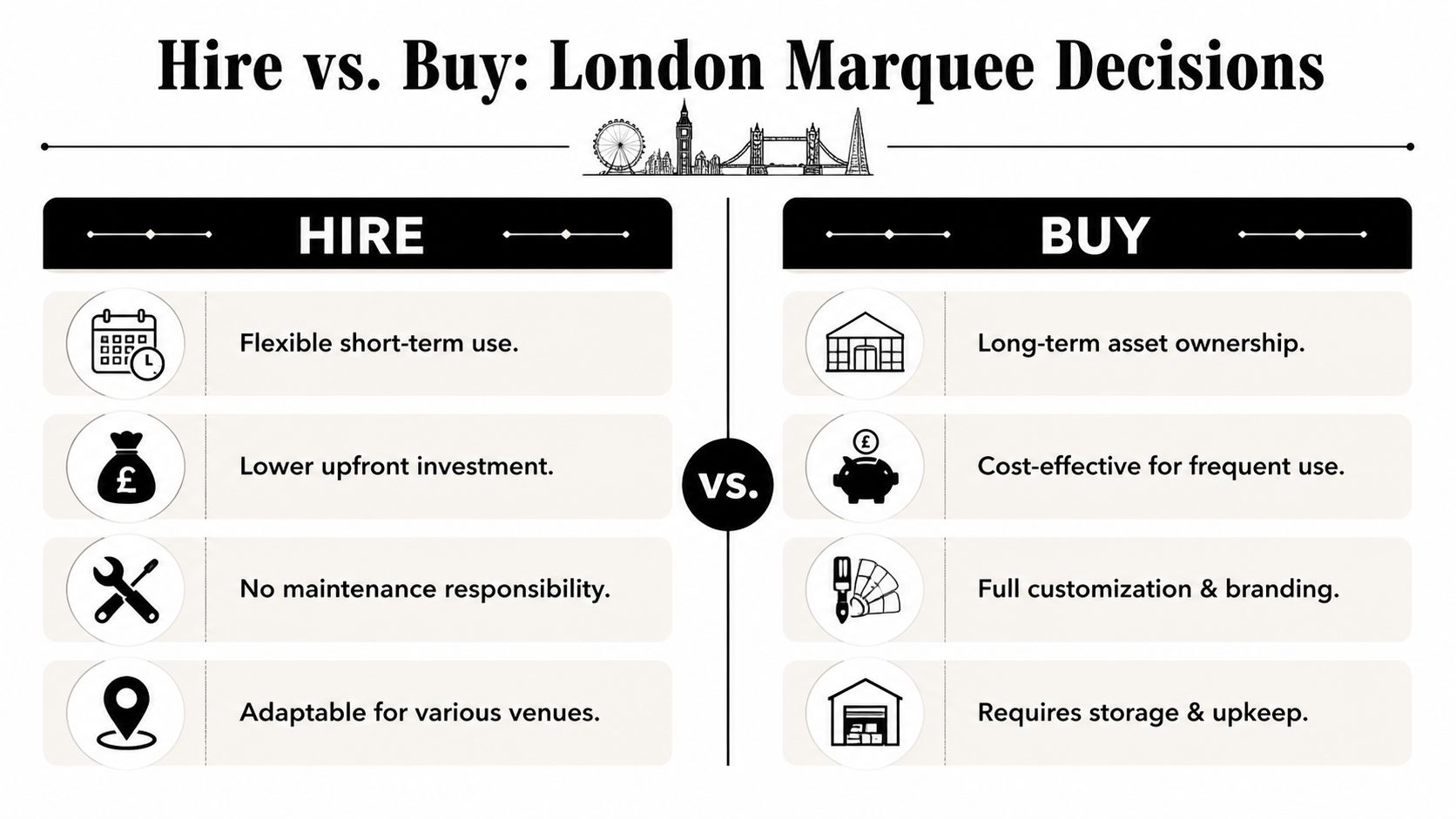
Hiring suits short-term use, changing sites, and organisers who want the event delivered without taking on storage, transport, installation, and aftercare.
A private wedding is the obvious example. The marquee may only be needed for three or four days, but the job around it is much bigger. Access may be tight. The ground may be uneven. The power run may need planning from the house or a generator position. In London and the South East, those practical details decide whether the day runs smoothly far more often than the question of ownership.
The same applies to company parties, community festivals, Mehndi events, and launch nights. If the setup changes each time, hiring gives you flexibility. You can size the marquee to the guest count, add flooring if the lawn is soft, change the entrance position, and bring in the right crew for that specific site.
That matters on awkward residential jobs.
When buying makes sense
Buying works best for organisations with repeated use, a predictable format, and staff or contractors who can handle the structure properly each time.
Schools, sports clubs, hospitality venues, golf clubs, and faith organisations often fall into that category. If the same type of event returns every term or every season, ownership can make financial sense over time. It also gives you control over availability during peak summer weekends, when popular hire stock across London, Surrey, and Kent gets booked early.
The trade-off is straightforward. A bought marquee is only an asset if it is used often enough, stored correctly, and installed to the same standard every time. If it sits packed away for most of the year, or if every event needs different dimensions and accessories, the numbers usually swing back toward hire.
Repeat use usually supports buying. Occasional use usually supports hiring. The expensive mistakes happen in the middle, when buyers underestimate the work that comes with ownership.
The costs buyers often miss
The purchase price is only part of the decision. Ownership also brings ongoing responsibilities that first-time buyers often overlook:
- Storage: PVC and linings need to be packed dry and kept in clean, secure conditions.
- Transport: Frame sections, roof covers, ballast, and flooring take space and suitable vehicles.
- Labour: Commercial marquees need trained hands, especially on larger spans or harder London sites.
- Routine checks: Fixings, base plates, sidewalls, ratchets, and connectors need inspecting before each use.
- Insurance: Owners need cover for the structure itself and for claims linked to its use.
- Consistency: If the marquee is part of your business or venue offer, every setup has to meet the same standard.
There is also a middle ground. Some venues and organisations want regular access to a marquee without taking on full ownership. In those cases, long-term marquee hire for venues and repeat-use events often gives better value than a series of one-off bookings, while avoiding storage and maintenance burdens.
For London event planners, the practical test is simple. Count how many times the marquee will be used each year, list operating costs around it, and be honest about who will install and look after it. That usually gives a clearer answer than the ticket price alone.
Navigating Regulations Maintenance and Warranties
A marquee can fit the site, suit the event, and still become a poor purchase if the paperwork and aftercare have not been checked properly. I see this in and around Croydon quite often. A buyer focuses on span, side height and appearance, then runs into delays over permissions, or finds the warranty does not cover the way the structure is being used.

Planning permission is where many buyers slip up
Temporary structures still need checking against local rules. In London and the South East, that matters even more on tight residential plots, school grounds, listed settings, and sites near neighbours who will notice lighting, traffic and noise.
Domestic buyers often assume a marquee is treated like garden furniture. It is not that simple. Size, height, how long it stays in place, and where it sits on the property can all affect whether consent is needed. Commercial sites bring another layer, because land use, licensing, access and public safety can all come into play.
A buyer in Bromley, Richmond, Kingston or parts of Surrey may face extra scrutiny because of conservation areas or sensitive surroundings. The practical approach is to check with the local authority before money is committed to a structure that may stay up for more than a short event period. For a useful starting point, see this planning guidance summary from Oxnorth for commercial marquees.
The expensive mistake is not asking early enough.
Maintenance is what protects the investment
Heavy duty marquees last well when they are treated as working equipment. London and South East conditions are hard on them. Tree sap in suburban gardens, road dust on urban sites, damp packing after wet-weather breakdowns, and repeated installs on mixed surfaces all shorten service life if basic checks are missed.
A sensible maintenance routine usually includes:
- After each use: Clean and dry the fabric fully before storage. Wet PVC packed in a hurry often leads to staining, odour and premature material wear.
- During breakdown: Check frame members, connectors, base plates and fixings for bends, cracks, distortion or missing parts.
- Before each install: Inspect anchoring gear, ratchets, straps and sidewall connections so faults are found in the yard, not on site.
- In storage: Keep fabric off dirty floors, protect aluminium sections from impact damage, and store parts in a way that makes inspection easy.
One tired crew at the end of a wet Saturday can create problems that show up weeks later. Mildew, seized fittings and damaged panels are expensive because they affect both appearance and safe use.
Read the warranty like an operator, not a shopper
Headline warranty terms do not tell you much on their own. The useful questions are practical ones. Does the cover apply to the frame only, or also to PVC, stitching, corrosion, connectors and repeated commercial erection? Is fair wear excluded? Are there fitting, cleaning or storage conditions that could void the cover?
Those details matter more than the length of the promise.
Ask for the paperwork behind the product. That usually means fire certification for the fabric, installation guidance, wind loading information where available, and clear instructions on inspection and replacement parts. A professional supplier should be able to explain what the marquee is designed to handle, what maintenance is expected, and where the warranty stops. If they cannot do that plainly, treat it as a warning sign.
Your Buyers Checklist and London South East FAQs
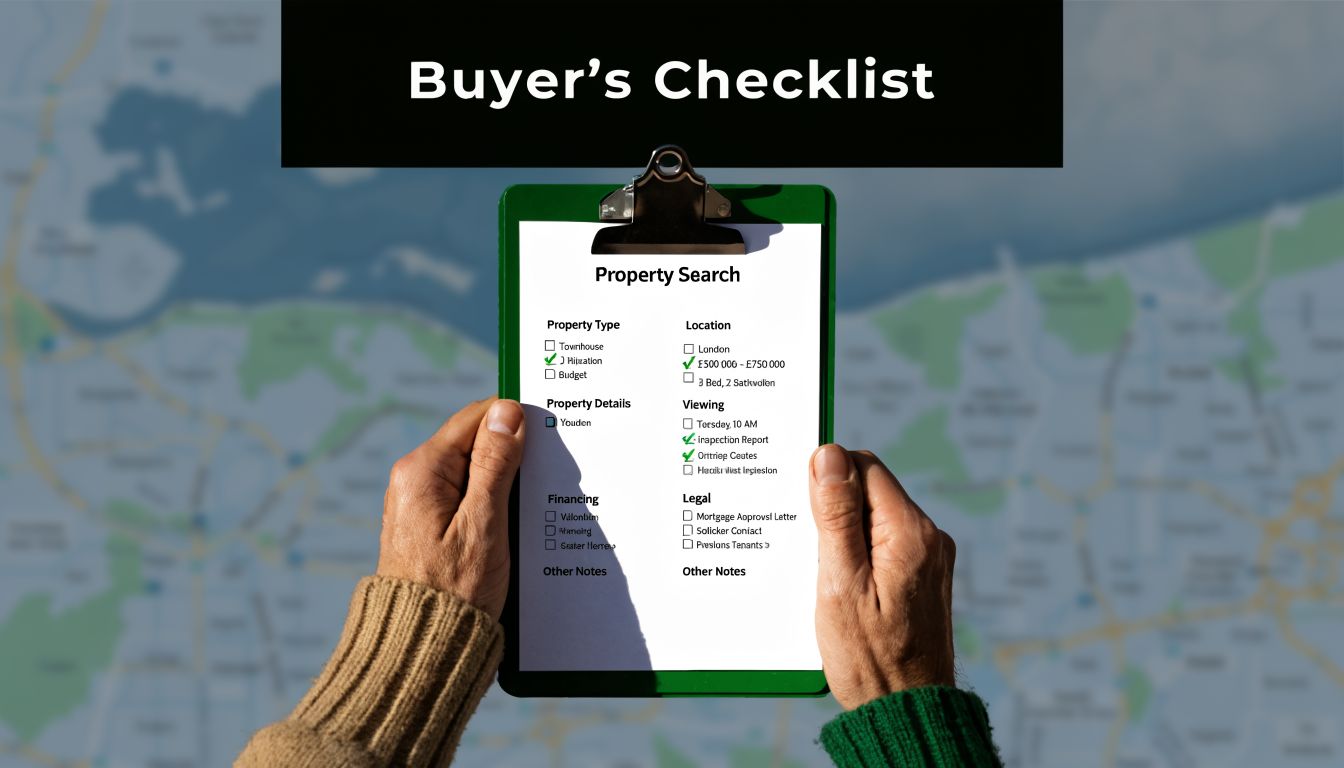
Buying well usually comes down to a short list of checks done properly. Most bad marquee purchases happen because buyers skip one of them.
Buyers checklist
- Confirm the use case first: Decide whether the marquee is for weddings, school use, corporate hospitality, community events, or mixed use. That shapes the width, layout and accessories.
- Check compliance documents: Ask what standards the structure and fabric meet, and make sure the supplier can support those claims with paperwork.
- Insist on a site survey: Access, levels, surface type, overhead obstructions and anchoring all need checking before a final decision.
- Ask how the system expands: Modular growth matters. A marquee that can extend sensibly is more useful than one fixed awkwardly at the wrong size.
- Clarify what's included: Delivery, installation, anchoring kit, sidewalls, storage bags, flooring compatibility and after-sales support should be clear in writing.
- Read the warranty terms carefully: Look for detail on structure, corrosion and fabric performance, not just a headline promise.
- Check planning early: If the marquee may stay up for longer periods, verify whether local permission is needed.
A short visual guide can help if you're weighing up ownership against temporary use.
London and South East FAQs
Is buying sensible for a one-off wedding
Usually, no. For most private weddings, hiring is simpler and lower risk. Buying starts to make more sense when the marquee will be used repeatedly.
Can a heavy-duty marquee go on a patio or driveway
Often, yes. The key issue is the anchoring method and the load plan for that specific surface. Hardstanding needs a proper installation approach, not a casual workaround.
What if my garden is sloped
A slope doesn't automatically rule a marquee out. It does mean the site needs proper assessment, and possibly flooring or a revised layout. The mistake is assuming a flat footprint from a quick glance.
Do I need a large span for every big event
Not always. Some events work better with linked structures, catering tents or separate reception areas. The best footprint depends on guest flow and site constraints, not just headcount.
What matters more, steel or aluminium
The better question is whether the system is engineered properly for the intended use, storage conditions and local environment. Material matters, but design quality, corrosion protection and compliance matter more than a simplistic material preference.
Should I ask for a CAD layout
Yes, especially for larger events or difficult sites. It helps you test circulation, seating, bars, dance floors, catering runs and exits before money is committed.
If you're weighing up heavy duty marquees for sale and want practical advice before you commit, speak to Premier Marquee Hire. The team is based in Croydon and can help with site visits, layout planning, marquee options and straightforward quotations for events across London and the surrounding counties.
Sorry, the comment form is closed at this time.