


09 May Large Marquee For Hire: Your Expert Guide
Planning a big event usually starts the same way. You've got a date in mind, a guest list that keeps growing, and a venue question that refuses to settle itself. If you're hosting in Croydon, Bromley, Sutton, Purley, or further into Surrey, that question often comes down to space, access, weather, and how to make the day feel organised rather than improvised.
A large marquee for hire solves a lot of those problems when it's planned properly. It gives you control over layout, guest flow, catering, lighting, and timing in a way that many fixed venues don't. It also introduces practical decisions that matter more than is commonly anticipated, especially in London gardens, tight driveways, school grounds, car parks, and community sites where access can be just as important as guest numbers.
The right way to approach it is to treat the marquee as a temporary venue, not just a cover. That means thinking about structure, footprint, flooring, power, weather resilience, and how people will move through the space once the event starts.
Your Guide to Planning a Large Event in London
If you're at the stage where the event feels exciting one minute and overwhelming the next, that's normal. Weddings, corporate functions, Mehndi celebrations, school events, and community festivals all reach a point where the indoor options stop fitting the brief. Either the numbers are too high, the venue rules are too restrictive, or the atmosphere just isn't right.
A large marquee gives you flexibility that permanent venues rarely offer. You can place dining exactly where it works, create a separate bar area, add a stage, build in catering space, and shape the event around your site rather than squeezing the event into someone else's floorplan. In Croydon and the surrounding boroughs, that matters because no two sites are alike. One client has a deep garden with narrow side access. Another has a school field with plenty of room but uneven ground. A third has a corporate car park that needs to stay partially operational during installation.
Start with the non-negotiables
Before you look at styles or extras, pin down four things:
- Guest profile: Are people mainly seated, mainly standing, or doing both over the course of the day?
- Event rhythm: Is this a formal meal, an open-house style celebration, or a public event with arrivals and departures throughout?
- Site type: Garden, private land, venue grounds, hardstanding, or public-facing space.
- Operational needs: Catering, power, toilets, storage, entertainment, and vehicle access.
For food-led events, the operational side often gets underestimated. If caterers are cooking on site, they need working room, sensible access, and enough separation from guest circulation. Anyone building that side of the business may also find Afida's complete guide for UK catering startups useful because it highlights practical considerations around service planning and setup requirements.
A good marquee plan starts with how the event will function, not with how the roofline looks in a brochure.
That's the difference between a setup that photographs well for an hour and one that works properly all day.
Choosing Your Large Marquee Size and Style
The first serious decision is footprint. Not colour scheme. Not lighting. Not furniture. Size and structure decide whether the event feels comfortable or cramped.
For larger events, most clients end up comparing clear-span marquees with more traditional pole structures. For practical use, clear-span is usually the stronger option because it gives you an unobstructed interior and cleaner layout options. That becomes important once you start adding dining, staging, dance floors, bars, or mixed-use zones.
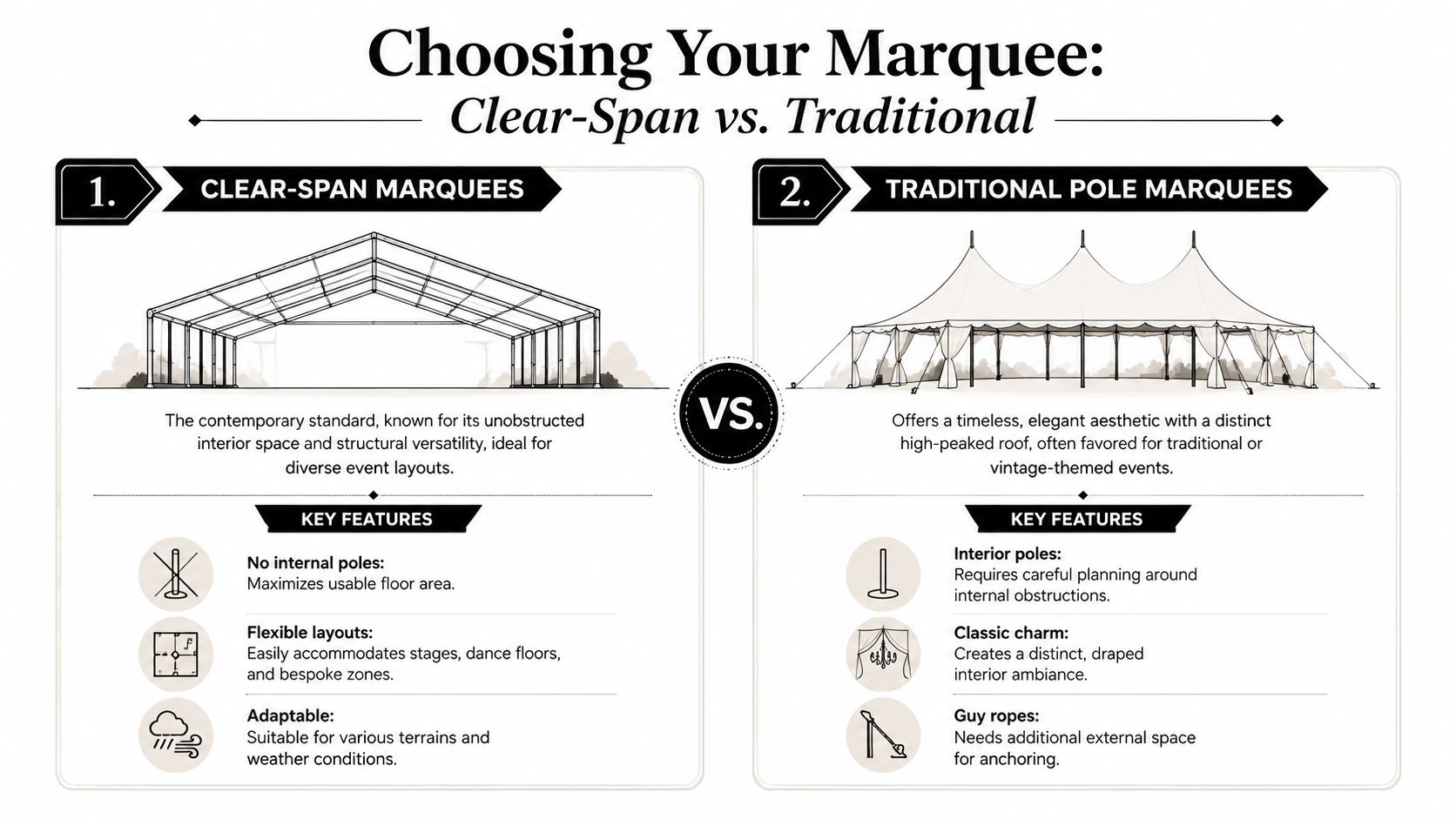
Why clear-span usually works better for larger events
A traditional pole marquee can look elegant, but it asks more of the site and more of the floorplan. Internal poles affect table plans, sight lines, staging positions, and dance floor placement. Guy ropes also need more external space, which is often the first thing London gardens and tighter venues don't have.
A clear-span structure avoids most of that. You get a cleaner rectangle to work with, fewer compromises inside, and more flexibility if the event brief changes late in the process.
Large Marquee Size and Guest Capacity Guide
The wider market for party supply rental, which includes marquees, was valued at USD 15,225.4 million in 2023 and is projected to grow at an 11.2% CAGR until 2030, according to Grand View Research's party supply rental market report. The same source notes 100 square metres as a minimum guide for an event of 100 guests, and that a 15m x 30m marquee (450 sq m) can comfortably accommodate 200 guests for a seated function.
Using that guidance, this table gives you a practical starting point:
| Marquee Size (Width x Length) | Area (sq m) | Standing Reception (Guests) | Seated Dinner – Long Tables (Guests) | Seated Dinner – Round Tables (Guests) |
|---|---|---|---|---|
| 10m x 12m | 120 | Around 100 | Fewer than a comparable standing event | Fewer than a comparable standing event |
| 10m x 15m | 150 | More room for circulation than 100 sq m minimum layouts | Suitable for medium seated events | Suitable for medium seated events |
| 12m x 18m | 216 | Suitable for larger standing events | Suitable for larger seated dinners | Suitable for larger seated dinners |
| 15m x 21m | 315 | Comfortable for substantial mixed-use events | Suitable for large long-table layouts | Suitable for large round-table layouts |
| 15m x 30m | 450 | Generous space for major receptions | Around 200 | Around 200 |
What the table doesn't show
Capacity guides are only a start. They don't account for:
- A stage or DJ position
- A full bar run
- Back-of-house catering space
- Wide aisles for service
- Reception desks or gift tables
- Lounge furniture or feature areas
That's where people often under-size the marquee. A guest count might fit on paper, but the event still feels tight once the practical components go in.
Modularity matters
Large structures are often configured in modular bays, which is useful on awkward sites. A wider marquee can be extended in regular sections rather than forcing you into a fixed one-size layout. That's especially helpful in Croydon and South London settings where the usable space isn't always a neat rectangle.
Practical rule: Choose the marquee for the event you want to run inside it, not the minimum number of bodies it can technically hold.
Designing Your Marquee Layout for Guests and Activities
Once the footprint is settled, the next question is how the inside will work. This is where good events become easy to move through and poor ones start to show strain. Guests notice bottlenecks fast. They notice when the bar queue cuts across the dance floor, when waiting staff can't pass each other, and when tables are too close to entrances.
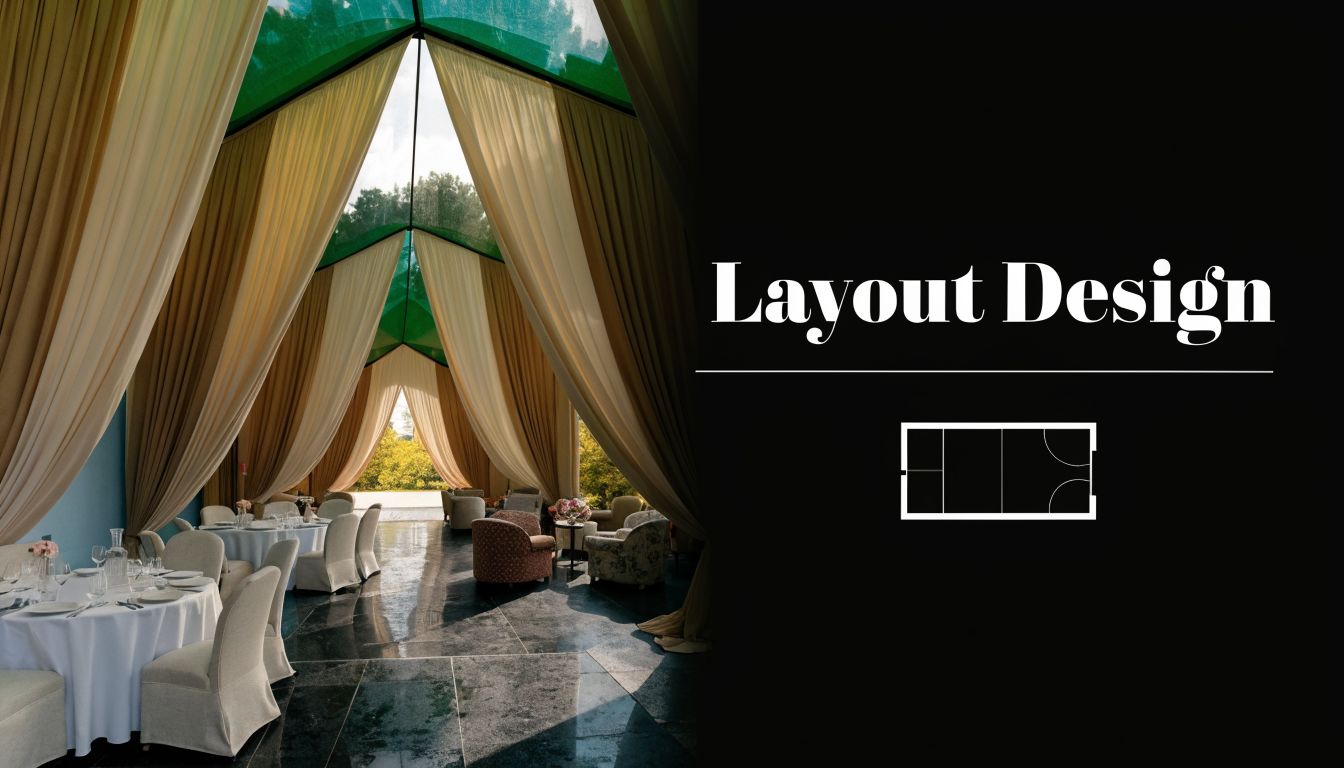
Divide the space by function
A large marquee works best when it's zoned. Even within one open structure, guests should be able to read the room immediately. They should know where to arrive, where to sit, where to order drinks, and where the event energy shifts later in the day.
The usual zones are:
- Arrival area: Welcome table, cloak space, signage, or drinks reception.
- Main guest area: Dining tables, ceremony seating, banquet lines, or open standing space.
- Entertainment zone: Dance floor, DJ booth, stage, live music setup, or speech position.
- Service zone: Catering access, prep space, storage, and staff circulation routes.
The common mistake is trying to fill every corner with furniture. Empty space isn't wasted space if it improves flow.
Long tables, rounds, and mixed layouts
Long tables suit narrower spaces and can create a more communal atmosphere. Round tables usually soften the room and work well for formal dining, but they take planning. They also change the amount of free circulation space available around the edges.
Mixed layouts can be the right answer for big celebrations. A client might choose formal dining in one half and lounge seating or a dance floor in the other. That can work very well for weddings, cultural celebrations, and company summer events where the format changes during the day.
If guests need to stop and negotiate their way around furniture, the layout is too tight.
Why CAD plans help
Professional planning tools prove their value. A proper CAD layout shows you how tables, staging, bars, and walkways sit inside the actual marquee size. It's not there to look impressive. It helps you catch problems before installation day.
CAD plans are especially useful when:
- The site shape is awkward and the marquee can't sit centrally.
- The event has several uses such as dining, speeches, then dancing.
- Multiple suppliers are involved and everyone needs a shared plan.
- Access points matter for caterers, wheelchair users, or public entry.
In practice, that means fewer assumptions. You can test whether the bar should move, whether the top table has enough depth behind it, or whether a stage placement creates dead space. Those are small changes on a drawing and expensive changes on site.
Think like a guest
The best quick test is simple. Ask how someone will experience the event from arrival to departure. If the answer is smooth, the layout is probably right. If the answer includes awkward turns, crossing service routes, or people queuing through seated areas, it needs revision.
Assessing Your Site for a Safe and Secure Setup
A large marquee can only perform as well as the site allows. That's why a proper survey matters. Clients often focus on how much open space they have, but the tougher questions are usually about ground conditions, access, and how installation will proceed.
In Croydon, this comes up constantly. A garden might look ideal until you measure the side return and realise delivery equipment can't get through cleanly. A school field might seem straightforward until the fall across the ground affects flooring levels. A car park may have enough square metreage but not enough clear run for safe unloading.
Access can decide the whole plan
London and South London properties create access challenges that don't show up in online measurements. Things that regularly affect setup include:
- Narrow side paths
- Steps between front and rear garden
- Low arches or gates
- Restricted parking
- Shared driveways
- Street timing restrictions for unloading
A marquee that fits on paper still has to be carried, staged, installed, and later dismantled without damaging the property or blocking neighbouring access. That's one reason site visits save so much time. They catch practical issues before anyone commits to the wrong structure.
Ground conditions are never a small detail
Grass, gravel, paving, and mixed surfaces all behave differently. Uneven ground changes flooring requirements. Soft ground affects anchoring. Hardstanding can need a different fixing approach from a lawn installation.
This matters even more for public events and larger occupancies. For community and religious festivals using marquees over 100m², HSG195 HSE guidelines are mandatory, including fire-rated PVC (Class B-s1,d0), 2.5m egress paths, and Temporary Event Notices where relevant. The same verified data notes a 42% rise in these gatherings in South East England, cited in this marquee capacity guide reference.
Public events need a different standard of planning
If the event is a school fair, faith gathering, council-backed celebration, or open community function, the conversation changes. You're no longer just asking whether the marquee fits. You're asking whether the whole setup supports safe public use.
That means checking:
- Entry and exit routes
- Fire safety materials
- Separation between public and service areas
- Alcohol licensing where relevant
- Noise and neighbour considerations
- Vehicle movement during build and breakdown
A free patch of ground is not the same thing as a usable event site.
That's particularly true around Croydon, Bromley, and Sutton, where residential streets, mixed-use venues, and constrained access often shape the practical answer more than the measurements do.
Ensuring All-Weather Comfort with Seasonal Setups
Weather worries are usually the reason people hesitate before booking a marquee. That hesitation makes sense if they're picturing a lightweight shelter. A professional large marquee is a different category of structure when it's specified and installed properly.
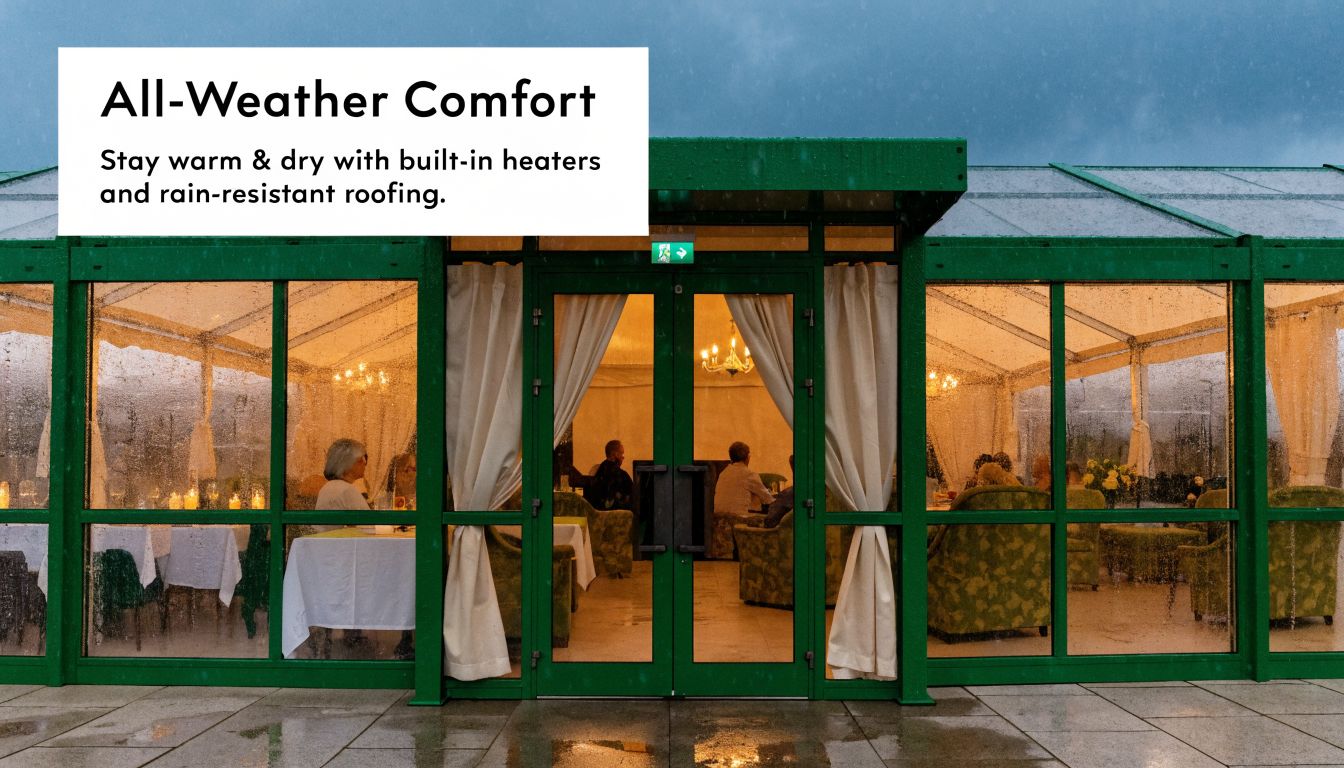
Verified technical guidance states that professional large marquees must comply with BS EN 13782:2015, requiring them to withstand wind speeds up to 100 km/h. The same verified data also notes that winter events are up 35% in London and Surrey, and that structures for winter use must handle snow loads of 75kg/m², with secure anchoring particularly important in clay-heavy soils. That verified fact is referenced from this winter marquee guidance page.
What actually keeps guests comfortable
Clients often ask for “a weatherproof marquee”, but comfort comes from a package of decisions rather than one feature. The structure matters, but so do the floor, linings, doors, and heating plan.
For colder months, the dependable setup usually includes:
- Solid flooring: Better underfoot, cleaner in wet conditions, and more stable for dining furniture.
- Lined interior: Helps the room feel finished and improves comfort.
- Controlled heating: Proper placement matters so heat reaches guests rather than disappearing at the perimeter.
- Well-planned entrances: Door positions affect drafts more than many people expect.
If you're comparing options for colder months, Premier Marquee Hire also outlines practical considerations around marquee and heater hire in more detail.
Summer weather needs planning too
Warm-weather events have their own issues. Heat build-up, glare, guest comfort during afternoon sun, and flooring choice on dry hard ground all affect the experience. A marquee should still feel airy and usable during the brightest part of the day, not just once the evening starts.
That's one reason sidewall configuration, entrance placement, and internal zoning matter so much. If all the heat collects where guests are dining, the room becomes uncomfortable long before the party starts.
For a closer look at large-structure setup in practice, this video is worth watching before you finalise your brief.
What doesn't work
The weak approach is trying to save money by treating winter resilience as an optional extra. In real conditions, guests feel every shortcut. Thin flooring over wet ground, underpowered heating, and poor entrance planning can make even a good-looking marquee feel uncomfortable.
Weather resilience isn't just about the roof staying up. It's about guests staying warm, dry, and relaxed for the full event.
Selecting Add-Ons from Furniture to Entertainment
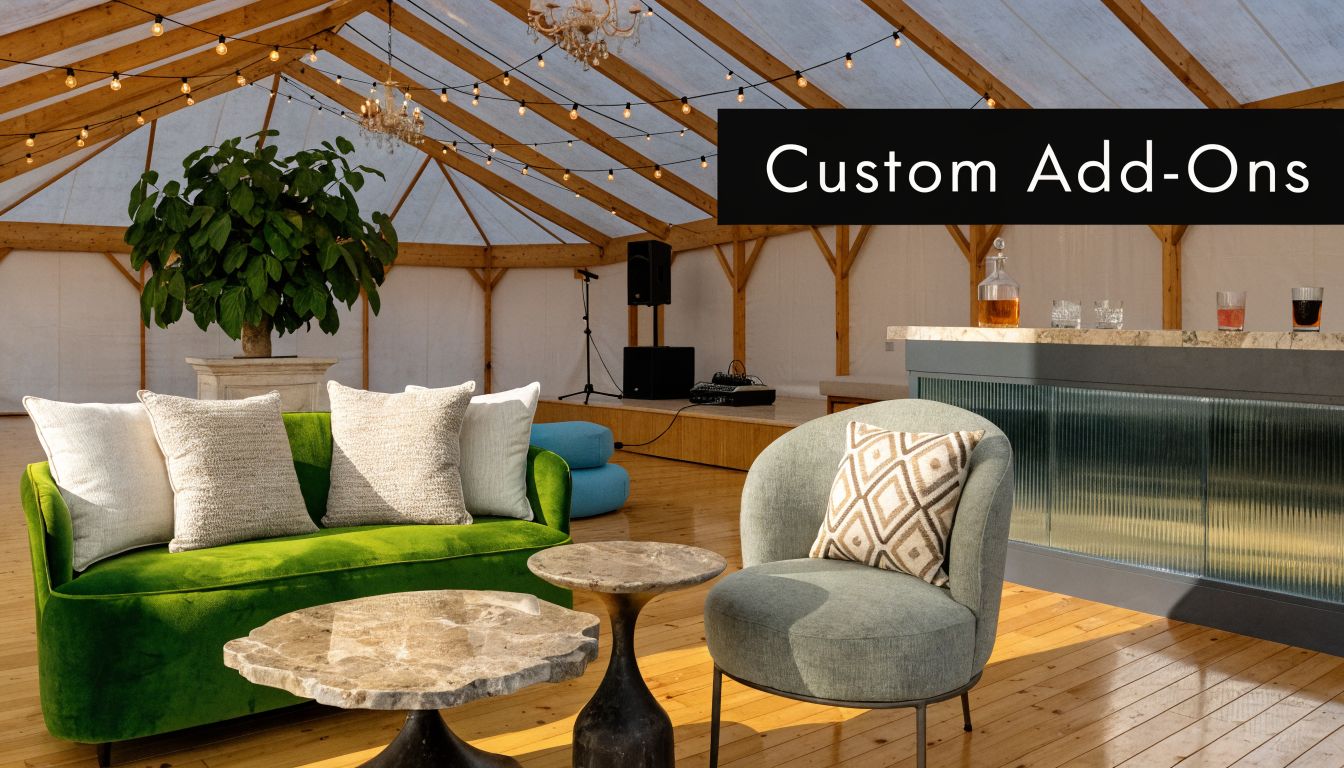
A large marquee starts as a structure. The event atmosphere comes from what you build inside it. This is the stage where an empty shell turns into a wedding venue, a company hospitality space, a festival dining area, or a polished family celebration.
One of the easiest ways to think about add-ons is to walk through the guest experience. Guests arrive. They see the flooring first, then the lighting, then the furniture layout. After that, they start noticing the details. The bar looks inviting or it doesn't. The seating feels considered or it doesn't. The room either has rhythm or it feels like tables dropped into a tent.
Start with the foundation pieces
If the event is formal or runs into the evening, the first decisions should usually be:
- Flooring
- Linings
- Tables and chairs
- Lighting
Those four shape the room more than novelty extras do. Flooring changes both comfort and finish. If you're weighing practical surface options for a garden or mixed ground site, this guide to flooring for marquee setups is a useful place to start.
For outdoor lounge zones or furnished reception areas, durability matters as much as appearance. If you're comparing furniture materials for external use beyond the marquee itself, this British retailer's teak furniture advice is a sensible reference for understanding longer-lasting timber choices.
Then build the atmosphere
Once the base is sorted, the room can take on character quite quickly. A few examples:
A wedding setup might use round dining tables, Chiavari chairs, soft lining, feature lighting, and a defined dance floor that becomes the focus after speeches.
A corporate launch might work better with poseur tables, a branded welcome area, a mobile bar unit, and a presentation zone that doesn't interfere with catering routes.
A Mehndi or family celebration often benefits from a more layered layout. Dining, lounge seating, entertainment, and circulation all need their own space so the event can shift naturally from one phase to the next.
Add-ons that earn their place
Not every extra is worth adding. The strongest choices are usually the ones that improve use, not just appearance.
- Dance floors: Give the event a centre once formalities finish.
- Staging: Important for speeches, performers, or live music where sight lines matter.
- Bars: Create a natural social anchor.
- Photo features: Work well when placed away from congested routes.
- Lounge furniture: Useful in larger marquees where guests need a quieter secondary space.
What rarely works is throwing in too many focal points with no hierarchy. One or two strong features usually beat a cluttered room every time.
Budgeting Your Marquee Hire and Understanding Costs
Clients often ask for price early, which is reasonable. The difficulty is that a large marquee for hire isn't one item. It's a venue package built from several choices, and each of those choices affects the quote.
That's why very short online price lists can be misleading. Two marquees with the same footprint can cost very differently once flooring, linings, heating, furniture, access, and installation complexity are included.
What usually drives the final quote
The main cost factors tend to be:
Structure size and shape
A larger footprint means more frame, more roof, more walling, and more labour.Type of site
Easy-access open ground is simpler to install on than a London garden with narrow access and staged hand-carry routes.Flooring choice
This is often one of the biggest differences between a basic shelter setup and a venue-standard finish.Interior specification
Linings, lighting, furniture quality, and staging all move the quote.Seasonal requirements
Winter setups may need more from the build than summer ones.
Reliability has value
The UK marquee hire market is stable, with average growth of 3.3%, and the industry is made up largely of small local firms with the most common staff sizes being 2 to 4 full-time employees, according to Plimsoll's marquee and tent hire market analysis. That matters because service quality and reliability can vary widely.
In practical terms, the cheaper quote isn't always the cheaper event. If a supplier under-specifies the structure, skips the detail in planning, or struggles with access management, the savings can disappear quickly in stress, last-minute changes, or compromised finish.
Where clients can save sensibly
There are sensible ways to control budget without hollowing out the event:
- Keep the layout efficient: Dead space costs money without improving guest experience.
- Choose furniture for use, not trend: Some styles carry a premium without changing how the event functions.
- Be realistic about extras: Focus on the additions guests will use.
- Book with enough lead time: It gives more room to plan around dates, logistics, and stock availability.
- Ask for a detailed quotation: You want to understand what is and isn't included.
If you want a clearer breakdown of what typically shapes a quotation, this guide to prices for marquee hire is worth reviewing alongside your shortlist.
The best budget conversations happen after the brief is clear. Without that, you're comparing guesses, not like-for-like proposals.
Your Booking Process and Final Pre-Event FAQs
The booking process should feel straightforward. If it feels vague, that usually means key details haven't been nailed down yet. For a large marquee, clarity early on saves time later.
How the process usually works
A practical booking route looks like this:
Initial enquiry
Share the date, location, estimated guest numbers, and the type of event. Even rough information is enough to start the conversation.Site discussion
Access, surface type, and any obvious restrictions get checked early. London-specific issues often arise during these initial checks.Site visit
A proper visit confirms the workable footprint, access route, and any installation constraints.Layout and quotation
You receive a clearer proposal based on the actual site and event use, rather than a generic estimate.Booking confirmation
Once the specification is agreed, the date and equipment can be secured.
For larger events, this process matters because changes become more expensive the later they happen. A clear brief and a confirmed site survey usually prevent most avoidable problems.
Final questions clients often ask
Do I need planning permission for a marquee
Sometimes, but not always. It depends on the site, how long the structure will remain, and whether the event is private or public-facing. Private short-term installations are often more straightforward than public events on regulated sites. If the location has venue rules, lease conditions, or public access issues, check early.
What about power for a large event
Power depends on what's being used inside the marquee. Lighting, catering equipment, bar equipment, DJs, bands, and heating all place different demands on the supply. Don't assume a domestic socket arrangement will suit a large event. This needs proper discussion before the quote is finalised.
How long do installation and removal take
That depends on marquee size, access, flooring, and how much is being installed inside. A simple open site can move much faster than a constrained urban property. The key is to allow enough time before guests arrive so the structure, interior, and final checks are completed without a rush.
A large marquee works best when the planning is calm, measured, and site-specific. If you've got a date in mind and want a practical view on what will fit, what will work, and what's worth spending on, the next step is to get the conversation started.
If you're planning a wedding, corporate function, private celebration, or community event in Croydon, London, Surrey, Kent, or the surrounding areas, Premier Marquee Hire can help you assess the site, map out the layout, and put together a clear quotation with no pressure.
Sorry, the comment form is closed at this time.