

11 May Garden Party Tent Hire: The Ultimate 2026 London Guide
You notice the problem the moment you stop looking at the garden as a garden. The patio has to take a drinks table, the lawn may need to hold a marquee, and that narrow side path in a Croydon or Bromley property suddenly matters because it is the only way our crew can get equipment in. That is usually when the planning starts to feel less like hosting friends and more like setting up a temporary venue.
A garden party can look straightforward on paper, but London and Surrey homes rarely give you a blank, open plot. Terraced gardens often have tight access, changes in level, mature planting, sheds in the wrong place, and neighbours close by. I see it all the time around South Norwood, Purley, and Bromley. A marquee can solve a lot, but only if the site, access route, and weather cover are thought through properly from the start.
Garden party tent hire works best when it is treated as venue planning as much as equipment hire. A good setup gives guests shelter, clear circulation, safe flooring, and enough room to relax without feeling packed in. A poor setup leaves queues at the door, soft ground underfoot, and furniture squeezed into corners that looked much larger in your head.
Booking early helps, especially for popular summer Saturdays and bank holiday weekends. The British Franchise Association notes that marquees and temporary structures are commonly needed for outdoor events and can involve added planning around site use and permissions, which is one reason peak dates disappear quickly for private clients and organisers alike (British Franchise Association guidance on organising outdoor events). In practice, homeowners who get in touch early usually have more choice on size, style, flooring, and extras such as heating or lighting.
Even simple ideas need proper groundwork. Homeowners sometimes start with inspiration from family camping or children's party setups, such as setting up an outdoor tent basecamp, but a garden event for 30, 50, or 100 guests has different demands. Ground conditions, power supply, toilet access, delivery route, and local council rules can all affect what is possible in your garden and what will work well on the day.
Planning Your Perfect Garden Party Tent
Most first-time clients start with the occasion, not the structure. It might be a milestone birthday in Purley, a wedding reception in a family garden in Shirley, or a summer company gathering in Bromley where the office wants something more relaxed than a hotel function room. The marquee comes in when you realise the garden needs to do more than look nice. It needs to work.
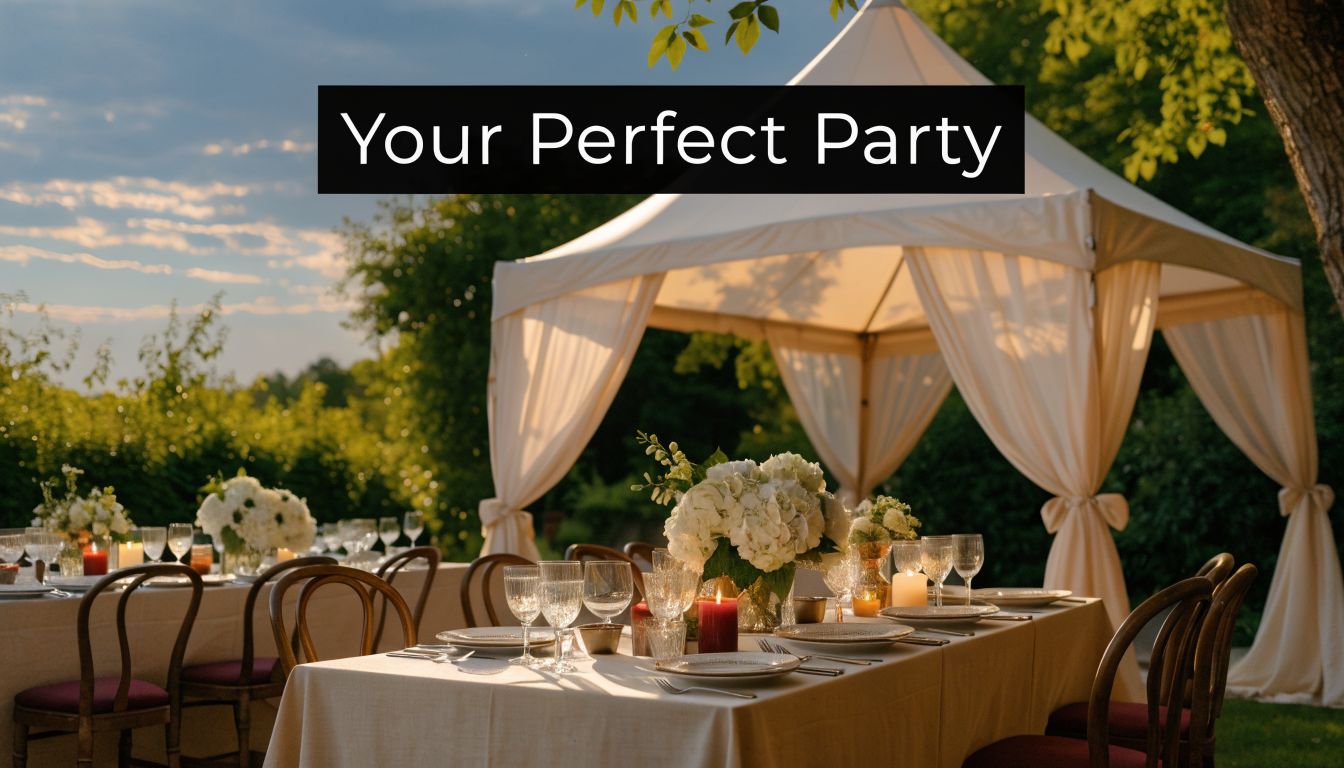
The best way to approach garden party tent hire is to think in layers. First, protect the event from rain, wind, strong sun, and evening chill. Then shape the guest experience inside that cover. Dining, drinks, circulation, speeches, music, and access to the house all need their place.
In Croydon and across South London, garden layouts often present a significant challenge. A wide lawn is straightforward. A terraced house garden with a narrow side path, a step down from the kitchen, and raised beds along both edges needs more thought. In Bromley, access can be tight through a garage passage. In Sutton or Wimbledon, the surface might switch from patio to grass halfway across the footprint. Those details decide what style of marquee will work and how the day will feel once guests arrive.
Start with the event, not the kit
Clients often worry about choosing the “right” marquee too early. A better starting point is this short list:
- Occasion first. Is it mainly seated dining, a standing drinks party, or a mixed-use celebration?
- Guest profile. Older relatives, children, and formal dining all change the layout.
- Garden use. Do guests need to move easily between the house, the marquee, and the garden?
- Season and finish time. Afternoon events and evening events need very different lighting and heating plans.
A marquee should solve problems before it adds style. Shelter, layout, access, and comfort come first.
If you're still at the early idea stage, even simple outdoor planning resources can help you think spatially. Something as basic as setting up an outdoor tent basecamp is useful for understanding zones, pathways, and how people naturally spread through an outdoor setup.
Measuring Your Site and Calculating Guest Capacity
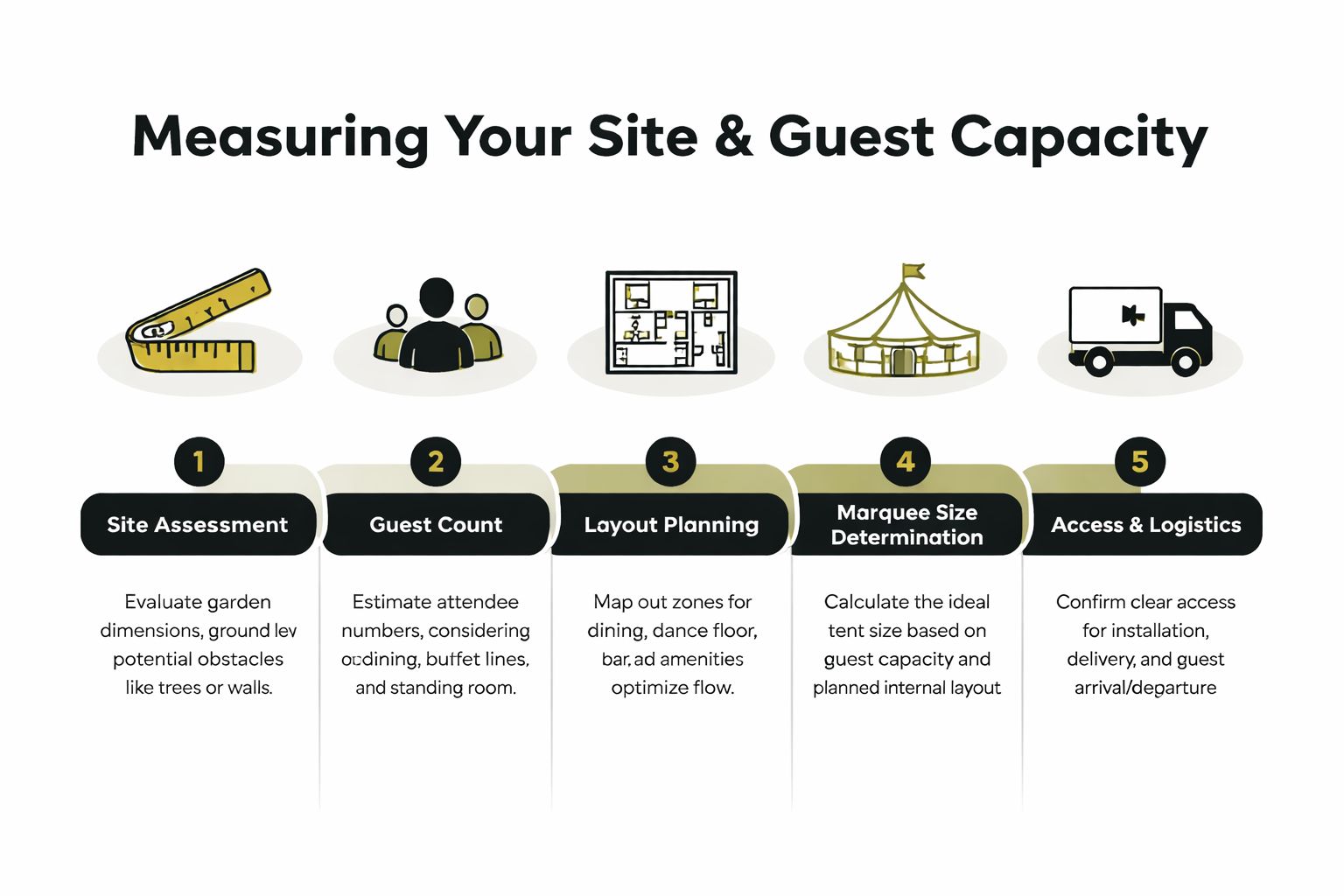
A rough guess nearly always causes trouble. Gardens can be deceptive. A space that feels generous on a Sunday afternoon can become very tight once you add dining tables, chairs, a buffet, a bar, and enough room for guests to move comfortably.
Measure the usable footprint
Start with the area that can take the structure. Don't include flowerbeds you want to protect, mature shrubs, fixed garden furniture, hot tubs, sheds, or awkward corners that won't be usable once the frame goes in.
A proper site assessment also needs extra perimeter space. As noted in this marquee sizing and setup guide, a secure installation should allow 1.5 to 3m on all sides for staking in line with HSE guidance. That same guidance also notes 12 sq ft per seated guest at round tables, plus room for amenities such as a 100 sq ft bar, and says free CAD layouts can reduce layout errors by 40% while marquees should meet BS EN 13782 wind loading standards.
That extra clearance is where many home setups fail on paper. The lawn may look large enough, but the safe install area is smaller once you account for edges, fences, and access.
Check the ground and the route in
This matters as much as the footprint itself. Walk the route from the street to the setup point and note every pinch point. In London, common issues include side returns, alley gates, steps, low branches, and newly laid paving that clients don't want marked.
Use this simple checklist:
- Width of access. Measure gates, side passages, and any narrow turns.
- Surface changes. Note where grass becomes patio, gravel, or decking.
- Level changes. Count steps and look for sloping sections.
- Overhead obstacles. Watch for washing lines, pergolas, tree limbs, and cables.
- House connection. Decide whether the marquee should sit close to doors or leave a weather gap.
A free CAD plan can make this much easier to visualise, especially if you're trying to work out the relationship between the kitchen, the main guest entrance, and serving points. For examples of structure options and practical footprints, it helps to browse party tents to rent for garden events.
Work out guest capacity realistically
Capacity depends less on the headline guest count than on what those guests are doing.
| Event style | What to allow for |
|---|---|
| Seated meal | Base your plan on the seated guest benchmark and leave proper aisle space |
| Drinks reception | You can host more people, but bars and circulation become more important |
| Mixed party | Plan for dining first, then add dancing, buffet, and standing areas carefully |
A common mistake is forgetting all the “small” extras that take space. Cake table, gift table, DJ position, speaker stands, service area for caterers, cloak area, heater placement, and even door opening zones all eat into your floorplan.
Practical rule: if you want guests to feel relaxed, plan the layout around movement, not maximum occupancy.
Choosing Your Marquee Style and Essential Accessories
A client in Croydon might have a neat lawn on paper, then we arrive and find the only route in is through a side passage barely wider than a wheelie bin. That changes the best marquee style straight away. In London and Surrey gardens, the right structure is usually the one that fits the site, the access, and the weather, then looks good once those boxes are ticked.
Frame marquee or traditional pole marquee
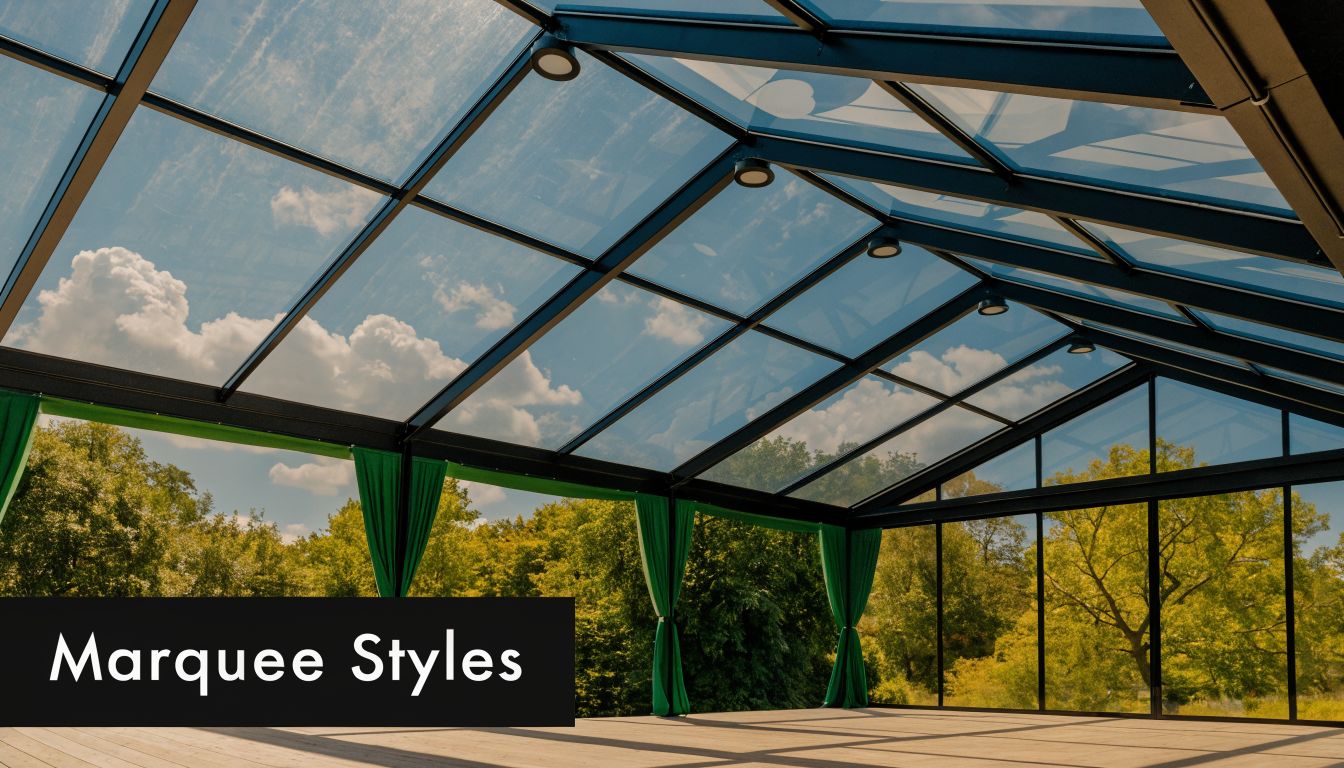
For terraced homes in places like Bromley, Beckenham, and parts of South London, a clear-span frame marquee is often the safer choice. It can go on grass, patio, or mixed surfaces, and it keeps the interior open for dining tables, a bar, or a dance floor without poles interrupting the layout. If access is awkward, frame systems also give more flexibility because the build can be adapted panel by panel.
Traditional pole marquees still have their place. They look softer and more classic, and they work well on a straightforward grass garden with enough pegging room all round. The compromise is practical. Centre poles affect where tables go, and perimeter guy lines need extra space that many suburban gardens do not have.
Stretch tents are popular for relaxed summer parties because they feel less formal and can suit gardens with a strong outlook. They also need the right site. Anchor points, drainage, and exposure to wind matter more than people expect, so I only recommend them after a proper site check rather than from photos alone.
A simple way to choose:
- Frame marquee for compact gardens, mixed ground, narrow access, and events that need a tidy internal layout
- Pole marquee for open grass areas where appearance matters more than a perfectly clear floorplan
- Stretch tent for informal entertaining where the garden suits the anchoring and the client accepts a more weather-dependent setup
Flooring affects comfort more than clients expect
Flooring is often the difference between a marquee that feels temporary and one that feels like a proper room. On a dry August afternoon, basic matting on good grass may be enough for drinks and light seating. For dining, speeches, or older relatives in heels, a solid floor is usually the better call.
London gardens regularly have hidden trouble spots. Slight slopes, old patios, patchy turf, and tree roots all show up once tables and chairs go in. In those cases, a boarded or cassette floor gives a flatter finish and stops that soft, uneven feel underfoot. If the event runs into the evening, it also helps with heating and keeps the whole space more stable.
Sidewalls, linings, and weather protection
This is the part many first-time clients under-specify.
In Surrey and South London, weatherproofing is not only for winter hires. A June party can still need clear sidewalls for wind, a covered entrance to the house, and guttering if two structures meet. If the marquee sits close to the property, that link matters. Guests notice very quickly when they have to dash through a wet gap carrying drinks.
Linings are mostly about finish, but they do have a practical effect. They hide the framework, soften the acoustics, and make evening lighting look warmer. I would not push them for every job. For a clean contemporary garden party, an unlined clear-span marquee can look sharper and cost less. If you are comparing options, it helps to review typical prices for marquee hire in Croydon and Surrey alongside the visual finish you want.
Lighting, heating, and the extras that make the event run properly
Lighting needs two jobs covered. It has to create atmosphere, and it has to let people move around safely. Soft festoons or fairy lights work well for family parties, while uplighters and chandeliers suit weddings and more formal receptions. Then there is the practical layer. Entrance lighting, catering light, and a clear route back to the house all need planning.
For inspiration on low-energy decorative lighting ideas, even non-event examples such as LuminAID solar lights for your campsite can help clients picture the difference between simple visibility and actual atmosphere.
Heating should be chosen with the structure and the season in mind. A spring or autumn booking in an open-sided setup feels very different from a fully enclosed marquee with flooring and linings. The same goes for furniture. Folding chairs are fine for a casual birthday, but a wedding breakfast usually needs better seating, proper table linen, and enough service space around the bar, buffet, or DJ area.
Good marquee design comes from choosing what the event needs, then leaving out what it does not. That is how the space looks right and works properly on the day.
How to Budget for Your Garden Party Tent Hire
A marquee budget usually goes off course for one simple reason. The first figure looks manageable, then the site realities of a London or Surrey garden start to show up in the quote.
I see this often with homeowners in Croydon, Purley, and Bromley. A client may budget for the tent itself, but not for the extra labour needed to carry equipment through a narrow side return, protect a patio, or level a lawn that slopes away from the house. On paper, two hires can look close in price. In practice, one may include flooring, heating, and full installation, while the other covers little more than the canopy.
What is usually in the base hire
A standard hire price normally covers the structure and the crew time needed to put it up and take it down safely.
That often means:
- Structure hire for the agreed dates
- Delivery and collection
- Installation and takedown
- Standard anchoring suited to the surface and marquee type
Some firms also include a basic site visit. Others cost that separately, especially where access is awkward or the layout needs more planning. That is why the right question is not “How much is the marquee?” but “What exactly does this price cover?”
Where budgets usually increase
Expenditure is usually shaped by comfort, finish, and site conditions.
Common additions include:
- Flooring, especially on soft grass or uneven ground
- Lighting, both decorative and practical
- Heating for evenings, spring bookings, and autumn events
- Tables and chairs
- Interior linings or drapes
- Bar units, staging, or dance floors
- Extra labour for restricted access or difficult setup conditions
The local garden makes a big difference here. A flat lawn with clear side access in South Croydon is usually straightforward. A terraced house garden in Bromley with steps, tight fencing, and no rear vehicle access can need more crew time and more hand-carrying. The marquee size may stay the same, but the installation cost does not.
Ask for the quote in layers
The clearest quotes separate the spend into parts you can judge properly.
| Quote layer | Why it helps |
|---|---|
| Core structure | Shows the cost of cover, installation, and removal |
| Guest comfort items | Covers flooring, lighting, heating, and furniture |
| Finish and styling | Keeps decorative upgrades separate from practical items |
This makes cost decisions easier. If the budget needs trimming, you can reduce styling before cutting something that affects how the event feels. Heating is a good example. Clients sometimes remove it in July to save money, then call two days before the party when the forecast drops. In the UK, that is a risky gamble. For a useful overview of the kind of systems used to keep guests comfortable outdoors, JetStream outdoor venue heating gives helpful background.
For a fuller cost breakdown, including how different marquee sizes and package levels affect price, see these prices for marquee hire in Croydon and Surrey.
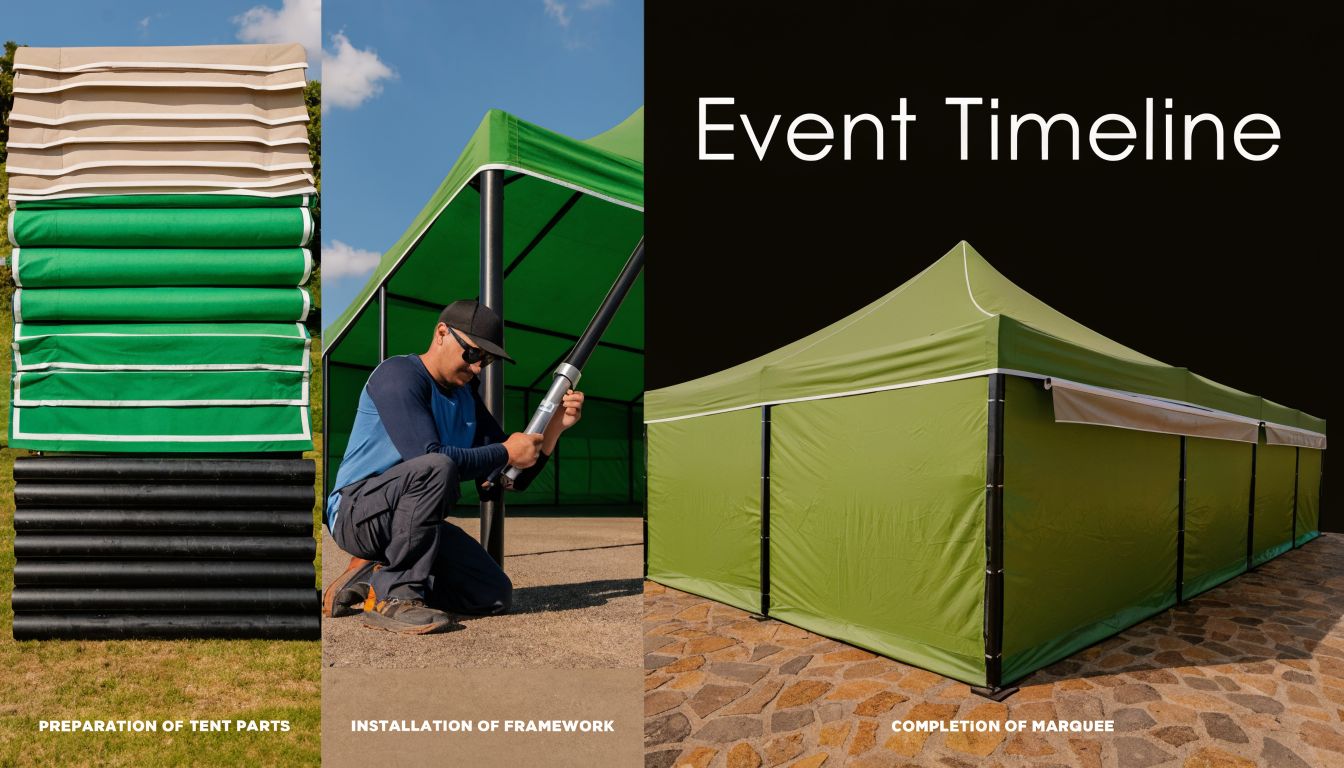
The Marquee Hire Timeline from Enquiry to Takedown
A client in Croydon might call on a Monday, wanting a marquee for a Saturday birthday in June. If the garden is open, level, and easy to reach, that can be workable. If it is a terraced garden in Bromley with a narrow side path, steps, and no rear access, the timeline needs more care from the start.
The process is straightforward once the order of jobs is clear. Delays usually come from late decisions on layout, power, flooring, or access, not from the marquee itself.
Enquiry and date holding
The first call should establish the date, postcode, guest numbers, occasion, and the basic shape of the garden. Good photos help at this stage. A few clear shots of the house, side access, lawn, and patio often tell us more than a long description.
Popular weekends go early, especially from late spring through September, so it is sensible to enquire as soon as the date is fixed. The British Hire Association advises booking event equipment early during peak periods to avoid limited availability and extra delivery pressure (British Hire Association guidance).
A provisional hold can be useful, but it should not replace proper planning. Until the site details are checked, no experienced hire company should promise that every marquee style will fit.
Site visit and layout planning
This is the point where rough ideas become an install plan. Measurements are confirmed, surface types are checked, and access is tested against the equipment that has to come through.
In London and Surrey gardens, this stage often decides the whole setup. A detached home in Purley may allow direct access across a wide drive. A terraced property in Bromley may mean every panel, floor section, and chair has to be carried through the house or down a tight side return. That affects labour, install time, and sometimes the marquee choice itself.
The site visit should answer practical questions such as:
- How wide is the access route at its narrowest point?
- Are there steps, low branches, drain covers, or fragile paving to work around?
- Will doors open cleanly between the house, catering area, and marquee?
- Is there space for heaters, lighting cables, and service areas without blocking guest movement?
- Does the site need permissions or neighbour consideration because of access, noise, or parking pressure?
A layout drawing helps clients make decisions before install day. It is far easier to move a bar, change a doorway position, or widen a walkway on paper than when the build crew is already on site.
Later in the planning process, visual references can also help clients understand how a structure comes together on site:
Installation, event day, and takedown
Installation usually starts one or two days before the event, depending on the size of the structure and how awkward the access is. A small clearspan on an open lawn can go in quickly. A larger build with flooring, linings, heating, and furniture in a confined garden needs more time and a more careful sequence.
Weather matters here too. If heavy rain is forecast, we plan ground protection, keep entrances practical, and make sure the structure is fully dressed and checked before guests arrive. In exposed gardens, wind direction and runoff around the house also need attention. These are the details that first-time clients rarely see coming.
By event day, the work should already be done. The marquee should be secure, dry, lit properly, and ready to use without last-minute fixes.
Takedown is normally scheduled for the next available collection window after the event. A professional crew removes the structure methodically, checks for any items left behind, and leaves the garden as tidy as conditions allow. If the ground is soft after rain, some light marking can happen on lawns, but careful contractors will explain that risk in advance and minimise it during removal.
The best marquee jobs feel calm because the awkward parts were handled early.
Key Questions to Ask Your Marquee Hire Company
A first call with a marquee firm tells you a lot. In Croydon and the surrounding boroughs, the good companies usually start asking about access before they talk about style. That is a strong sign. A smart-looking marquee means very little if the crew cannot get it through a side gate in Beckenham or past a kitchen extension in a Bromley terrace.
Ask who is actually assessing your site
Do not settle for a vague promise that "it should fit". Ask whether they want photos, measurements, or a proper site visit. On London domestic jobs, small details cause significant trouble. Gate width, steps, shared access, overhead cables, low branches, and uneven paving all affect what can be installed and how long it will take.
Ask these questions early:
- Will you check access as well as garden size?
- Have you worked in tight residential gardens like mine before?
- What surface are you expecting to build on, and how will you secure it?
- Do I need to tell my neighbours about crew access or delivery timing?
A good answer should sound specific. If the company works regularly on home installations, they will talk you through practical limits without dressing it up.
Ask about safety, insurance, and what happens on your ground
Ask whether the structure complies with BS EN 13782 and how it will be anchored on your actual site. Grass is straightforward. Patios, artificial lawns, and mixed surfaces need more thought. In some Surrey gardens, weighted systems are the only realistic option, and that can affect the usable space inside.
Insurance matters too. Ask what cover they carry for installation and public liability, and ask what protection they use for delicate paving, planted borders, or narrow side returns. A careful contractor will explain the trade-off plainly. The safest build method is not always the least intrusive, and the least intrusive is not always the cheapest.
Ask where responsibility starts and stops
This catches people out all the time.
If you are hiring lighting, heating, furniture, a dancefloor, catering equipment, or a generator, ask who is coordinating the full setup. Some marquee firms handle the lot. Others supply the structure only and expect your other suppliers to work around it. Neither approach is wrong, but you need clarity before the event week.
If you are still comparing layouts, this guide to choosing an outdoor party tent for home events helps you see how structure choice affects power, flooring, and guest flow.
Ask how they deal with bad weather in practice
The useful question is not "Is it waterproof?" Any reputable marquee should keep out normal rain. Ask what they do about wind exposure, doorway puddling, damp ground, cold evening temperatures, and guest comfort if the forecast worsens two days before the party.
Useful questions include:
- What is included as standard for rain and wind protection?
- Are sidewalls, matting, solid flooring, or heaters priced separately?
- How do you manage runoff near the house or patio doors?
- At what point would you recommend changes to the setup?
A contractor with real domestic experience will answer in relation to your garden. In Croydon, for example, I would treat an open rear lawn very differently from a sheltered courtyard behind a townhouse.
Ask sensible questions about sustainability
Keep this practical. Ask what can be reused, what is hired in rather than bought for one event, and whether simpler finishes would reduce waste and cost. The European Commission's framework for sustainable products and circular design gives useful background on why materials, reuse, and product lifespan now matter more across the supply chain.
For a homeowner, the better question is often straightforward. Do you want layered linings, extra drapes, and decorative features that create more transport, labour, and waste, or do you want a cleaner setup that still looks right for the party?
A reliable marquee company answers clearly, flags likely problems early, and does not hide awkward details until the installation day.
Navigating Permits and Weather in the UK
A lot of first-time clients in Croydon call us with the same concern. The party itself feels manageable. The worry starts when they realise the marquee has to go into a real London garden, with close neighbours, limited access, and a forecast that can change twice before the weekend.
When permission might be needed
For a straightforward private party in a back garden, formal permission is often not required. The grey areas start when the structure is large, stays up for longer than a short hire period, sits close to boundaries, or becomes part of a more organised event with generators, catering units, security, or regular deliveries.
The safest approach is to check early with your local council rather than guess. The Planning Portal's guide to outbuildings and temporary structures is a sensible place to start, but borough-specific rules still matter. In places such as Croydon, Bromley, and Sutton, officers may also look at noise, access, licensing, and whether the setup affects neighbours or the street.
I advise clients to raise the question early if any of these apply:
- the marquee is unusually large for the garden
- the hire runs beyond a typical weekend event
- guests, suppliers, or toilets are likely to affect adjoining properties
- the property is listed or in a conservation area
- the setup involves a front garden, shared access, or parking controls
If you are still comparing options, this guide to an outdoor party tent for home events explains the sort of domestic setups that tend to need more planning.
Weather in the UK needs a proper plan
A weather app is not a plan.
The practical question is how the structure will perform if the ground softens, the wind direction changes, or the temperature drops sharply after sunset. That matters in Surrey as much as London, but tight residential plots make the consequences more obvious. On a terraced house job in Bromley, for example, there is rarely spare space to move an entrance at the last minute or keep wet guests away from the kitchen doors.
Good weather planning usually comes down to four decisions. Site position, anchoring method, flooring, and how people move between the house and the marquee. If one of those is wrong, the event can still go ahead, but it becomes harder work for everyone.
Local conditions matter more than the forecast summary
Two gardens with the same postcode can behave completely differently in bad weather. A sheltered rear garden behind tall fences will hold warmth better, but it can also trap condensation if the marquee is sealed up too tightly. An exposed lawn on a corner plot may need a different layout altogether, especially if the open side catches the prevailing wind.
Local experience pays off in a practical way. In Croydon and the surrounding areas, I would always want to know whether the build area is lawn, patio, gravel, or a mix. I would also ask how installers reach it. A marquee that is perfectly suitable on paper can become the wrong choice if every frame section has to be carried through a narrow side passage, down steps, and around a kitchen extension.
Do not ignore neighbours
Neighbour issues cause more stress than light rain.
For suburban garden parties, the sensible approach is to tell neighbours what is happening, control delivery times, and keep lighting and speaker positions away from boundaries where possible. If the event runs into the evening, plan guest departures as carefully as arrivals. Quiet dispersal at 11pm keeps the night remembered for the party, not the complaints.
A well-planned garden party tent hire setup should suit the property, the weather, and the people living next door. That is usually what makes the day feel easy.
Your Garden Party Tent Hire Questions Answered
Can you set up a marquee on a sloped or uneven garden
Yes, often you can, but the solution depends on how uneven the site is and what the event needs inside. Mild slopes can usually be handled with the right structure and flooring approach. If the garden has several level changes, raised edges, or awkward patio transitions, that needs checking in person before anyone promises a layout.
How much access do you need to reach my garden
More than many homeowners expect. The important measurement isn't just the lawn. It's the route from the road to the build area. Side gates, passages, corners, and steps all matter. Terraced houses in places like Bromley or Streatham often need more careful planning because carrying equipment through the house is very different from taking it down a side return.
What's the best option for a winter garden party
A weather-ready structure with proper flooring and heating usually matters more than decorative upgrades. Keep the layout compact, reduce unnecessary entrances, and make sure guests aren't crossing exposed wet ground between the house and the marquee.
Is garden party tent hire only for large weddings
Not at all. Smaller family events often benefit most from it because a marquee lets you use your own home without relying on public venues. It works well for birthdays, anniversaries, christenings, corporate drinks receptions, and pre-wedding celebrations such as Mehndi parties.
Can a marquee go on patio, decking, or concrete
Often yes, but the type of marquee and the securing method need to match the surface. Hardstanding sites usually favour frame structures, especially where lawns are limited or the usable space is split between surfaces.
If you're planning an event at home and want practical advice before you commit, Premier Marquee Hire can help with site visits, layout guidance, and custom marquee options across Croydon, London, Surrey, Middlesex, and Kent. Request a quote and get clear answers based on your garden, your guest numbers, and your date.
Sorry, the comment form is closed at this time.