

14 May Hire a Marquee London: Your Complete 2026 Planning Guide
Planning an event in London often starts with a simple idea and turns complicated very quickly. You might be trying to host a wedding in a family garden in Wimbledon, a milestone birthday in Bromley, or a company event where an indoor venue feels too rigid, too expensive, or not right. The attraction of a marquee is obvious. It gives you control over the setting, the layout, the atmosphere, and the guest experience.
The part that catches people out is everything around the structure itself. Access can be tight. Gardens rarely measure up neatly. British weather doesn't care what month you booked. And the first price you see is almost never the full picture unless someone explains what sits behind it.
That's where practical planning matters. If you're searching for hire a marquee london, you're usually not just looking for a tent. You're looking for a clear way to turn an outdoor space into a working venue without nasty surprises on installation week.
Your London Event Vision Starts Here
A marquee works best when you stop thinking of it as temporary cover and start treating it as a venue shell. That's the difference between an event that feels improvised and one that feels properly put together.
In Croydon and across Greater London, the same pattern comes up again and again. A client has enough outdoor space on paper, but the practical questions are more important. Can the team get the frame through the side passage? Will the patio take flooring cleanly? Is the lawn level enough for dining tables? Will guests have somewhere dry and warm to move between areas if the weather turns?
Why marquees suit London events so well
Indoor venues give you certainty, but they also lock you into somebody else's layout, timings, and supplier rules. A marquee gives you flexibility. That matters if you want:
- A family-led celebration at home where guests can move between house and garden
- A wedding setup with personal styling rather than a fixed-function room
- A corporate event space that can include branding, catering, and separate zones
- A community or faith event that needs flow, shelter, and adaptable capacity
A good marquee plan starts with the guest experience, not the fabric and frame.
The strongest marquee events in London usually have one thing in common. The host has thought about how the event should feel. Formal and seated. Relaxed and social. Open-plan with a bar and dance floor. Or divided into practical zones for catering, speeches, and guest circulation.
The three concerns clients usually have
Most enquiries come with the same three worries.
| Concern | What it really means |
|---|---|
| Cost | What's included, what isn't, and what changes the final quote |
| Space | Whether the garden or venue can actually support the layout you want |
| Weather | How the structure, flooring, lining, and heating work together |
Those are sensible concerns. They're also the right ones. If those points are handled properly at the start, the rest of the planning becomes much easier.
Choosing the Right Marquee Size and Layout
The quickest way to overspend on marquee hire is to choose size by guest count alone. The better approach is to match the structure to how people will use the space.
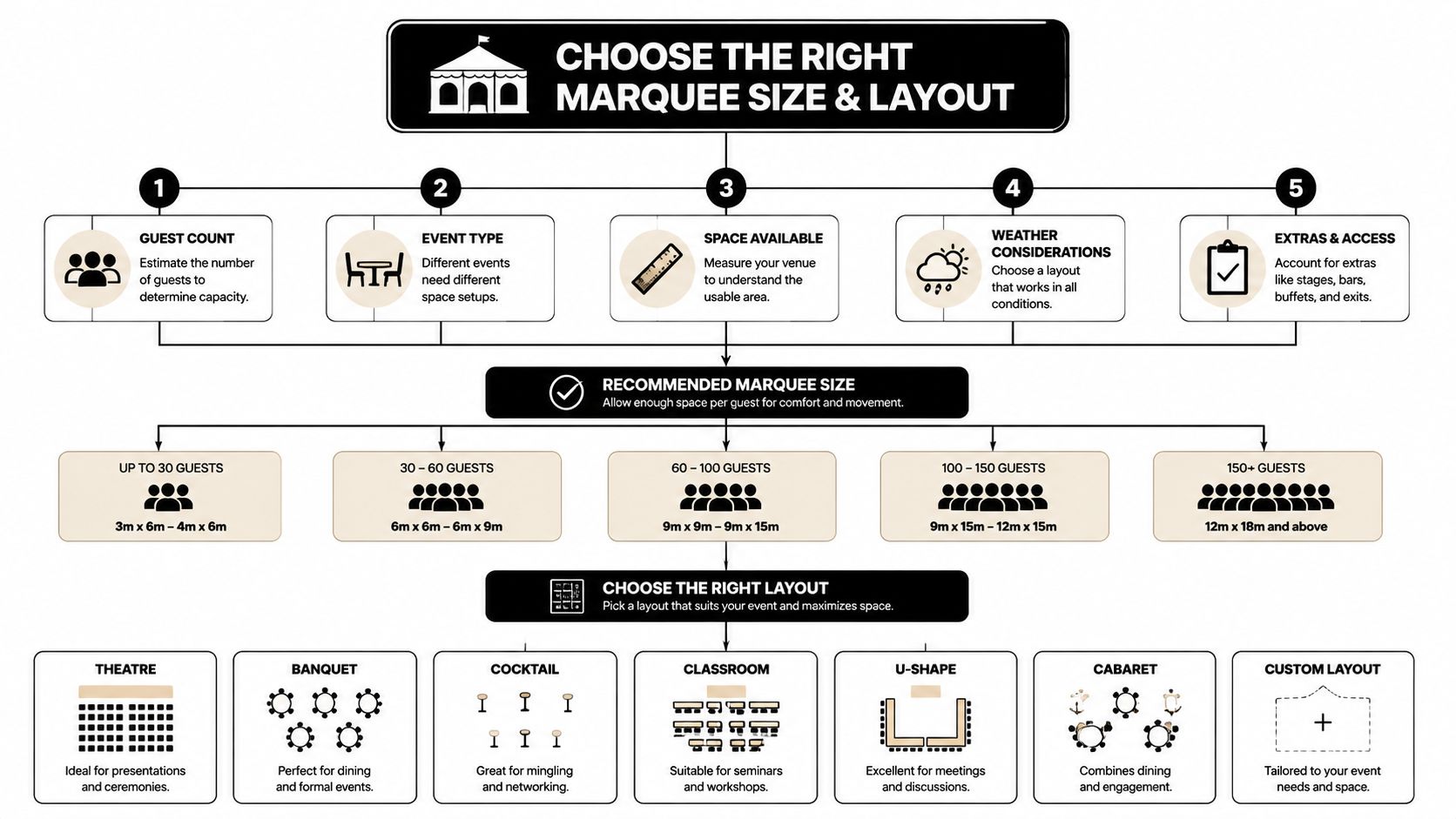
For London events, layout matters as much as footprint. According to UK marquee capacity guidance for layout planning, seated banquets typically need 1.0-1.5m² per person, while standing events need 0.5-1.0m² per person. The same guidance notes that a 9m x 27m marquee can suit 120 seated guests or 200 standing, but once you add a dance floor or bar, seated capacity drops to around 96 to avoid overcrowding and stay within fire code expectations.
Start with event style, not just headcount
A seated wedding dinner needs a different plan from a drinks reception. So does a Mehndi, where circulation, staging, décor, and family seating all compete for space.
Use this as a practical starting point:
- Formal seated dining works best when you allow enough space for tables, chairs, service routes, and guest movement.
- Standing receptions can use space more efficiently, but they still need room for bars, serving points, and entrances.
- Mixed-use events often need the most thought because dining, entertainment, and social areas all pull from the same footprint.
Why frame marquees fit London sites better
In built-up boroughs, flexibility matters more than romantic marquee language. Frame marquees are usually the practical answer because they're modular and can be configured in different widths and lengths to suit awkward gardens, patios, and venue grounds.
That modular approach is useful when you need to work around:
- Narrow gardens
- Hardstanding and lawn combinations
- Side returns or extensions
- Trees, borders, and raised levels
If you're trying to visualise a tighter footprint before a site visit, it can help to create accurate London apartment layouts or garden-adjacent plans to map furniture positions and circulation. It won't replace a proper marquee survey, but it does help you think more clearly about usable space.
Practical rule: Count every non-guest feature early. Dance floor, bar, DJ, cake table, catering area, photo booth, gift table, and entrance matting all reduce usable capacity.
A simple way to test your layout
Before speaking to any supplier, sketch these zones:
Guest area
Seated tables or standing clusters.Service area
Catering access, buffet runs, bar service, staff movement.Feature area
Dance floor, stage, DJ, Magic Mirror, or display point.Arrival and exit routes
How guests enter, queue, and move without bottlenecks.
For larger guest counts, a longer modular structure often works better than trying to force everything into a squarer footprint. If you're comparing options for a bigger event, this guide to large marquee hire configurations is a useful reference point for thinking about span, layout, and guest flow.
What doesn't work
Some layout mistakes are easy to predict.
- Too many round tables in a narrow marquee creates wasted edge space and poor circulation.
- A bar placed near the main entrance causes congestion.
- No allowance for wet-weather movement leaves guests standing in the wrong places.
- Over-optimistic guest capacity makes the event feel cramped even before the furniture arrives.
If you want the day to feel calm, the layout has to do part of the hosting for you.
Estimating Your London Marquee Hire Costs
Price is usually the first question, but the useful question is slightly different. It's not “what does a marquee cost?” It's “what does the event setup I need cost in London?”
That distinction matters because the base structure is only one part of the total.
Real London price ranges
For a broad guide, London marquee hire pricing data shows that marquee hire in London ranges from £300 to over £2,500. The same source gives these examples:
| Marquee size | Typical use | London price |
|---|---|---|
| 4m x 6m | Garden party for 20-30 guests | £250-£300 |
| 6m x 8m | Event for 40-50 people | £500-£600 |
| 9m x 12m | Wedding or corporate event for 80-100 guests | £800-£1,200 |
That same pricing guide notes that a 9m x 12m marquee in London can sit well above the £700-£800 seen in other UK regions, which is why local quotes often look steeper than national examples.
What the base hire usually covers
The base price normally relates to the structure itself and the practical work around it. In most cases, clients should expect the core quote to centre on:
- The marquee frame and cover
- Delivery to site
- Installation
- Removal after the event
That's the shell. Once clients start picturing the event they want, the extras appear quickly.
Where the total usually rises
The biggest cost differences tend to come from add-ons and site conditions rather than from the frame alone.
Common extras include:
- Flooring, especially on patios, uneven gardens, or winter sites
- Lining for appearance and comfort
- Lighting for evening use and atmosphere
- Furniture, including tables and chairs
- Heating for colder months
- Feature items such as bars, decorative pieces, or entertainment spaces
Furniture is a good example of how small decisions add up. Across the same London pricing reference, tables are typically £5-£10 each and chairs £1.50-£3.50 each within marquee hire packages.
The cheapest base quote can become the most expensive option if it leaves out flooring, lighting, heating, or delivery assumptions that your site clearly needs.
Why London quotes vary so much
Two events with the same guest count can have very different costs because London jobs carry different site realities.
A quote may rise because of:
- Restricted access that slows installation
- Premium venue rules around timing and vehicle movement
- Urban transport and labour costs
- Higher-spec finishes expected for weddings and branded corporate events
- Additional equipment needed to protect lawns or level hard surfaces
That's also why itemised pricing matters. A transparent quote should separate structure, flooring, furniture, lighting, heating, and any unusual site requirements so you can see what's driving the figure. If you want a more detailed breakdown before requesting site-specific pricing, this guide to marquee hire prices in London helps frame the right questions.
What works when budgeting
A practical budget starts with three buckets:
Must-have infrastructure
Structure, access, flooring if needed, lighting, and weather protection.Guest comfort
Seating, table plans, heating, and sensible circulation.Visual upgrades
Linings, décor, bars, and statement features.
That order keeps spending tied to function first. It's usually the difference between a setup that looks good in photos and one that runs well on the day.
Navigating Site Challenges and London Permits
A lot of London clients assume their garden is either suitable or unsuitable. In reality, most sites sit somewhere in the middle. They're workable if somebody plans them properly.
The recurring issue in South London isn't usually lack of space. It's usable space. A rear garden may look generous until you factor in side access, raised beds, retaining walls, steps, sheds, neighbouring boundaries, and the path the installation team has to take.
Tight access is more common than people think
According to research on London garden marquee enquiries and constrained plots, 42% of London garden event enquiries involve spaces under 100sqm with significant access constraints, and tight installs can add 4-6 hours to setup time. That's exactly why a proper site visit matters in boroughs with terraced housing, narrow alleys, and split-level gardens.
A few common examples:
- Bromley and Wimbledon family gardens with long narrow access routes
- Dulwich and Sanderstead plots with visible gradients
- Patio-led spaces where level transitions matter
- Townhouse gardens where neighbours, fences, and planting leave little tolerance for error
The site survey is where the real answers appear
A serious survey does more than measure width and length. It checks whether the build is practical and what support the ground or surface needs.
A useful survey should identify:
| Site issue | Why it matters |
|---|---|
| Access width | Determines what equipment and components can reach the build area |
| Ground condition | Affects anchoring, flooring, and stability |
| Slope or level changes | Influences floor choice and layout |
| Obstacles | Trees, walls, outbuildings, and drains can restrict footprint |
| Power and service routes | Impacts lighting, heating, catering, and evening operation |
Most London garden jobs are won or lost on access, not on guest numbers.
Where a site is awkward, CAD layouts become especially useful. They let you test entrance positions, table plans, and service routes before installation day rather than improvising once the frame is already up.
Planning permission and permissions on site
For many private, short-term domestic events, formal planning permission often isn't the main issue. The bigger practical concerns tend to be access, timing, and neighbour impact. Public events, longer-term installations, and certain venue or heritage settings can be different.
The right approach is simple:
- Ask early if the event is public-facing or extended over a longer period
- Check venue rules if you're on hired land rather than at home
- Flag listed-building or restricted-access concerns before finalising design
- Confirm installation timings where local access is tight or controlled
For awkward London sites, there's a difference between a supplier saying “it should fit” and one proving how it will fit. That difference usually saves the most stress.
Creating Your Perfect All-Season Event Space
The structure is only the starting point. What guests remember is how the space felt once they were inside it.
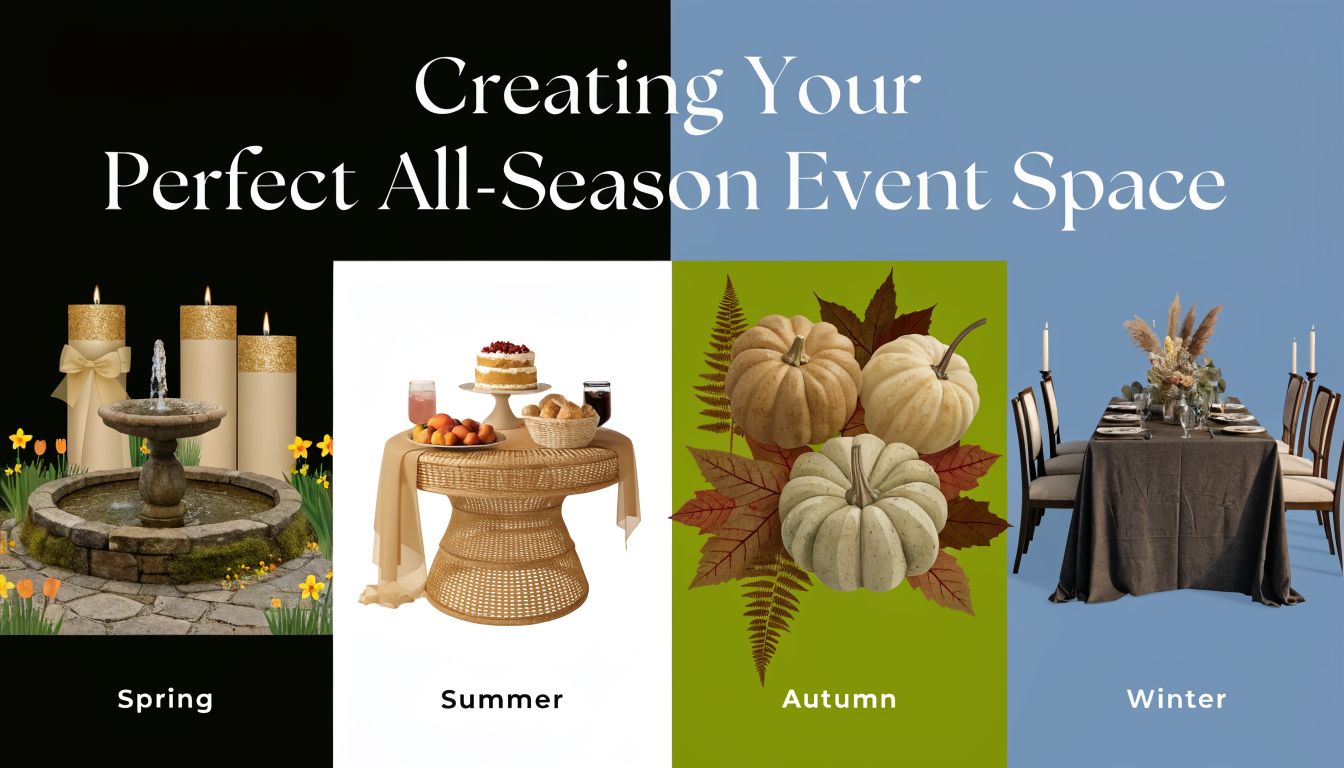
A marquee can feel bright and relaxed for a summer garden party, formal for a wedding breakfast, or warm and enclosed for an off-season celebration. The difference comes from combining flooring, lining, heating, lighting, and furniture properly. If one of those elements is missing, the whole setup feels unfinished.
The structure has to suit the season
For year-round use, frame marquees are the practical workhorse. According to technical guidance on frame marquee performance and all-season setup, modular 3m bays provide structural integrity against wind loads up to 110km/h under BS EN 13782, and breathable linings can reduce condensation by 60% when specified correctly.
That matters more in London than many clients expect. A marquee used in spring or autumn can feel very different by evening once temperatures drop and damp air builds. Good lining and proper anchorage aren't styling extras. They're part of comfort and safety.
Flooring changes everything
Clients often focus on roofline and walls first. In practice, flooring is what changes the experience most.
Without the right floor, even a well-dressed marquee can feel makeshift. Guests notice unstable chairs, soft patches, and uneven transitions immediately.
The right flooring choice depends on the site:
- Cassette flooring suits more demanding surfaces and gives a firmer event feel
- Levelled systems help on sloping or uneven ground
- Simpler coverings may be enough for relaxed summer use on straightforward sites
- Matting and surface finishes affect both look and practicality
Heating, lining, and comfort after dark
Evening comfort is rarely about one big heater. It's about a coordinated setup that holds warmth, manages airflow, and avoids dampness building up inside.
A good winter or shoulder-season marquee setup usually includes:
- A weather-resilient frame
- Correct anchoring for the site
- Lining to improve comfort and appearance
- Heating sized to the usable space
- Lighting that supports both safety and atmosphere
If your event falls outside peak summer, it helps to look at practical options for marquee and heater hire early rather than treating heat as a last-minute add-on.
Guests forgive cold weather outside. They don't forgive a cold event space inside.
Style works better when function comes first
The most attractive marquee interiors usually come from sensible infrastructure choices. Once the floor feels stable and the temperature is right, the visual details start to work properly.
That's when you can think about combinations such as:
- Chiavari seating with formal dining layouts
- Mobile bar units positioned away from main entrances
- Lighting schemes that move from practical to atmospheric as daylight drops
- Feature items such as a Magic Mirror or statement letters without blocking circulation
Premier Marquee Hire offers marquees in widths from 3m to 15m with configurable lengths, alongside furniture, mobile bars, lighting, and entertainment items including a Magic Mirror photo booth and giant LOVE letters, plus free site visits and CAD layouts for planning. That kind of joined-up package is useful when you want one layout to handle both infrastructure and styling without losing sight of access and weather realities.
What tends to go wrong in all-weather setups
The failures are usually predictable.
| Poor decision | Likely result |
|---|---|
| No lining in cold, damp conditions | The space feels raw and less comfortable |
| Heat added without planning airflow | Warm patches near heaters, colder corners elsewhere |
| Decorative layout before service layout | Congested entrances and awkward guest movement |
| Underestimating flooring | Wobble, mess, and a less polished feel |
A marquee becomes a proper venue when the shell, the floor, the temperature, and the layout all support each other. That's what makes all-season use realistic rather than risky.
Your Booking Journey with Premier Marquee Hire
Most clients seek the same outcome from the booking process. They want clarity before they commit. They want to know the site has been understood properly. And they want a quote that reflects the actual event, not a hopeful estimate that changes later.
That's especially important now that weather resilience has become a bigger part of planning. According to London winter marquee demand and weather trend data, winter storms in London with gusts over 50mph have increased 28% since 2023, and Google searches for “marquee hire London winter” were up 65%. Clients are right to ask more detailed questions before booking.
Step one feels simple, but it shapes everything
The first enquiry should cover the practical basics:
- Your event type
- Approximate guest numbers
- The location
- Whether the event is seated, standing, or mixed
- Any known site issues, such as steps, narrow access, or hardstanding
If you're running a corporate event or a larger celebration with guest management involved, it can help to build custom event registration pages early so your numbers and arrival patterns are clearer before the layout is finalised.
The site visit is where uncertainty drops
A proper site visit answers the questions that photos can't.
The team can assess:
- Access
- Ground conditions
- Best marquee orientation
- Space for extras like bars, heaters, or entertainment
- Any constraints that affect setup time
This is also where a lot of expensive assumptions get removed. A site may support the event perfectly, but not in the layout you first pictured. That's useful to know before invitations, furniture plans, and catering logistics are locked in.
CAD plans and itemised quotations matter
A visual plan helps people make better decisions. It's much easier to compare a dining-led layout with a more open social layout when you can see entrance positions, table spacing, and feature placement.
A good quote should then follow the same logic. It should show the structure, key equipment, and optional extras clearly enough that you can understand where the total sits and what can be adjusted.
The easiest marquee projects are the ones where the client can see the plan before the build starts.
What a smooth booking process feels like
It should feel collaborative rather than pressured. You ask questions. The team tests whether the site and layout work. Adjustments get made before money is wasted on the wrong structure or unnecessary extras.
That's the point of a proper booking journey. Not just to reserve a date, but to remove uncertainty while there's still time to solve it.
London Marquee Hire FAQs
Some of the most important questions come quite late in the process. They tend to appear once the idea feels real and the host starts thinking about timing, logistics, and weather backup.
Common Questions Answered
| Question | Answer |
|---|---|
| How far in advance should I book a marquee in London? | As early as you can once you have a date and rough guest count. London availability tightens quickly around summer weekends, bank holidays, and peak wedding periods. Early booking also gives more time for site visits, layout changes, and add-ons such as flooring or heating. |
| Can a marquee go on a patio or driveway? | Often, yes. What matters is the surface condition, access, and how the structure will be secured. Hard surfaces usually need more thought around anchoring and flooring transitions than a simple lawn build. |
| What if my garden is awkward or narrow? | That's common in London. Narrow side access, stepped gardens, and mixed surfaces don't automatically rule a marquee out. They do mean the layout and installation method need checking properly before anything is promised. |
| What happens if the weather turns bad? | The right response isn't hope. It's correct structure choice, secure installation, sensible anchoring, and the right internal setup for guest comfort. Weather planning should already be built into the quote and layout, especially outside peak summer. |
One final point is worth keeping in mind. The success of marquee hire usually comes down less to the idea and more to the planning discipline behind it. The structure itself is only one piece. Access, layout, flooring, and weather preparation are what make the event feel easy on the day.
If you're planning an event in Croydon, London, or the surrounding counties and want a practical view of what will work on your site, Premier Marquee Hire is a straightforward place to start. A clear enquiry, a proper site visit, and an itemised quote will tell you far more than a headline price ever can.
Sorry, the comment form is closed at this time.