


29 May Your Guide to Wedding Garden Parties in London & Surrey
A lot of couples start in the same place. They can already see it. Drinks on the lawn, a long table under soft lights, the ceremony in a family garden, and that lovely feeling that the whole day is more personal than a hotel function room ever could be.
Then the practical questions arrive. Is the garden big enough? What happens if it rains all afternoon? Where does the caterer work from? Will the neighbours mind the music? If you're planning from London and looking at a home in Croydon, Purley, Wimbledon, Bromley or out into Surrey, those are the right questions to ask.
The good news is that wedding garden parties are absolutely achievable when the planning is grounded in reality, not just inspiration photos. The best ones feel relaxed because the logistics were handled properly in advance. The pretty part matters, of course, but so do access routes, power runs, flooring, weather cover and guest flow.
If you're still gathering ideas, this guide to garden party themes and styling ideas is a useful place to spark the visual side. What follows is the part couples usually need most. Clear advice on how to make a London or Surrey garden wedding work on the day, not just in theory.
Dreaming of a Garden Wedding? Let's Make It Happen
One of the nicest things about a garden wedding is that it doesn't have to feel formulaic. A family home in South Croydon can become the ceremony space. A wider lawn in Banstead can take a dining marquee beautifully. A townhouse garden in Dulwich can host drinks and supper if the layout is thought through carefully.
I've seen couples worry that a garden wedding has to be either very grand or very rustic. It doesn't. It just needs to be honest about the site. Some gardens suit a formal English look with neutral linen, Chiavari chairs and soft florals. Others work better as a relaxed summer party with shared tables, lounge seating and an open bar area under cover.
The mistake is assuming the garden itself will do all the hard work.
A successful garden wedding feels effortless to guests because somebody has already solved the awkward bits. Entrances, exits, catering routes, lighting, loos, wet grass, rubbish collection, all of it.
For London-based couples, that practical thinking matters even more. Many suburban gardens are long rather than wide. Side access can be tight. Parking can be restricted. Neighbours are close by. None of that rules out a great event. It changes the design.
What couples usually worry about first
Most enquiries start with a similar shortlist of concerns:
- Space: Will the garden hold a ceremony area, dining space, dance floor and bar without feeling cramped?
- Weather: If the forecast turns, can the day still feel elegant rather than improvised?
- Logistics: Can suppliers get in and out without marching through the house all day?
- Comfort: Will guests be warm, dry and able to move around in proper shoes?
- Permissions: Is it just a private celebration, or does something on the day need extra attention from a licensing or local authority point of view?
Those are the questions worth answering early. Once they're handled, the creative decisions become much easier and much more enjoyable.
Choosing Your Style and Securing Your Garden Venue
A garden wedding style should suit the property, not fight it. That's where many plans improve quickly. Couples often begin with a mood board, but the stronger approach is to match the look to the actual shape, access and feel of the site.
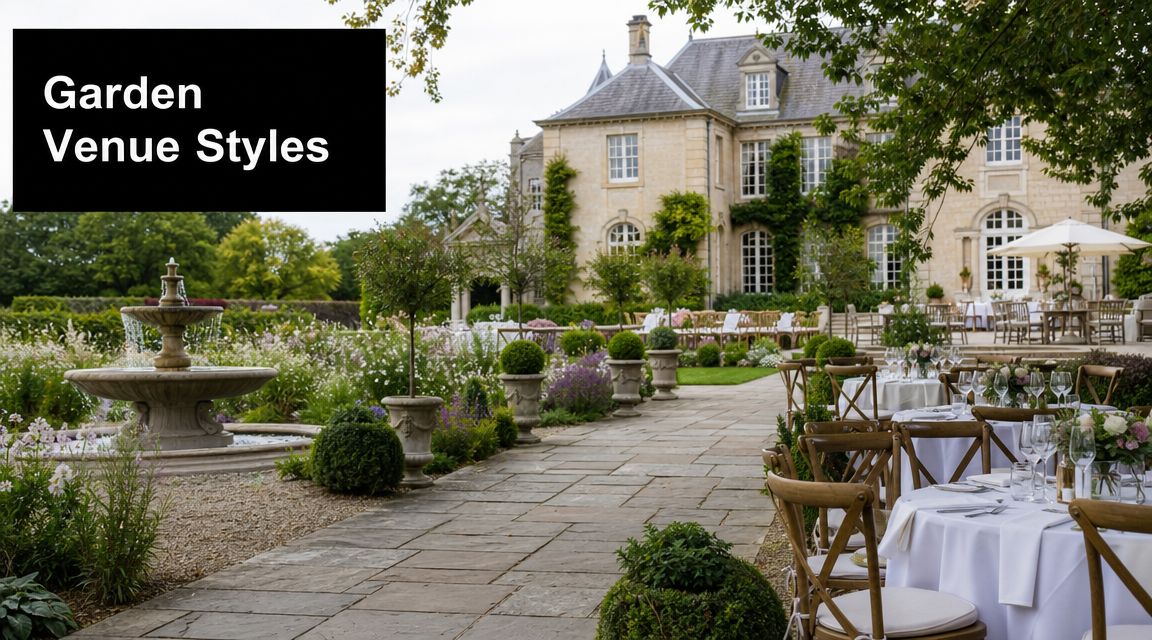
Matching the style to the garden
A few combinations tend to work especially well in London and the home counties:
- Classic English country: Best in established gardens with mature planting, lawns and brick or period backdrops. This style suits soft florals, elegant dining chairs and a lighter marquee interior.
- Modern clean-lined wedding: Better for newer properties, architectural homes, or gardens with paved terraces and simpler planting. Clear walls, a monochrome palette and restrained décor often look stronger here.
- Relaxed garden party look: Ideal when the priority is warmth and sociability rather than formality. Long tables, mixed seating zones and a visible bar can work beautifully.
If you're still deciding between a private home and a venue with grounds, compare them thoroughly. A licensed venue usually gives you built-in infrastructure, easier supplier access and fewer residential concerns. A private garden gives you freedom, personality and often more control over the feel of the day. Both can work. They come with different considerations to address.
For couples weighing up that choice, this guide to venues for marquee weddings helps clarify the trade-offs.
Private garden or hired venue
A home-based wedding often wins on atmosphere. There's history in the space. Guests relax quickly. Family homes in places such as Purley, Wimbledon and Bromley can make wonderful settings because the event already feels rooted in your life.
But a private garden also has to behave like a temporary event site.
That means asking practical questions early:
- Access routes: Can furniture, catering equipment and marquee components get to the build area without damage or delay?
- Parking and drop-off: Where do guests arrive, and what happens if the road is narrow or permit-controlled?
- Noise management: Where will speakers face, and when does amplified sound need to come down?
- Neighbour impact: Will deliveries, lighting, generator use or guest departure cause friction?
Some of the smoothest home weddings I've seen started with a polite conversation with neighbours well before the day, not a last-minute apology.
Permissions and event framework
In England and Wales, the Licensing Act 2003 formalised how outdoor gatherings are planned. Permissions like a temporary event notice can cover up to 500 people for up to 7 days, which is a range that accommodates most large wedding garden parties and made them easier to organise at scale, as outlined in this overview of wedding industry licensing context.
That doesn't mean every garden wedding needs the same permission. It does mean you shouldn't assume that because it's on private property, everything is automatically straightforward. Alcohol service, music, guest numbers and the way the event is run can affect what needs checking.
For residential gardens, the less glamorous details often matter most. A beautiful setup that irritates the whole street is not well planned. The right approach is to treat the property with the same respect you'd give a temporary venue.
Sizing Your Marquee and Visualising the Layout
Marquee size is where couples often either overestimate badly or try to squeeze too much into too little space. Both create problems. A marquee that's too large can swallow the garden and leave the event feeling flat. One that's too tight makes service clumsy and the room uncomfortable.
The right size depends less on guest count alone and more on how you want the day to work. A seated meal, top table, dance floor, bar, cake table and catering access all compete for space. A drinks-led reception has a completely different footprint.
Start with how the event will be used
Ask these questions before talking dimensions:
- Are guests dining formally or mingling for most of the event?
- Will the ceremony happen under the marquee, outside it, or elsewhere?
- Do you want a separate catering area, or are suppliers working from an existing kitchen?
- Will the bar sit inside the main structure or in a linked space?
- Do you want a proper dance floor, not just a bit of cleared room after dinner?
Once those answers are clear, a sensible footprint becomes easier to sketch.
Example marquee sizing guide for wedding garden parties
The table below is a planning guide, not a substitute for a site visit. Layout shape, furniture choice and garden access can all shift the recommendation.
| Guest Count (Seated Dinner) | Guest Count (Standing Reception) | Recommended Marquee Size (Example) |
|---|---|---|
| Small seated wedding | Higher if mainly drinks and mingling | Compact marquee with space for dining and a modest service zone |
| Medium seated wedding | Medium to larger standing reception | Mid-sized marquee with a defined dining layout and bar position |
| Larger seated wedding | Large standing reception | Wider-span marquee with separate zones for dining, dance floor and circulation |
| Seated wedding with band, bar and dance floor | Lower standing density once extras are included | Larger marquee or linked structures to avoid crowding |
| Home wedding with ceremony, reception and evening party in one place | Flexible depending on phase of day | Split layout using connected marquees or clearly zoned interior planning |
That may seem less precise than couples expect, but in real gardens, precision comes from the site itself. The same guest list can fit comfortably in one property and feel impossible in another because of trees, slopes, patios, flower beds or awkward side access.
Why layout matters more than raw square footage
Most planning problems aren't caused by the marquee shell. They're caused by poor flow.
Common trouble spots include:
- Bottlenecks at the entrance: Guests arrive, queue for drinks and block circulation.
- Dining tables pushed too close: Staff can't serve efficiently and chairs knock together.
- Bar placed badly: One popular area takes over the whole room.
- Dance floor in a dead corner: The evening loses energy.
- Catering route through guests: Service becomes noisy and disruptive.
A strong layout gives each part of the day its own logic. Guests should understand the room instinctively. Ceremony here. Drinks there. Dining comfortably central. Evening party with enough space to breathe.
Practical rule: If staff can't move cleanly, guests won't feel relaxed. Good flow is invisible, but everyone notices when it's missing.
Why a site visit changes everything
A proper survey earns its keep. On paper, a garden can look generous. In person, you may find a narrow gate, a drop in level, a protected tree canopy or a patio that limits leg positions and anchoring options.
A site visit lets you answer the questions that photos never do:
- Is the lawn level enough?
- Is there enough build access?
- Can linked spaces work better than one large block?
- Where do guests naturally arrive from?
- What part of the garden has the best view and the driest footing?
For many couples, a drawn layout is the point when the wedding stops feeling abstract and starts feeling manageable. A simple CAD plan helps you visualise table spacing, dance floor location, bar placement and service routes before anything is booked in final form.
If you're comparing structures, this overview of an outdoor party tent for garden events helps explain the basic options.
Weatherproofing Your Day for the UK Climate
British couples usually ask about rain first, but rain isn't the only weather issue that affects comfort. Temperature drops, damp ground, shifting wind and low evening light all change how a garden wedding feels.
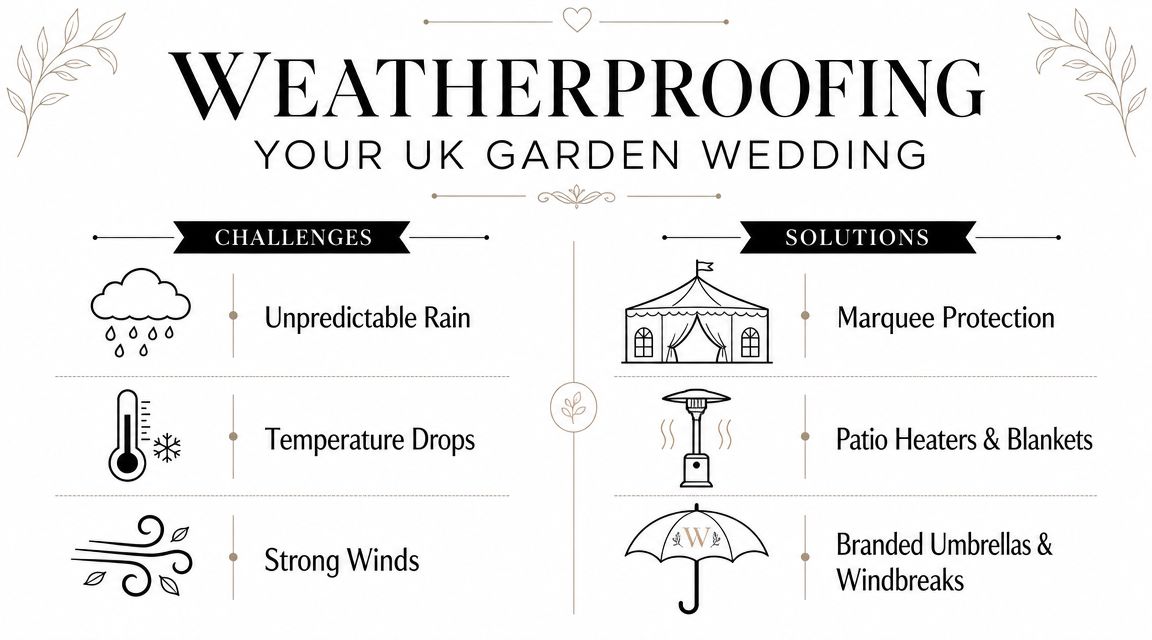
The fair-weather myth
Outdoor wedding demand in the UK is concentrated in the warmer months, which is why spring and summer dates are so popular. Even so, weather uncertainty stays with you, and that is exactly why covered structures are such a normal part of UK garden wedding planning rather than a sign that something has gone wrong.
The same principle matters outside peak summer too. The UK had its second warmest spring on record in 2025, yet spring weather remained highly variable, which is why resilient planning with drainage, flooring and heating is so important for comfort, as noted in this write-up on weather resilience for backyard weddings.
The couples who enjoy their day most aren't the ones who gamble hardest on sunshine. They're the ones who make the weather irrelevant.
What real weatherproofing looks like
A proper weather-ready setup usually includes a combination of the following:
- Frame marquee protection: A solid structure gives shape, shelter and confidence if the forecast turns.
- Flooring underfoot: Guests stay off wet grass and furniture sits properly level.
- Heating for the evening: Essential outside the warmest spells, especially once people are seated.
- Clear walls or panoramic panels: These keep the space bright while protecting against wind and showers.
- Sheltered circulation: Covered links between house, marquee, toilets and service areas make a huge difference in poor conditions.
The result shouldn't feel enclosed and gloomy. The best weatherproofed wedding garden parties still feel open, light and connected to the garden.
Comfort is the real goal
A couple may be happy to carry on in light drizzle. Guests in formalwear, heels and lighter summer outfits won't always feel the same. Comfort isn't just about avoiding complaints. It changes the whole atmosphere.
When people are dry, warm and able to move around easily, they stay longer outside, use the space more naturally and enjoy the evening instead of huddling around whichever corner feels least exposed.
A few things that work especially well:
- Covered arrival points so guests don't start the day flustered
- Dry, lit walkways back to cars or transport
- A slightly warmer evening setting than you think you'll need
- Flexible walling that can be opened or closed depending on conditions
If you design for comfort first, the day still looks beautiful. If you design for photos only, the weather decides whether guests enjoy it.
Managing Catering, Bar, and Power Logistics
A garden wedding only feels polished when the working parts of the event have somewhere sensible to go. Guests shouldn't be watching staff wrestle with extension leads, trolleying plates over muddy grass, or squeezing through the same opening used for the drinks queue.
Catering needs its own plan
Even when a house kitchen is available, it rarely handles the full job neatly for a wedding service. Caterers need prep space, washing space, delivery access and a route that doesn't cut through the social heart of the event.
Think in terms of a working chain:
- Delivery arrives.
- Equipment is unloaded.
- Food is stored or prepped.
- Service reaches tables quickly.
- Clearing happens unobtrusively.
- Waste leaves discreetly.
If one link is awkward, the whole service feels slower and more stressful. In a suburban garden, that usually means deciding early whether the caterer works from an attached catering tent, a separate prep zone, or a carefully managed indoor kitchen arrangement.
The ground has to support more than guests
This is one of the most overlooked points in wedding garden parties. A key technical constraint for UK garden events is ground-bearing capacity. Saturated topsoil can lose strength, so ground protection and sub-floors are important for guest footfall, catering trolleys and service equipment, especially on soft or sloped lawns, as explained in this article on garden party ground conditions and practical setup.
That matters in real terms. High heels sink. Trolleys drag. Refrigeration units and service kit can mark lawns or become awkward to move. If staff can't move safely and quickly, the dining experience suffers.
Power, water and the hidden essentials
A garden isn't a purpose-built venue, so infrastructure has to be created sensibly.
Key points to map out early include:
- Power load: Lighting, bar refrigeration, catering equipment, DJ or band kit, and heating all need coordinated supply.
- Cable routing: Cables should be protected and positioned where guests and staff won't trip over them.
- Water access: Some caterers need reliable nearby supply, not a long hose run through the house.
- Waste management: Bottles, food waste and general rubbish need a discreet holding point.
- Toilet provision: Depending on guest numbers and the house arrangement, extra facilities may be worth considering.
A neat event often depends on details guests barely notice. That's exactly as it should be.
Guests remember smooth service as "the whole day ran beautifully". They remember bad logistics as queues, delays and little frustrations they can't quite name.
Ideas for Décor, Lighting, and Entertainment
Once the bones of the event are right, the fun part starts to show. At this point, a marquee stops feeling like a practical shelter and starts feeling like your wedding.
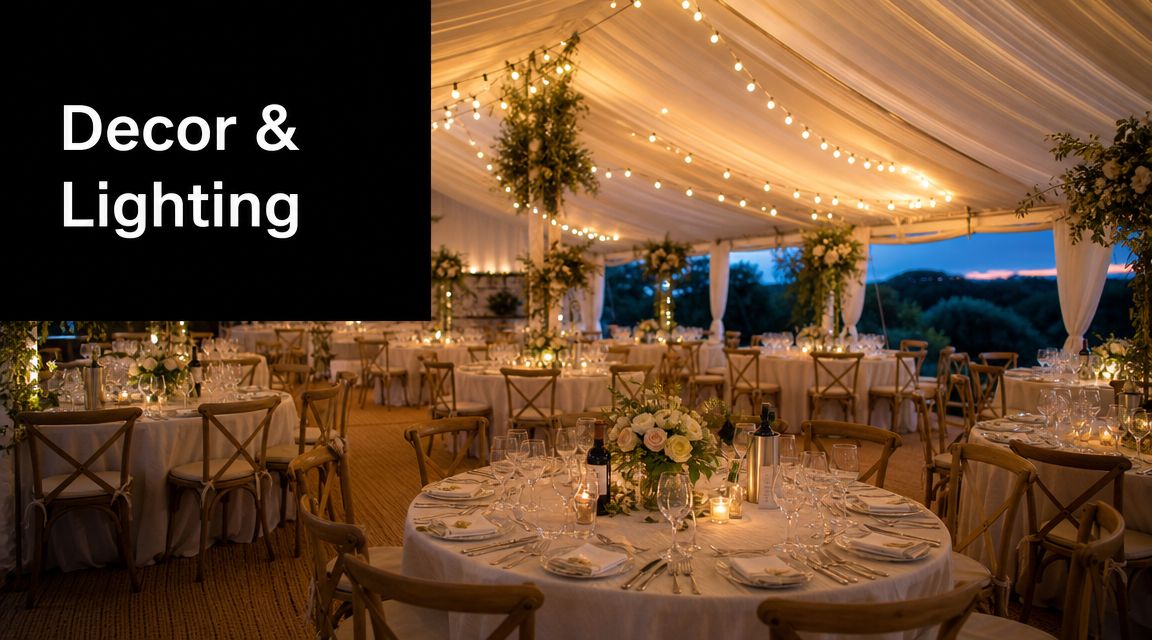
Décor that suits the structure
The strongest marquee styling usually works with the frame rather than trying to hide it. Clean draping, suspended florals, statement tables and well-chosen chairs tend to do more than cluttered styling.
For a London or Surrey garden wedding, these combinations often land well:
- Soft English garden look: Neutral linen, pale florals, tapered candles and Chiavari chairs
- Contemporary evening party: Black or white furniture, coloured uplighters and a more defined bar area
- Relaxed family celebration: Mixed table formats, lounge corners and softer decorative layering
Try to concentrate your budget where guests spend time and where photos naturally linger. Entrance points, dining tables, the ceremony backdrop, cake area and dance floor all give a stronger return than scattering little details everywhere.
Lighting makes the space feel finished
Lighting changes the marquee more than almost any décor decision. In daylight, the structure carries the look. By evening, lighting carries the atmosphere.
Useful layers include:
- Overhead fairy light canopies for warmth and softness
- Festoon lighting outside for terraces, paths and bar approaches
- Coloured uplighters to shift the mood later in the evening
- Pin lighting for cake tables, florals or feature areas
- Pathway lighting so guests can move confidently after dark
If you want ideas beyond standard festoons, these creative garden light arrangements are worth browsing, especially for thinking about paths, borders and subtle exterior glow around the marquee.
Lighting also has a practical job. It needs to lead people to loos, exits, smoking areas, cars and taxis without making the garden feel like a floodlit sports pitch.
Entertainment that fits the site
A dance floor should feel connected to the room, not exiled to one side. If you're having a DJ or band, place them where the sound carries evenly without blasting the nearest residential fence line.
This is also where a few well-chosen extras can help the day feel more complete. A Magic Mirror photo booth works well in a side zone rather than next to dining tables. Giant LOVE letters are best used as a visual anchor, not squeezed into a circulation route. Lawn games can be brilliant in the afternoon if they don't obstruct service or emergency access.
A short video can help you picture how marquee styling, furniture and lighting come together in a live event setting:
Sound matters just as much as visuals. Acoustic musicians often suit the day better during drinks and dinner, with amplified music becoming more useful later. In close residential settings, that balance can protect the atmosphere inside the marquee without creating unnecessary tension outside it.
Your Garden Wedding Timeline and Planning Checklist
The couples who feel calm near the wedding date are rarely the ones who did less. They made decisions in the right order. A garden wedding has more moving parts than a standard venue booking, because the property has to be turned into a functioning event site for the day.
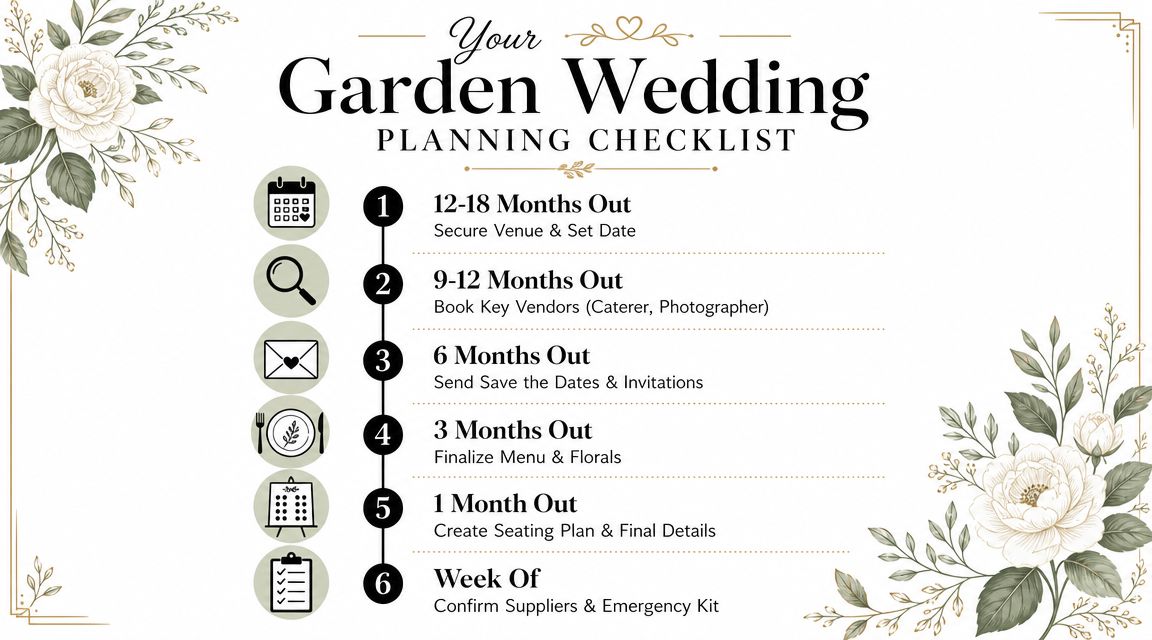
Twelve to eighteen months out
Start with the essentials. Secure the date, confirm whether you're using a private home or grounds-based venue, and build an early guest list that reflects the kind of day you want.
UK couples are increasingly choosing smaller, more personal outdoor celebrations, which puts more pressure on private properties to function like temporary venues. That makes early thinking on access, noise and neighbourhood impact more important, as discussed in this piece on outdoor wedding reception planning and home-based events.
Use this early stage to:
- Set the shape of the day: Ceremony only, full reception, or ceremony elsewhere with garden party afterwards
- Walk the site properly: Look at side access, house-to-garden movement and where guests would arrive
- Test your guest count against the site: Be realistic before invitations become emotional commitments
Nine to twelve months out
This is the point to secure the core suppliers. Marquee, catering, photographer, entertainment and any specialist lighting should all be moving into place.
A good checklist here looks like this:
- Book the main structure: Lock in the marquee style and likely footprint
- Develop the first layout draft: Tables, dance floor, bar and service zones
- Choose your catering approach: Kitchen use, catering tent, staffing model and service style
- Check practical permissions: Especially if alcohol, music or a larger setup needs closer review
If you like comparing timelines while keeping the fashion and personal-prep side in view, this guide on planning your luxury bridal journey is a helpful companion read.
Six months to three months out
The event becomes specific rather than conceptual. The floorplan needs refining, décor choices need to meet the power plan, and logistics need to line up with supplier needs.
Focus on:
- Finalising the room flow
- Confirming power and lighting requirements
- Planning toilet arrangements and waste handling
- Deciding on heating, flooring and walling options
- Talking to neighbours if the event is at home
The earlier you make practical decisions, the less likely you are to spend the final month paying for rushed fixes.
One month out to the week of the wedding
This phase is all about confirmation. Not reinvention.
Use the final stretch to pin down:
- Supplier timings: Delivery, installation, collection and access windows
- Wet-weather operating plan: What changes, what stays the same, and who decides
- Final guest circulation: Especially entrances, exits and evening transport
- Emergency kit: Umbrellas, wipes, spare footwear options, signage and extension contingencies
- Seating and service lists: So the room and staffing match the final count
The week of the wedding should feel like checking details, not solving major design questions. That's the reward for making the hard decisions in the proper order.
Budgeting and Partnering with a Local London Expert
Garden weddings can be excellent value for the atmosphere they create, but they aren't cheap because they're in a garden. In some cases, they cost more than couples expect precisely because the site needs temporary infrastructure.
The key is knowing what you're paying for.
Where the budget usually goes
A realistic budget for wedding garden parties normally includes several layers:
- The structure itself: Marquee size, style, walls and linings
- Flooring and surface preparation: Especially important on softer lawns
- Furniture: Dining chairs, tables, bar units, lounge pieces and extras
- Lighting and power: Ambient lighting, working light, entertainment supply and safe cable routing
- Weather resilience: Heating, sheltered links, rain planning and guest comfort measures
- Operational support: Delivery, installation, collection and site-specific setup complexity
Couples sometimes compare only the headline marquee figure and miss the rest. The smarter comparison is total event function. A cheaper shell with poor layout, weak flooring and awkward logistics often costs more in stress, patchwork add-ons and compromised guest experience.
Why local knowledge saves headaches
A supplier who knows Croydon, South London, Surrey and the surrounding boroughs understands the practical reality of local homes. Narrow drives, restricted parking, terraced access, sloping lawns, mature trees and neighbour-sensitive roads aren't unusual. They're normal.
That local familiarity helps with decisions such as:
- whether the build should happen earlier
- which access route will protect the property best
- how to keep delivery and collection tidy
- where guest transport should stop
- what kind of structure works best in a tighter suburban plot
It also helps with communication. Couples planning from London often don't want ten vague emails and a lot of guesswork. They want someone to visit, assess the site properly, show a workable layout and explain the trade-offs clearly.
What to ask before you commit
Before booking any marquee company, ask direct questions:
- Will they visit the site in person?
- Can they show you a layout, not just talk about one?
- How do they handle wet ground and uneven gardens?
- What happens if access is tighter than expected?
- Can they supply the extras that make the event run smoothly, not just the tent?
Those questions tell you quickly whether you're dealing with a planner's partner or a stock provider.
One final admin tip. After the wedding, couples often want an easy and private way to circulate images to family and friends. These secure wedding photo sharing tips are useful to have saved in advance, because that job tends to land on somebody when everyone's already exhausted.
A good garden wedding feels personal, generous and calm. That doesn't happen by luck. It comes from practical planning, sound equipment and people who understand how London-area gardens behave as event spaces.
If you're planning a wedding at home or on private grounds in Croydon, London, Surrey, Kent or nearby, Premier Marquee Hire can help you shape it properly from the start. The team offers free site visits, pressure-free quotes and CAD layout plans so you can see how your day will work before you commit. If you'd like clear advice on marquee size, garden access, flooring, lighting or weather cover, get in touch for a friendly chat and book your free site visit.
Sorry, the comment form is closed at this time.