

01 Jun Hire of a Marquee: Your London Event Guide 2026
A lot of people come to marquee hire at the same point. The guest list has grown, the house won't hold everyone, and a garden in Croydon, Purley or Bromley suddenly looks like the perfect venue. Then the practical questions arrive all at once. Will it fit? What if it rains? How much access do installers need? Where does the catering go? Can the lawn take it?
That's where the hire of a marquee stops being a simple tent booking and becomes a proper event project. Done well, it gives you flexibility that fixed venues can't. Done badly, it creates avoidable stress on the week of the event.
Your Complete Guide to Marquee Hire in London
A typical London enquiry starts with excitement and a bit of uncertainty. Someone is planning a wedding in a family garden, a milestone birthday in South Croydon, or a summer staff event on a business premises. They know the atmosphere they want. What they usually don't know yet is whether the site will be suitable without compromises on comfort, access or safety.
That's why practical marquee planning starts with the site, not the brochure. The UK marquee and tent hire sector is established enough to be tracked as a distinct industry, with Plimsoll formally analysing the top 260 companies in the market, which tells you this is a professional trade with structured suppliers and real operational standards. The same market snapshot also notes a Surrey marquee-hire firm founded in 2023 with estimated annual revenue of $171,110, showing that even newer regional operators can build meaningful turnover quickly in this sector through proper delivery and service quality (Plimsoll market report on marquee and tent hire).
For clients, that maturity matters. It means there's a right way to plan the hire of a marquee, from survey and layout through to installation sequence and breakdown.
A wedding is a good example. The marquee itself is only part of the day. You also need room for guests to move, catering to function, furniture to be positioned sensibly, and those personal touches that make the event feel complete. For couples who also want guests to contribute photos without chasing everyone afterwards, tools for effortless guest photo gathering can sit neatly alongside the marquee plan and save a lot of admin after the celebration.
A marquee should solve problems, not create new ones. The right setup feels natural on the day because the difficult decisions were handled early.
When to Book and How to Choose the Right Size Marquee
A client in Croydon will often ring after finding a size chart online and ask for a quick answer. Forty guests. Maybe sixty. One garden party, one wedding, one corporate do. The honest answer is that guest count only gives you a starting point. The date, the way people will use the space, and the realities of a London garden usually decide whether the job stays straightforward or becomes expensive.
Book once the date and site are credible
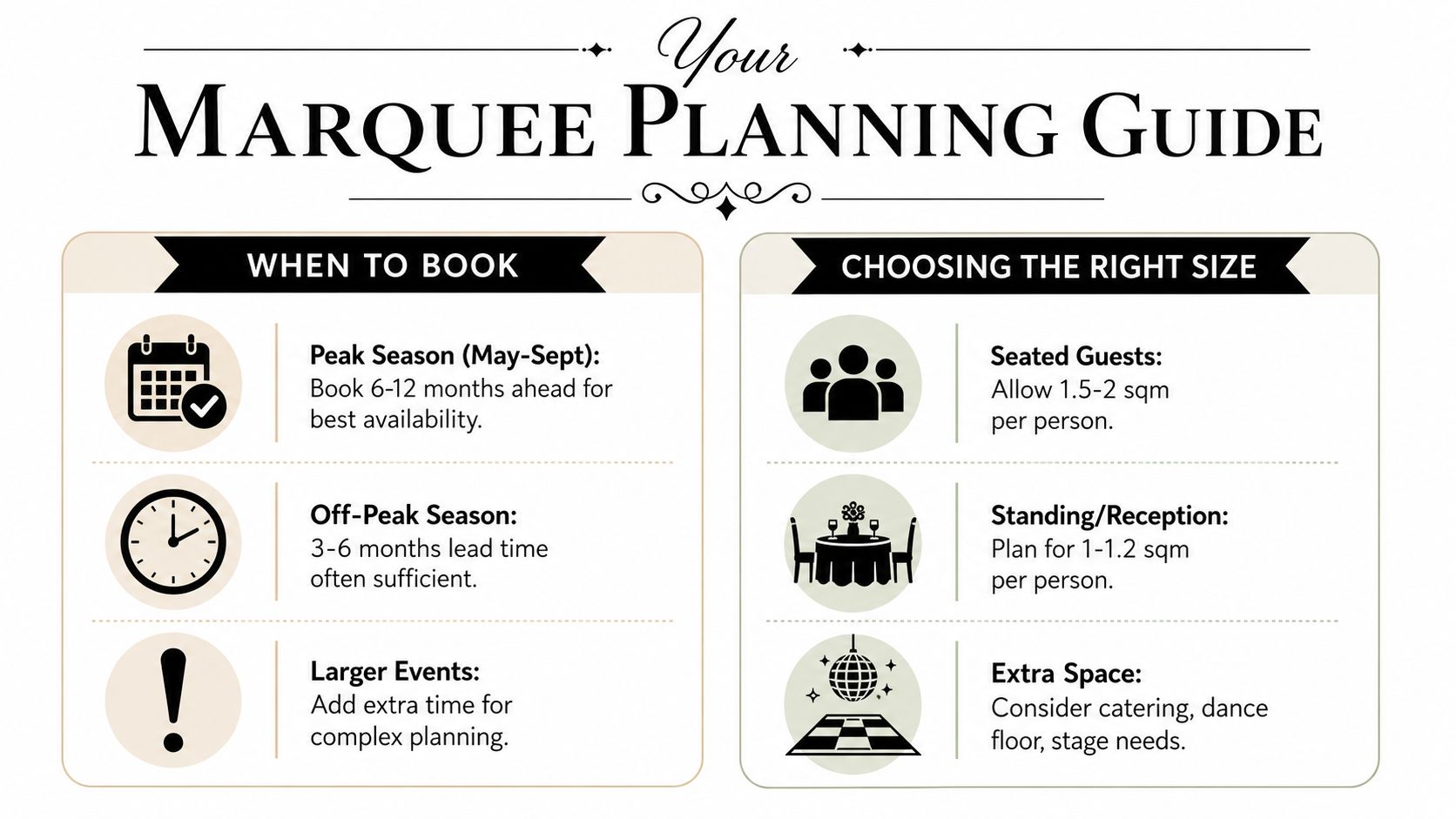
The right time to book is as soon as two things are clear. You have a firm event date, and you have reasonable confidence the site can take the structure you want.
Popular summer Saturdays disappear early, especially if you need more than a plain cover. Flooring, lining, lighting, heating, clear walls, furniture, staging and catering space all depend on stock, crew time and vehicle planning. In London and Croydon, access also affects scheduling. A marquee going into a back garden with a narrow side path takes longer to install than one going onto an open lawn, so the same weekend can fill up quickly.
A smaller family party can sometimes be arranged in a shorter window. Choice is the trade-off. Leave it late and you may still get a marquee, but not the shape, width or finish that suits the event best.
If you are weighing up two possible dates, settle that first. Availability checks mean very little without a real date.
Size starts with event format, not just headcount
A marquee for 60 guests can feel generous or cramped depending on what is happening inside it.
A seated meal needs table spacing, chair pull-out room and clear routes for staff. A drinks reception can work in a smaller footprint, but only if you have thought about arrival flow, serving points and cover near the entrance if the weather turns. Add a dance floor, DJ, bar, cake table, photo booth or children's corner and the usable space changes again.
This is the point many clients miss. They ask for a marquee to hold 80 guests when what they need is a marquee to hold 80 guests, a dance floor, a bar queue, a buffet line and a sensible walkway for older relatives.
A practical starting framework looks like this:
| Event style | What usually sets the size | What clients often forget |
|---|---|---|
| Seated lunch or dinner | Table shape, spacing, serving routes | Gift table, cake table, space behind chairs |
| Standing drinks party | Guest flow, drinks points, entrance area | Wet weather bunching near doors |
| Wedding meal plus dancing | Dining layout and separate dance area | DJ table, speaker position, bar queue |
| School or community event | Flexible open space and circulation | Buggy access, signing-in table, clear exits |
London and Croydon bookings need a margin for reality
In this area, the marquee that fits on paper is not always the marquee that works on site.
Terraced homes, side returns, detached garages, raised patios and long gardens all affect what can be installed and how much usable room you get for the money. A client may have space for a certain footprint, but if the access route is tight, the ground is uneven, or the best position blocks the caterer from working properly, the layout needs to change. Sometimes the answer is a different shape. Sometimes it is a smaller dining plan with a linked catering tent. Sometimes the better decision is to reduce guest numbers slightly rather than squeeze everyone in.
That is why experienced suppliers price from a working layout, not from a generic chart.
Ask these before you commit
Use these questions to narrow the right size quickly:
- Are guests sitting for most of the event, or moving between dining, drinks and dancing?
- Do you need a separate area for catering, storage, toilets or staff access?
- Will elderly guests, children, wheelchair users or pushchairs need wider routes?
- Is the room layout changing in the evening once entertainment starts?
- Does the garden need space left clear for access to the house, neighbours, or fire exit routes?
Practical rule: If the marquee only fits the furniture plan and not the movement around it, it is too small.
A proper quote should be built from layout, not guesswork.
Mastering Your Space with a Critical Site Survey and Layout
A Croydon client can stand in the garden and see plenty of room. Then the survey starts, and the actual constraints show up quickly. The side gate is 85cm wide. The lawn falls away toward the fence. There is a manhole where the dance floor was meant to sit. The house extension blocks the cleanest access route for the crew.
That is why the site survey decides more than the marquee size. It affects whether the build is straightforward, what flooring is needed, how long installation takes, and where the extra cost sits.
What a proper survey actually checks
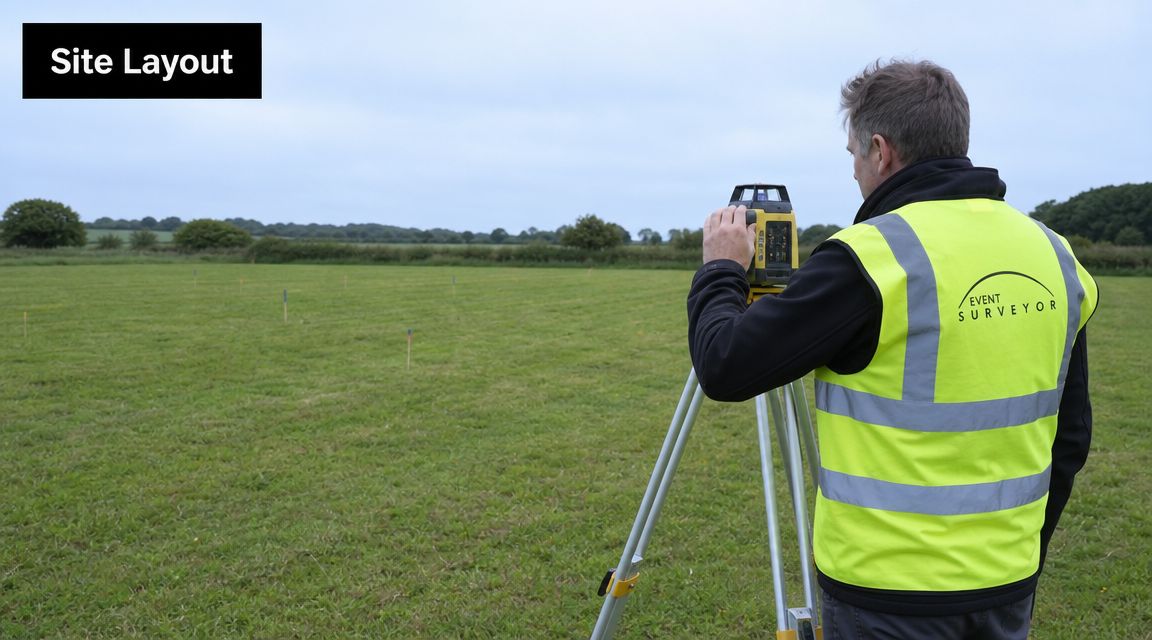
A proper survey is part measurement, part logistics check, part problem prevention. Width and length matter, but they are only the start. I always want to know how the structure will be built, how guests will move through it, and what the site will look like after a wet week in South London.
The main checks usually include:
- Ground condition: Lawn quality, slope, soft patches, waterlogging, uneven paving, and whether the floor needs packing or levelling.
- Access route: Gate widths, alleyways, steps, corners, shared drives, parking controls, and distance from unloading point to build area.
- Fixed obstacles: Trees, branches, fences, sheds, conservatories, raised beds, drains, covers, and overhead cables.
- Clearance around the marquee: Space for anchoring, tensioning, ladders, and safe working room during the build.
- Service layout: Power run, catering area, toilet position, refuse route, and a sensible emergency exit path.
In London gardens, access causes as many problems as the footprint itself. A marquee can fit the lawn perfectly and still become an expensive install if every panel, pole, and floor section has to be hand-carried through a narrow passage or over delicate paving.
Ground conditions decide feasibility and cost
This is the point many clients only hear about after they have fallen in love with a layout.
Flat, firm ground keeps things simple. Sloping ground can mean extra levelling work and a different flooring approach. Soft grass after heavy rain may still be usable, but traffic routes need protecting and furniture needs a solid base. Hard standing changes the fixing method, which can alter both labour and equipment requirements.
A few common examples from Croydon and nearby jobs:
- A mild slope: Acceptable for a drinks reception, awkward for round tables, bars, and formal dining chairs.
- Patchy or saturated lawn: Fine in dry weather, but risky once staff, caterers, and guests start walking the same route all day.
- Low branches near the build area: They cut into roof clearance and can force the marquee out of its best position.
- Terraced-house access: Build time increases because the crew cannot move equipment in bulk from the van to the garden.
A difficult site does not automatically rule the job out. It usually means changing something practical. The shape, the orientation, the floor build-up, the access plan, or the installation schedule.
Layout needs to work during the event, not just on a plan
A marquee should feel easy to use once guests arrive. That comes from layout discipline, not from squeezing every item into the footprint.
The plan needs to show how people enter, where coats or welcome drinks go, how waiting staff cross the room, where queues will form, and whether people can reach the toilets without cutting through the dance floor. If the event runs from daytime dining into a colder evening reception, it also helps to allow for enclosed sides and heating positions. Clients planning a winter or shoulder-season event usually benefit from reviewing heated marquee hire options for colder-weather layouts at the same time as the floor plan.
Premier Marquee Hire offers free site visits and CAD layout designs on request. That sort of pre-build planning helps clients see the practical version of their event, not just the attractive version.
The video below gives a useful visual sense of what site planning and physical setup involve in practice.
Layout details that prevent problems on the day
Small placement decisions have a habit of becoming big operational problems once the marquee is full.
| Layout element | Why it matters |
|---|---|
| Entrance position | Reduces bottlenecks and keeps the main approach usable if the ground turns wet |
| Catering zone | Gives staff a workable route without crossing through seated guests |
| Bar location | Stops queues from blocking tables, exits, or access to the dance floor |
| Dance floor placement | Helps with sightlines, speaker direction, and evening circulation |
| Exit routes | Keeps movement clear during busy periods and supports safe evacuation if needed |
For London and Croydon gardens, the survey is where the actual project gets priced and planned. Capacity charts help at the early stage. Ground conditions, access, and a workable layout are what decide whether the event will run smoothly.
Preparing for British Weather with All-Season Marquees
The weather question is always fair. In the UK, nobody books an outdoor event assuming perfect conditions. They book it hoping for the best and planning for everything else.
That's why weatherproofing has to be built into the setup from the start. Not added as an afterthought when the forecast turns.
Stability starts with the install method
A marquee isn't made weather-ready through strong materials alone. Reliability depends on how the structure is erected and secured on the day. Independent UK installation guidance stresses that wind resistance depends on taut roof tension and surface-appropriate anchoring, and identifies slack fabric and inadequate anchoring as the most common failure points (UK marquee setup guidance on tension and anchoring).
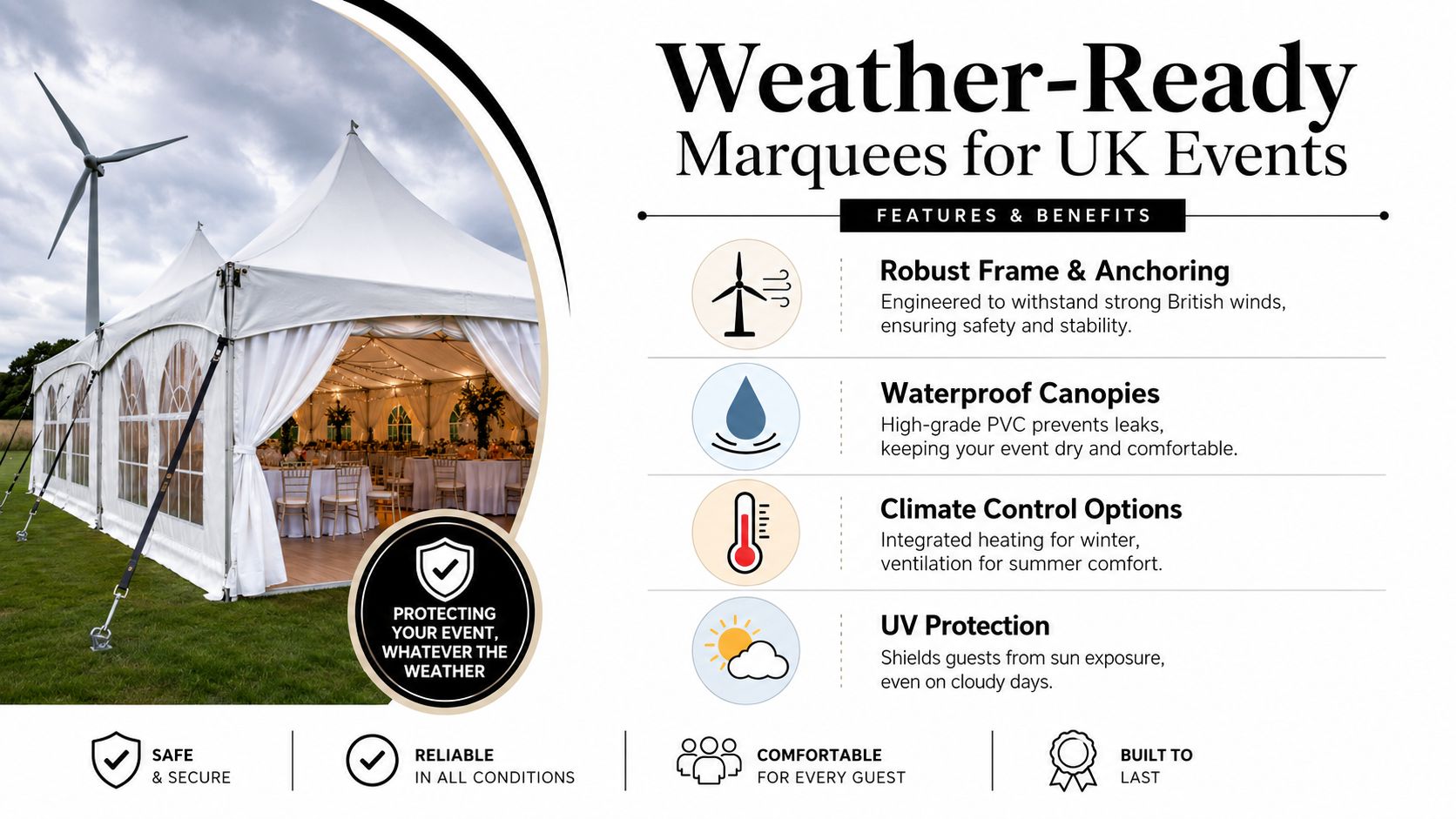
That matters because different sites need different fixing methods. Soft ground may suit staking. Hard surfaces may need weights, straps or another anchoring approach suited to the surface. The wrong method creates movement, flap and unnecessary risk. The right method creates a structure that feels solid and settled.
Guest comfort is part of weather planning
Clients often focus on rain, but comfort issues show up in several ways. Cold underfoot, draughts at entrances, condensation around poorly ventilated spaces, and dark corners after sunset all affect how the event feels.
A weather-ready marquee plan usually includes decisions such as:
- Flooring choice: Bare ground may be acceptable for casual daytime use, but formal events often need a proper floor for stability and comfort.
- Walling and entrances: Solid or well-managed side walls can make a big difference when wind changes direction.
- Lighting and power: These should be planned early, not squeezed in near the event date.
- Heating for cooler months: If the event is outside summer, heat should be designed into the layout, not treated as a last-minute add-on.
For colder dates, it's worth looking at dedicated options for heated marquee hire so flooring, heat output and enclosure all work together rather than fighting each other.
Weather-proofing isn't about being dramatic. It's about making sure guests stay comfortable if the day turns colder, wetter or windier than hoped.
Summer and winter need different priorities
A summer marquee may need better airflow, shaded areas and practical lighting for the evening transition. A winter setup usually needs more thought on flooring, side protection and heat retention.
What doesn't work is assuming one setup suits every month. The hire of a marquee for a June garden party and the hire of a marquee for a late-autumn wedding might use the same frame system, but the comfort package around that frame should be different.
The best outcome is simple. Guests shouldn't be talking about how they coped with the weather. They should be talking about the event.
Bringing Your Marquee to Life with Furniture and Ancillaries
An empty marquee is a shell. The atmosphere comes from what you put inside it and how those pieces work together.
The easiest way to think about this is to treat the space like a room you're building from the floor up. Start with what guests physically need. Then add the elements that shape the mood.
Start from the ground and build upward
Flooring changes everything. For a relaxed garden gathering, practical surface coverage may be enough to stop grass wear and muddy shoes becoming an issue. For a wedding or evening party, a firmer floor usually makes the room feel finished and gives tables, bars and dancing a much better base.
Then lighting takes over after dark. Functional flood or service lighting helps staff work safely, but it won't create atmosphere on its own. Softer decorative lighting can warm the room, draw attention to key areas, and stop the marquee feeling flat after sunset.
A simple styling sequence usually works best:
- Flooring first because every other item sits on it.
- Table plan next so you know where guests, aisles and service routes sit.
- Lighting after layout because it should support the room, not fight it.
- Feature items last such as bars, statement seating, mirrors or decorative letters.
Match furniture to the event, not just the budget
Not every event needs the same furniture language. A school celebration, community function and formal wedding all ask different things from the room.
A few common pairings make sense:
- Community and council events: Folding chairs and practical tables often do the job cleanly.
- Weddings and formal dinners: Chiavari seating or more refined banqueting furniture helps the marquee feel like a venue rather than a temporary structure.
- Corporate gatherings: Poseur tables, lounge seating and branded zones can make the space feel more intentional.
- Family celebrations: Mixed furniture can work well if different age groups will use the marquee differently across the day.
If you want to compare options before deciding, a dedicated guide to event furniture hire in London is useful because the furniture decision affects layout as much as style.
The most successful marquee interiors don't use the most items. They use the right items in the right positions.
The extras that change how the event feels
Ancillaries are where a blank canvas becomes personal. A mobile bar can create a social centre. A dance floor gives the evening a clear focal point. A Magic Mirror photo booth adds something interactive without needing a separate room. Giant LOVE letters, feature lighting and a well-placed entrance area can completely alter the first impression guests get.
The important thing is not to crowd the room. Every extra takes space, and every space decision affects circulation. If the bar causes a queue through the dining area, or the photo booth blocks an exit route, the room stops working no matter how good it looks.
That's why styling should always be tied back to the layout plan. The right ancillaries lift the event. The wrong combination just eats floor area.
Understanding Marquee Hire Costs, Permits, and Installation
A marquee quote often changes once the site survey is done. In Croydon and across London, the biggest differences usually come from the ground under the structure and the route the crew has to use to get there.
Two clients can ask for the same guest numbers and a similar look, then end up with very different costs. A flat rear lawn in Sanderstead with side access is a simpler job than a townhouse garden in central London where every panel, floor section and chair has to be carried through the house or down a narrow passage. That is usually where budgets shift.
What changes the quote
The main cost drivers are usually practical.
| Cost factor | Why it affects the price |
|---|---|
| Marquee size and shape | More structure, more materials, more labour |
| Ground and flooring | Uneven or soft sites may need a suspended floor system or another structured flooring option |
| Access difficulty | Longer carry routes and tighter access increase labour time |
| Hire duration | The structure and equipment are tied up for longer |
| Lighting, heating and furniture | These add equipment, transport and setup work |
| Location and logistics | Parking, timing restrictions and local access conditions can complicate delivery |
Flooring is a good example. On a level lawn, standard boarding and carpet may be enough. On sloping gardens, soft patches, mixed paving, or sites with tree roots near the surface, the floor build becomes more involved and the labour goes up with it.
Access is the other factor clients often underestimate. If the install team cannot get a vehicle close to the build area, every component is hand-carried. In London, controlled parking zones, school run traffic, width-restricted roads and fixed delivery windows can all add time and cost before the first frame bay goes up.
That is why broad online estimates can be misleading. A clearer way to compare like for like is to look at a breakdown of prices for marquee hire and then match it against your actual site conditions, not just your guest count.
Permits and permissions
Private garden events are usually simpler, but they are not free of checks. Permission can still be needed if access affects neighbours, if suppliers need to stop on restricted roads, or if the event includes generators, catering tents, toilets or other equipment outside the main marquee footprint.
For public spaces, school grounds and community sites, confirm the following early:
- Landowner permission
- Any local authority requirements
- Insurance responsibilities
- Power and welfare provision
- Emergency access expectations
London sites can have another layer of complexity. Some boroughs and managed venues have rules on vehicle movements, noise, protection of paved areas, and the times crews are allowed on site. These points are easier to handle at planning stage than on installation morning. For wider scheduling advice, this guide to mastering event planning for 2026 is a useful reference.
What installation day looks like
Installation is a staged job. The team marks out the footprint, builds the frame, tensions the roof, adds flooring, fits walls and doors, then finishes lighting and interior items in the agreed order.
From the client side, the jobs that make the day run well are straightforward but important:
- Keep access clear: Open gates, move cars, and clear side returns or paths.
- Prepare the site: Cut the lawn if needed, remove fragile pots or furniture, and keep pets away from the work area.
- Confirm power locations early: This avoids last-minute cable changes.
- Coordinate other suppliers: Caterers, florists, entertainers and furniture teams should arrive in a sensible sequence.
In Croydon gardens, I often find the pressure point is not the marquee itself. It is the route to it. A build can be perfectly feasible on paper, then slow down because of a narrow alley, a steep set of steps, or a garden office that blocks the only carrying line. That is why a proper site survey matters so much to the final price and the installation plan.
A well-run install depends on sequence, access and a site that is ready for the crew.
Breakdown needs the same level of planning. If décor, tables or personal items are still inside when the crew arrives to dismantle, collection takes longer and later pickups can be delayed. The cleanest jobs are the ones where setup, event timings and strike order are agreed in advance.
Marquee Hire FAQs and Planning Your Croydon Event
Some of the most useful marquee questions come late in the conversation. They're the practical ones that affect confidence more than style.
Quick answers to common client questions
What if guest numbers change after booking?
That depends on timing, stock availability and how much the layout changes. Small changes are often easier to accommodate than major jumps that affect the whole floor plan.
Do I need a damage deposit?
Some suppliers ask for one, some handle this differently through terms and conditions. Ask early so there's no confusion.
What happens if the weather forecast changes?
That should trigger a conversation about sides, flooring, heating, lighting and access protection if those weren't already in the plan.
Can you install on paving or mixed surfaces?
Often yes, but the fixing method and floor treatment may differ from a straightforward lawn installation.
A short planning checklist that actually helps
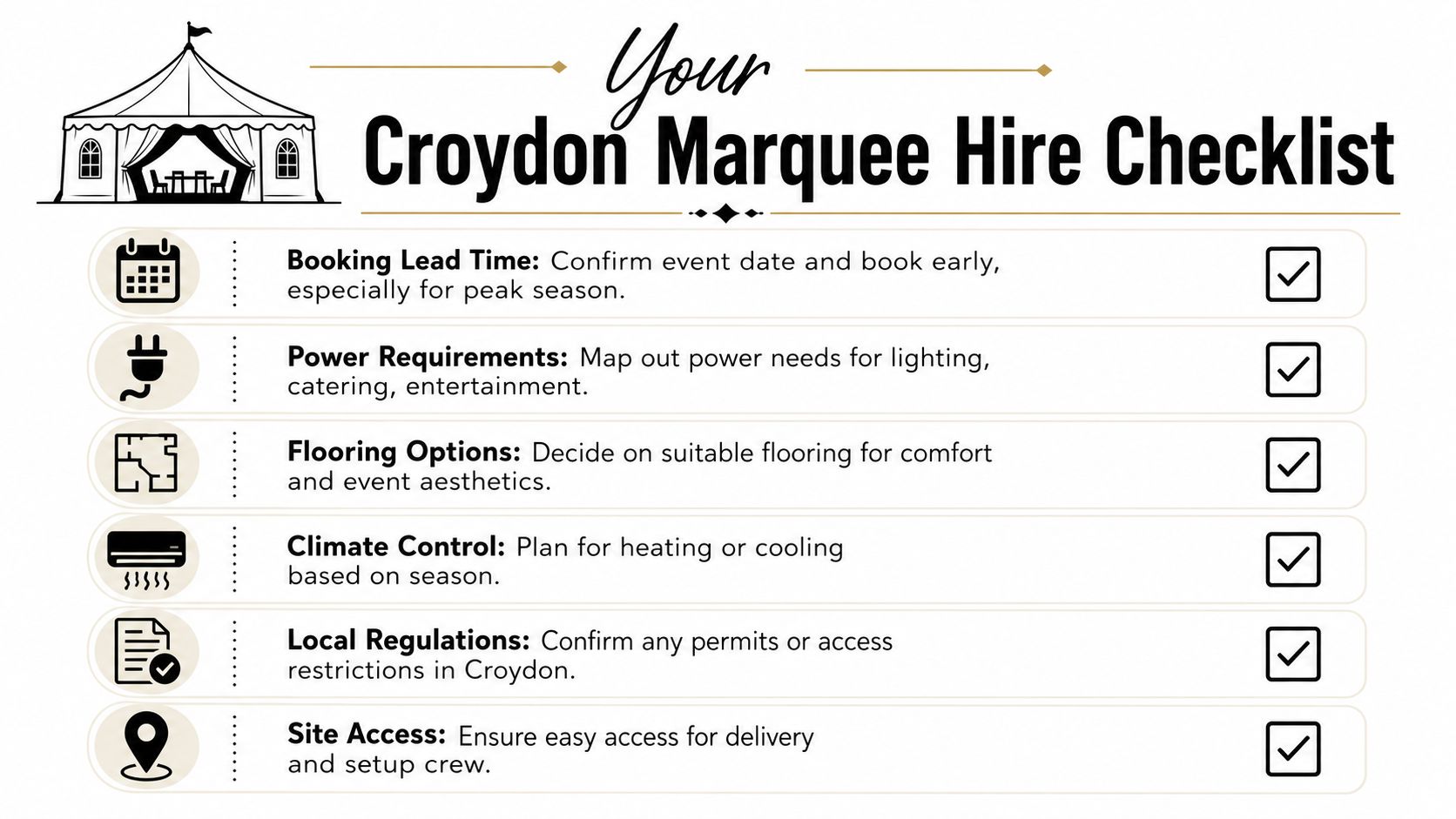
Before you confirm the hire of a marquee, make sure you've pinned down these decisions:
- Date and purpose: Wedding, party, corporate event, school function or community use.
- Guest format: Seated dining, standing reception, mixed use or all-day schedule.
- Site realities: Ground condition, access, nearby obstacles and supplier routes.
- Comfort items: Flooring, lighting, heating and weather protection.
- Operational details: Power, catering support, toilets and breakdown timing.
For a broader planning view beyond the marquee itself, this guide to mastering event planning for 2026 is useful for thinking through logistics that sit around the structure.
The main thing is not to leave the difficult questions until the last week. In Croydon and across Greater London, the cleanest events are usually the ones where site, layout and access were dealt with early.
If you're planning an event and want clear advice before committing, Premier Marquee Hire can help with a site survey, layout guidance and a no-obligation quote based on your actual space rather than guesswork.
Sorry, the comment form is closed at this time.