

17 Jun Your 2026 Guide to Hire Marquee for Wedding in London &
You're probably at the stage where a marquee wedding feels like the perfect answer. You want more freedom than a fixed venue allows, you like the idea of celebrating at home or on private land, and you don't want your day squeezed into someone else's package. That instinct makes sense. A marquee can give you a wedding that feels personal from the first guest arrival to the last dance.
Around Croydon, Purley, Sanderstead, Sutton and out towards Wimbledon or Bromley, I often find couples are not short of ideas. What they need is clarity. Hiring a marquee for a wedding isn't just about choosing a tent shape and a few fairy lights. It's about creating a working venue on a piece of land that may or may not be ready for one.
That sounds more daunting than it needs to be, but it's better to know it early. Once you understand the practical side, the planning becomes much easier, and the right decisions become obvious.
Is a Marquee Wedding Right for You
A marquee wedding suits couples who want control, flexibility and a setting that doesn't feel off the shelf. It works especially well if you're using a family garden, a private field, or a property where the view and atmosphere matter as much as the ceremony itself.
What catches people out is the assumption that marquee hire is the same as venue hire. It isn't. A venue already has floors, toilets, power, lighting, access routes, staff areas and weather protection built in. A marquee gives you the framework, then the rest has to be planned properly around it.
What couples love about marquee weddings
The appeal is easy to understand:
- You set the tone: Formal black-tie dinner, relaxed garden party, mixed cultural celebration, Mehndi followed by wedding breakfast, all of it can be shaped around your day.
- You control the layout: Dining, bar, lounge area, dance floor and catering space can be arranged around how you want guests to move.
- You're not tied to one venue style: A clearspan marquee can feel elegant, minimal, rustic or contemporary depending on furniture, lighting and finishes.
If you're still exploring styles, Battle Abbey Weddings' tent guide is a useful read because it helps couples compare marquee options in a practical way rather than treating every structure as interchangeable.
Where the real decision sits
The key question isn't whether a marquee looks beautiful. It usually does. The better question is whether your site can support the wedding you have in mind, and whether the full setup still represents good value once everything required is included.
Practical rule: Compare a marquee wedding against an all-in venue using a full checklist, not just the headline hire figure, because essentials such as site levelling, flooring, power, lighting, heating, toilets and wet-weather contingency can push the total investment higher than couples first expect, as noted in this UK marquee wedding guidance.
That doesn't mean a marquee is the wrong choice. It means it's the right choice when you want a bespoke setting and you're prepared to plan it as a temporary venue, not just a temporary cover.
When a marquee is usually a strong fit
A marquee tends to work well when:
- The location matters to you: Family home, meaningful garden, private estate or open land.
- You want a longer setup window: Styling and supplier coordination often need a bit more breathing room than a standard venue turnover.
- Your guest experience needs tailoring: Mixed age groups, cultural ceremonies, informal evening flow, or separate zones for different parts of the day.
If you're hiring a marquee for a wedding in London or the Home Counties, that honesty at the start saves stress later. Romance is part of the appeal. Infrastructure is what makes the day run smoothly.
First Steps Assessing Your Site and Guest List
The first decisions are not about drapes or chair colours. They're about how many people are coming and what the land can realistically take.
A wedding for day guests sitting down to eat needs a different footprint from an evening party where more people arrive later for drinks and dancing. If you only count chairs at tables, you'll often under-plan the space needed for circulation, a bar, service routes, musicians, gift tables and somewhere for people to gather without blocking the room.
Start with guest numbers, not marquee style
Split the list into practical groups:
- Day guests: These are the people who need seated dining space.
- Evening guests: These affect bar space, dance floor use and toilets more than table count.
- Suppliers working on site: Caterers, waiting staff, band members, DJs and coordinators need room to operate.
A couple in South Croydon might have a garden that looks generous until a catering tent, dance floor and toilet access route are added. A property in Wimbledon might have enough lawn area but awkward side access that changes what can be installed.
What to check on the site before anyone quotes
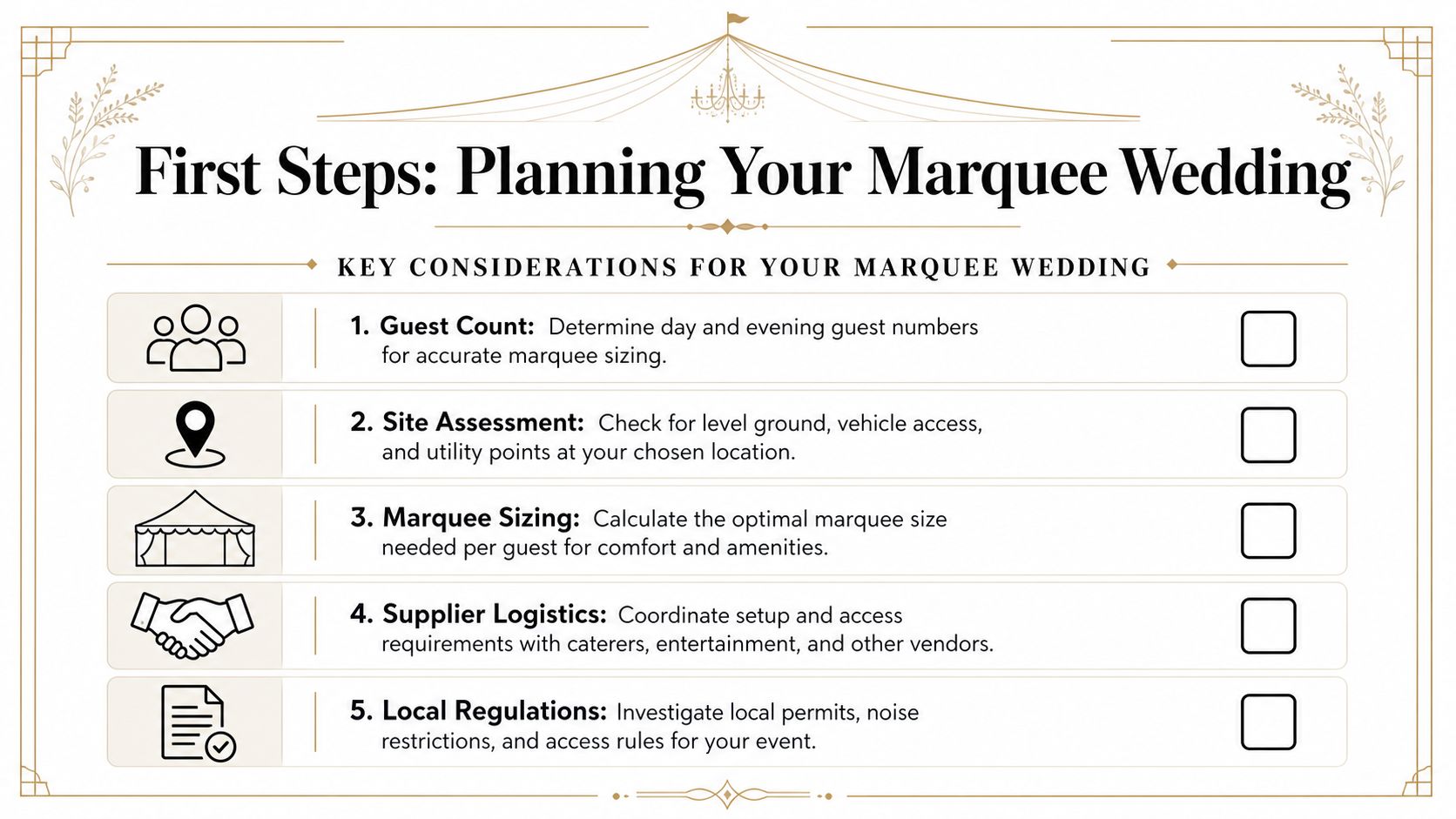
An early site survey is the proper starting point. UK industry guidance for marquee weddings says the process should lead to a written specification confirming ground suitability, delivery access, and provision for power, water and toilets before the marquee size is even confirmed, with catering and entertainment needs aligned at the same stage because mismatches are a common failure point in setup, as explained in this guide to planning a marquee wedding.
That matters because the plot rarely behaves the way couples expect from photographs alone.
The practical checks that matter in London and nearby boroughs
Walk the whole route from road to build area and pay attention to the parts that don't look glamorous:
- Access width: Can larger delivery vehicles get near the setup point, or is everything coming through a narrow side gate?
- Ground level: Slight slopes can be manageable, but they affect flooring, seating and entrance thresholds.
- Surface condition: Soft or uneven ground changes how the structure and floor need to be installed.
- Overhead obstacles: Trees, low branches, cables and nearby structures can limit height and placement.
- Underground services: You need to know where drains, irrigation, pipes or other buried services may sit.
- Utility reach: Water and power don't just need to exist. They need to be in the right place for the event layout.
A neat lawn in daylight can still be the wrong event site if vans can't reach it, guests can't cross it in wet weather, or the catering team has no workable service route.
A sensible local approach
For gardens in Bromley, Sutton, Shirley or Beckenham, do your own first pass with a tape measure and a phone camera. Measure gates, paths and pinch points. Note where guests would arrive, where toilets could go, and whether the band or DJ would need long cable runs.
After that, get a proper site visit. That's where issues become manageable rather than expensive. Most marquee problems aren't dramatic. They're small oversights that snowball on build day.
Choosing Your Marquee Size and Layout
The right marquee size comes from use, not guesswork. A wedding meal, dance floor, bar and lounge all compete for the same footprint, and the shape of the site can matter more than the raw square area. That's why couples hiring a marquee for a wedding in London often get better results by planning for flow first.
Fit and flow matter more than a big empty footprint
For properties in London and the South East, where compact gardens and restricted access are common, the useful approach is to focus on fit and flow rather than imagining a large open field. UK-facing industry guidance notes that this has driven demand for modular, flexible structures such as clearspan marquees, which can be adapted in width and length and suit smaller urban sites and winter weddings, as discussed in this London and South East marquee planning video.
A clearspan structure is often the practical choice because it avoids internal poles. That gives you more freedom for long dining runs, a central dance floor, or a linked arrangement where one section handles dining and another takes the bar and evening entertainment.
Think in zones
Instead of asking, “What marquee fits our guest count?”, ask, “What spaces does our wedding need?”
A useful layout usually includes:
- Dining area: Enough room for tables, chairs and service circulation.
- Dance floor: Positioned so it feels connected to the room, not tucked away.
- Bar space: Easy to reach without creating a bottleneck.
- Catering support area: Separate enough to keep service smooth.
- Arrival and transition space: Important if guests are moving between ceremony, drinks and dinner.
If you want a deeper primer on working out footprint and guest comfort, this guide on marquee hire sizes explained is a useful starting point.
Marquee size guide by guest number
| Guest Count | Activity | Recommended Marquee Size (Approx.) |
|---|---|---|
| Smaller guest list | Seated dining only | Compact footprint with dining-focused layout |
| Smaller guest list | Dining plus dance floor | Medium footprint with separate activity zone |
| Mid-sized guest list | Dining, bar and dancing | Larger clearspan layout or linked sections |
| Larger guest list | Full wedding setup with catering support | Wide-span or modular linked structure |
| Larger evening attendance | Dining for day guests plus evening party flow | Layout designed around transition space and circulation |
This table is deliberately broad because a flat garden in Purley behaves differently from a narrower plot in Sutton or a tucked-away site in Wimbledon. The same guest list can need a different layout depending on access, ground conditions and whether the catering operation sits inside the main structure or beside it.
What usually works and what doesn't
What usually works:
- Linked spaces: Dining in one section, party atmosphere in another.
- Rectangular planning: Easier for tables, walkways and service.
- Bar near but not on the main route: Guests can reach it without blocking movement.
What doesn't:
- Overfilling the footprint: It makes the day feel cramped even if the marquee technically “fits”.
- Ignoring evening flow: Once chairs shift and more guests arrive, pressure points show up fast.
- Treating all gardens the same: Urban plots need more careful planning than open field sites.
A well-sized marquee feels calm. Guests find their tables, staff move easily, and the room still works once the music starts.
Budgeting for Your Complete Marquee Wedding
Budget problems usually start with one line item. A couple asks for the marquee price, sees a figure that feels manageable, and assumes the hard part is done. It isn't. The structure is only one part of the cost of making a temporary venue perform like a proper wedding space.
Bridebook reports that UK couples spend an average of £4,633 on marquee hire alone, while most spend £3,000 to £15,000+ depending on size, style and location, and a fully set-up marquee wedding typically reaches £15,000 to £35,000+ once extras are included. The same guide gives practical guest-based benchmarks of £5,000 to £10,000 for 80 to 100 guests and £8,000 to £15,000+ for 120+ guests, specifically for the marquee and core infrastructure, in this Bridebook marquee wedding cost guide.
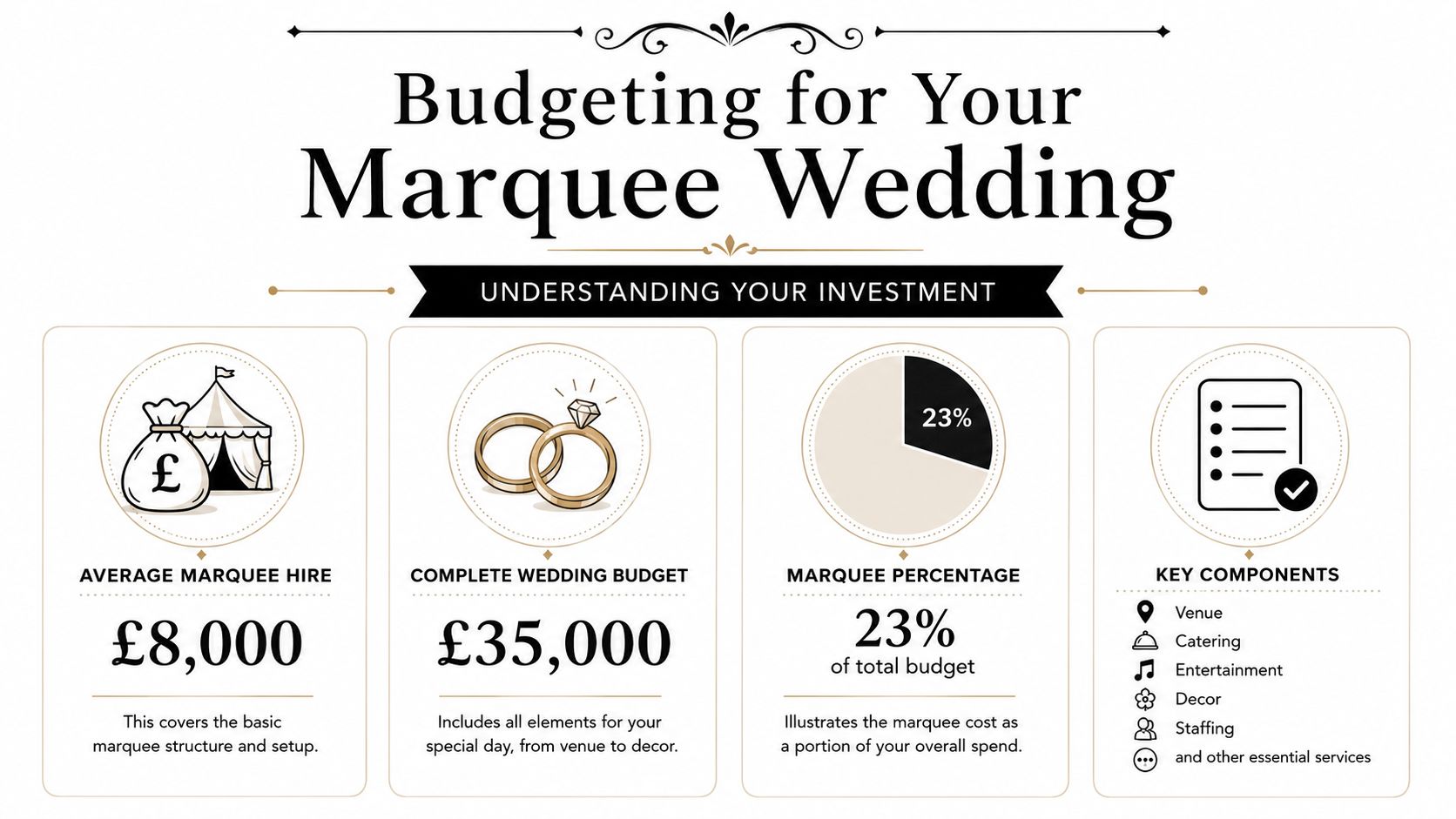
Those numbers are useful because they move the conversation away from “How much is the tent?” and towards “What does the venue need to function properly?”
Costs couples often miss
The extras aren't gimmicks. They're the elements that make the day comfortable and workable.
- Flooring: Matting may suit some access routes, but dining areas often need a more solid base. If the site is uneven, the flooring choice becomes even more important.
- Lighting: You'll need practical lighting as well as decorative lighting. Guests, staff and suppliers all rely on it.
- Heating: UK evenings can turn cool quickly, even outside winter.
- Power: Household supply isn't always enough for catering equipment, entertainment and lighting working together.
- Toilets: If the property can't comfortably support guest numbers indoors, luxury toilet hire becomes part of the venue build.
- Furniture: Chairs, tables, bar units, lounge pieces and service furniture all affect both budget and space.
- Insurance and compliance: Often overlooked until late in the planning process.
A better way to budget
Treat the marquee wedding as a package of systems rather than a single hire item. That means asking for a costed list that covers:
| Budget area | Why it matters |
|---|---|
| Structure and installation | The shell of the venue |
| Flooring and interior finish | Comfort, appearance and weather resilience |
| Utilities | Power, lighting, water and toilets |
| Guest furniture | Dining, lounge, bar and service needs |
| Operational support | Delivery access, setup time, breakdown and contingency |
If you're bringing in bands, caterers, mobile bars or specialist equipment, it also helps to check whether appliances and electrical items need testing paperwork. For couples trying to understand that side of planning, this guide to London PAT testing rates gives a practical overview of what suppliers may reference when discussing compliance.
Budget mindset: The most accurate marquee budget is the one that includes the boring items early. They're usually the things you can't do without.
A clear quote should let you see what's included, what's optional and what depends on the site. That's what keeps the wedding budget under control.
Essential Logistics Permissions Power and Weatherproofing
A marquee wedding runs well when the hidden systems are sorted early. Guests notice the flowers and the lighting scheme. They definitely notice if the toilets are too far away, the floor feels unstable, or the power struggles once the band starts.
Power is rarely as simple as an outdoor socket
A domestic property can sometimes support parts of the event, but weddings quickly add up. Catering equipment, refrigeration, band gear, DJ kit, lighting, bar equipment and heating all place demands on the setup. If power planning is loose, you end up with cables in the wrong places or not enough capacity where it matters.
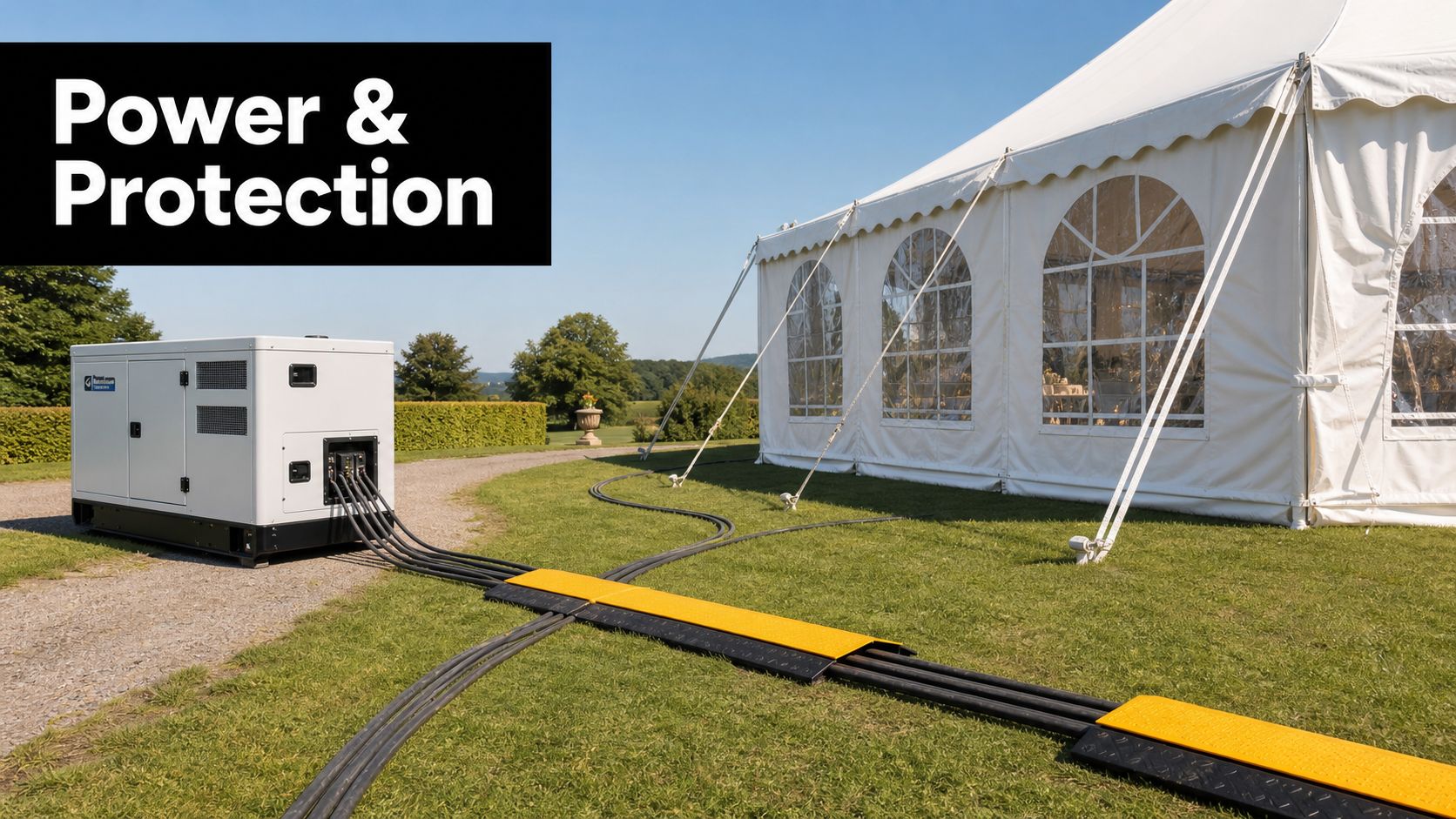
The practical questions are straightforward:
- What equipment is being powered
- Where each supplier needs connection points
- Whether the house supply is suitable
- Whether a generator is the safer option
If you're comparing flooring systems at the same time, this guide on marquee flooring options is worth reading because flooring and weather resilience are closely tied.
Permissions and neighbour considerations
For many private garden weddings, formal planning permission isn't the first issue couples expect it to be. What matters more in practice is the wider event setup. Think access, local restrictions, delivery times, noise, and whether roads or entrances create any pressure on neighbours.
A sensible local check includes:
- Property rules: Especially if the home sits within managed grounds or has access restrictions.
- Neighbour impact: Music finish times, lighting spill and vehicle movement.
- Supplier access timings: Early morning deliveries in tighter residential roads can be sensitive.
In built-up parts of Croydon, Sutton and Streatham, neighbour management often matters as much as the marquee itself. A polite conversation in advance solves a surprising amount.
Weatherproofing is not optional in the UK
Modern marquees can perform very well in poor weather, but only if the whole setup is designed for it. Rain doesn't just affect the roof. It affects entrances, walkways, catering access, guest shoes, furniture stability and how warm the room feels after sunset.
Don't judge weather protection by the canopy alone. The weak points are usually the ground, the entrances and the service routes.
Good weatherproofing usually means proper anchoring, sensible entrance design, suitable flooring, and heating that matches the season and guest comfort expectations. It is experienced planning that makes the difference between “outdoor wedding charm” and guests queueing around muddy edges trying to keep dry.
Styling Your Space Furniture Lighting and Extras
Once the practical build is right, the marquee becomes the part couples usually fall in love with. A well-planned wedding marquee doesn't feel temporary. It feels intentional. That comes from furniture, lighting and the smaller extras that shape the mood as guests move through the day.
Here's a look at the kind of atmosphere a finished event setup can create:
Furniture sets the tone before décor does
Tables and chairs do more than fill a room. They tell guests what kind of wedding they're attending. Chiavari chairs lean classic and polished. Folding chairs can work for a simpler, lighter-touch setup. Rustic bench seating changes the feel again and suits relaxed dining layouts or mixed outdoor spaces.
For couples who want to think carefully about material choices for outdoor events, this piece on how to choose sustainable garden furniture is a helpful reference point when style and long-term practicality both matter.
A few combinations that tend to work well:
- Classic wedding look: Round guest tables, Chiavari chairs, soft draping and warm white lighting.
- Relaxed garden celebration: Wooden tables, simpler chairs, festoon-style lighting and a looser bar layout.
- Evening-led party setup: Strong dance floor presence, bar feature, lounge corners and layered lighting.
Lighting does most of the atmosphere work
During the day, the marquee carries itself. In the evening, lighting takes over. That might mean chandeliers for a formal reception, fairy lights for softness overhead, or uplighting that shifts the room from meal to party without changing the structure itself.
A useful approach is to layer it:
- Base lighting: Enough for guests and staff to move comfortably.
- Feature lighting: Chandeliers, canopy lighting, statement fittings.
- Accent lighting: Bar fronts, cake table, entrance points, walkway lighting.
Premier Marquee Hire also supplies complementary items such as furniture, mobile bar units, lighting, a Magic Mirror photo booth and giant LOVE letters, which means couples can plan the main structure and selected extras through one provider where that suits the event.
For a quick visual sense of how styling and structure come together, this video is useful:
Extras should support the flow, not clutter it
The best marquee styling choices don't just photograph well. They make the room feel natural to use. A mobile bar should sit where guests gather, not where staff need to pass constantly. A photo booth should feel easy to find without pulling everyone away from the dance floor. LOVE letters can frame a focal point, but they need enough surrounding space.
Design cue: If an extra makes movement awkward, it isn't an upgrade. It's an obstacle.
That's why the strongest marquee weddings usually feel edited rather than overloaded. The structure gives you freedom. Good styling gives that freedom direction.
Your Vendor Checklist Questions to Ask a Marquee Company
Choosing a marquee company gets much easier when you stop asking general questions and start asking operational ones. You're not only hiring a structure. You're hiring judgement, planning discipline and the ability to make a temporary venue work on a real site.
Questions worth asking early
Use these as a proper filter when speaking to suppliers:
- Do you offer a site visit before finalising the specification? If the answer is vague, that's a warning sign.
- Will you confirm access, power, water and toilet planning in writing? Verbal reassurance is not enough.
- Can you help with layout drawings or a visual plan? A layout often exposes issues before build day.
- What happens if the weather turns during installation? You want a real contingency process, not confidence alone.
- Is pricing transparent about delivery, setup, collection and optional extras? Avoidable surprises often creep in otherwise.
- Have you worked on tight-access London or South London residential sites before? A crew used to open field installs may struggle in narrower borough settings.
If you want a broader comparison framework, this guide on how to assess marquee hire companies helps couples look beyond brochure photos.
What good answers sound like
A solid supplier usually talks clearly about process. They'll ask sensible questions about guest numbers, timings, caterers, entertainment and the land itself. They won't rush straight to a generic size recommendation.
They should also be comfortable saying when something won't work as planned. That honesty is valuable. It often prevents awkward layouts, budget creep and installation-day compromises.
The local advantage
For weddings in Croydon and surrounding boroughs, local knowledge matters more than many couples expect. Side access in Sutton, sloping gardens in Purley, compact plots in Wimbledon, parking pressure in Bromley, all of these affect what's practical. A company familiar with this sort of work is usually quicker to spot the actual constraints.
The right marquee company should leave you feeling calmer after the first conversation, not more confused. If they can explain the site, the layout, the infrastructure and the budget in plain terms, you're probably talking to the right people.
If you're planning to hire a marquee for a wedding in Croydon, London or the surrounding counties, Premier Marquee Hire can help you assess the site, talk through layout options and arrange a quotation without pressure. A proper conversation early on usually saves time, cost and stress later.
Sorry, the comment form is closed at this time.