

18 Jun Decorating Marquees for Weddings: A Premier London Guide
You've booked the marquee. The date is in the diary. Then you stand in the garden, or on a private plot, or beside a venue lawn in Croydon, Bromley or Sutton, and suddenly the excitement is mixed with one big question. How do you turn an empty structure into a wedding that feels warm, elegant and personal?
That moment is completely normal. A marquee starts out as open space, which is exactly why so many couples choose one. You're not inheriting somebody else's carpets, chandeliers, wall colours or layout. You're building the room around the way you want the day to feel.
Decorating marquees for weddings works best when you treat it as a sequence of good decisions, not one huge styling challenge. Start with the shape of the day. Think about where guests arrive, where they pause for a drink, where they sit, where they dance, and what the room should feel like when daylight fades. Once those pieces are right, décor stops being random and starts doing a job.
Around South London, that practical approach matters. Gardens vary. Access can be tight. Weather changes quickly. Evening temperatures can dip even after a bright day. Good marquee décor doesn't ignore those realities. It works with them.
Your Marquee Wedding A Blank Canvas of Opportunity
A marquee is often described as a blank canvas, but that phrase can make couples feel they need to invent everything from scratch. In practice, the opposite is true. The strongest marquee weddings usually come from a few clear ideas, handled well.
The first thing to know is that an empty marquee isn't unfinished. It's flexible. You can shape the space around a formal seated meal, a relaxed mixed-layout reception, or a lively party with a proper dance floor and soft lounge corners. That freedom is where the appeal sits.
What catches people out is the temptation to decorate every surface merely because the structure looks open at first. That rarely creates the best result. Marquees look more polished when key features are chosen with intent and the rest of the space is allowed to breathe.
What couples often need most
In our experience across Croydon and the surrounding boroughs, couples usually want four things from their marquee décor:
- A clear sense of style that doesn't feel copied from a hotel or barn venue
- Comfort in changing weather, especially later in the day
- A layout that feels natural rather than cramped or awkward
- A finish that looks complete in photographs from day through to evening
Those goals can all work together. They don't compete unless the planning happens in the wrong order.
A marquee doesn't need more decoration than a fixed venue. It needs decoration that suits its scale, height and movement.
That's the key mindset. Once you stop trying to fill the room and start trying to shape it, decisions become far easier. Ceiling treatment, table styling, lighting, furniture and floral placement all become part of one picture instead of separate shopping lists.
The Foundation Site Layout and Guest Flow
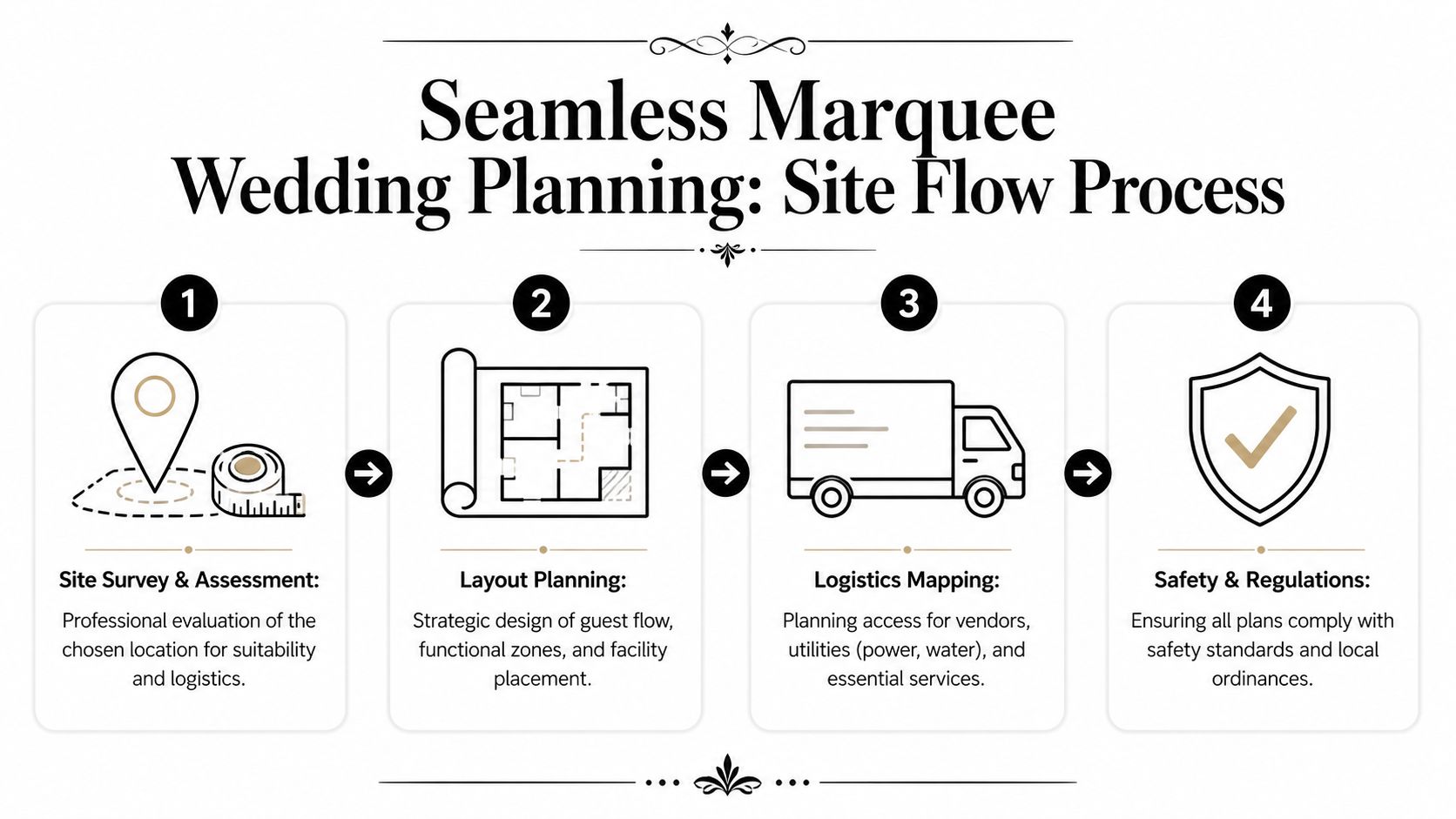
The best-looking marquee weddings are usually the ones where the practical work was done first. Before choosing centrepieces, lanterns or ceiling features, the space itself needs to be planned properly.
For UK marquee weddings, the most reliable workflow is to start with a measured floor plan and allocate room for circulation, dining, the dance floor, bar, catering and access routes before choosing décor, as noted in this guide to marquee wedding planning. That matters because décor is always limited by the usable footprint, not just the guest list.
Start with movement, not decoration
A marquee wedding should feel easy to move through. Guests shouldn't have to squeeze past chairs to reach the bar. Staff shouldn't be forced through the dance floor to serve dinner. Toilets shouldn't feel like an afterthought hidden behind a decorative screen.
A sound layout usually answers these questions early:
- Where do guests arrive and gather first?
- Where do drinks service and dining happen?
- How does the room shift from meal to evening party?
- What routes do caterers, suppliers and staff need to keep clear?
If those answers are vague, decorating too early often makes the problems worse.
Zoning makes a marquee feel like a venue
One of the smartest things you can do is divide the marquee into clear zones. That doesn't mean building physical walls. It means using layout, furniture, lighting and styling to create purpose.
A typical wedding marquee might include:
- Dining space with the main guest tables and best visual focus
- Dance area with enough surrounding clearance to feel inviting
- Bar zone that draws people naturally without blocking circulation
- Lounge corner for older relatives, quiet conversations or a breather from the music
Décor's value becomes evident. Flooring changes can define one area from another. Lighting can pull attention to the dance floor. Softer seating and side tables can make a lounge area feel intentional rather than leftover.
Site conditions shape the styling
South London sites often come with their own quirks. A garden in Purley might have a slope. A back garden in South Croydon may have limited side access. A venue lawn in Bromley may have a strong visual backdrop on one side and practical service access on the other.
That's why the site survey matters so much. A good layout reflects what's possible on the ground. It also affects décor decisions such as where hanging installations can work best, where entrances need weather protection, and where statement pieces will be seen properly.
For couples comparing gardens and venue grounds, this guide to venues for marquee weddings is useful because it helps frame the practical questions before styling starts.
Practical rule: if a decorative idea narrows a key walkway or interrupts service flow, it's not improving the space. It's getting in the way.
That's why the strongest marquee interiors feel calm. Guests aren't analysing the floor plan, but they can feel when it works.
Defining Your Vision With Themes and Colours
Once the layout is settled, style choices get much easier. This is the point where couples often feel excited and overwhelmed at the same time. There are too many ideas online, and many of them look good in isolation but clash when combined inside one marquee.
The common mistake is to treat the marquee as an empty box that needs to be filled. That usually leads to too many colours, too many hanging elements and too many competing focal points. A better approach is maximum-impact, minimum-clutter styling.
Guidance on marquee décor regularly points out the risk of visual overload and recommends a more restrained approach that protects circulation, sightlines and usability, especially in UK conditions, as discussed in these top tips for decorating a marquee wedding.

Choose a palette that works with the structure
Most marquees already give you a light, neutral shell. That's useful. It means you don't need to fight the room.
In practice, the cleanest schemes tend to use:
- One base tone for linens, draping or furniture styling
- One supporting colour in florals, stationery or soft furnishings
- One statement layer such as candlelight, foliage, metallic detail or bold floral placement
That's enough to create depth without visual noise. If every table, pole, wall edge and ceiling section carries a different idea, the room starts to feel busy rather than luxurious.
Pick focal points that deserve the attention
A marquee rarely needs ten standout features. It usually needs two or three. Good focal points might include the top table backdrop, a statement hanging installation above the dining area, or a well-dressed entrance that sets the mood on arrival.
Here's the test we often use. If you remove a decorative item and nobody would miss it, it was probably filler.
A lot of couples also find it helpful to build atmosphere through small, repeatable details rather than oversized installations everywhere. For candle styling, mixed vessels and soft glow often work better than trying to dominate every surface. If you're exploring alternatives to standard candles, this event planning candle sand guide offers useful ideas for adding warm detail in a flexible way.
A marquee feels more expensive when the eye knows where to land.
That's why restraint matters. It isn't about doing less for the sake of it. It's about letting the right features carry the room.
Transforming the Space Draping Flooring and Lighting
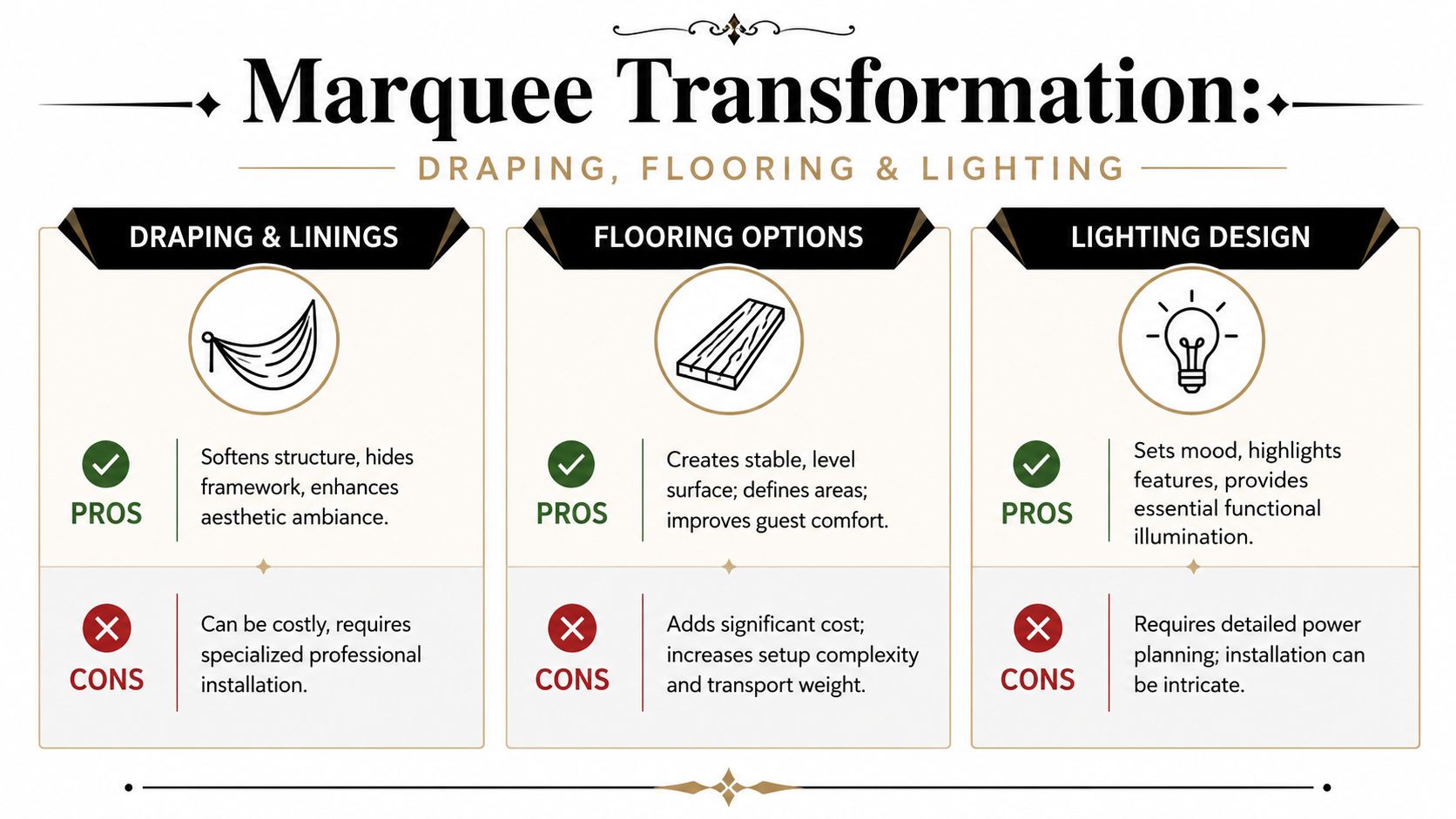
If you want the biggest visual shift inside a marquee, three elements do most of the work. Draping, flooring and lighting change how the structure feels at a fundamental level. They don't just decorate it. They shape the atmosphere.
Modern marquee styling treats the structure as a blank canvas by using height, suspended features, layered lighting and distinct zones for dining, dancing and lounging, as explained in this article on marquee decoration ideas and planning. That approach works especially well in the UK because the room needs to carry the celebration from daylight into evening smoothly.
Draping changes the character of the structure
Draping softens the interior immediately. It can hide framework, reduce the stark feel of plain sections and give the ceiling more movement. Some weddings suit a crisp, pleated finish. Others work better with a softer lining and minimal extra ornament.
The trade-off is simple. More fabric usually means a more dressed look, but it also adds cost, setup time and visual density. If the marquee already has attractive lines or clear sections with a strong view, heavy draping can take away from the space.
For couples thinking through fabric options in more detail, these ideas on drapes for marquees help clarify where draping adds elegance and where it becomes too much.
Flooring affects comfort as much as style
Flooring is often underestimated because people think of it as a practical extra rather than part of the décor. Guests experience it from the moment they walk in. If the floor feels firm, level and well-finished, the whole event feels more settled.
A good floor also helps with:
- Chair stability during the meal
- Dancing comfort later on
- Cleaner visual zoning between uses
- Confidence in poor weather when the ground outside is damp
On uneven lawns or soft ground, proper flooring can be the difference between a polished reception and a space that never quite feels complete.
A quick visual comparison can help when weighing options and trade-offs:
Lighting is where the marquee comes alive
Lighting does more than make the room visible. It tells guests how to feel in the space. During the day, the marquee may rely on natural light and open sides or clear panels. By evening, the mood depends on what you've built into the plan.
The most effective setups layer different jobs together:
| Lighting layer | What it does | Where it helps |
|---|---|---|
| Ambient lighting | Creates warmth and overall mood | Dining areas, lounge zones |
| Functional lighting | Supports service and safe movement | Catering points, pathways, bar |
| Feature lighting | Adds drama and focus | Dance floor, top table, ceiling details |
Warm-white lighting is usually more flattering than harsh bright tones for weddings. In colder months, that softer light also makes the marquee feel cosier. Winter and shoulder-season celebrations benefit from décor choices that support comfort, so insulated linings, controlled entrances and a thoughtful lighting plan are often more useful than decorative effects that leave the space feeling draughty.
Furnishing and Styling the Finer Details
Once the shell of the marquee feels right, the room still needs human detail. With this detail, weddings stop looking like installed structures and start feeling welcoming. Furniture, table dressing and smaller styling choices do that work.
A marquee with only standard tables and rows of chairs can feel functional but flat. Add one lounge corner with sofas, a rug and low tables, and suddenly guests have somewhere to settle between courses or step away from the music. Add texture through linens and glassware, and the room starts to feel considered.
Build a room people can use naturally
One layout we often see working well is a dining area with a little formality, balanced by softer edges elsewhere. Round guest tables keep conversation easy. Longer tables can create a communal feel and a stronger visual line. A mixed layout often suits marquees because it stops the interior from feeling too uniform.
For cocktail-style marquee layouts, a practical benchmark is seating for about 70% of guests, which helps balance comfort with floor efficiency, according to this advice on how to decorate a wedding marquee. That principle is useful even for weddings that aren't fully cocktail-style, because it reminds couples that every seat occupies space that might also be needed for circulation, service and atmosphere.
Let the table styling echo the wider design
A well-styled table shouldn't feel disconnected from the rest of the marquee. If the ceiling is soft and romantic, the tables can carry that through with gentle candlelight, layered textiles and floral movement. If the room is cleaner and more modern, sharper lines and restrained place settings may suit it better.
Useful details to think about include:
- Linen texture that suits the formality of the event
- Centrepiece scale that leaves room for conversation
- Glassware and chargers that reflect evening lighting nicely
- Napkins and placemats that subtly integrate the colour scheme
For couples refining tabletop choices, this guide to selecting premium dining room accents is a helpful reference for how fabrics and place settings influence the overall finish.
Small comfort cues make a big difference
Some of the best styling choices aren't dramatic. They make the room easier to enjoy. A drinks ledge near the lounge area. A side table beside a sofa. A place for handbags and wraps that doesn't end up as a heap on a chair.
Chair styling is similar. If the rest of the room is quite soft and dressed, plain seating can look unfinished. In other settings, adding covers or tied details can make the dining space feel far more cohesive. Couples looking at those options can compare styles through this guide to chair covers for wedding.
The finer details work best when guests notice the comfort before they notice the effort.
That's the difference between styling that photographs well and styling that also feels good in use.
Budgeting Logistics and Bringing It All Together
A common marquee mistake happens late in the process. The layout is agreed, the lighting is booked, then extra décor starts creeping in because the space still feels like a blank canvas on paper. By install week, the budget has stretched and the room is carrying more pieces than it needs.
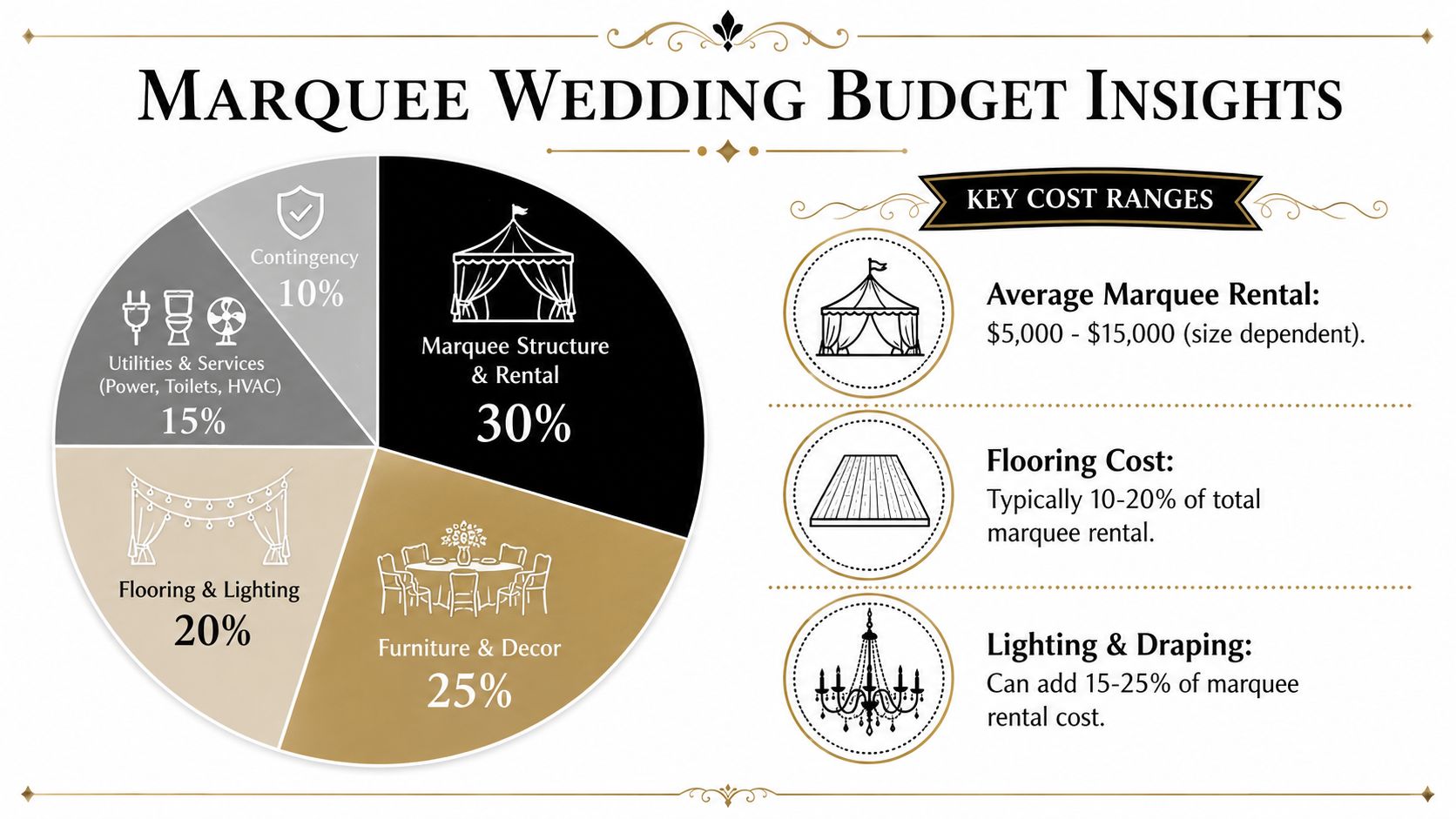
Marquee weddings reward clear decisions. The structure is only one line in the budget. Flooring, lighting, power, furniture, access, delivery timing and styling all affect the final total.
UK cost guides are useful for setting expectations. Bridebook reports an average marquee hire cost of £4,633, while a fully set-up marquee wedding often falls between £15,000 and £35,000+ once the added elements are included. It also notes that couples spend about £1,000 on non-DIY décor on average in its guide to how much a wedding marquee costs.
Where couples often overspend
In practice, overspending usually comes from layers that were never prioritised properly. We see it across Croydon and the surrounding London boroughs. A second lounge area that looks good on a mood board but rarely gets used. Extra draping added after the frame size is fixed. Decorative features at the entrance that need more support, more labour and more lighting than expected.
The simplest way to avoid that is to budget by impact, not by category alone.
| Priority level | What belongs here | Why it matters |
|---|---|---|
| Required | Layout, flooring, lighting, access planning | These determine whether the day runs comfortably |
| High impact | Main focal décor, dining finish, one well-placed lounge area | These shape the feel of the marquee and the photographs |
| Optional extras | Novelty props, duplicate statement pieces, low-visibility styling | These add cost faster than they add value |
That middle column is where smart marquee styling pays off. One strong focal point usually does more for the room than five smaller decorative moments scattered around it.
Spend where guests will feel it
Comfort and clarity are usually better investments than quantity. Solid flooring, a lighting plan that works from afternoon into evening, and furniture that fits the guest count properly will do more for the finish than lots of minor decorative add-ons.
The same rule applies to styling. A few larger floral arrangements, one dressed bar, or a clean backdrop behind the top table often gives a much better result than filling every corner. Maximum impact, minimum clutter is not a compromise. In a marquee, it is often the more polished choice.
Premier Marquee Hire provides marquees along with practical items such as flooring, furniture, lighting and CAD layouts, so couples can see how the room will function before anyone starts adding decorative layers.
Logistics are what make it look well planned
Even lovely décor can fall flat if the install is rushed. The order matters. Structure first, then flooring and power, then furniture, then dressing and florals, then the final adjustments. On private sites especially, access times, parking, noise limits and collection schedules need proper thought from the start.
A short planning checklist keeps things under control:
- How will each supplier get onto the site, and in what order?
- What needs power, and where will cables run?
- Which items need to be in place before stylists and florists arrive?
- What will the marquee feel like after dark, not just in daytime photos?
- Are you paying for décor in areas guests will barely use?
Answer those early and the whole scheme gets easier to manage. That is usually the difference between a marquee that feels calm, elegant and intentional, and one that feels overfilled despite a healthy budget.
Frequently Asked Questions About Marquee Decoration
Can we use real candles inside a wedding marquee
Usually, that depends on the marquee setup, the venue rules and the exact candle style. Open flames may be restricted in some settings, or they may need to be enclosed properly. LED candles are often the simpler option for long runs of tables, walkways or areas where fabric and guest movement are close by. Always check what's permitted before ordering décor around candlelight.
How far in advance should décor decisions be finalised
The earlier the better for the major items. Flooring, lighting, draping, furniture layout and power-related features shouldn't be left until the last minute because they affect installation planning. Smaller tabletop details can usually be refined later, but the structural décor choices need to be settled with enough time for drawings, access planning and supplier coordination.
Do we need a generator for decorative lighting
Sometimes yes, sometimes no. It depends on the venue supply, the lighting plan and what else is drawing power in the marquee. Decorative lighting by itself may be manageable on an existing supply in some settings, but once you add catering equipment, bar refrigeration, heating or entertainment, the load changes quickly. This is a planning question, not something to guess on the week of the wedding.
What décor works best for winter marquee weddings
The most successful winter styling choices are the ones that improve comfort as well as looks. Warm-white lighting, layered linings, sensible entrance treatment and fabrics that make the room feel soft all help. Wide open decorative entrances and overly sparse styling can look striking in photos but feel cold in practice.
How do we stop the marquee looking cluttered
Choose focal points first and let the rest of the space support them. Keep walkways clear. Don't fill every ceiling section or every table with a competing idea. If a decorative item doesn't improve atmosphere, comfort or flow, it probably doesn't need to be there.
Is a marquee wedding always the cheaper option
Not always. A marquee can offer more control, but it also means pricing up the structure and many of the elements that fixed venues already include. The benefit isn't only lower cost. It's the ability to shape the setting around your priorities.
If you're planning a wedding in Croydon, Greater London or the surrounding boroughs and want clear advice on decorating marquees for weddings, Premier Marquee Hire can help you map out the practical side as well as the finish. If you'd like to talk through layout, styling options or arrange a site visit, get in touch for a straightforward quote and guidance suited to your space.
Sorry, the comment form is closed at this time.