

25 Jun 10 Stunning Marquee Lighting Ideas for Events
You've chosen the marquee. The date's in the diary. The guest list is moving about a bit, as it always does, and now you're staring at a blank white or clear-span space wondering how on earth it turns into something that feels warm, polished, and memorable by the time guests arrive.
That's where lighting does the heavy lifting. Good marquee lighting ideas don't just make the space visible. They shape the room, soften the structure, direct attention, and change how people feel as the event moves from drinks to dinner to dancing. A marquee with flat, functional light can feel temporary. The same marquee with the right lighting feels intentional.
Around Croydon, Purley, Bromley and the wider London area, I see the same concern come up again and again. Clients know they want fairy lights, festoons, chandeliers, or something dramatic for the dance floor, but they're not always sure what belongs where, what works together, or what the power supply will cope with in a garden or outdoor venue. That's the practical side people often miss.
A useful starting point is to think in layers. One UK marquee lighting guide recommends planning around ambient, accent and task lighting, with a rough rule of thumb of Guests × 5.5W for total system load, and for a 100-guest marquee that same guide suggests around 550W overall, roughly 100m of festoon lighting, 8 uplights, and dedicated table or bar lighting to reach around 200 lux for dining and 75 lux for dancing, according to the UK marquee lighting planning guide from Marquee Vision. That gives you a sensible framework before you fall in love with individual fittings.
If you're still deciding on size and layout, the MODERN LYFE tent planning guide is also a helpful early read. Once the structure is mapped out, the lighting decisions become much easier.
1. Fairy Lights & Festoons The Timeless Classic
Fairy lights and festoons are still the most requested marquee lighting ideas for one simple reason. They work with almost any event style. A wedding reception in South Croydon, a birthday in a Purley garden, or a relaxed company summer party in Bromley can all carry this look without it feeling forced.
Fairy lights give you softness. Festoons give you shape. Used together, they stop a marquee ceiling from feeling like a big blank canopy and make the whole space feel settled from the moment guests walk in.
Where they work best
A fairy light canopy is strongest over the main guest area, especially above dining tables or lounge seating. Festoons are better when you want more visual structure, such as running across an entrance, around the perimeter, or over a bar zone.
The mistake is relying on them alone. They create atmosphere beautifully, but they don't always give enough practical light where people are reading place cards, finding handbags under tables, or queuing at the bar.
- For weddings: Warm white tones suit speeches, first dances and evening photos.
- For garden parties: Festoons help define edges of the event space and make the garden feel part of the venue.
- For mixed-age celebrations: This style feels welcoming rather than nightclub-bright, so older guests stay comfortable too.
If you want to see how this look comes together in a real package, Premier's marquee with lights options show the sort of combinations that tend to work well.
Practical rule: Fairy lights are excellent ambient lighting. They are not a full lighting plan on their own.
I usually advise clients to think of fairy lights as the mood-setter. Then add task lighting for key areas and one stronger visual feature elsewhere in the room so the design doesn't feel one-note.
2. Uplighting For Drama & Sophistication
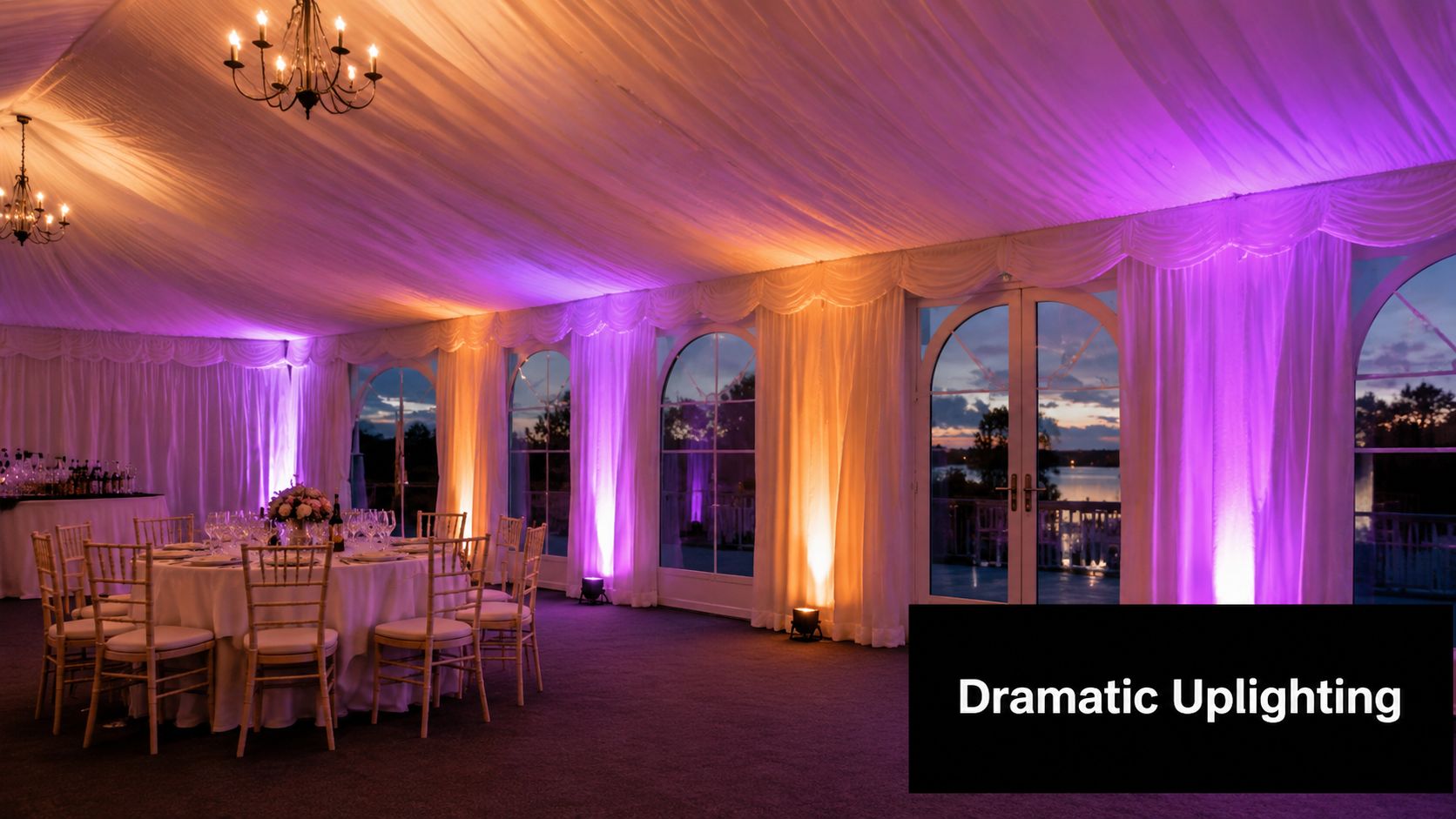
If you want the marquee to feel transformed rather than merely decorated, uplighting does that faster than almost anything else. Place fixtures at floor level, aim them upward, and the walls and ceiling suddenly gain depth, colour and presence.
That's why uplighting is such a favourite for evening receptions and corporate events. A plain white interior starts to feel suited to the occasion, whether that means a soft amber wash for a winter celebration or a more branded colour palette for a launch event.
What clients often get wrong
Too much saturated colour can make faces look odd in photographs and can flatten table styling. The better approach is usually restraint. Use colour on the walls and keep dining areas warmer and cleaner.
For professional setups, LED and control compatibility matter more than old lamp categories. Commercial market evidence discussed by Inside Lighting, drawing on U.S. DOE and ACEEE findings, points to LEDs as the dominant installed technology in many segments and highlights controls as the next major adoption gap. In practical marquee terms, that's why the stronger packages are usually dimmable, low-heat and control-ready rather than just decorative strings with no flexibility, as covered in this Inside Lighting report on LED adoption and controls.
That matters on site. A Croydon garden wedding might need soft light during dinner, then deeper colour around the perimeter once the band starts. If your fittings can dim and shift cleanly, the room changes with the event rather than fighting it.
For more on this style, Premier's guide to lighting for marquees gives a good sense of how these layers are used together.
3. Chandeliers The Statement Centrepiece
Some lighting disappears into the design. Chandeliers do the opposite. They tell guests, straight away, that the marquee isn't just a temporary shelter. It's the venue.
This is the right choice when you want a focal point in the apex, especially for weddings, black-tie dinners, charity events, or formal family celebrations. A chandelier pulls the eye upward and helps the marquee feel dressed even before florals and table styling are added.
Best use in real events
One chandelier in the centre works well in a smaller marquee where the dining layout sits under the main roof span. In larger structures, several smaller chandeliers often look better than one oversized fitting that leaves the rest of the space feeling underlit.
A few combinations work particularly well:
- Crystal-style chandeliers: Strong for classic weddings and formal receptions.
- Rustic wood or wrought-look chandeliers: Better suited to relaxed country styling or boho schemes.
- Chandelier plus fairy lights: Keeps the centre elegant while softening the wider ceiling.
The trade-off is practical. Chandeliers look luxurious, but they don't solve everything. They don't light pathways, bars, catering corners, or cloakroom areas. They also need proper rigging points and clear planning within the marquee frame, so they should be part of the design from the start, not a late add-on.
A chandelier should be the hero, not the whole cast.
In London and the surrounding boroughs, this style works especially well in clear-span marquees used for weddings where the couple wants a polished interior without making the room feel overly themed. If the budget allows for one striking centrepiece, chandeliers are often the cleanest way to create that effect.
4. Giant Marquee Letters Personal & Photogenic
Giant illuminated letters sit halfway between lighting and décor. That's exactly why they're so useful. They don't need to light the whole marquee to earn their place. They create a focal point, help with wayfinding, and give guests somewhere obvious to gather for photos.
For weddings, LOVE or initials are the usual choices. For corporate events, a company name or set of initials can anchor a drinks reception, stage backdrop, or product display area. In both cases, they perform best when they're positioned with purpose, not just squeezed into the nearest empty corner.
Where to place them
Near the dance floor works well if you want them in the background of evening photos. Close to the entrance can also work, especially when the event flows straight into the main marquee and you want a strong first impression.
What doesn't work is blocking service routes, emergency exits, or squeezing letters behind tables where no one can properly see them. They need breathing room.
A few dependable placements are:
- By the dance floor: Best for weddings and evening parties.
- At the marquee entrance: Good for arrival photos and branding.
- Near a feature wall or photo booth: Creates a dedicated social area.
- Outside under cover: Effective if you want the feature visible before guests step inside.
In a family celebration in Croydon or a wedding in Wimbledon, giant letters often become the part of the setup people remember most in pictures. That's their strength. They're not subtle, and they're not supposed to be.
The practical point is to treat them as one layer only. They work best when the surrounding area is still lit properly, so the feature stands out without leaving guests in darkness around it.
5. Paper Lanterns Whimsical & Colourful
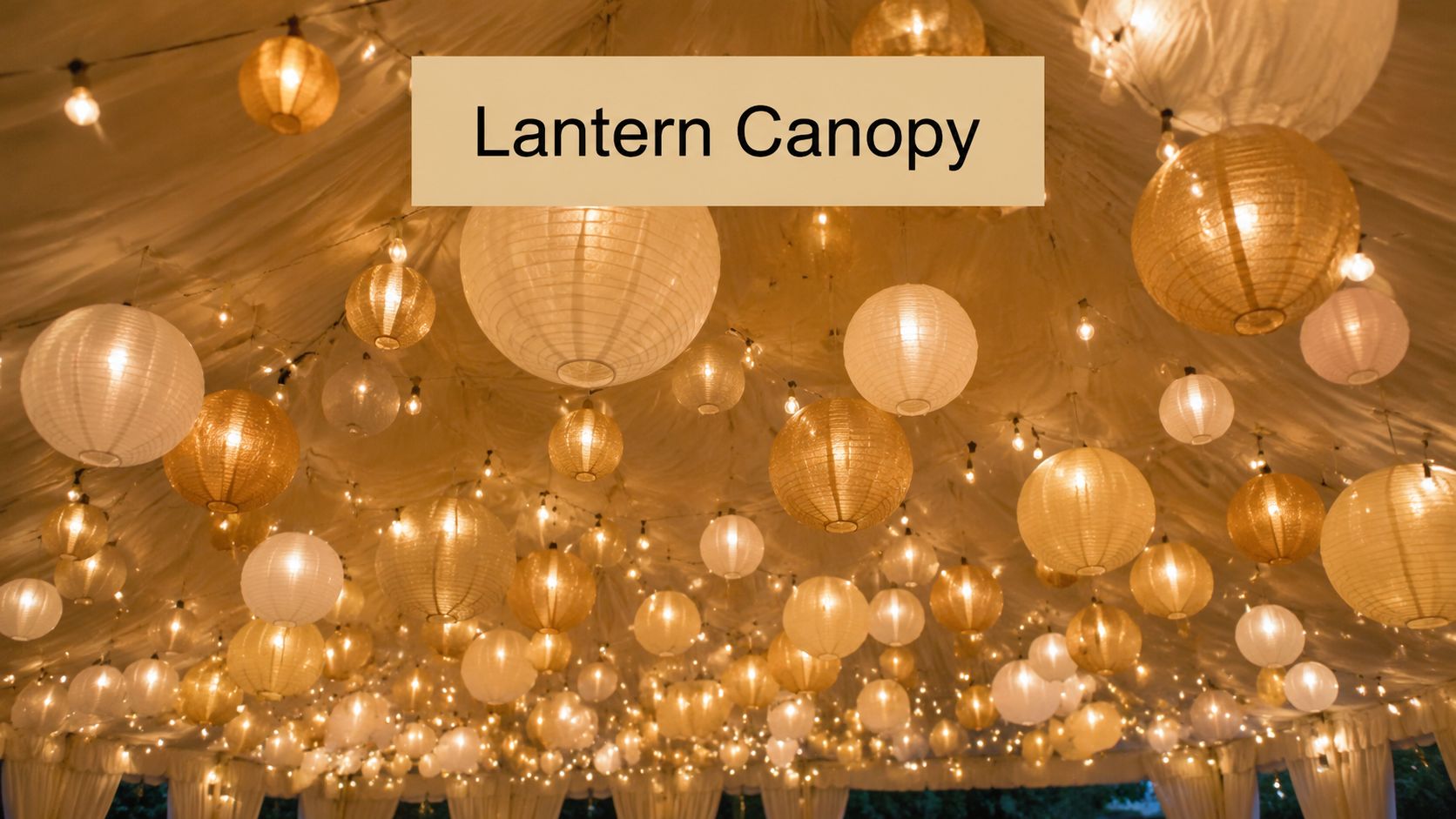
Paper lanterns bring softness in a different way from fairy lights. Instead of sparkle, they give volume. They fill the ceiling space and make a marquee feel layered, especially during daytime events that need to carry smoothly into the evening.
They're one of the better marquee lighting ideas for clients who want colour without something flashy. A run of white lanterns can feel elegant and airy. Mixed tones can make a Mehndi party or summer celebration feel joyful without tipping into clutter.
Why they suit daytime-to-evening events
Lanterns still look decorative before dusk. That matters. Some lighting only comes alive once it's dark, but lanterns contribute to the visual design all day.
They're especially effective in marquees used for:
- Pre-wedding celebrations: Colour palettes can match the wider décor without adding heavy fittings.
- Garden lunches that become evening parties: The ceiling still looks finished in daylight.
- Community and school events: They make large spaces feel less stark and more welcoming.
The caution is that paper lanterns need support from another light source. They're lovely overhead, but on their own they can leave the marquee feeling dim at table level. I'd nearly always pair them with discreet festoons, uplighting, or dedicated dining light.
Soft decorative lighting looks beautiful overhead. Guests still need to see their food, their seats and each other comfortably.
If you want a ceiling treatment that feels less formal than chandeliers and less expected than a standard fairy light canopy, lanterns are a strong middle ground. In the right colour scheme, they can make a marquee feel bespoke without becoming fussy.
6. Edison Bulbs & Pendant Lights Rustic Industrial Chic
Edison bulbs suit marquees that need character rather than polish. They're warm, exposed and a little more architectural, which is why they work so well over bars, long banquet tables and lounge corners.
This style is popular when clients want a less traditional wedding look, or when a corporate event needs to feel relaxed and contemporary instead of formal. In a clear-span marquee with timber flooring and a good bar build, pendant lighting can tie the whole room together.
Where they earn their keep
Over a bar, they create a natural gathering point. Over feasting tables, they give definition and intimacy. Hung at mixed heights above a lounge area, they can make one corner of a large marquee feel deliberate and cosy.
The downside is glare. If bulbs are hung too low or too close to seated guests, people end up staring into them. If there are too many, the look can drift from stylish into overly busy.
A better way to use them is selectively:
- Cluster pendants over a bar: Adds atmosphere where guests naturally stand and chat.
- Single pendants over key tables: Useful for sweetheart tables, cake displays or gift stations.
- Mix with softer background lighting: Prevents the whole marquee from feeling harsh.
A lot of clients first think about this look because they like signage and warmer decorative features.
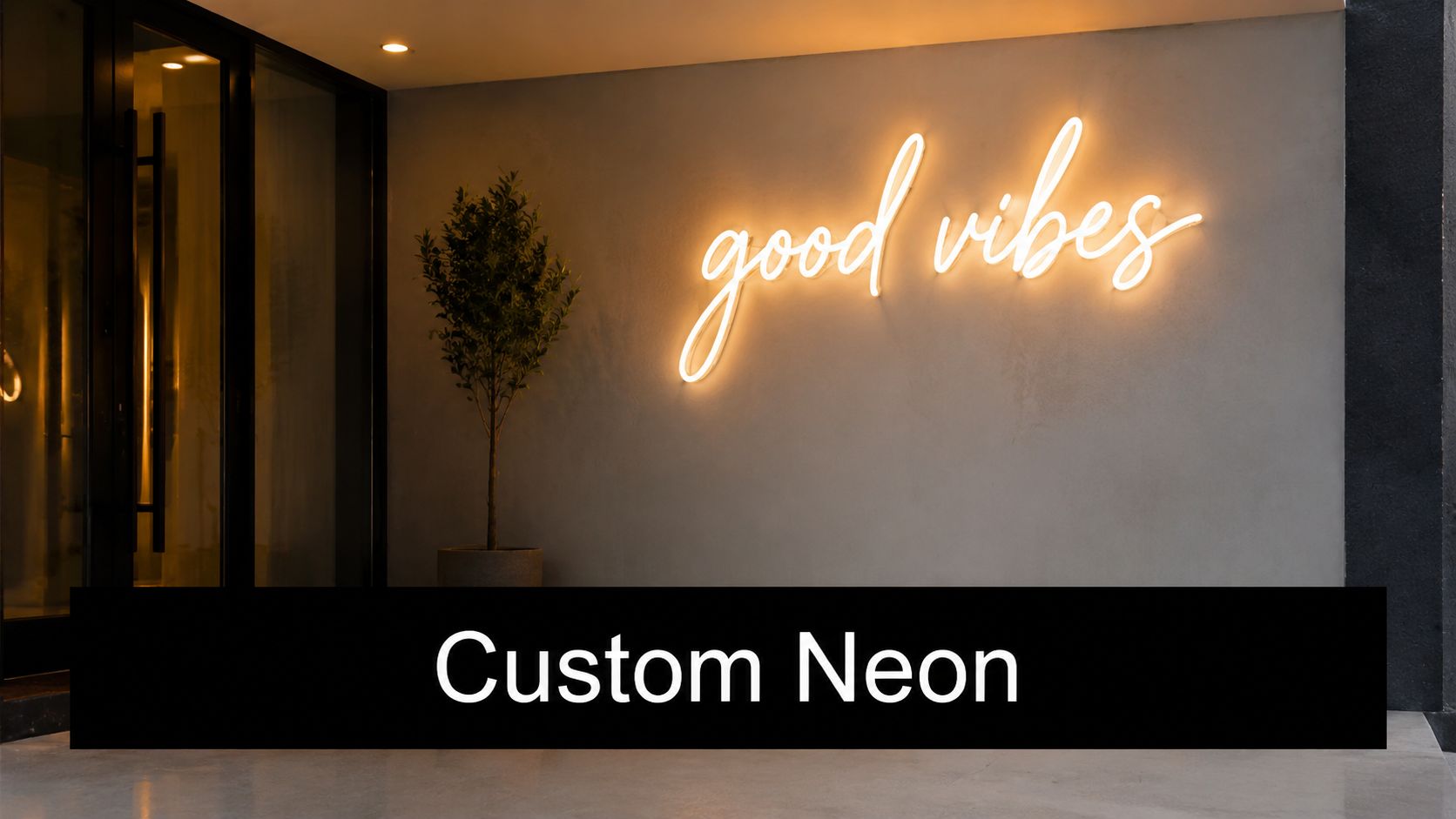
That wider mood works well. Edison bulbs, warm signage, timber details and softer perimeter lighting all sit happily together. In Surrey or South London garden events, this combination often feels more relaxed and modern than a fully traditional interior, especially for couples who want the marquee to feel styled but not overly formal.
7. Gobo Projection Personalised Patterns & Logos
When a client wants something that feels bespoke without filling the marquee with extra props, I often suggest a gobo. It's one of the cleanest ways to personalise a space because it uses light itself as the décor.
A monogram on the dance floor, a pattern washed across the roof lining, or a company logo behind a lectern can all look sharp if the positioning is right. It's subtle at first glance, but it gives the room a custom finish.
When gobo projection works best
It works best when there's a clear surface to receive the image. Marquee walls, dance floors, lining panels and stage backdrops are all good candidates. It's less effective on cluttered or heavily textured surfaces where the detail gets lost.
For wedding clients, initials or a custom motif are usually the safest option. For corporate events, logos and simple brand marks are often stronger than trying to project too much text.
If you're not familiar with the setup, Premier explains the basics clearly in this guide on what a gobo is.
A few common wins:
- Dance floor monogram: Elegant without taking up any physical space.
- Ceiling pattern: Adds texture to a plain marquee interior.
- Brand projection behind a stage: Looks cleaner than freestanding print in some layouts.
The trade-off is that projection needs darkness and accuracy. If the marquee is heavily lit from every angle, the effect weakens. If the projector angle is wrong, the image distorts.
Keep the design simple. The more complex the artwork, the less clean it usually looks on site.
For clients in Bromley and Croydon who want one personalised detail rather than lots of themed décor, gobos often give the best return in visual impact.
8. Dance Floor Lighting Setting the Party Scene
There comes a point in the evening when the lighting has to stop being polite. Dinner is done, the speeches are over, and guests need a clear signal that the event has shifted into party mode. That's the job of dance floor lighting.
Without it, even a lovely marquee can lose momentum. Guests stay seated because the room still feels like a dining space. Add focused party lighting and the energy changes almost immediately.
What actually works
Mirror balls are still effective. So are moving fixtures when they're used with restraint. The best setups support the music and make the dance floor feel active without blasting the entire marquee with constant colour.
For wedding receptions and milestone birthdays, a layered approach is usually strongest:
- Mirror ball with pin spots: Great for retro energy and first-dance moments.
- Coloured moving lights: Best once the dance floor is open and busy.
- A darker perimeter: Helps the dance area stand out as the focal point.
This is one area where controls matter. The broader smart-lighting market in Europe is still growing, with MarketsandMarkets projecting the European smart lighting market to rise from USD 2.02 billion in 2025 to USD 3.06 billion by 2030 at an 8.6% CAGR, as noted in its European smart lighting market forecast. In practical marquee work, that supports what event teams already prefer on site. Zoned lighting, app-based dimming and scene presets make it far easier to shift from ceremony to dining to dancing without rebuilding the room.
That flexibility matters at London events where one marquee may need to perform several jobs in the same day. Static light won't always keep up.
9. Pathway & Exterior Lighting The First Impression
Exterior lighting is easy to leave until late in the planning process. It shouldn't be. Guests experience the event before they step inside the marquee, and the route in tells them a lot about how the evening is going to feel.
A softly lit path from the house, gate, drive or car park creates anticipation. It also stops guests picking their way across a dark lawn in formal shoes, which is reason enough on its own.
Safety first, atmosphere second
The best pathway lighting does both jobs. It marks the route clearly, but it still feels part of the design. Festoons between posts, discreet spikes in planting, or gentle illumination on trees and entrance points can all work.
This matters even more later in the year. One practical issue many people miss is that marquee lighting can look lovely in inspiration photos but fail once winter power limits, outdoor cabling and installation constraints come into play. ETC guidance around temporary outdoor electrical work emphasises safe design, weatherproofing and suitable circuit protection, which is why pretty fittings alone aren't enough for darker-season events, as discussed in this ETC article on stage and event lighting design considerations.
That's very familiar on local jobs. In London gardens, available outdoor power isn't always where you want it, and access routes aren't always straightforward.
- Light the entrance clearly: Guests should instantly know where to go.
- Protect cables properly: External runs need planning, not last-minute improvising.
- Carry the style outside: If the marquee glows warmly inside, the approach should feel connected.
A well-lit approach makes the whole event feel more professional. It also reduces the usual last-minute panic when guests start arriving after dark.
10. Battery & Solar Lights For Ultimate Flexibility
Battery and solar lighting are no longer just backup options. In some setups, they're the smartest choice from the beginning. If the marquee sits a long way from a usable supply, if cable runs would be awkward, or if the garden layout needs a lighter touch, these fittings can solve problems quickly.
That's especially useful for community events, temporary hospitality spaces, and private gardens where you don't want cables trailing across every access point. They also help when you need to light smaller satellite zones away from the main marquee, such as an entrance arch, photo area, food station or smoking point.
Where flexible lighting helps most
Battery uplighters are handy when you want colour on marquee walls without tying everything to one fixed cable plan. Portable exterior lights can mark routes and garden features where mains access is poor. Solar can also have a place for softer decorative effects outside, particularly in summer events with good daylight beforehand.
Still, there are trade-offs. Battery and solar options are brilliant for flexibility, but they need realistic expectations. They're strongest when used strategically rather than asked to carry the entire event on their own.
A sensible use of this category looks like:
- Battery uplighters inside the marquee: Useful where cable-free positioning matters.
- Portable lights outside: Good for entrances, walkways and feature trees.
- Hybrid setups: Mains for core lighting, battery for detail zones and awkward corners.
In larger London and Surrey events, I'd usually treat battery and solar as part of a blended plan. They make installation cleaner and often faster, but the main guest areas still benefit from a properly designed central lighting system. Used that way, they add freedom without compromising the finish.
10-Point Marquee Lighting Comparison
| Style / Item | Implementation Complexity 🔄 | Resource Requirements ⚡ | Expected Outcomes 📊 | Ideal Use Cases ⭐ | Key Advantages 💡 |
|---|---|---|---|---|---|
| 1. Fairy Lights & Festoons | Low–Medium: simple drape/wrap techniques; straightforward install | Low power; many strands; weatherproof (IP44+) recommended | Warm, ambient canopy; high visual charm | Weddings, garden parties, intimate celebrations | Easy to scale, romantic ambience, low cost |
| 2. Uplighting | Medium: strategic placement and colour programming | Moderate power per unit; multiple fixtures required | Dramatic wash; transforms space and adds depth | Corporate events, evening receptions, themed parties | Strong brand/colour impact; programmable scenes |
| 3. Chandeliers | High: professional rigging and weight safety checks | High-quality fixtures; secure suspension points; dimmers | Elegant focal point; strong central illumination | Elegant weddings, gala dinners, high‑end events | Instant sophistication; excellent photo focal |
| 4. Giant Marquee Letters | Low: straightforward placement; needs standard mains | Standard mains outlet (13A per set); sturdy floor space | Bold, photogenic focal element; branding or personalization | Weddings, engagement parties, corporate branding | Highly photogenic, instantly recognisable, simple install |
| 5. Paper Lanterns | Low: hanging by clips or fishing line; group styling | Low power when battery LEDs used; many lightweight pieces | Whimsical, colourful canopy; soft diffuse glow | Festival‑style weddings, Mehndi, garden parties | Cost‑effective, colourful, flexible heights & grouping |
| 6. Edison Bulbs & Pendants | Medium: suspension points and grouped layouts | Low–moderate power (LED versions recommended) | Warm, vintage character; zoned illumination | Rustic/vintage weddings, bars, lounge areas | Strong aesthetic impact; efficient LED alternatives |
| 7. Gobo Projection | Medium–High: projector positioning and surface prep | Projector + custom gobo; advance ordering (2–3 weeks) | Crisp personalised logos/patterns; high professionalism | High‑end weddings, corporate branding, product launches | Powerful personalisation; strong brand reinforcement |
| 8. Dance Floor Lighting | Medium–High: rigging, DMX or simple T‑bar setups | Moving heads / scanners / mirror ball; power and control | Energetic, dynamic party atmosphere; motion & colour | Any event with evening dancing: weddings, parties | Creates party cue; synchronises with DJ/music |
| 9. Pathway & Exterior Lighting | Low–Medium: layout planning for safety and effect | Outdoor‑rated fixtures; longer cable runs or solar | Safer arrival routes; framed exterior views | All evening events, large gardens, fields | Enhances arrival experience; practical wayfinding |
| 10. Battery & Solar Lights | Low: simple placement; charging/backup planning | Batteries or solar panels; charge time and runtime | Flexible, cable‑free illumination; eco‑friendly option | Off‑grid locations, eco weddings, sensitive sites | Cable‑free, portable, avoids noisy generators |
Ready to Light Up Your Event in London?
The best marquee lighting ideas aren't just about choosing attractive fittings. They're about making the space work properly from the first guest arrival to the last song of the night. A well-lit marquee feels inviting, easy to move through, flattering in photographs and comfortable for every part of the event.
That's why lighting decisions should follow the event itself. A wedding needs romance during dinner and energy later on. A corporate event often needs a cleaner, more controlled look with branding built in. A family celebration may need a softer, broader approach that works for children, older relatives and evening dancing all in the same space.
In practice, the strongest results come from layering. Ambient light gives the marquee its base mood. Accent lighting adds character and focus. Task lighting solves the practical things guests notice immediately when it's missing, such as seeing the bar menu, finding their seat, or walking safely to the entrance. When those layers are balanced, the marquee doesn't just look good. It feels easy to be in.
That's also where local experience matters. Around Croydon and the wider London area, no two sites behave exactly the same way. A neat garden setup in Purley has different challenges from a corporate installation in Bromley or a wedding on a more open site in Wimbledon. Access can be tight. Power points can be nowhere near where you need them. Trees, fences, slopes and neighbouring properties all affect what's practical.
Clients often start with a single feature in mind, such as chandeliers, fairy lights or giant letters. There's nothing wrong with that. The trick is building the rest of the plan around it so the feature has proper support. A chandelier needs surrounding warmth. Fairy lights need useful light elsewhere. A dramatic dance floor needs the rest of the marquee to dim back at the right moment.
At Premier Marquee Hire, that's the part we help simplify. We don't just drop in a marquee and leave you to guess the rest. We help map the lighting around how your event will run, how your guests will move through the space, and what the site can realistically support. If needed, that can include a site survey and a layout that helps you picture where each element belongs before anything is installed.
If you're planning a wedding, party, Mehndi, corporate function or community event in Croydon, London or the surrounding counties, the right lighting can change everything. It can turn a plain structure into something atmospheric, polished and memorable without making the planning process harder than it needs to be.
If you're looking for practical advice on marquee lighting ideas for your event, speak to Premier Marquee Hire. We'll help you choose a lighting setup that suits your marquee, your guest numbers, your site and the atmosphere you want to create, with clear guidance and a pressure-free quote.
Sorry, the comment form is closed at this time.