

24 May Marquee Hire in Croydon: Your 2026 Local Guide
If you're looking at marquee hire in Croydon, you're probably at the stage where the event feels real but the logistics still feel fuzzy. You know the date, you've got a rough guest list, and you can already picture everyone in the garden, at a school field, or on business premises. What usually trips people up isn't the idea of hiring a marquee. It's working out what will fit, what the site will allow, and what the final setup needs beyond the structure itself.
That matters more in Croydon than many first-time clients expect. Local events often happen in spaces with awkward access, tight boundaries, slopes, patios, trees, sheds, neighbouring fences, or limited room for catering and toilets. A marquee can solve a venue problem brilliantly, but only if the layout is planned around the site rather than guessed from a product page.
Understanding Your Marquee Options in Croydon
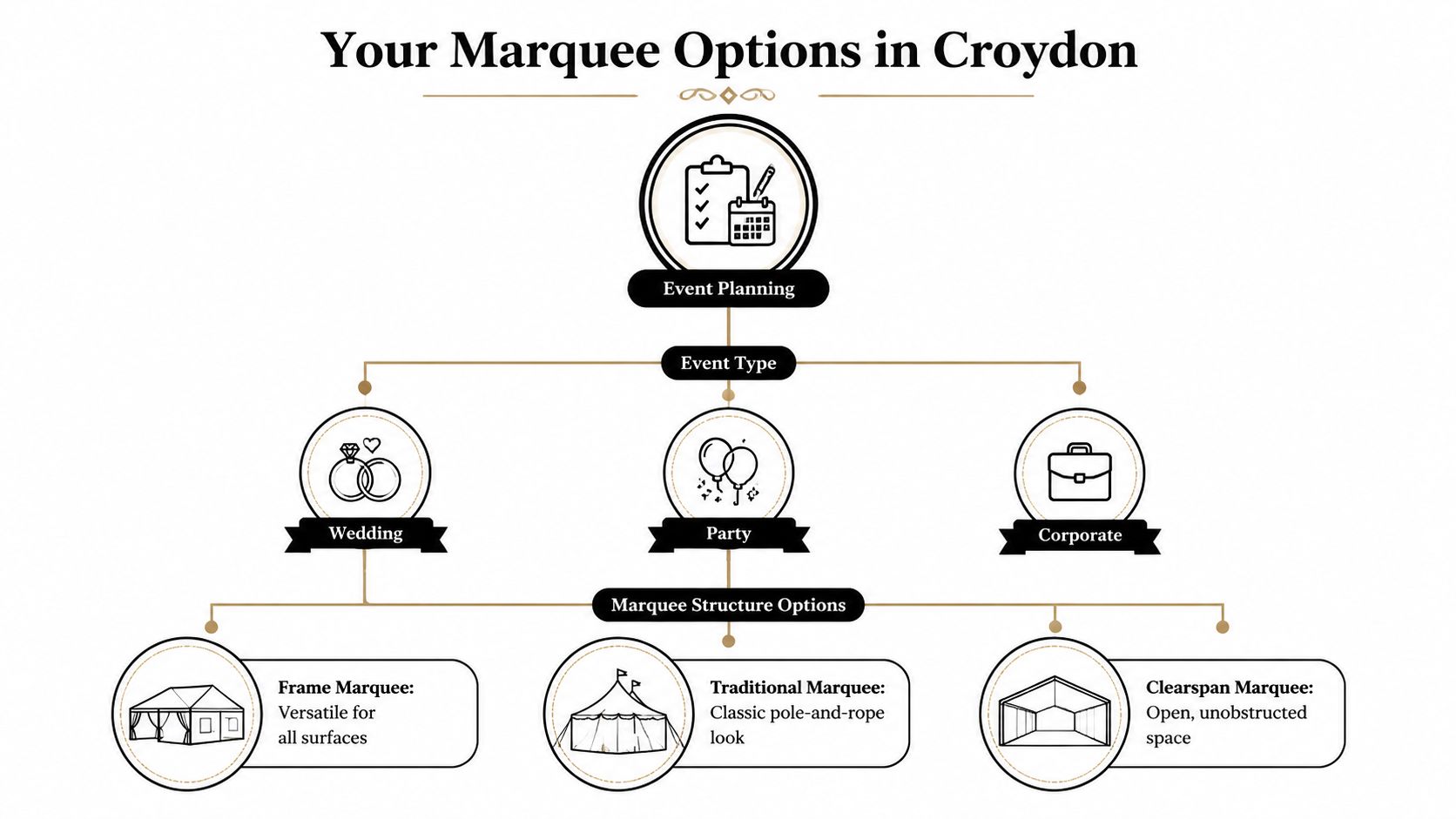
For most private and corporate events, the starting point is a frame marquee or clearspan marquee. In plain English, that means a structure without central poles running through the middle. You get an open internal space, which is far more practical for dining layouts, bars, dance floors, presentation areas, and mixed-use setups.
That open span is one reason marquee hire in Croydon works well for everything from garden birthdays to larger hospitality events. The local market is built around modular systems. Premier Marquee Hire lists 3m, 6m, 9m, 12m and 15m widths, with lengths extendable in 3m bays on its marquee hire range. That modularity is what makes these structures useful on real sites rather than just in brochures.
Why modular marquees suit Croydon properties
Think of a marquee as a set of building blocks rather than one fixed tent size. A narrow side return might suit a smaller walkway structure. A square lawn might take a balanced dining layout. A deeper garden may allow extra bays so you can split the space into entrance, seating, and dancing.
That's especially useful across Croydon, Purley, Sanderstead, Shirley, and nearby areas where outside space varies wildly from house to house.
A few practical examples:
- Small family gatherings often work best with compact widths that don't overwhelm the garden.
- Wedding receptions usually need enough width for tables, guest circulation, and a defined focal area.
- Corporate events often need cleaner zoning, such as reception space, branding area, catering, and seating.
- Community functions may prioritise cover, flow, and weather protection over decorative extras.
Practical rule: Don't choose the marquee by guest count alone. Choose it by guest count, furniture layout, and the actual shape of the site.
What clients usually mean when they say “marquee”
Most first-time clients aren't comparing structural systems. They're asking simpler questions. Will it look smart? Will it fit? Will it feel solid in bad weather? Will there be poles in the way? Can the inside feel like a proper venue rather than a temporary shelter?
In most cases, a clearspan structure is the answer because it gives you a cleaner footprint and more freedom with layout. That's one reason these systems are standard across the local market.
If you want a simple visual starting point before getting into layouts and accessories, this guide to an outdoor party tent for home events is useful for understanding the difference between basic shelter and a full event setup.
Choosing the Right Size Marquee for Your Guests
People usually ask for a marquee size too early. The better question is how you want the event to function. A standing drinks reception and a formal seated dinner may have the same guest list, but they need very different amounts of usable floor space.
A marquee that looks generous on paper can feel cramped once you add tables, chairs, serving space, a bar, a cake table, or a dance area. That's why sizing should start with event style first, then move to structure size.
Start with how guests will use the space
A standing event can use space far more efficiently than a fully seated one. The moment you add dining furniture, guest circulation matters more. People need room to pull chairs out, servers need routes through the space, and nobody wants to squeeze past table corners all evening.
For weddings and milestone birthdays, the common mistake is leaving no allowance for the things that make the night feel comfortable. Not luxury extras. Basics such as entrance space, buffet or catering access, and a clear route to the dance floor.
If you're between two sizes, the larger option usually gives you a better event. The smaller option usually gives you a tighter quote and a more awkward room.
Marquee size and guest capacity guide
The table below is a practical planning tool, not a final specification. It helps you build a shortlist before a proper site survey confirms what your Croydon location can take.
| Marquee Size (Width x Length) | Guests (Standing Reception) | Guests (Seated at Tables) |
|---|---|---|
| 3m x 6m | Small informal gathering | Small seated setup |
| 3m x 9m | Small drinks or buffet event | Limited seated layout |
| 6m x 6m | Comfortable for compact receptions | Suitable for smaller table plans |
| 6m x 9m | Good mid-size standing event | Often works for intimate dining events |
| 6m x 12m | Strong option for mixed use | Better for seated events needing flow |
| 9m x 9m | Useful for larger receptions | Allows more flexible dining layouts |
| 9m x 12m | Strong wedding and party format | Better for dining plus feature areas |
| 9m x 15m | Larger social or corporate event | Suitable where tables and zoning are needed |
| 12m x 15m | Large reception use | Better for sizeable seated functions |
A better way to shortlist your size
Before asking for a quote, write down these three things:
- Guest count. Use your realistic number, not the hopeful number.
- Layout type. Standing, buffet, banquet, cabaret, or mixed.
- Must-have features. Dance floor, bar, lounge seating, cake table, DJ, stage area, catering tent.
That shortlist gives the installer something concrete to work from. It also makes the survey much more useful because the conversation becomes about fit and flow, not guesswork.
The Croydon Hire Process From Survey to Setup
Friday afternoon in South Croydon, the guest list is set, the caterer is booked, and then the first real problem shows up. The side gate is narrower than expected, the lawn drops away towards the fence, and the spot that looked perfect from the kitchen window sits under low branches. That is a normal marquee job in Croydon. The difference between a calm install and a stressful one usually comes down to what gets checked before anyone unloads a single panel.
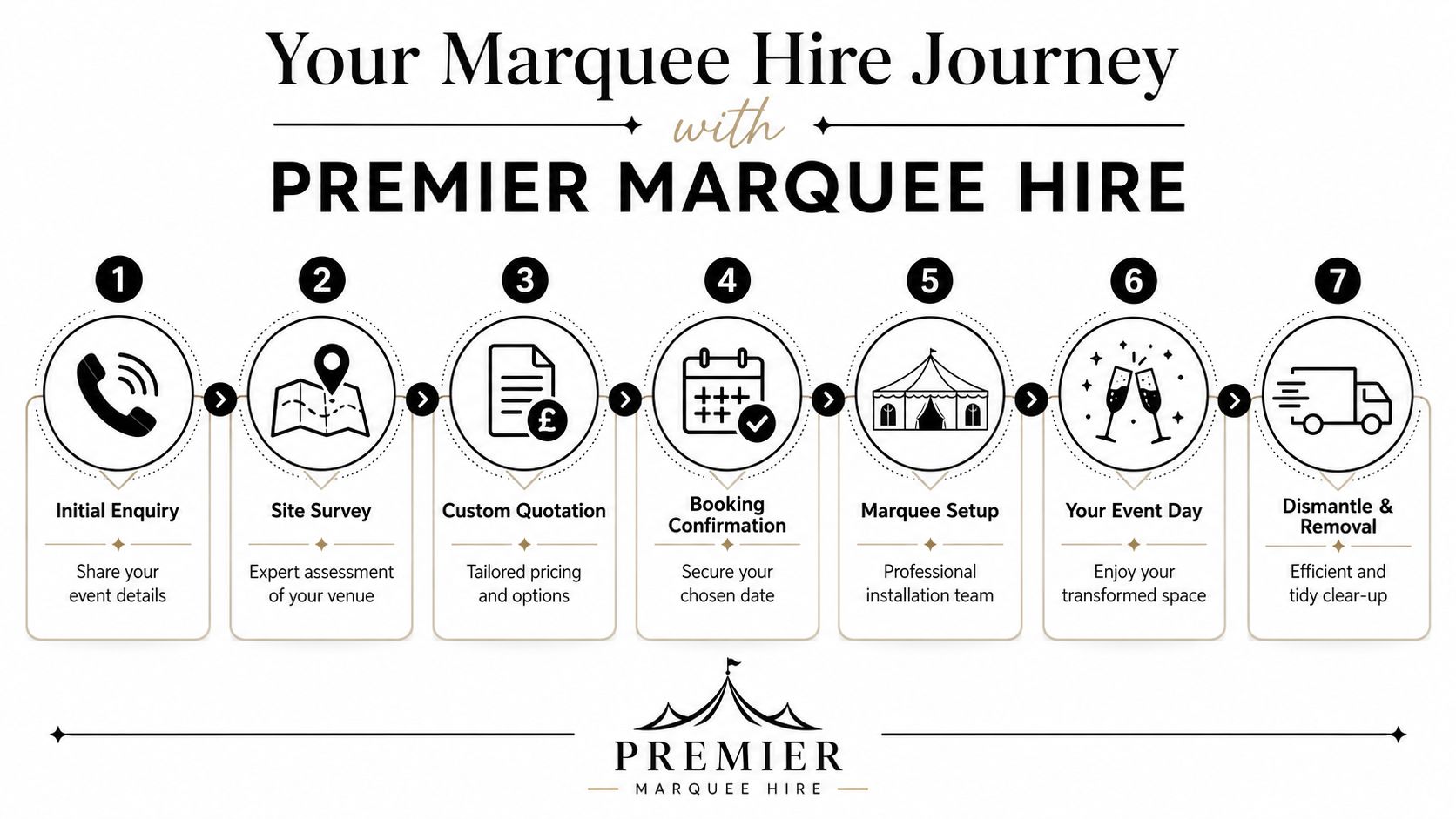
The first conversation
The first call is not about choosing a pretty structure. It is about whether the site can take it properly.
The basics still matter. Date, postcode, event type, guest numbers, and the sort of layout you have in mind. After that, the useful questions are local and practical. Is there side access or only a route through the house? Are there steps, narrow turns, raised patios, or shared driveways? Is the setup area lawn, paving, gravel, or a mix of all three?
Clients often say, "The garden should be fine." Sometimes it is. Sometimes it is technically possible but expensive to do well. A sloping lawn may need a different flooring build. Tight access can increase labour because equipment has to be moved by hand instead of trolley. Hard standing can be excellent for stability, but it may need ballast rather than staking. Those details affect the plan early.
Why the site survey matters
A proper survey answers the questions that photos and rough measurements miss. In Croydon, that usually means checking three things first. Access, ground, and clear working space.
On paper, a garden may look large enough. On site, a retaining wall can limit the footprint, a tree canopy can cut into the roofline, or the only usable entrance can point straight at a neighbour's boundary. These are not unusual problems. They are the reason experienced installers insist on seeing the site before confirming the final layout.
A survey usually covers:
- Access routes. Width of gates, steps, turns, and how the crew will move flooring, frame sections, and furniture.
- Ground type and fixing method. Grass, patio, concrete, resin, or mixed surfaces all change how the structure is installed.
- Levels. A mild slope can often be handled. A more awkward fall may need a raised floor or a revised position.
- Obstacles overhead and around the perimeter. Trees, cables, sheds, fences, garages, and conservatories can all reduce usable space.
- Practical event flow. Entrances, catering access, emergency exits, and where guests will queue, gather, and move.
This is also the point where the honest cost conversation starts. All-season events are where overlooked site issues become expensive. If the ground is poor, the weather is cold, and access is awkward, the structure may still work well, but the quote will reflect the extra labour, flooring, heating, and delivery time involved. That is not padding. It is what keeps the event usable in real conditions.
From measured site to workable layout
Once the site is measured properly, the layout stops being guesswork. A drawing helps you see whether the plan is merely possible or comfortable enough for a real event.
That matters more on Croydon plots than many first-time clients expect. A marquee can fit on paper and still feel cramped if the tables are too close, the bar blocks circulation, or the catering route cuts through the guest area. Free site visits and CAD layout designs help iron that out before installation day. They also make it easier to spot whether a smaller, better-planned structure will work better than forcing in a larger one.
What setup day usually looks like
Once the layout and specification are agreed, setup is straightforward. The crew marks out the footprint, builds the frame, installs the roof and walls, then moves on to flooring, linings, lighting, heating, and furniture if those items are included.
The time on site depends heavily on access and specification. A clear, level lawn with wide side access is a very different job from a terraced garden with steps and mixed surfaces. Clients often focus on marquee size, but installation time is just as often driven by how hard the site is to work on.
The jobs that go best are not always the easiest sites. They are the ones where the awkward parts were spotted early, priced properly, and built into the plan before the crew arrived.
What Drives Marquee Hire Costs in London
Price matters, but single-number pricing rarely tells the full story. The marquee itself is only one part of the quote. What you're hiring is a temporary event venue built around your site, your layout, and your comfort requirements.
There is one useful benchmark for Croydon. Poptop's marketplace data lists the average marquee or tent hire price in Croydon at approximately £1,186 per event, and notes that this typically covers a three-day hire period with one day for setup, one for the event, and one for takedown, as referenced by Cameo Event Hire's Croydon marquee overview.
What changes the quote
Two events can use the same size structure and still price very differently. The main reason is specification.
Some of the usual cost drivers are:
- Flooring choice. Basic ground cover and a more durable floor system are not the same thing in look, feel, or installation requirement.
- Interior finish. Linings, drapes, and upgraded lighting change the atmosphere quickly.
- Furniture package. Chair style, table layout, and lounge furniture all affect the overall figure.
- Season and weather planning. Cold-weather setups often need more than a summer party does.
- Site complexity. Difficult access or awkward ground can increase labour and setup time.
What the three-day structure really means
Clients sometimes assume marquee hire works like a same-day delivery. It usually doesn't. The common pattern is setup, event day, and takedown. That's one reason professional marquee work feels more controlled than ad hoc shelter hire.
The value is in the whole operation. Delivery, build, securing the structure, fitting interior elements, checking the site, and removing everything safely afterwards.
If you want a fuller breakdown of how quotes are usually structured, this guide to marquee hire prices in London is a sensible companion read.
The cheapest quote on day one can become the most expensive choice if it leaves out the items that make the event usable.
Furnishing and Finishing Your Marquee Interior
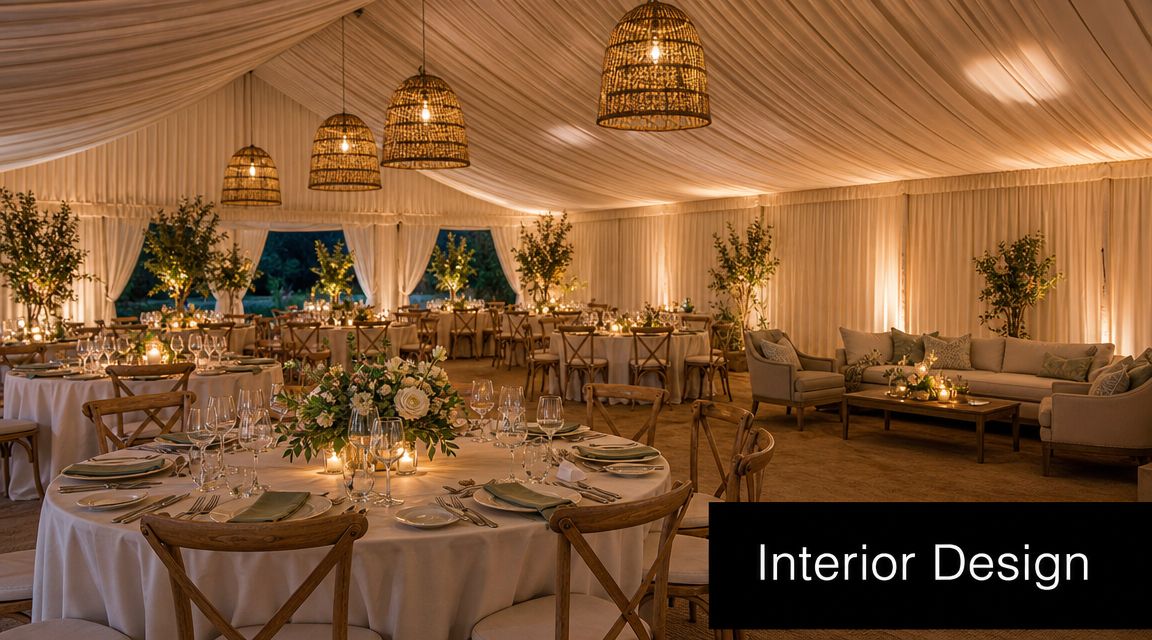
A marquee starts as a structure. It only becomes an event space once the interior is doing a job.
That job may be formal dining, relaxed family seating, a drinks reception, a Mehndi celebration, a company party, or a mixed-use layout that has to change mood from day to night. Good interior planning makes the marquee feel intentional. Poor interior planning makes it feel like a shelter filled with furniture.
Start with the floor and the layout
The floor influences everything above it. If the surface underfoot feels unstable, cold, or uneven, guests notice immediately. That's why flooring is one of the first interior decisions to get right, especially for dining events and evening functions.
A practical layout often includes:
- Arrival space so guests aren't stepping straight into table backs.
- Main seating zone with enough room to move around tables comfortably.
- Service route for catering, staff, or family members carrying food.
- Feature area such as a dance floor, stage point, sweetheart table, or bar.
- Quiet edge space where older guests can sit away from speakers.
For a closer look at the options underfoot, this guide on flooring for marquee events is worth reviewing before you lock in your layout.
The details that change the atmosphere
Furniture and lighting do more than decorate. They change how the space is used. Bistro chairs can suit simpler celebrations. Chiavari seating pushes the room towards a wedding or more formal reception feel. A mobile bar changes traffic flow. Warm lighting makes a large structure feel more intimate.
Premier Marquee Hire supplies complementary options including furniture, mobile bar units, lighting, a Magic Mirror photo booth, and giant LOVE letters. Those extras aren't mandatory. They're useful when they support the kind of event you're hosting.
A few examples from real-world planning:
- Weddings usually benefit from layered lighting, a focal backdrop, and clearly zoned dining and dancing.
- Corporate parties often work better with uncluttered furniture layouts and a strong entrance impression.
- Mehndi and family celebrations may need more flexible floor area, lounge seating, and room for movement rather than fixed banquet density.
Good marquee interiors feel easy to use. Guests shouldn't have to work out where to stand, sit, queue, or dance.
Planning for Winter Events and UK Weather
A January birthday in South Croydon or a December wedding reception in Sanderstead can look brilliant under canvas. It can also become an expensive cold box if the plan is only “add a couple of heaters and hope for the best”.
That is the part many marquee guides soften. Winter performance comes from the whole specification. Ground conditions, exposure to wind, how guests enter and leave, the type of flooring, and how long people will be sitting still all matter as much as the marquee itself. In Croydon, those details change from one road to the next. An open garden on higher ground behaves very differently from a more sheltered suburban plot.
What winter setups need
All-weather use is possible, but it is never just about the frame and roof. Industry guidance from the UK Events Industry Forum points to weather planning, safe anchoring and suitable heating. For most winter bookings, the honest question is not “can a marquee be heated?” It is whether the full package of heating, flooring, linings and weather protection still makes financial sense compared with a fixed indoor venue, as discussed in notes on total winter hire costs for Croydon marquee bookings.
For colder months, the setup usually needs:
- Fully enclosed sides to hold temperature and cut drafts
- Heating sized for the volume of the structure, guest numbers, and how often doors will open
- Solid flooring or a proper sub-floor system so people are not standing over wet or frozen ground
- A planned entrance arrangement so warm air is not lost every few minutes
- A weather allowance in the plan if wind, rain, or saturated ground changes how the build needs to be handled
Access and ground type often decide the actual cost. If the site is soft after a week of rain, flooring becomes much more important and sometimes more involved to install. If access is tight, kit may need to be moved in by hand rather than directly from the vehicle, which affects labour and build time. Those are the practical points that catch first-time clients out.
What works in practice
The best winter marquees are treated as temporary venues, not summer setups used in colder weather.
A warm room for standing drinks can still feel chilly for guests who are seated through speeches or dinner. Elderly relatives feel it first. Children feel it too. Guests arriving in suits, dresses, or formal shoes are less tolerant of damp grass, cold boards, and draughts around the entrance than many hosts expect.
Winter events can still look better than summer ones. Linings, lighting and a properly enclosed structure create a smart, atmospheric room. But they need realistic budgeting from the start. In some cases, the marquee remains the right call because the site, layout and privacy suit the event perfectly. In others, once you price the full cold-weather specification accurately, an indoor venue is the simpler and cheaper option.
Your Marquee Booking Timeline and Checklist
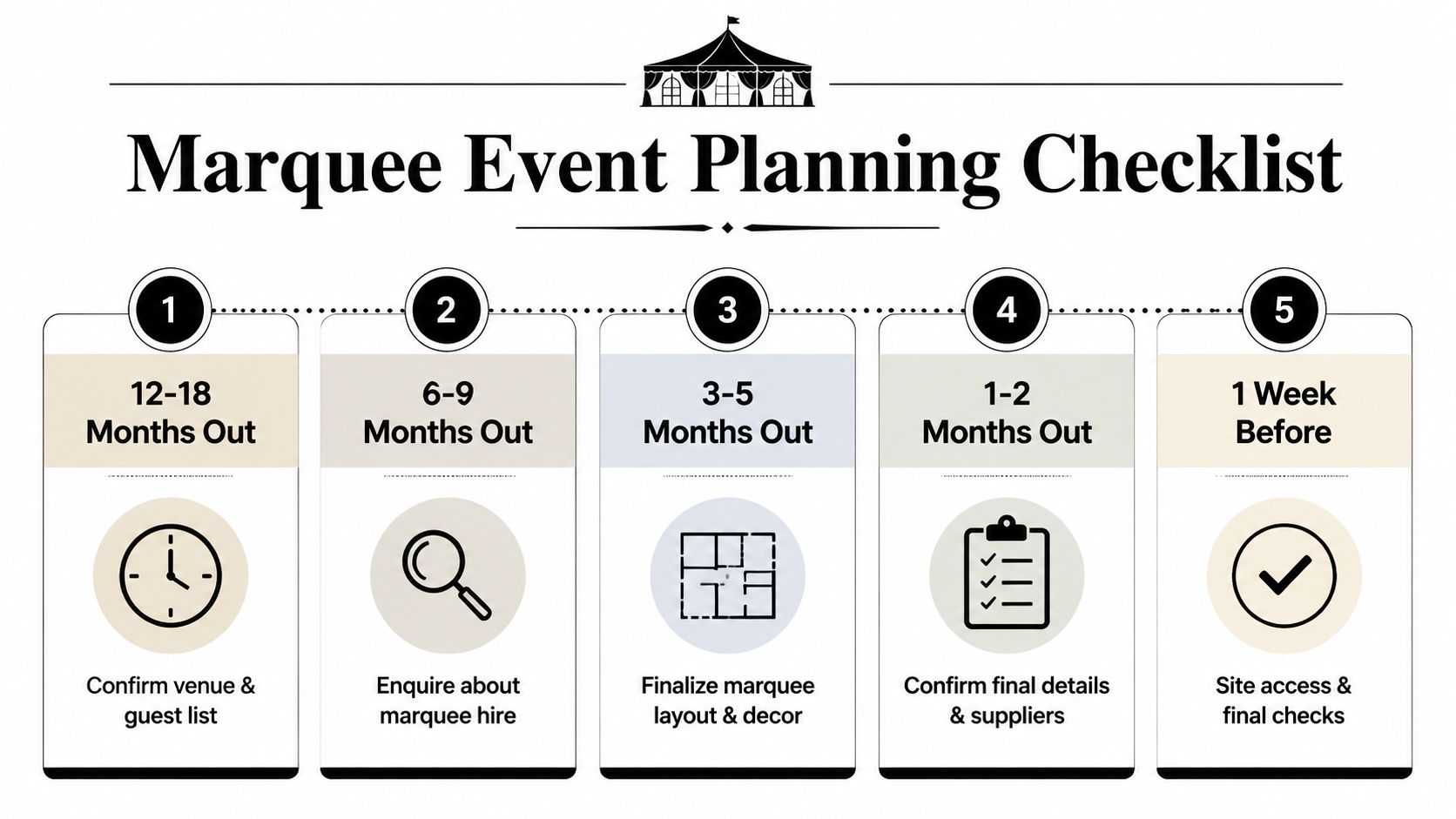
The best time to enquire is earlier than one might expect, especially for weddings, summer Saturdays, and events that need a more complex build. Even when dates are still being confirmed, an early conversation helps you test feasibility before you commit the rest of the event around a layout that might not suit the site.
What to have ready before you enquire
You don't need every detail finalised. You do need enough information for a useful first conversation.
Bring these with you:
- Your event date or your shortlist of possible dates
- The full address of the site
- Estimated guest numbers based on real attendance expectations
- Your event style such as seated meal, standing reception, or mixed format
- A short wish list covering flooring, lighting, bar, dance floor, furniture, and any entertainment items
- Site photos if you have them, especially access points and the garden or venue space
A simple planning rhythm
A good reverse timeline looks something like this in practice:
- Early stage. Confirm the event type, likely numbers, and whether the site is your preferred venue.
- Next step. Arrange a survey while there's still flexibility to adjust the plan.
- After layout approval. Finalise the marquee size and core extras.
- Closer to the event. Confirm guest numbers, furniture plan, and supplier coordination.
- Final week. Double-check access, clear the setup area, and confirm delivery timing.
The easiest bookings are the ones where decisions happen in the right order. Site first. Layout second. Styling after that.
If you're planning an outdoor event and want a realistic view of what will work on your site, Premier Marquee Hire can arrange a no-obligation enquiry based around your date, layout, and practical setup requirements in Croydon and the surrounding area.
Sorry, the comment form is closed at this time.