

04 Jun Hire a Marquee: The Ultimate Guide for London Events
You're probably here because the event has become real.
The date is pencilled in, the guest list is growing, and the venue question is suddenly the hardest part. A hotel feels restrictive. A hall doesn't look like you. A London venue quote lands in your inbox and makes you rethink the whole plan. That's usually the moment people start looking at whether to hire a marquee.
In Croydon and across South London, that decision often starts with a practical need, not a styling one. You may have a garden in Purley that's bigger than it first appears, a business premises with usable outside space, or a venue in Bromley or Sutton that needs extra covered capacity. A marquee gives you control, but only if it's planned properly from the start.
Your Vision Your Venue Why a Marquee is the Perfect Choice
A marquee works because it doesn't force you to fit your event into someone else's layout, timings, or house rules.
That matters more than people expect. A wedding in a family garden feels different from a hotel suite because the space already means something. A milestone birthday at home in Sanderstead or Shirley can run with the pace and atmosphere you want, not the pace the venue dictates. A corporate launch in Croydon can be built around guest flow, branding, catering, and speeches instead of trying to work around a fixed function room.
Real London events rarely fit standard venues neatly
In practice, London events often come with awkward requirements. You may need room for a dance floor but not a full seated dinner. You may want guests under cover while keeping the garden visible. You may need a separate catering area, a walkway, or a bar that doesn't dominate the whole room.
That's where marquee hire makes sense. Instead of choosing a venue that almost works, you build the footprint around the event itself.
A good marquee plan starts with how the day needs to work, not with which roofline looks nicest in a brochure.
A garden party in Bromley might need a neat frame marquee that avoids swallowing the whole lawn. A school event might need weather cover and reliable access for suppliers. A religious celebration may need flexible zones for seating, catering, and family circulation. These are very different jobs, but the advantage is the same. You start with a blank canvas.
Personal space without the compromise
There's also a financial and logistical side to this. Existing venues often bundle in things you don't need and leave out things you do. With a marquee, you decide what matters most. Flooring, furniture, lighting, bar layout, entrance position, catering access, and guest circulation can all be designed around your site.
If you're still building the wider event plan, a solid comprehensive event planning guide can help organise the moving parts around suppliers, timings, and guest experience. That's useful before you even settle on the final structure.
For first-time planners, the biggest reassurance is this. Hiring a marquee doesn't mean making things more complicated. Done properly, it removes compromise and gives you a venue that suits the event, the site, and the people attending.
The Planning Phase Booking Timelines and Marquee Sizing
A common London booking mistake starts like this. The guest list goes out, the date is fixed, and only then does someone ask whether the garden can take dinner seating, a bar, a caterer, and a weather backup under one roof.
Booking early helps, but timing is only half the job. The other half is choosing a marquee size that matches how the event will run on the day.
Booking windows that work in the real world
In Croydon, Bromley, and across South London, the pressure points are predictable. Summer Saturdays go first. So do bank holiday weekends, school celebration dates, and popular wedding periods. If your event depends on one specific date, treat the marquee as an early booking item, not a last-minute add-on.
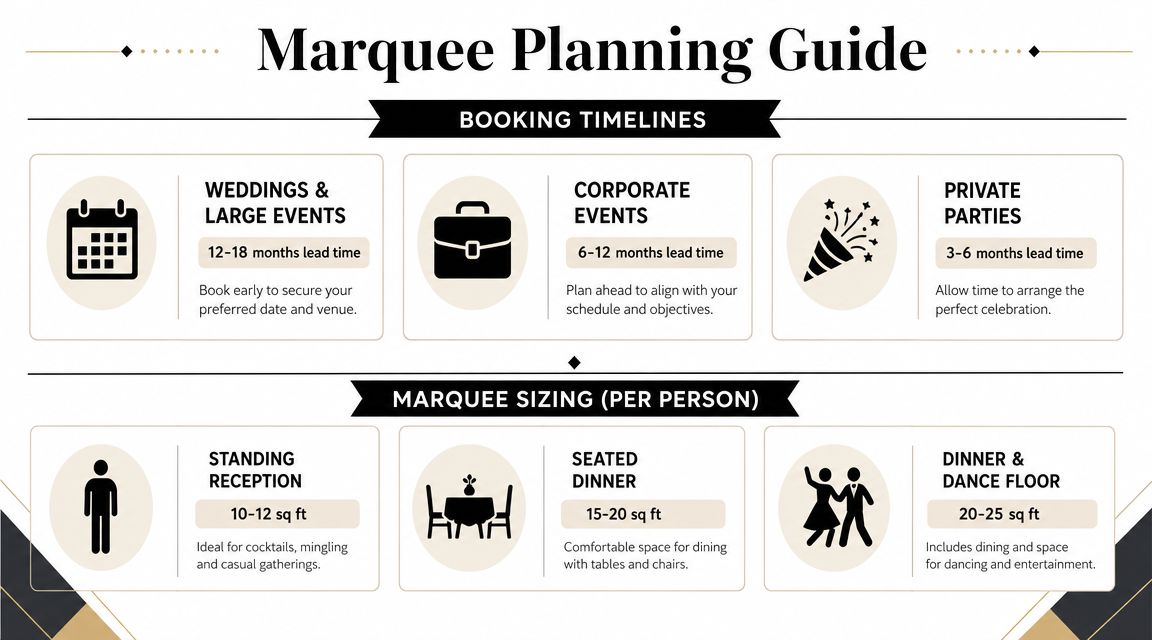
The practical pattern usually looks like this:
- Weddings and larger private events: Book as soon as the date and site are reasonably firm. The structure is only one part of the plan. Flooring, power, toilets, catering space, and furniture availability all tighten as the date gets closer.
- Corporate events: These often have shorter sign-off windows, but they still need early decisions if branding, production, guest registration, or supplier access are involved.
- Garden parties and family events: Smaller marquees can sometimes be arranged with less notice, though tight access, uneven lawns, and wet-ground protection still need proper planning.
One point first-time planners often miss is that marquee hire affects every other supplier. Caterers need prep space. Toilet providers need delivery access. Furniture layouts affect fire exits and guest flow. This broader guide for professional event planners is useful if you are coordinating several moving parts at once.
How marquee sizing actually works
Guest count gives you a starting point. It does not give you a finished answer.
As noted in Field and Lawn's marquee size guide, a standing event for 150 guests needs at least 112.5 m², based on 0.75 m² per person. That rule is helpful for drinks receptions and less formal events, but it can be misleading if you apply it to every occasion.
A seated event needs more generosity in the layout. Round tables take room. So do chairs being pulled back, waiting staff moving between tables, a dance floor that people can use, and an entrance area that does not clog up the whole space. In London gardens, you also lose usable footprint to awkward corners, trees, patios, and the need to keep a clear route for suppliers.
That is why two events with the same guest count can need very different marquee sizes.
If you are comparing wider spans and higher guest numbers, it helps to review what a large marquee hire setup can handle in practice, including dining layouts, service zones, and mixed-use event space.
Marquee Size and Capacity Guide
| Guest Count | Standing Reception (Approx. Size) | Seated Dinner (Approx. Size) |
|---|---|---|
| 50 | Smaller footprint, often suitable for compact garden layouts | Needs extra room for tables, chairs, and circulation |
| 100 | Medium marquee with clear guest flow | Larger footprint once dining layout is added |
| 150 | At least 112.5 m² for a standing layout | Significantly more space needed than standing format |
| 200+ | Large modular structure, often planned around bars and event zones | Usually requires a full layout plan before booking |
In practice, I advise clients to size the marquee around the busiest moment of the event, not the quietest one. If guests will be seated for dinner, standing for drinks, using a dance floor, and circulating between a bar and catering area, the structure needs to support all of that without feeling pinched.
Practical rule: Choose your marquee size from the furniture plan, service space, and weather backup you need, not from guest numbers alone.
Your Site Visit Checklist Ground Access and Weather
The biggest mistake first-time hirers make is focusing on appearance before checking whether the site can take the structure safely.
A marquee can look perfect on paper and still be wrong for the ground. That happens regularly in London gardens and venue spaces. A lawn can appear level until you measure it properly. A side path can look usable until delivery kit has to come through it. A forecourt can seem straightforward until underground services or overhead obstructions limit what can be installed.
The site visit is where problems are found early
This is what needs checking before any serious quote is treated as final:
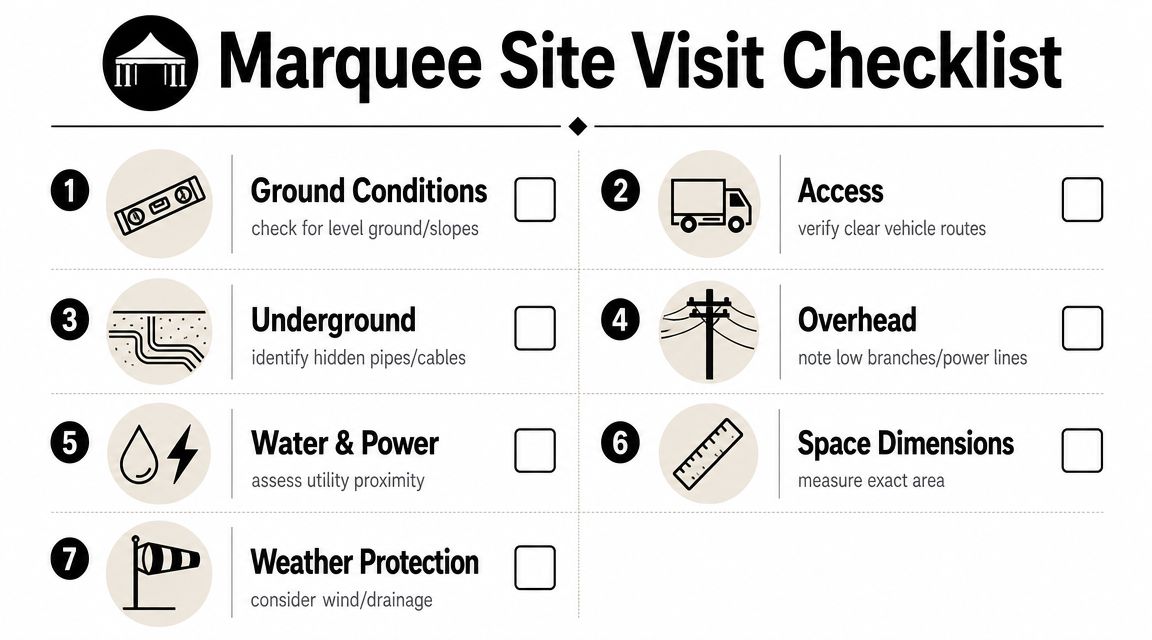
- Ground level: Small slopes matter. Once tables, chairs, and dance floors go in, even a subtle fall across the garden can become obvious.
- Access route: Terraced homes in Streatham, side access in Bromley, and tight gates in South London are common pinch points.
- Underground and overhead issues: Pipes, cables, drains, trees, and low lines all affect positioning.
- Utilities: Water and power don't always need to be on top of the marquee, but the distances matter.
- Working room around the marquee: Installers need space to unload, build, secure, and dress the structure properly.
A proper survey isn't paperwork for the sake of it. It stops surprises later.
Wet weather changes the site more than the client expects
Ground conditions are one of the most overlooked risks in marquee hire. As noted in guidance on marquees, walkways, and weather-related site issues, with the UK experiencing increasingly wet weather, a site that looks ideal in dry conditions can become difficult after rain. Drainage, soil softness, anchoring, ballast, and floor protection all become more important, and a low quote may not reflect that extra work.
That matters in and around Croydon because many event sites are mixed-use spaces. You'll see patios leading onto lawn, gardens with soft edges, church grounds that hold water, and venue plots that become slippery after a spell of rain.
If the ground is marginal in dry weather, it usually becomes expensive in wet weather.
What works and what tends not to
Some layouts are forgiving. A compact frame marquee on a firm, accessible lawn is usually straightforward. A business park hardstanding area can also work well if the loading route is sensible and the structure is weighted correctly where needed.
The awkward jobs are usually a combination of issues rather than one big problem:
- Narrow access plus a long carry distance
- Soft ground plus a need for flooring
- A sloped garden plus formal dining
- Open exposure plus a winter date
- A nice-looking site with poor drainage
These aren't reasons to give up on the event. They're reasons to assess the site properly before locking in layout and cost.
In London and the South East, the best marquee plans are rarely the ones that look simplest in the first enquiry. They're the ones that have allowed for the ground, the weather, and the practical route in and out.
Designing Your Interior From Flooring to Furniture
Once the structure is settled, the inside becomes the venue your guests experience.
Many events held in a marquee either come together beautifully or end up feeling like a temporary shelter with furniture dropped into it. The difference is usually planning, not budget. Floor finish, table shape, bar position, lighting level, and circulation all affect how the marquee feels once people arrive.
Start from the ground up
Flooring changes everything. If guests are in heels, if dining is formal, or if dancing matters, the floor needs serious thought. A lawn under a marquee might be acceptable for a casual daytime gathering, but it won't give the same stability or finish as a proper boarded or solid floor.
For more detail on practical options, this guide to flooring for marquee events is a useful starting point.
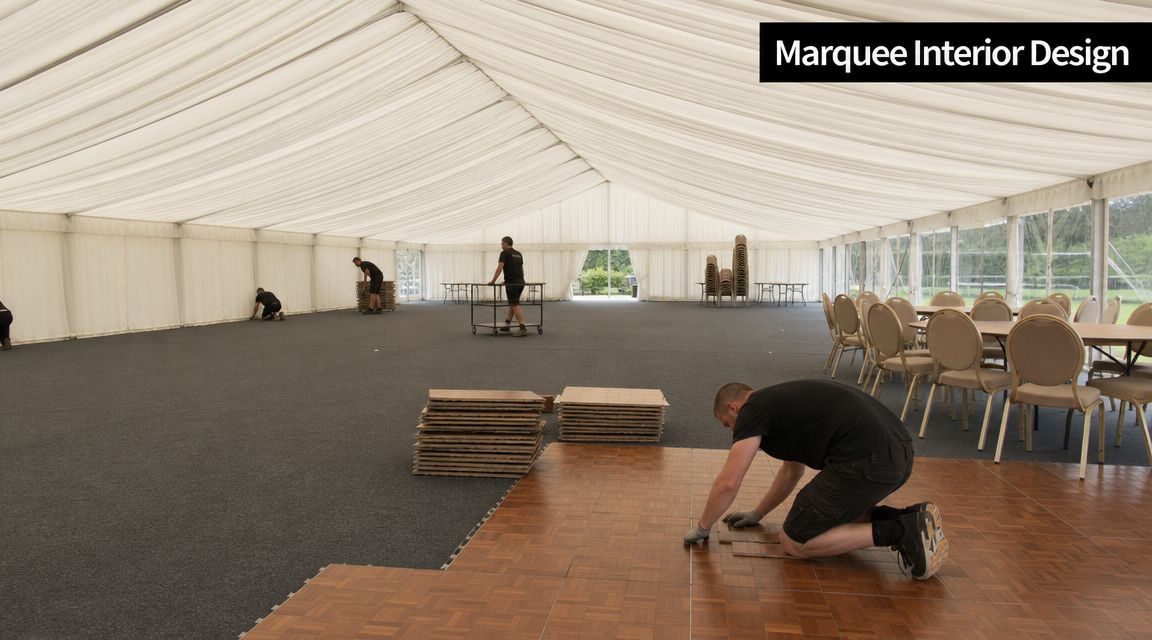
Different events call for different priorities:
- Weddings: Guests notice floor level, chair comfort, table spacing, and lighting softness.
- Corporate events: Branded areas, clean sightlines, and tidy service zones usually matter more than decorative extras.
- Private parties: A good bar location and clear flow to the dance floor often do more for the atmosphere than expensive styling.
Layout first, styling second
Professional event guidance notes that a marquee layout must account for guest count plus support functions such as catering, a bar, a dance floor, and accessible circulation, and that a full day for erection and another for breakdown is common, with some events needing a 3-day access window for flooring, power, and final styling, according to 1 Entertainment's marquee planning guide.
That's why interior planning has to happen before the decorative decisions. If the dining layout takes more room than expected, the bar may need to move. If the dance floor is undersized, the evening feels pinched. If the catering path cuts through the guest area, service becomes messy.
A practical interior checklist usually includes:
- Tables and chairs: Round tables suit social occasions well. Trestle layouts can work for long dining formats or communal events.
- Lighting: Uplighters, festoon lighting, fairy lights, and chandeliers each create a very different mood.
- Bar and service points: These should be obvious to guests but not block the main flow.
- Feature items: A Magic Mirror photo booth or giant LOVE letters can work well if they're positioned as part of the layout, not squeezed into spare corners.
Good marquee interiors feel easy to move through. Guests shouldn't have to work out where to stand, queue, sit, or dance.
One practical tool many clients find helpful is a CAD layout before final sign-off. It lets you test the furniture plan against the actual footprint and avoid common mistakes such as overloading one side of the marquee or underestimating the room needed for service and circulation.
The Hiring Process Quotes Contracts and Insurance
A professional marquee hire process should feel calm, clear, and boring in the best possible way.
If a supplier is vague at quote stage, that vagueness usually carries through to delivery, extras, and collection. The strongest protection for a client isn't a flashy brochure. It's a process that checks the site properly, confirms the scope properly, and records the booking properly.
What a solid process looks like
A standard UK workflow begins with a free site survey and CAD layout, then an accurate quote. Once accepted, a 25% deposit typically secures the booking, with delivery planned for the week before the event, as outlined in this step-by-step marquee hire guide.
That sequence matters because it puts the technical checks before the commitment.
A quote should show what's included with enough detail that you can compare like with like. Not every marquee quote covers the same things. One may include flooring and lining. Another may allow only for the basic structure. One may assume easy access and level ground. Another may already reflect a more complex site.
What to check before you pay a deposit
Use this as a working checklist when you hire:
- Itemisation: The quote should separate marquee structure, flooring, furniture, lighting, and any optional extras.
- Site assumptions: If the price depends on easy access or straightforward ground, that should be clear.
- Install and collection windows: You need to know when the team arrives, how long the setup needs, and when the structure comes down.
- Payment terms: The deposit, balance schedule, and any change charges should be written down.
- Cancellation terms: These don't have to be generous to be fair, but they do need to be understandable.
If you're comparing providers, a practical benchmark is to review how established marquee hire companies usually structure surveys, quotations, and event support.
Insurance and responsibility
Insurance is one of those topics clients often leave until late. It's better dealt with early.
A reputable marquee provider should be able to confirm its public liability cover and explain what sits with the hire company versus what sits with the client or venue. If alcohol is being served, if contractors are coming on site, or if the event is open to the public, there may be additional responsibilities beyond the marquee itself.
Premier Marquee Hire, for example, offers free site visits, CAD layouts on request, and modular structures from compact walkway units up to 15 metre spans, which is useful when a client needs one supplier to handle both the main structure and practical layout planning.
The basic rule is simple. If anything about the quote, contract, or insurance wording feels unclear, pause and ask. That conversation is much easier before the booking is locked in than after the equipment is on site.
Sample Timelines and Budgets for London Events
Sample planning scenarios help because most clients aren't trying to organise a generic event. They're trying to organise one specific day on one specific site, with real constraints.
The details vary, but the planning logic stays consistent. Space, access, lead time, weather cover, and supplier coordination all have to line up.

Scenario one, a garden wedding in South London
A couple want a summer wedding reception in a family garden near Bromley. The attraction is obvious. The setting is personal, the photos will feel like them, and they'd rather spend money shaping the day than paying for a fixed venue package.
Early on, the key decisions are practical. Is the garden level enough for formal dining? Is there side access for installation? Where does catering work from? Is there room for the main marquee, a bar, and guest circulation without the whole lawn feeling swallowed up?
Their budget usually isn't one line called “marquee”. It spreads across several choices:
| Budget Area | Typical Planning Priority |
|---|---|
| Marquee structure | The main covered space and overall footprint |
| Flooring | Essential if the event is formal or includes dancing |
| Lighting | Needed for mood and evening usability |
| Furniture | Drives comfort and dining layout |
| Dance floor and bar | Important for evening flow and atmosphere |
The biggest trade-off is often between appearance and usable space. People naturally want decorative extras, but if the dining layout is too tight, guests feel it all day.
Scenario two, a Croydon corporate event
A business wants a networking event on site at its premises in Croydon. The planning window is shorter, but the priorities are clearer. They need weather cover, a clean branded environment, room for catering, and an entrance sequence that feels organised rather than improvised.
Corporate jobs often succeed because they are less emotionally driven and more operationally disciplined. The team checks access early, confirms power needs, agrees branding points, and locks the running order without too many late design changes.
The easiest events to install are usually the ones where the client has decided what the space must do before choosing decorative additions.
How to think about budget without guessing
A practical budget starts with must-haves, then adds experience-led extras.
Start with the structure, flooring if required, lighting, furniture, and any catering or service space. Only then move into decorative features, entertainment add-ons, and statement items. That order prevents a very common mistake in London marquee planning, which is spending emotionally at the top of the list and then discovering there isn't enough room or budget left for the basics that make the event function smoothly.
Marquee Hire FAQs for London and the South East
Do I need planning permission for a marquee?
Usually, small marquees in private gardens don't need planning permission. Larger structures, or setups for public or ticketed events, may require a Temporary Event Notice from the council. Guest numbers, alcohol sales, and late-night entertainment can affect that, as explained in this guidance on Temporary Event Notice considerations for marquee events. It's worth checking early with both your provider and your local authority.
Can a marquee go on any garden?
No. Many can, but not every garden is suitable without adjustments. Access, slope, drainage, overhead obstructions, and the need for flooring all affect whether the site is practical.
How far in advance should I enquire?
As early as you can, especially for summer weekends and weddings. Even when the event feels simple, good dates and good installation windows get taken quickly.
Is a cheap quote risky?
It can be. A lower starting price may not include the site-specific work needed for access, anchoring, protection of soft ground, or flooring. The cheapest initial figure isn't always the safest total cost.
Can I hire a marquee for winter?
Yes, but the planning needs to be tighter. Ground conditions, access, weather exposure, and heating all matter more.
What should I have ready before asking for a quote?
Your date, rough guest number, address or postcode, event type, and any photos of the site help a lot. If you know whether you need dining, dancing, a bar, or catering space, that makes the first conversation much more accurate.
If you're ready to hire a marquee and want practical advice based on your actual site, Premier Marquee Hire can help you work through size, access, layout, and setup requirements before you commit. A clear site survey and an accurate quote usually answer most of the questions that feel overwhelming at the start.
Sorry, the comment form is closed at this time.