

22 May Marquee Hire in London: A Step-by-Step Guide
You've found a venue, or maybe you've decided your own garden is the venue. The guest list keeps growing, London weather is doing what it always does, and suddenly marquee hire in london feels less like a nice idea and more like a chain of decisions you don't want to get wrong.
That's usually the point where people call us from Croydon, Wimbledon, Bromley, Dulwich, Sutton and further out. They've got the broad picture in mind. A wedding reception at home. A company summer event on private grounds. A birthday party that needs to feel polished, not improvised. What they want to know is simple: what size marquee do I need, will it fit, what happens if it rains, and are there any council or licence issues hiding in the background?
Those are the right questions. A marquee can give you freedom that a fixed venue can't, but only if the structure, layout, access and weather planning are handled properly. London adds another layer because gardens are tighter, access is often awkward, borough rules can differ, and neighbours are usually much closer than people expect.
Your Vision for the Perfect London Event
A couple in Wimbledon wants a wedding reception that feels personal, not hotel-standard. A business in Bromley wants an outdoor summer party but needs a space that still works if the forecast turns. A family in Croydon wants to host a milestone birthday at home without squeezing everyone into the house and hoping for the best.
Those events all start with the same feeling. Excitement first, then uncertainty. You can picture the lighting, the tables, the dance floor, the bar, the flowers, the music. What's harder is seeing how all of that fits into a real London site with fences, side access, paving, sloping lawns, neighbours and limited parking for setup.
That's where people often go wrong. They shop for a marquee as if they're hiring one item, when in practice they're building a temporary venue.
What clients are usually balancing
- Style and atmosphere: A garden wedding in South West London wants a different feel from a corporate drinks event in a Bromley office car park.
- Practical movement: Guests need room to arrive, sit, eat, queue at the bar and move around without the space feeling cramped.
- Outside suppliers: Caterers, DJs, florists and family members all need access plans. If guests are travelling in from outside the city, transport planning matters too, especially for airport arrivals, which is why some hosts also arrange Heathrow airport transfers London for family groups or corporate attendees.
- Theme choices: Once the practical footprint is clear, styling becomes much easier. If you're still deciding on the look and layout, this guide on choosing a theme for your event is a useful starting point.
The best marquee events in London don't feel temporary. They feel intentional.
From a Croydon base, the pattern is familiar. Clients who get the smoothest result are usually the ones who treat the marquee as part of the whole event plan from the start, not as something to bolt on at the end. When that happens, the decisions become clearer very quickly.
Choosing the Right Marquee Size and Style
A common London booking starts like this. The client says they have 80 guests and a decent-sized garden, so they assume a marquee for 80 will do the job. Then we add dining tables, a bar, a DJ setup, space for staff to serve properly, and somewhere for guests to stand without blocking the exits. The shape of the event changes quickly.
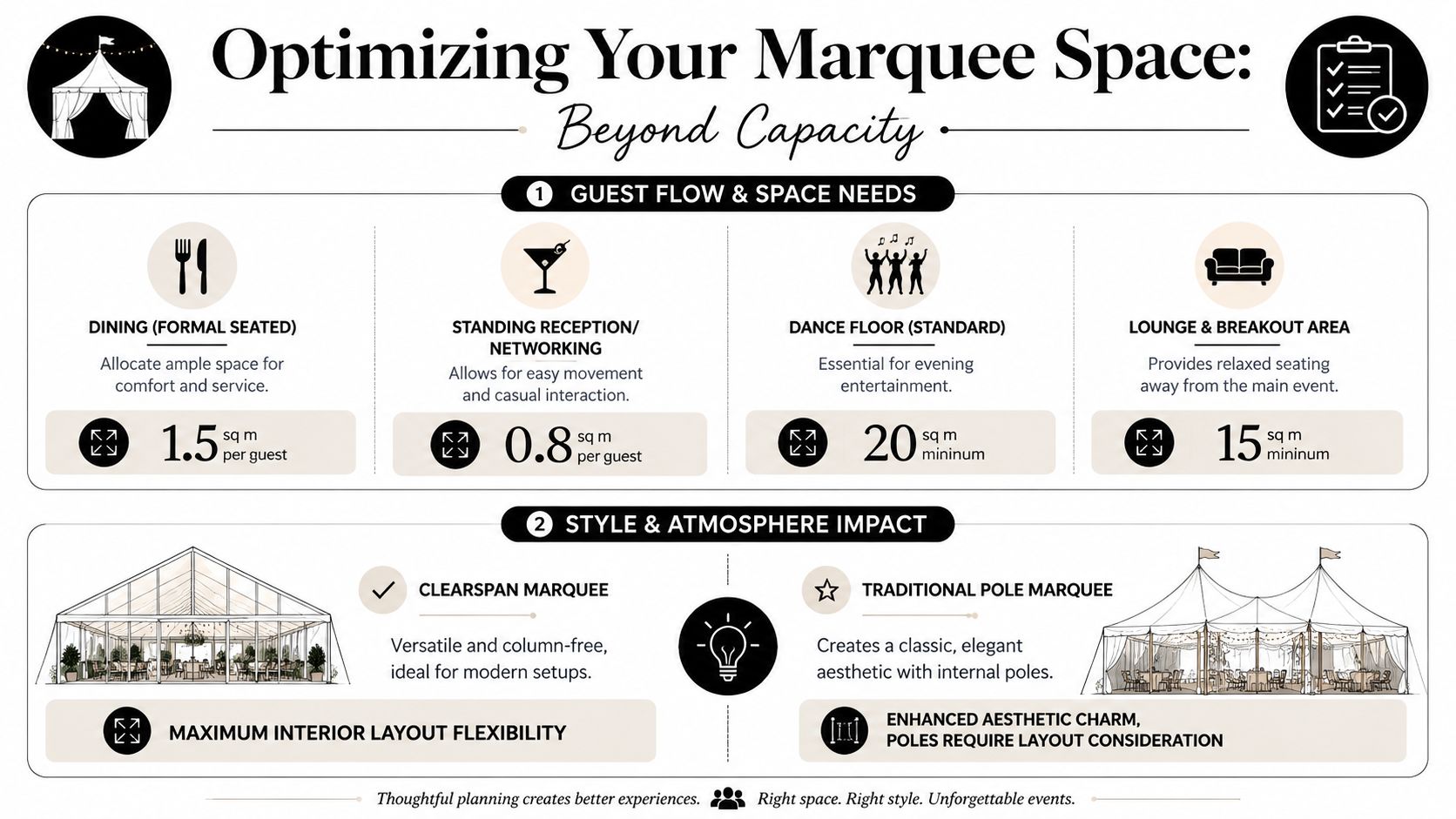
The right size comes from use, not just numbers. Guest count matters, but it is only the starting point.
A seated wedding breakfast in Richmond needs room for round tables, waiting staff routes, speeches and a dance floor that does not feel squeezed into a corner. A standing drinks reception in the City can take a smaller footprint for the same number of guests, but it still needs clear circulation around poseur tables, the bar and entrance points. A birthday party in Croydon with a buffet often sits somewhere in the middle. People want seats, but they also want open space once the music starts.
I plan marquee size around three questions:
How many guests will be inside at the busiest point?
Day guests and evening guests can change the layout requirement completely.What has to happen inside the structure?
Dining, dancing, speeches, a band, a photo booth and gift table all compete for space.What support space needs covering?
Caterer prep areas, linked walkways, cloakroom space and entrance matting can all affect the final footprint.
This is why a marquee that looks generous on a sketch can feel tight on the day. If your space is compact, it helps to review practical options for small marquee hire in London before confirming the guest list and furniture plan.
Matching structure to event style
Different marquee styles solve different problems. In London, the choice is rarely just about appearance. It also affects layout, lighting, heating, and how comfortably the event runs.
| Marquee type | Best suited to | Main trade-off |
|---|---|---|
| Clearspan | Weddings, corporate events, flexible layouts | Clean and practical, but it needs lining, lighting or floral work if you want a softer look |
| Traditional pole or sailcloth style | Garden receptions, classic celebrations | The look is beautiful, but centre poles and guy ropes restrict layout options |
| Stretch tent or alternative format | Relaxed parties, summer events, informal entertaining | Strong visually, but not always ideal where full enclosure or a rigid square layout is needed |
Clearspan marquees suit many London events because they give an open interior with no centre poles. That freedom matters if you are fitting dining and dancing into one garden in Wimbledon or trying to create a polished corporate layout on a tight footprint in South London.
Traditional pole marquees create real character, especially for weddings. They also demand a more disciplined table plan. Poles can interrupt sightlines, and the usable floor area is not always as straightforward as clients expect from the outside dimensions.
Stretch tents can work well for summer parties and mixed indoor-outdoor layouts. I would be more cautious with them for formal dining events or any booking where clients want strong weather protection from every side.
A simple rule that saves trouble
If the layout only works when every table, chair and supplier position is fixed with no spare room, the marquee is too small.
That extra breathing space is what guests notice. They notice whether they can get to the bar easily, whether service feels calm, and whether the room feels comfortable once everyone is inside.
The best results usually come from choosing the structure after the floorplan is clear. In practice, style still matters, but comfort and flow are what make the event feel well organised rather than improvised.
Assessing Your London Venue Site and Access
A London marquee job can fail before the first panel comes off the van. The usual problem is not the size of the lawn. It is access, ground conditions, and how the structure will be built on a tight, lived-in site.
From Croydon, we regularly work across South London gardens, school grounds, courtyards and private estates, and the same lesson comes up again and again. A site that looks straightforward in estate agent photos can be awkward in practice. A garden in Streatham might have plenty of usable space once you are standing in it, but if the only route is a narrow side return with two sharp turns, every floor cassette, chair stack and catering item takes longer to move in. That affects labour, set-up time and, in some cases, the type of marquee you can install safely.
I have also seen the opposite. A Dulwich garden can look modest from the house, then prove ideal once measured properly, apart from one issue. The slope. If the fall across the site is more than the client expected, a basic carpet on the lawn stops being a sensible option. Dining chairs rock, bars do not sit square, and the whole event feels slightly off even when the décor is good.
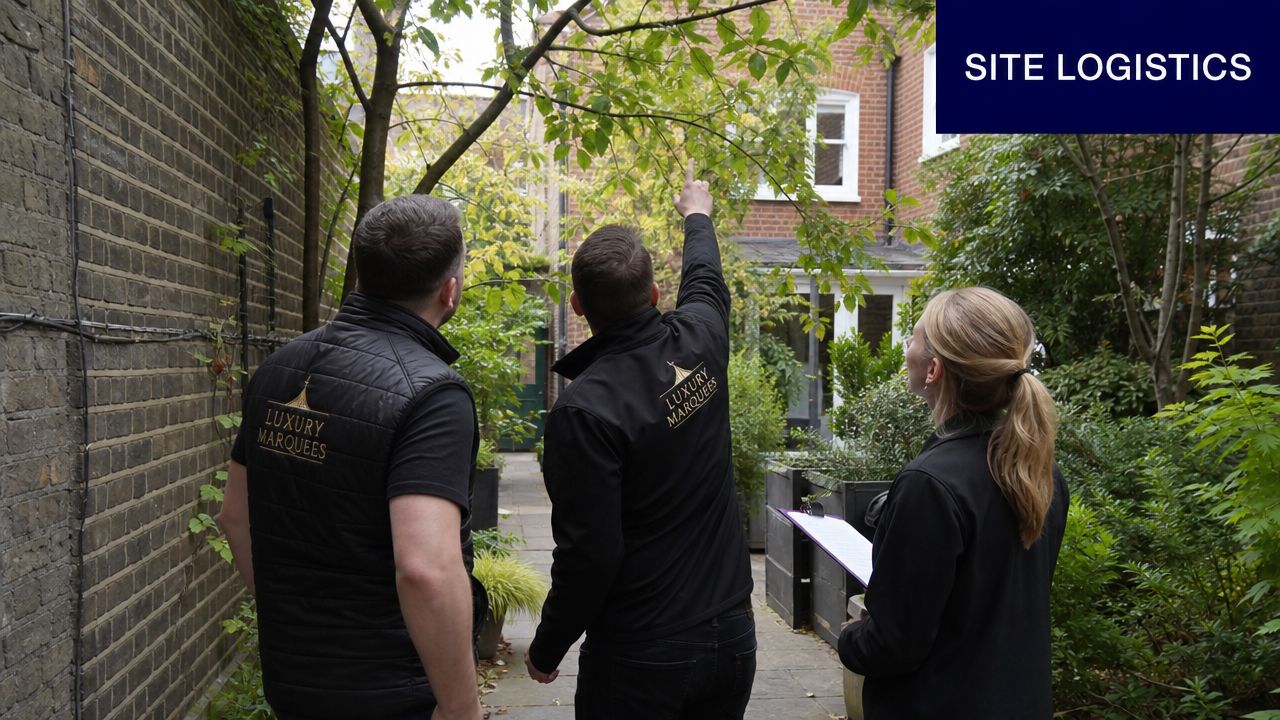
That is why a proper survey matters.
The survey should answer practical questions, not just confirm measurements. Can the team get equipment to the build area without going through the house? Is the ground level enough for dining, or does it need a suspended floor? Are there trees, walls, sheds, raised beds or low cables that reduce the usable footprint? Which way should the entrance face so guests are not walking straight into wind or mud?
A few common London site issues show how quickly details change the plan:
- Terraced homes in Sutton, Streatham and Tooting: rear access is often limited, so build time and carrying distance need to be allowed for from the start.
- Sloping gardens in Dulwich, Purley and Crystal Palace: a levelled floor can make the difference between a smart event and a room that never feels comfortable.
- Paved courtyards in central and inner London: fixing methods, weight loading and surface protection need to be agreed before install day.
- Shared drives and restricted parking in Croydon, Bromley and Clapham: delivery slots matter because crews need space to unload safely and keep the road clear.
Ground type catches people out as well. Grass is often the easiest surface to work with, but after heavy rain it can become soft around entrances, bars and catering routes. Gravel creates problems for heels, dancefloor edges and wheeled service equipment. Patios can work very well, but only if the dimensions are exact and the fixing method suits the surface.
Orientation matters more in London than clients often expect. Afternoon sun through one gable can overheat a summer party. A marquee set in the wrong position can force catering staff to cross the guest entrance all evening. On tighter sites, even the location of a generator, toilet unit or smoking area needs to be settled early so the event still feels orderly once guests arrive.
Venue type changes the advice too. A private garden usually gives more freedom, but less room for error. A dry hire venue may offer a cleaner footprint while imposing stricter access hours, approved supplier rules or ground protection conditions. If you are comparing properties, this guide to dry hire venues in London is a useful starting point for the questions to ask before you book.
The best site visits save money because they catch problems early. The expensive version is finding out on build day that the floor needs upgrading, the access route is too tight for the planned equipment, or the entrance has been placed on the wettest part of the garden.
Navigating Permissions Insurance and Local Rules
This is the part many people leave too late. In London, that can create real headaches.
The structure itself may be temporary, but that doesn't mean rules never apply. A marquee can become a regulated temporary building depending on duration, location and use, and separate permissions may also be needed for alcohol, music or use of public land, which is especially relevant in dense London boroughs, according to marqueehirelondon.uk.
When you need to stop and check
Private family events in a garden are often straightforward, but there are situations where you shouldn't assume anything.
- Public land or shared land: Parks, school grounds, church land and community spaces usually need formal permission.
- Extended use: If the structure is staying up beyond a short event window, planning questions become more likely.
- Licensed activities: Selling alcohol, running amplified music or inviting the public changes the compliance picture.
- Neighbour-sensitive locations: In tighter London streets, noise, traffic, lighting and emergency access can all become objections.
Croydon won't always treat an event the same way another borough does. Bromley, Sutton, Lambeth and Wandsworth each have their own processes and practical expectations. That's why local knowledge matters.
Insurance is not the detail to skim past
Ask any supplier what insurance they carry and what documents they can provide. Public liability insurance should be discussed early, not after the quote is accepted. If your venue or landowner asks for paperwork, you need a supplier who can respond quickly and clearly.
You should also ask who is responsible for what. That includes the structure, the electrical setup, any generator arrangements, and any third-party elements such as catering tents, mobile bars or toilets.
“We'll sort that later” is one of the most expensive phrases in event planning.
The right approach is simple. Check the site status, check the event use, ask the borough or venue where needed, and make sure your supplier can support the paperwork side sensibly. That's far better than discovering a compliance issue after invitations have gone out.
Creating an All-Season Marquee Experience
A lot of clients still think marquees are only for warm, dry weekends. In London, that mindset rules out plenty of good dates for no reason.
A properly specified marquee can work very well across the year. The key is not optimism. It's specification. Weather planning should be built into the original design, not added once the forecast looks rough.
Flooring and structure first
The biggest comfort factor is usually underfoot. Guests forgive cool air for a short period. They don't forgive an uneven or damp floor.
On more awkward sites, a rigid, level floor changes the event completely. Dining chairs sit correctly, bars feel stable, and older guests move around with much more confidence. If the ground is irregular, the flooring system needs to match it from the start.
Weather resilience also comes from the structure details:
- Sidewalls and clear panels keep wind and rain out while preserving light.
- Roll-up sections help on warmer days when you want the marquee to feel open.
- Extra anchoring may be required on more exposed sites.
- Covered walkways are worth considering if guests need to move between the house and the marquee.
Heating and guest comfort
Heating works best when it's planned with the size and use of the marquee in mind. A dining event in cooler weather has different needs from a party where guests are moving around all evening.
Think about comfort in layers:
| Event element | Why it matters in poor weather |
|---|---|
| Entrance protection | Stops the first few steps into the marquee becoming muddy or congested |
| Warm seating zones | Helps older relatives and early-arriving guests settle comfortably |
| Bar placement | Avoids queues forming near draughty openings |
| Toilet route cover | Keeps the event feeling organised rather than improvised |
What works is building a weatherproof venue that still feels elegant. What doesn't work is assuming one heater and some hope will solve a cold evening in an exposed London garden.
Budgeting for Furniture Lighting and Extras
A London marquee budget usually changes once the room starts becoming an event space. The initial figure may cover the structure, but the spend often moves on furniture, lighting, flooring, power distribution, bar setup, toilets, staffing areas and the practical details that make the day run properly.
That catches people out on city jobs and garden builds alike. A private party in Croydon might need little more than dining furniture, decent lighting and a bar. A wedding in Richmond or a corporate reception near Hampstead Heath can need trackway for access, a generator because the house supply is limited, and extra labour because the crew cannot get close to the build area.
Industry guidance broadly agrees on the cost drivers. The final price usually depends on the marquee type, size and add-ons, and features such as glass walls, upgraded lighting, furniture, heating and luxury toilets push the total higher. Bundled quotes often make budgeting clearer, as explained by Holmsted Events.
What usually sits inside the quote
The structure is only one part of the budget. On a real London event, clients are paying for equipment, transport, setup time, collection, and the items that make the marquee feel finished rather than temporary.
I break costs into three practical groups.
The shell
This covers the marquee itself and the base hire elements around it. Suppliers package this differently. One London listing advertises pricing from £6,450 + VAT for events of up to 400 guests, while another South London provider lists a 12m x 18m marquee at a standard hire price of £1,469 including VAT, delivery, collection, pitching and take-down, which shows how quotes can vary depending on guest capacity, service level and what is included from the start, as shown by Marquee 2 Hire South London.
The guest environment
At this point, the visual brief starts affecting the budget.
- Furniture: Round tables with linen and banqueting chairs cost differently from trestle tables and simple folding seating.
- Lighting: Standard working lights let people see. Festoon, uplighting, chandeliers and bar lighting change the look and need more planning.
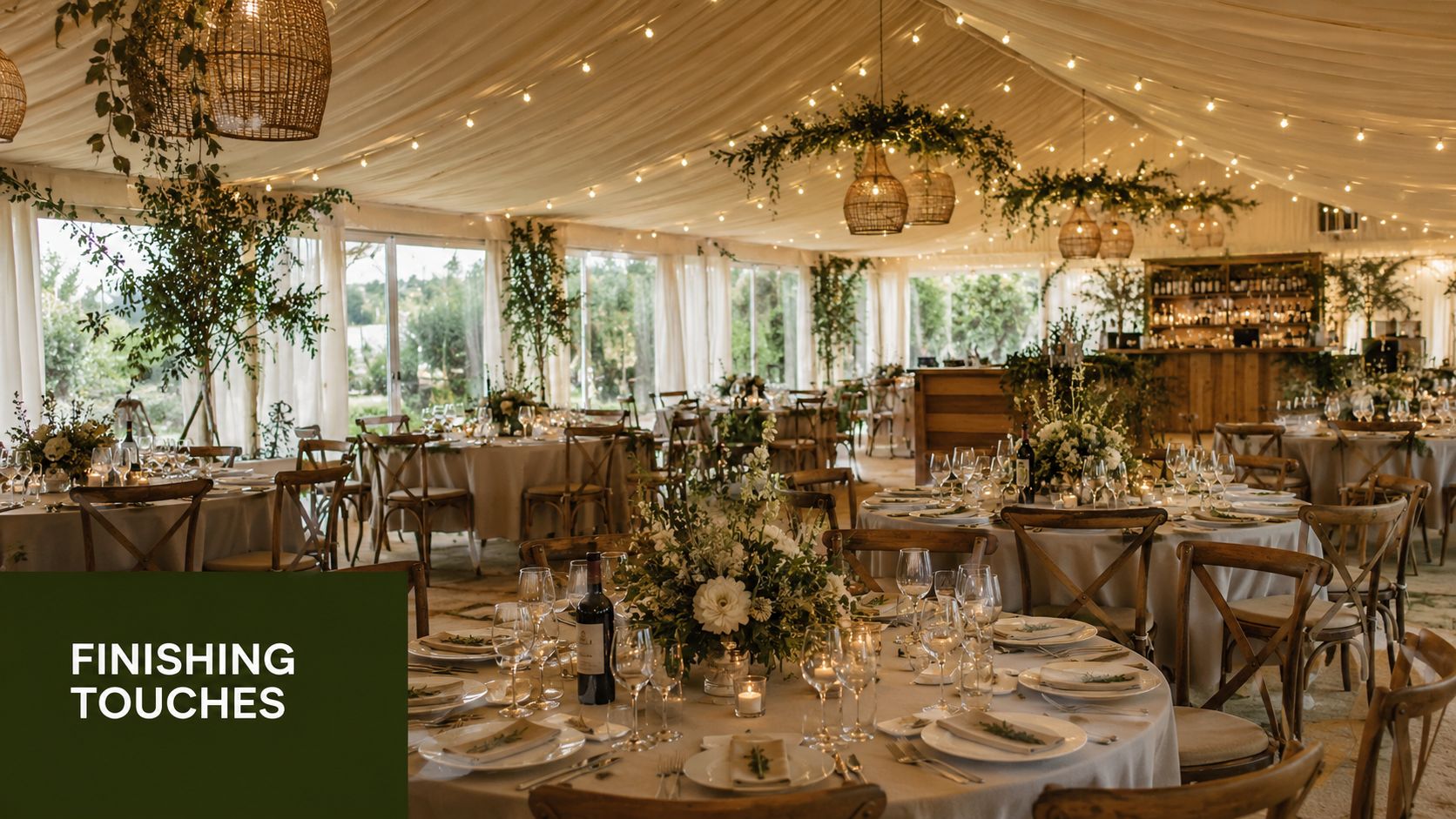
- Finishing items: Linings, drapes, staging, dance floors and partitioning all add cost, but they also change how the room feels and flows.
A clear-span marquee for a wedding in Dulwich can look sparse with basic furniture and utility lighting. The same structure can feel polished once the chair choice, table layout and lighting scheme are properly matched to the event.
The operational layer
This is the part clients often forget until later. Power, catering tents, bar units, refrigeration, luxury toilets, service areas and entertainment support all sit here. These items do not just add style. They affect how the event functions for guests, caterers and crew.
Using one supplier for more of these elements can reduce coordination problems on site. Premier Marquee Hire, for example, supplies marquees alongside furniture, mobile bar units, lighting and event extras such as a Magic Mirror, which can make the planning process simpler if you want fewer separate deliveries and contacts to manage.
How to stop the budget drifting
The clearest quotes usually show the whole setup early. A lower base price can rise quickly once flooring, furniture, lighting, power and labour are added as separate lines. In London, access can push this further. If a crew has to hand-carry equipment through a townhouse, work around parking restrictions, or install over several days because of venue rules, that cost appears somewhere.
Budget check: If a quote does not mention furniture, flooring, lighting, power, toilets or access conditions, treat it as an early estimate rather than the final event cost.
The best budget conversations are specific. Ask for the cost of the setup that fits your guest count, venue access, finish level and running requirements. That is how you avoid a quote that looks competitive on paper but misses half the event.
Your Marquee Hire Timeline and Supplier Checklist
The easiest marquee projects are usually the ones with enough breathing room. Peak dates go first, especially weddings, summer Saturdays and bank holiday periods. That doesn't mean late bookings are impossible. It does mean your options narrow faster in London because suppliers are balancing transport, crews and overlapping installations.
The wider UK marquee and tent rental trade also reflects that operational variability. A 2023 industry report found businesses ranging from 0 to 11 full-time year-round employees, with regular riggers earning an average daily rate of about £119.48, and very different overhead patterns across operators, including reported warehouse lease costs from £0 to £85,000 per year. The same report noted that about 32% of respondents spent £0 on advertising each month, which helps explain why some firms operate with lean core teams and seasonal labour, as outlined in the Tent Rental Industry Report 2023.
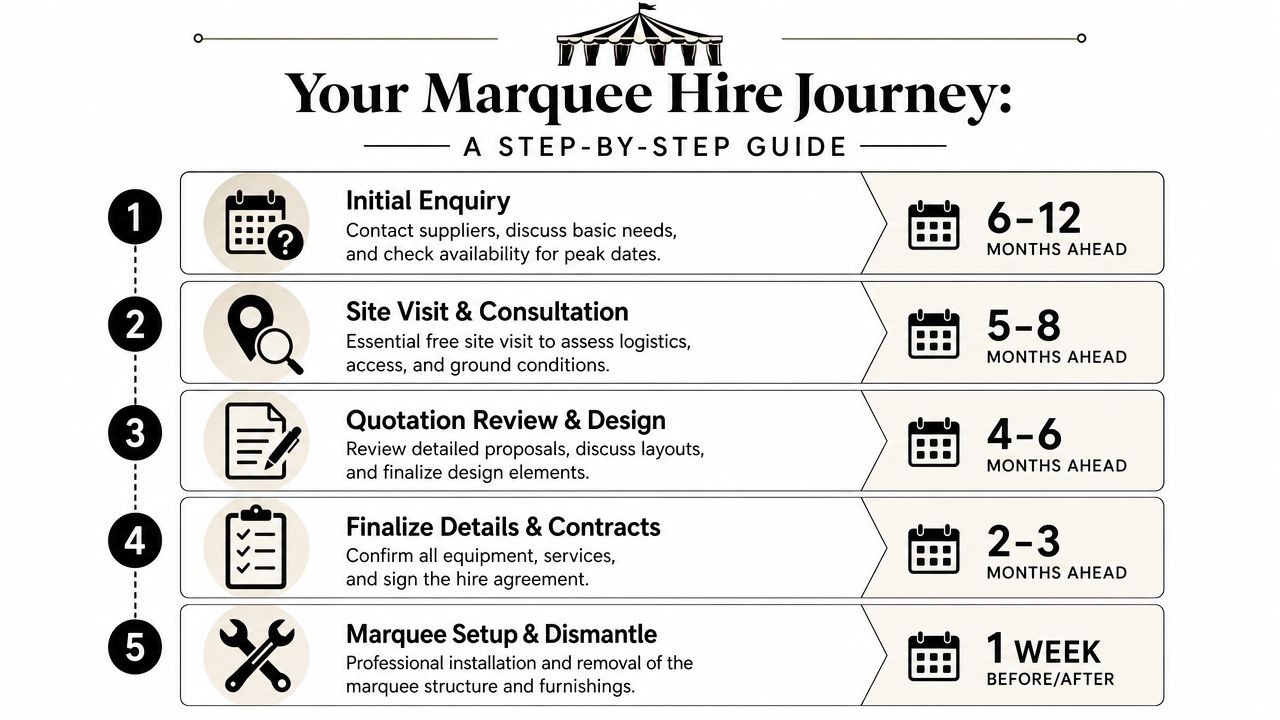
A realistic planning sequence
The exact timing varies, but the sequence is usually the same.
Initial enquiry
Share the date, location, guest count and event type. Good suppliers will identify the obvious feasibility issues early.Site visit
The site visit makes access, measurements, surface type, and layout options real.Detailed quote and layout review
You should be able to see what's included and what still needs decisions.Final confirmation
Lock in the structure, extras, schedule and paperwork.Installation and removal
Build time depends on complexity, access and weather. Removal should be planned with the same care.
Questions worth asking any supplier
- What exactly is included in the quoted price? Ask about flooring, lighting, delivery, collection and take-down.
- Have you visited similar London sites? Access experience matters more here than many clients realise.
- What insurance documents can you provide? Don't leave this until the venue asks.
- What happens if the ground is uneven or access is restricted? The answer tells you how experienced the team is.
- Who manages changes close to the event date? You want a clear contact and a clear process.
- Are the ancillary items part of one package or managed separately? That affects both cost clarity and event-day coordination.
A good checklist does more than help you compare suppliers. It also shows you who is thinking like an event partner and who is only thinking about dropping off a structure.
If you're planning marquee hire in london and want clear advice before making decisions, Premier Marquee Hire offers pressure-free quotations and site visits from a Croydon-based team that understands the access, layout and weather challenges London events bring.
Sorry, the comment form is closed at this time.