

31 Oct Inflatable Marquee Hire: Sizes, Sites and Safety
The popular advice is to pick a cover by how it looks in a photo, then ask whether it'll fit your date. That order is backwards for inflatable marquee hire. An air-supported structure isn't a bouncy castle, and it isn't a cheaper version of a pole or frame marquee. It's a different way of holding a roof up, so your site, power and weather plan decide first, and styling comes after.
When Inflatable Marquee Hire Is the Right Cover
An inflatable marquee suits a site that can provide continuous blower power, has suitable anchorage, and can operate within the manufacturer's wind limit. If one of those conditions cannot be met, choose another structure, regardless of how quickly the inflatable can be installed.
Use this comparison to decide which type fits your event and site.
| Criterion | Inflatable marquee | Framed marquee |
|---|---|---|
| How it stands | Blowers maintain air pressure in the tubes and cover | Poles, a frame or a clear-span structure supports the cover |
| Power on site | Continuous supply, with backup for the blowers | Lighting and catering may need power, but the structure does not depend on fans |
| Wind operating limit | Follow the manufacturer's stated limit, or a lower limit if specified | Follow the manufacturer's stated wind rating and anchorage design |
| Best fit | Short events, exhibitions, catering covers and sites with reliable power | Weddings, Mehndi, winter events and multi-day functions needing a rigid span |
| Avoid when | The site is exposed, the lawn is saturated, forecast gusts approach the limit, or there is no independent blower power | Access is too tight for frame sections, or the ground cannot take ballast or stakes |
Rain is another reason to plan cover around the event, not just its appearance. The Met Office guide to UK rainfall reports that the wettest observation sites in Snowdonia, the Lake District and the Scottish Highlands receive more than 4 metres of rain in an average year, as moist westerly winds bring Atlantic fronts. London, Surrey, Middlesex and Kent are generally drier, but those fronts can still bring rain at short notice.
A suitable cover helps protect guests, food service, furniture, electrics and routes through the event space. For an indoor exhibition alternative, expo stand builders offer another way to plan a display footprint, though the structure itself is different.
Sizing Guests Clearance and Garden Space
Don't choose a model from a photo. The outer tubes of an inflatable take up floor, so the usable width inside is smaller than the size on the label. Work through these five steps instead.
Five Steps Before You Accept a Quoted Length
- Count each zone separately. List seated guests, standing guests, a top table or stage, and a catering or bar area. A dance floor, buffet tables and a DJ booth aren't guest space, so don't hide them inside your headcount.
- Apply a floor allowance, then add furniture. Use the table below as your lookup, then add clear service space behind a bar and room for chairs to be pulled out without blocking a route.
- Measure fence to fence, then subtract. Take off space for blower positions, anchor points and a clear exit path. What's left is your real footprint, not the full garden.
- Check separation from other tents. Where several structures share a site, spacing is a fire and access decision, not a layout preference.
- Confirm delivery access. Check street parking in Croydon, a narrow drive in Purley or a park gate width, plus where a generator would sit overnight if you haven't got mains power.
| Check | Planning figure | Why it changes the hire |
|---|---|---|
| Seated banquet guests | About 1 to 1.2 square metres per guest | Tables and chairs use more floor than a headcount suggests |
| Standing reception | About 0.5 to 0.8 square metres per guest | A bar and dance space still need extra clear floor |
| Marquee separation | At least 6 metres where the Basingstoke and Deane benchmark applies | Fire spread, access and escape, not just guest comfort |
| Anchorage versus exits | Anchors, guys and stakes kept off gangways and exits | A full-looking layout can block the way out |
The Basingstoke and Deane Council event guidance says marquees and tents should be positioned at least six metres apart with adequate emergency lighting and escape routes, erected by competent persons with written safety certification. It also requires fabrics to be durably flame-retarded and firefighting equipment such as extinguishers, sand buckets and fire blankets placed around the site. That figure isn't a universal UK law for every venue, so check it against your controlling authority, venue conditions and fire-risk assessment.
Two edge cases catch people out. A long, narrow South Croydon garden may suit a framed span better than a bulbous air structure that wastes the edges. A school field may look huge, yet fail after rain because the ground won't hold anchors reliably.
Before you agree a size, run your numbers through a marquee capacity calculator and book a measured site survey. A quoted length means little until someone has stood on your ground.
Power Wind and Anchorage Limits
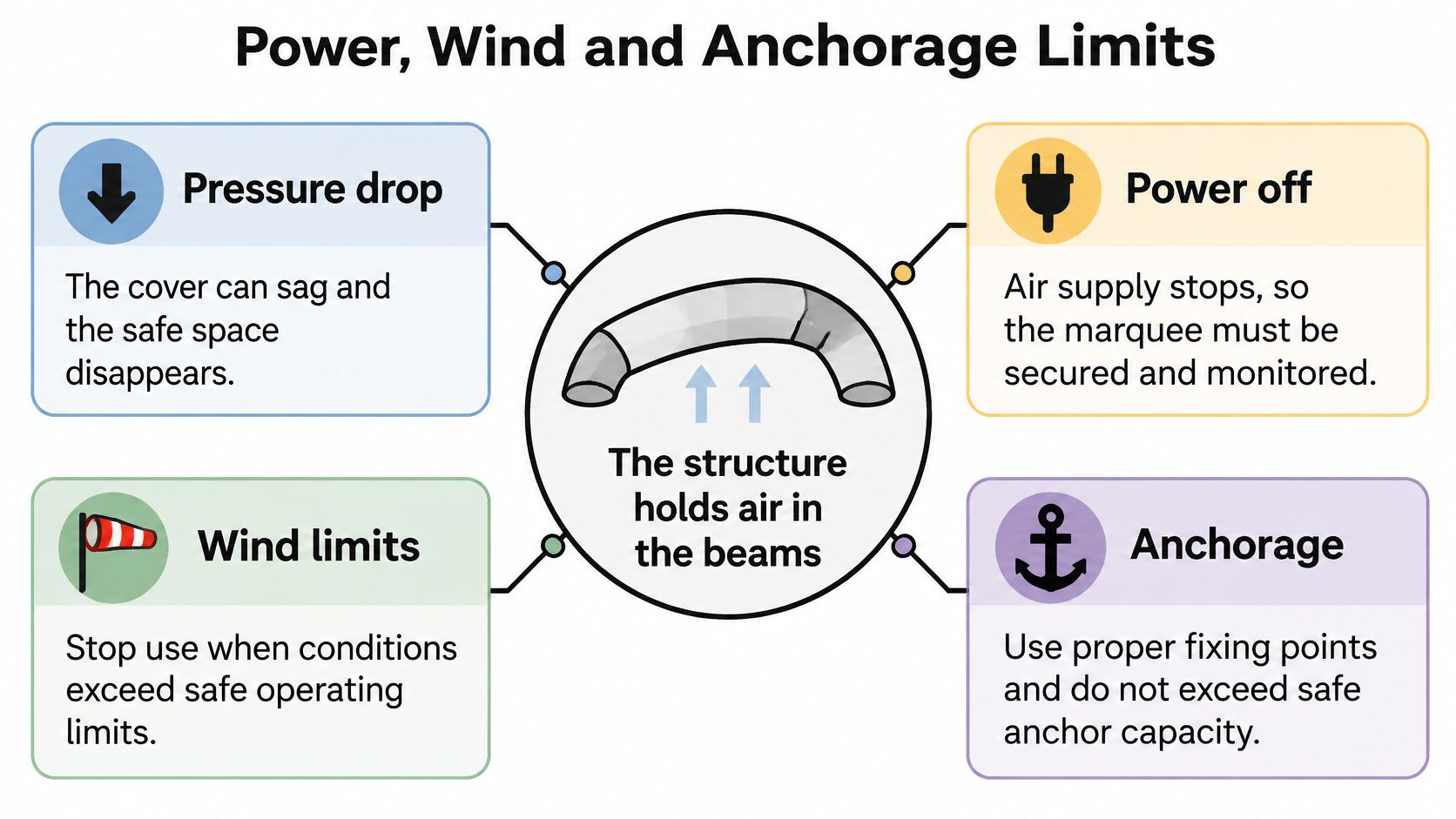
Think of an inflatable marquee like a life raft turned into a building. The air in the beams is the structure. If pressure drops, the cover sags, headroom shrinks and the safe, usable space underneath disappears with it.
The diagram below maps how power, wind and anchorage connect.
Two Blowers and Two Supplies
Redundancy isn't an upgrade. Islington Council's outdoor event conditions require an inflatable structure to have at least two air blowers, each with an independent power supply, so one fan or one shared socket can't bring the roof down. The same conditions require coverings to be durably flame-retarded and poles, frames, guy ropes, stakes and anchors kept clear of gangways and exit routes.
Say a Purley garden party runs everything from a single domestic socket, or a Croydon park event uses one generator for blowers, lighting and catering. A trip, a fuel stop or a faulty extension lead then becomes a structural problem, not just a lighting problem. Ask how many blowers you'll get, where each one plugs in and what happens to the cover while a supply is restored.
These checks matter most when the marquee is enclosed, open to the public or linked to catering. Catering heat, temporary power and dense seating raise the stakes for fabric evidence and clear exits, so ask to see the flame-retardant certificate rather than accepting a verbal assurance.
The Stop Rule for Wind
Don't treat wind as a judgement call on the day. HSE guidance on inflatables states inflatables must not be operated above 24 mph (38 km/h), equivalent to Beaufort Force 5, unless the manufacturer specifies a lower limit. The operator should use a suitable anemometer at the structure, take readings regularly in the wind direction, record them and remove the structure from service before that threshold is reached.
For a plain-language explanation of how gusts affect inflatables in practice, Phantom Entertainment's inflatable weather guidance is a useful companion read alongside the manufacturer's own manual. Your risk assessment still needs to name who watches the wind, how often they read the meter, what reading triggers evacuation or deflation and how forecast checks are compared with on-site measurements.
If the forecast sits near the limit, do not hope the structure through it.
Anchors Are a Design Decision
Anchor numbers aren't a generic add-on you settle on arrival. The design review should establish how many anchor points the structure needs for foreseeable wind and other loads, matched to ground that can hold them. Soft or saturated soil, an exposed ridge in Addington or Kenley, a park ridgeline and a festival field after heavy rain all change that answer.
Lawns hide another problem. Unknown drains, irrigation pipes and underground services can rule out staking in exactly the spot your layout needs. A ground suitability check should flag that before delivery day, along with whether ballast is a realistic alternative on hardstanding.
Finally, put the commercial consequence in writing. A delayed or cancelled install affects caterers, entertainers and guests who've travelled, so your booking should say who can stop the install, what notice you'll get and what happens to your deposit. Similar access and weather questions come up in nearby areas too, as this guide to marquee hire in Leatherhead shows for Surrey sites.
Events That Suit an Inflatable Cover
An inflatable cover can suit an event brilliantly, but the quickest setup is not always the right fit. Match the structure to the event's duration, setting and use before you enquire.
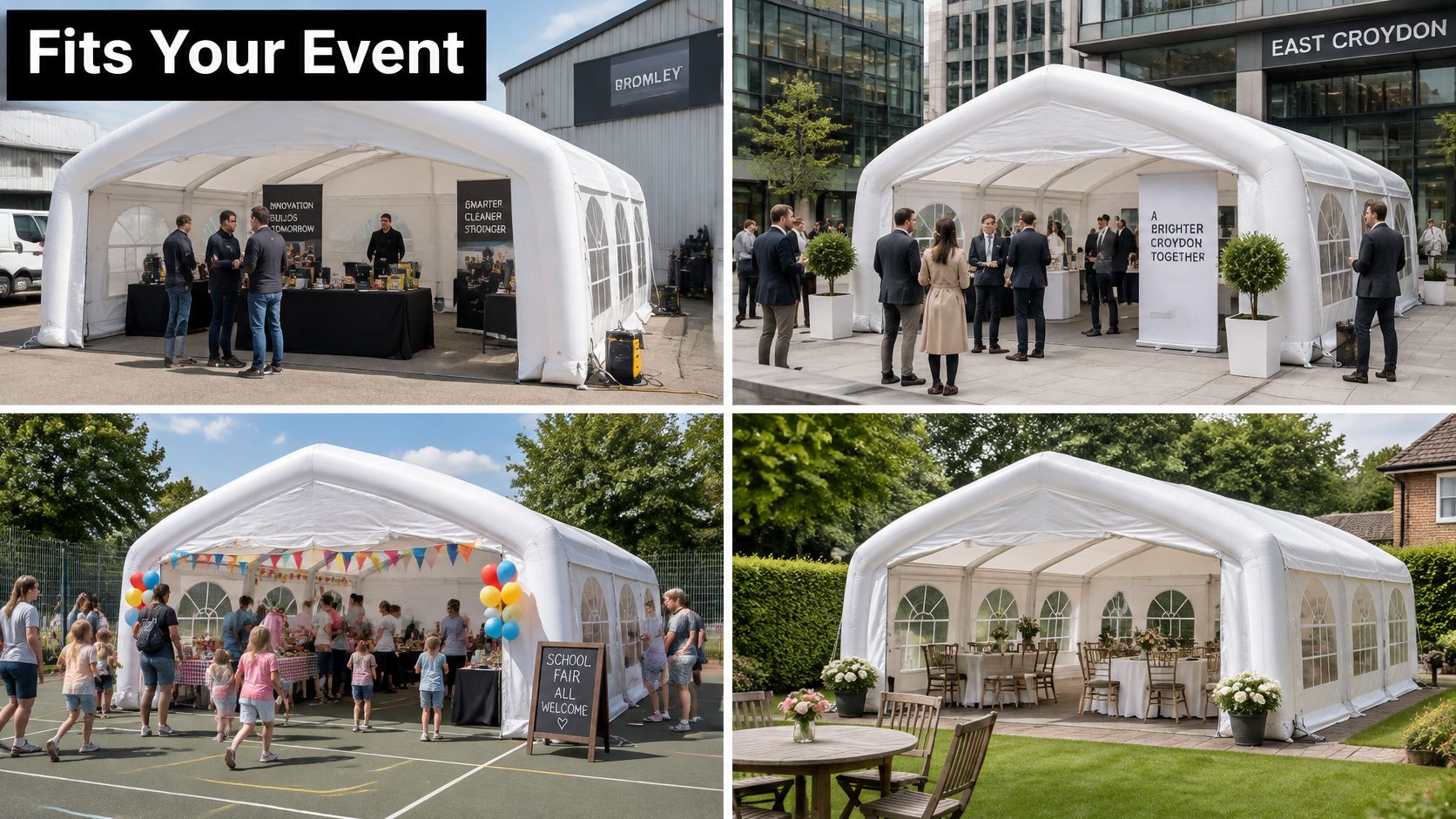
Four Croydon Area Scenes
A daytime exhibition or product launch on hardstanding in Bromley or East Croydon can be a good fit. Mains power may be close, blowers can sit away from public routes, and the cover is needed for hours rather than days. Deciding factor: reliable power. Small food and drink traders can also set up beside the main cover, keeping their stall separate from the guest space.
A school or community fete in a park may suit an inflatable cover if someone is assigned to monitor conditions throughout. Leave proper separation from neighbouring tents and agree who will act if conditions change. Deciding factor: supervision and evacuation. For a broader look at site layouts, see this guide to festival tents for hire.
A home wedding breakfast or Mehndi in a Sanderstead or Purley garden can be a less suitable match. Evening use, close seating, catering heat, soft lawn and nearby neighbours may make a framed span a better choice, particularly if fans running during speeches and dinner are undesirable. Deciding factor: duration and ground.
A winter corporate dinner is a poor fit for a basic air structure. Without heating, flooring, emergency lighting and a written wind plan, cold conditions and early dusk can make a quick-install cover unsuitable. Deciding factor: comfort and lighting after dark.
The clip below can help you picture the structure's scale and how guests might move through the space.
When you enquire, describe which scene comes closest to your event. That gives the supplier a clearer starting point for choosing a suitable structure. If a compact food or drink trader is part of your plans, you could host with The Matcha Bike beside the main cover.
What Drives the Price of Hire
You can't compare quotes sensibly if each supplier bundles different things into one headline figure. Ask for these items listed separately.
Seven Cost Drivers to Itemise
- Structure size and layout: The footprint drives the hire, not the headcount alone. Extra zones for catering, a bar or a stage push you into a larger structure.
- Blowers and power: Count the blowers, the supplies feeding them and whether a generator must be sourced, fuelled and parked safely overnight.
- Ground, flooring and anchoring: A lawn, school field and hardstanding each need different preparation. Flooring that keeps routes usable after rain is rarely a free extra.
- Hire duration: Install-to-dismantle time changes crew time, blower running time and power costs, even if your guests are only there for one afternoon.
- Delivery and access: Distance matters, but so does a tight Croydon street, a steep Purley drive or a park gate with restricted vehicle hours.
- Lighting, heating and sidewalls: General lighting, emergency lighting, heaters and sidewalls are often separate line items. Don't assume they're included because they appear in a photo.
- Deposit and cancellation terms: Check what you pay upfront, what counts as a weather delay and what's refunded if the install can't proceed.
Comparison rule: If two quotes don't list the same items, you're not comparing prices. You're comparing assumptions.
A site survey settles most of these points before a quote is final. Once access, ground and power are confirmed, the remaining choices are genuine options rather than surprises.
Booking Questions and Next Step
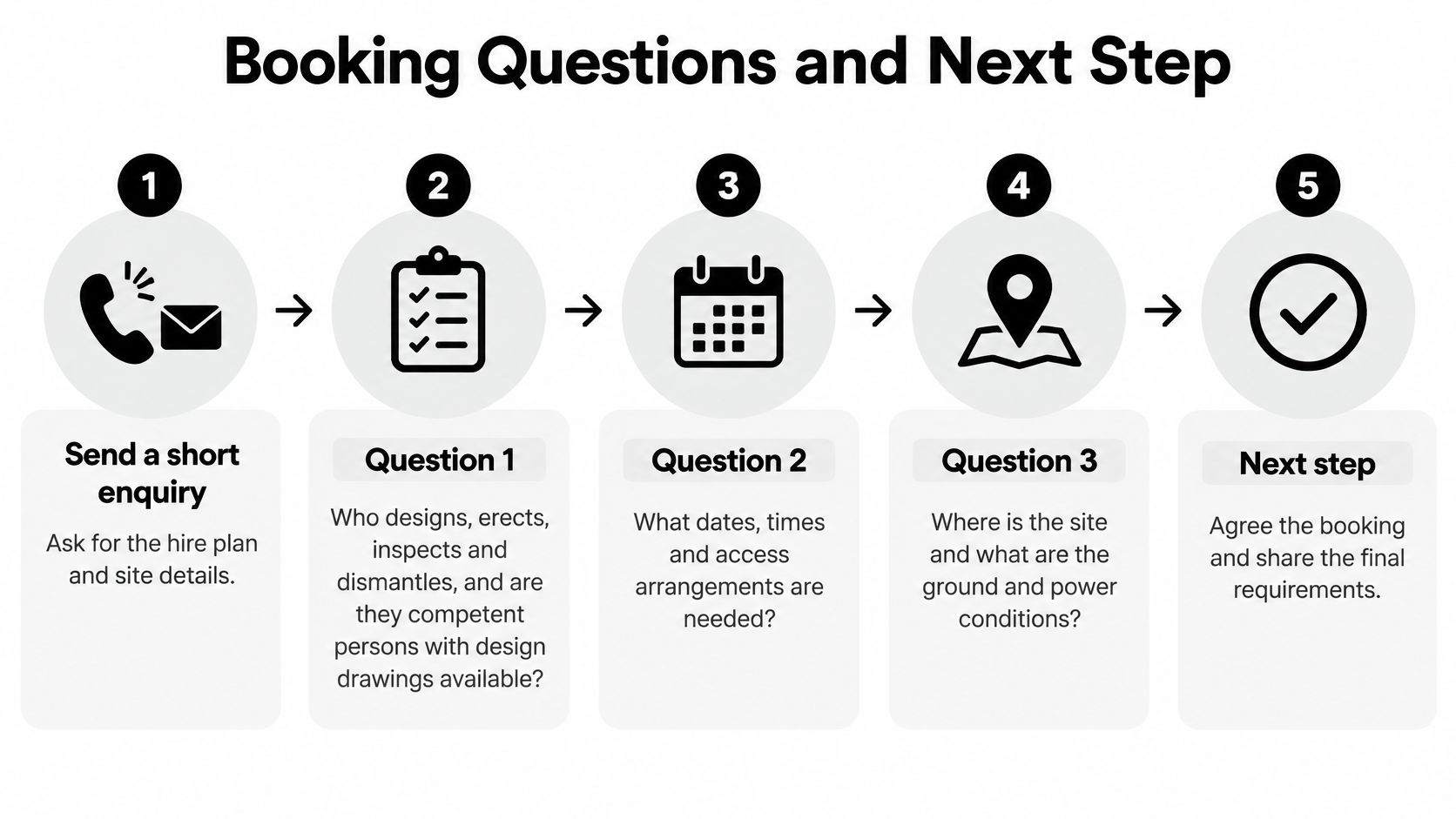
Send these eight questions with your first enquiry, not after you've paid a deposit. Keep the written answers with your quote.
- Who designs, erects, inspects and dismantles the structure, and are they competent persons with design drawings available?
- What's this model's maximum safe wind speed, and is it below the general ceiling you've been quoted against?
- How many blowers will be installed, and does each one have an independent supply?
- Where's the flame-retardant certificate, and who provides extinguishers, fire blankets and emergency lighting?
- What anchorage suits this ground, and will every anchor, guy and stake stay clear of exits?
- Who monitors wind during the event, and who has authority to order evacuation or deflation?
- What happens to the deposit, caterers and guests if installation is delayed or cancelled for weather?
- Which authority or venue process applies to this event, and does anything need submitting in advance?
The booking flow below shows the order to work in, from enquiry to agreement.
Who Enforces What
Question 8 matters because responsibility is split. The HSE event safety FAQs explain that local authorities generally enforce health and safety legislation at events, while HSE enforcement for erecting and dismantling temporary demountable structures explicitly excludes small marquees and similar tents, leaving them generally under local-authority enforcement. HSE still advises organisers to consider the Construction (Design and Management) Regulations 2015, use risk assessment as the central safety plan and liaise with the venue, emergency services and, where appropriate, the local Safety Advisory Group.
In plain terms, a smaller structure doesn't sit outside event safety planning. For a Croydon wedding, corporate reception, school event or community festival, confirm which process applies, especially if the marquee is open to the public or part of a larger installation. A public event may need a Safety Advisory Group submission that a private garden party doesn't.
Your next step is a short call or email with your date, postcode, guest count and event type, plus the eight answers you're expecting back. Ask whether an inflatable is available and suitable for that date before discussing colours or extras, and don't assume any supplier stocks one until they've confirmed it. Request a site survey and a layout showing guest flow and exits before any deposit changes hands.
If you'd like help testing whether an inflatable cover suits your Croydon garden, park or hardstanding, or whether a framed marquee is the safer fit, talk to Premier Marquee Hire about a site survey, layout and pressure-free quotation. Send your date, postcode, guest count and event type, and you'll get practical advice on structure, power and access before you're asked to commit.
No Comments